

Email Campaigns for Lead Generation: A Data-Backed Playbook
You sent 5,000 emails last quarter and got 12 replies. The average office worker receives 120+ emails a day - your message landed between a Slack notification and a lunch order. The problem isn't email as a channel. It's how most teams build their campaigns.
Here's the thing: the gap between a well-built email sequence and a batch-and-blast isn't incremental. It's 13x. We'll break down exactly what that means, how to build sequences that hit those numbers, and why your list quality matters more than your copywriting.
Why Email Still Works in 2026
Email delivers $36-$42 ROI per $1 spent. Nothing else comes close. And 73% of B2B decision-makers prefer sellers contact them via email - not cold calls, not social DMs.
The real question isn't whether email works. It's whether yours does.
2026 Benchmarks Worth Tracking
Stop obsessing over open rates. Apple's Mail Privacy Protection inflates them, making opens a noisy, unreliable metric. Click rate and reply rate are what actually matter.
If you want a cleaner KPI stack, start with lead generation metrics and build from there.
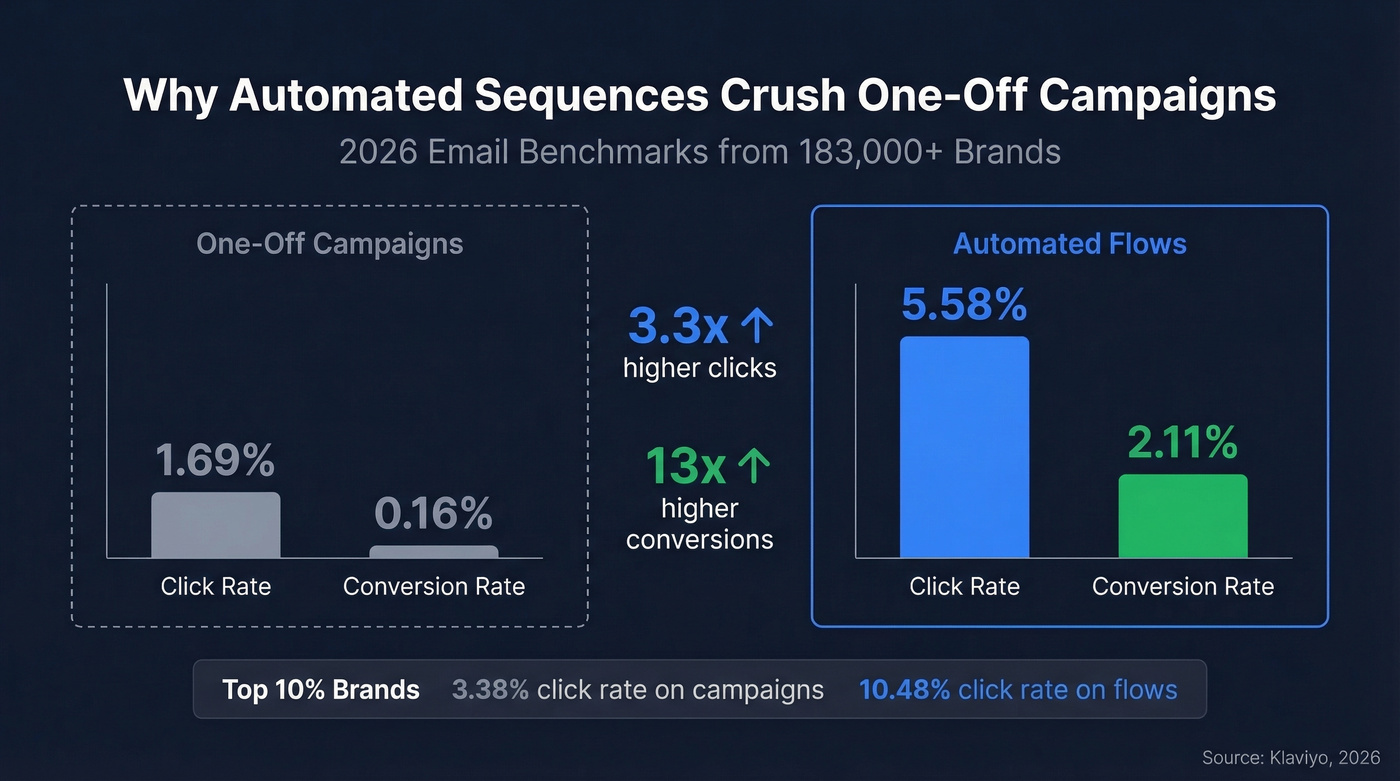
Here's what "good" looks like, based on Klaviyo's analysis of 183,000+ brands:
| Metric | One-Off Campaigns | Automated Flows |
|---|---|---|
| Avg Click Rate | 1.69% | 5.58% (3.3x higher) |
| Avg Conversion | 0.16% | 2.11% (13x higher) |
That 13x gap is the single most important number on this page. Automated sequences don't just perform better - they perform in a different league entirely, because they reach people at the right moment with the right message instead of blasting everyone at once. Top-10% brands hit 3.38% click rates on campaigns and 10.48% on flows, which proves the ceiling is far higher than the average. Mailchimp's benchmarks show similar patterns, with Business & Finance averaging 2.78% click rates and Ecommerce at 1.74%.
If you're optimizing for clicks, it helps to use a consistent click rate formula across campaigns and flows.
The 6-Email Sequence
The sweet spot for lead gen sequences is 5-9 emails over 2-4 weeks. Here's a proven 6-email cadence across 23 days:
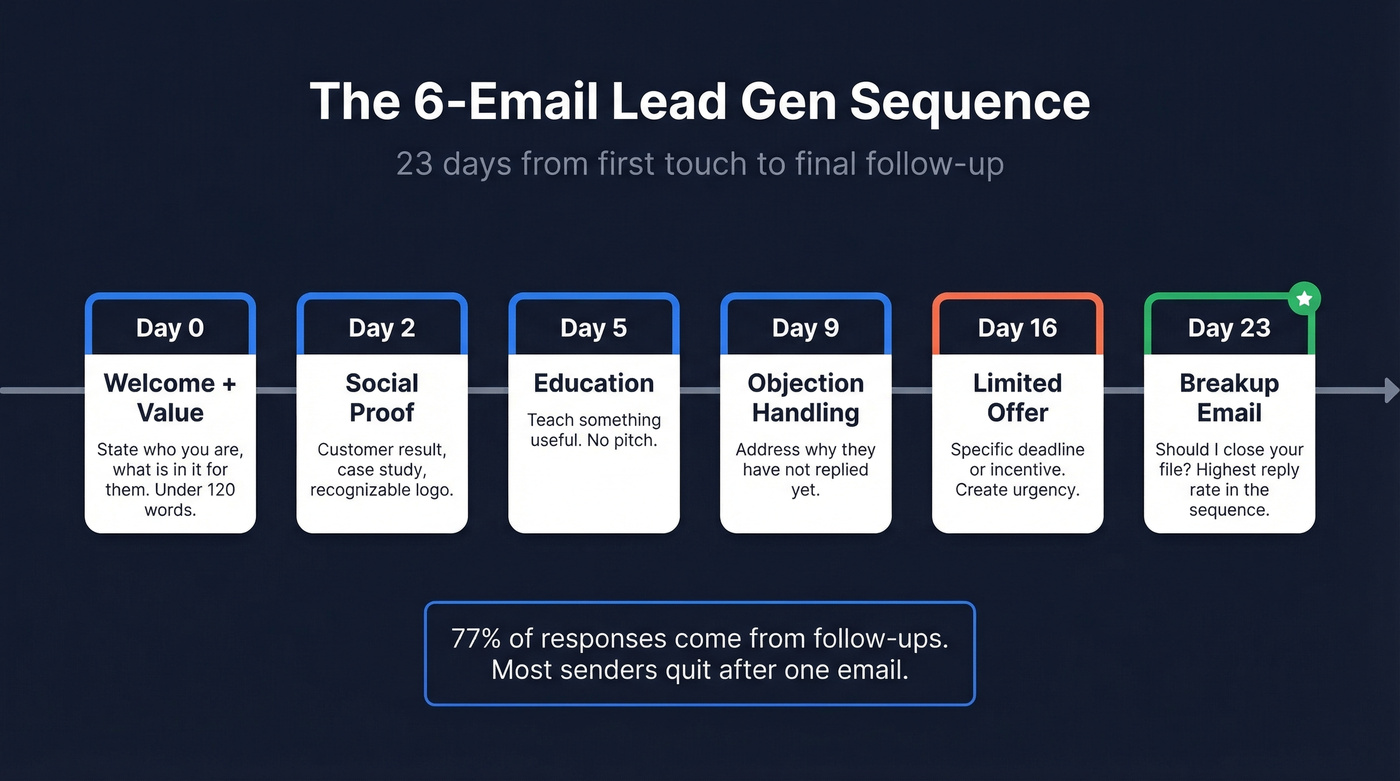
- Day 0 - Welcome + value. State who you are, why you're reaching out, and what's in it for them. Keep it under 120 words.
- Day 2 - Social proof. A customer result, a case study snippet, a recognizable logo.
- Day 5 - Education. Teach them something useful about their problem. No pitch.
- Day 9 - Objection handling. Address the reason they haven't replied yet.
- Day 16 - Limited offer. Create urgency with a specific deadline or incentive.
- Day 23 - Breakup email. "Should I close your file?" works better than you'd think.
In our experience, the breakup email is one of the highest-reply messages in the entire sequence. It forces a simple yes/no decision, and people who've been on the fence suddenly feel compelled to respond before the door closes.
For cold outbound specifically, average reply rates have dropped from 6.8% to 5.8% over two years - generic outreach gets punished harder every quarter. One practitioner on r/LeadGeneration reported sending ~1,200 emails over four weeks, generating 70 replies, booking 20 calls, and closing 6 clients. The biggest lever? Mentioning something specific about each company - not just {first_name} merge tags.
77% of responses come from follow-ups. Most senders quit after one email. Don't be most senders. If you need copy you can ship fast, use these cold email follow-up templates.
Five Tactics That Move the Needle
Segment ruthlessly. Segmented campaigns see +30% opens and +50% more clicks compared to batch-and-blast sends. Even basic segmentation by industry or role makes a measurable difference - and it's the easiest win most teams ignore. (If you want a more structured approach, borrow an ideal customer profile scoring rubric.)
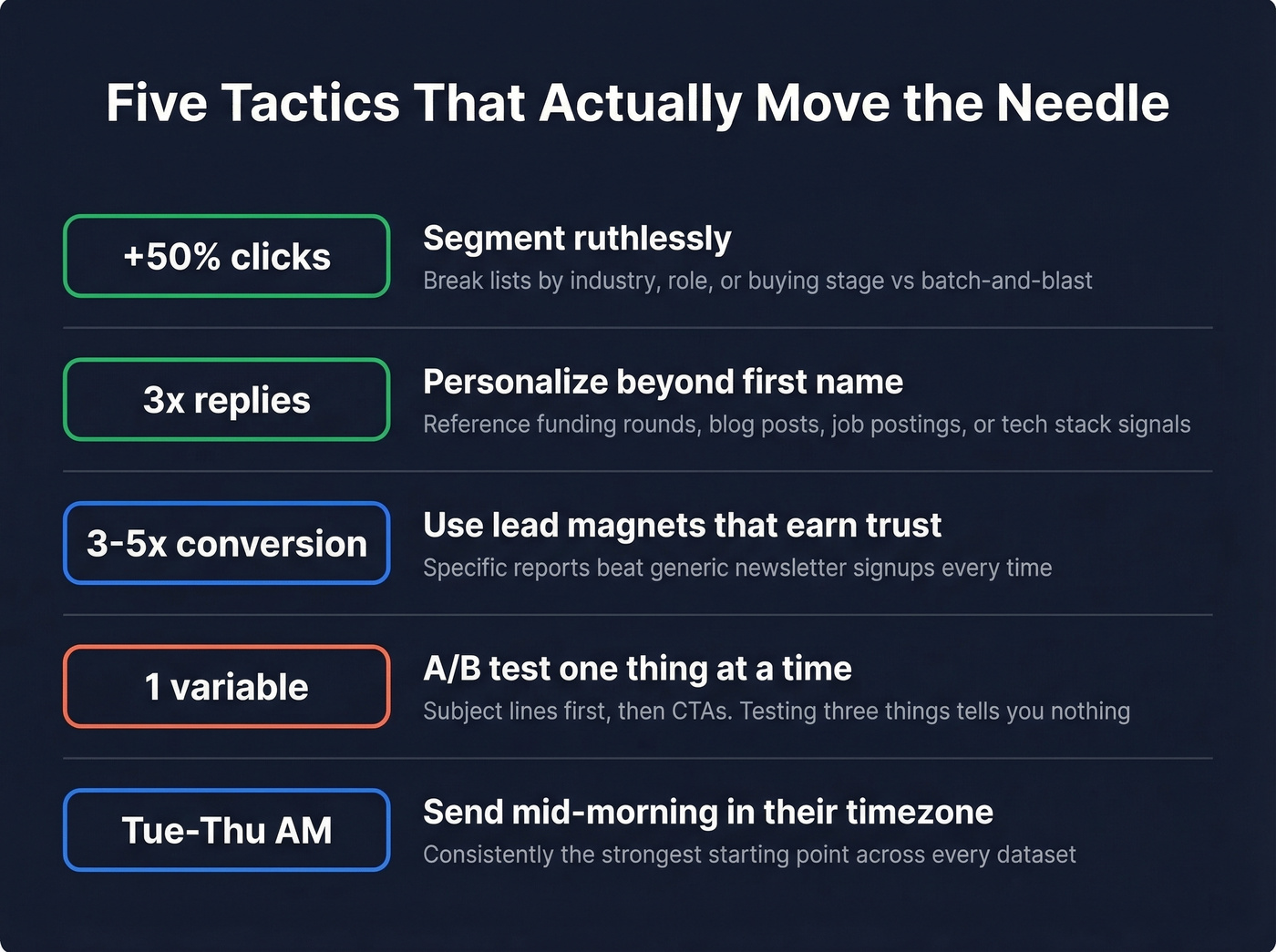
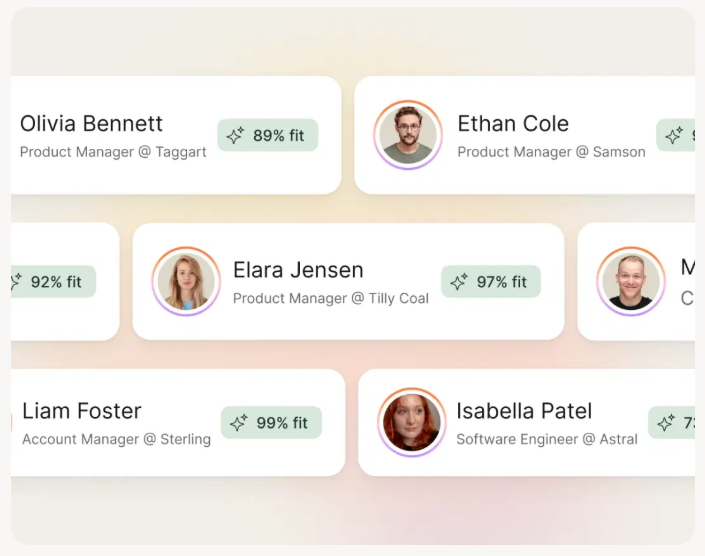
Personalize beyond first name. Mention their recent funding round, a blog post they published, or a job posting that signals a pain point. We've seen teams triple their reply rates by adding emails 3-5 to a sequence that previously stopped at two, but the personalized sequences always outperform generic ones at every stage. If you're pulling prospect data from a platform like Prospeo, you can filter by signals like job changes, headcount growth, or tech stack - all of which give you something real to reference in your opening line.
Use lead magnets that earn trust. "Download our 2026 SaaS Email Benchmark Report" converts 3-5x better than "Subscribe to our newsletter." Give people something specific enough to be immediately useful.
A/B test one variable at a time. Subject lines first, since they determine opens. Then CTAs, since they determine clicks. Testing three things simultaneously tells you nothing. If you need a starting library, pull from these email subject line examples.
Send Tuesday through Thursday, mid-morning in the recipient's timezone. Not revolutionary advice, but it's consistently the strongest starting point for engagement across every dataset we've looked at. For cold outbound, compare against the latest best time to send cold emails data.

Personalization at scale requires real signals - not just first names. Prospeo's 30+ filters let you build lists segmented by job changes, headcount growth, funding rounds, and tech stack, so every email in your sequence references something specific. At $0.01 per verified email with 98% accuracy, dirty lists stop being a problem.
Build the list your 6-email sequence deserves.
Deliverability: The Silent Campaign Killer
None of the tactics above matter if your emails land in spam. Let's be honest - this is where most campaigns actually die.
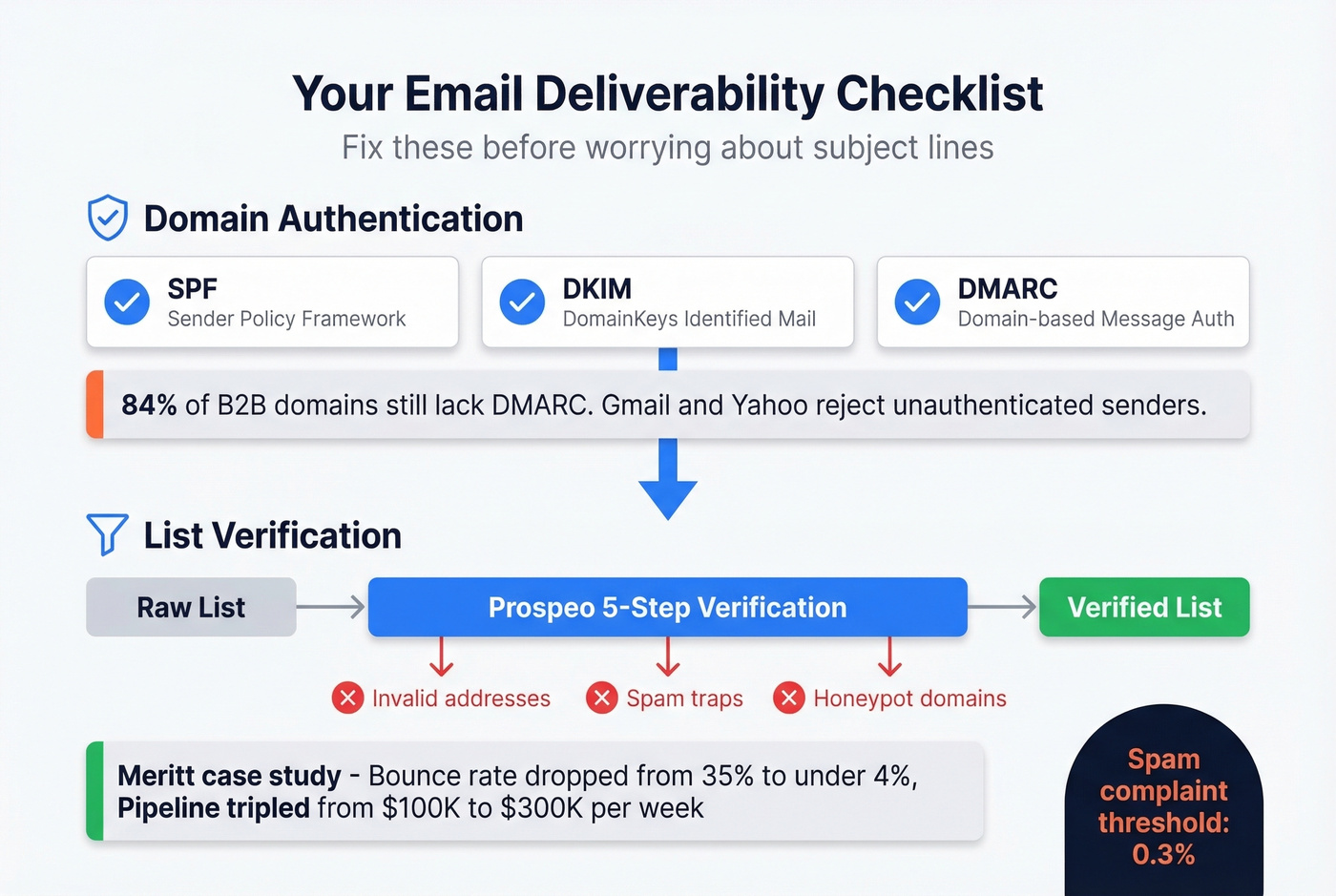
SPF, DKIM, and DMARC authentication aren't optional anymore. Gmail and Yahoo actively reject unauthenticated bulk senders, and 84% of B2B sending domains still lack DMARC. If you haven't configured all three, stop reading and go do that first. (If you're troubleshooting, start with how to verify DKIM is working.)
Here's my frustration with most email advice: it focuses on subject lines and send times while ignoring the fact that most teams don't have a messaging problem - they have a data problem. The spam complaint threshold is 0.3%. Exceed it and your deliverability craters. And delivery rate (98.16%) isn't inbox placement (84.3%). Your ESP says "delivered," but a big chunk of those emails still won't hit the primary inbox.
The fix is verifying your list before every campaign. Prospeo's 5-step verification catches invalid addresses, spam traps, and honeypot domains before they destroy your sender reputation. Meritt dropped their bounce rate from 35% to under 4% after switching their verification workflow - and their pipeline tripled from $100K to $300K per week in the same period.
If you're diagnosing list issues, start with email bounce rate benchmarks and fixes, then work through a full email deliverability guide.
Mistakes That Kill Campaigns
Generic messaging. Sending the same email to your entire list trains Gmail that you're spam. Break your list by role, industry, or buying stage.
Single-email sends. One email isn't a campaign. It's a coin flip. A 5-day sequence that only sells in the final email doubled qualified demo requests for one team we worked with.
Dirty lists. Invalid emails bounce, bounces hurt your sender score, and a damaged sender score means even your good emails go to spam. Verify before every send - it takes minutes and it's the cheapest insurance against a destroyed domain.
Spam-trigger language. "FREE!!!" and "Act now!!!" aren't persuasive. They're spam filter bait. Write the way you'd message a colleague.
Ignoring mobile. 60% of emails are read on phones. Short subject lines, single-column layouts, one clear CTA per email. Skip this if you enjoy watching your click rates flatline.
Compliance in 30 Seconds
CAN-SPAM penalties reach $50,112 per email. Every marketing email needs a valid physical address and a working unsubscribe link. Honor opt-outs within 10 business days - no exceptions. GDPR fines can hit EUR 1.2B, so if you're emailing EU contacts, you need explicit consent or a legitimate interest basis.
When in doubt, make unsubscribing easier than reporting spam. Your deliverability depends on it.
Building Campaigns That Last
The playbook is straightforward: authenticate your domain, verify your list, build a multi-touch sequence, and personalize beyond merge tags. Most teams fail not because the strategy is wrong but because their data is bad and their follow-up is nonexistent. Fix those two things and you're already ahead of 90% of senders.
If you want a deeper outbound-specific build, use this B2B cold email sequence framework.
Meritt dropped their bounce rate from 35% to under 4% and tripled pipeline to $300K/week. The difference wasn't better copy - it was Prospeo's 5-step verification catching spam traps, honeypots, and invalid addresses before they destroyed sender reputation. Your deliverability is your campaign ceiling.
Stop sending campaigns into the spam folder.