

How to Nurture Leads: The Playbook Nobody Else Will Give You
You generated 500 leads last month. Sales followed up on maybe 100. Seventy of those were unqualified. The other 400? They went cold - not because they weren't interested, but because nobody talked to them again.
That's not a lead gen problem. It's a nurturing failure, and it's costing you pipeline every single week.
The average B2B buying cycle runs 10.1 months. First meaningful contact between buyer and vendor doesn't happen until the buyer is 61% through their journey. The winning vendor lands on the buyer's Day One shortlist 95% of the time. And 79% of marketing leads never convert to sales. If you aren't building relationships with those contacts over time, you aren't competing - you're generating names for a spreadsheet nobody opens.
The Quick Version
Before the full framework, here's the cheat sheet:
- Map content to funnel stages - TOFU, MOFU, BOFU get different content, not the same drip.
- Build a 6-8 email sequence with behavioral branching (templates below). If you need a starting point, borrow from these sales follow-up templates.
- Score leads with fit + engagement + negative signals - MQL at 60-80 points. (More on lead scoring if you want a deeper model.)
- Verify your contact data before launching anything. A bounce rate above 10% can torch your sender reputation fast - see email bounce rate benchmarks and what “good” looks like.
- Measure pipeline influenced, not open rates. Track it alongside funnel metrics so you can see where leads stall.
That's the skeleton. Let's put muscle on it.
The 5-Step Lead Nurturing Process
92% of buyers already have at least one vendor in mind before they start evaluating. Forty-one percent have a preferred vendor before formal evaluation even begins. Learning how to nurture leads is how you become that vendor - or how you unseat the one they're already leaning toward.
The framework is five steps, and the order matters:
- Build personas - technical buyer, economic buyer, end user. Each gets different content. One practitioner on r/Emailmarketing put it well: target the account, not just the contact. In enterprise deals, you're nurturing a buying committee of 5-10 people, not a single lead. (If you sell to both, see technical buyer vs economic buyer.)
- Map content to funnel stages - the table below is your starting point. If you want a more structured view, use a B2B sales funnel template.
- Set cadence - 6-8 emails over 30 days for most B2B deals, 10 over 60 days for enterprise.
- Automate with behavioral triggers - branch on opens, clicks, page visits, and inactivity. This is easier with solid sequence management.
- Measure pipeline impact - not vanity metrics.
The content mapping table is the centerpiece. Print it out, tape it to your monitor, whatever works:
| Stage | Buyer Mindset | Content Types | Goal |
|---|---|---|---|
| TOFU | "I have a problem" | Blogs, guides, thought leadership | Educate |
| MOFU | "I'm evaluating options" | Case studies, webinars, comparisons | Build preference |
| BOFU | "I'm ready to decide" | Demos, pricing, free trials | Convert |
Most teams dump every lead into the same drip and wonder why engagement craters after email three. The fix is simple: tag leads by entry point and serve content that matches where they actually are in the buying process.
Build Your First Nurture Sequence
Stop building 15-email sequences. For most B2B deals, 6-8 emails over roughly 30 days is plenty. We've seen teams build elaborate 20-touch sequences where the last chunk barely gets read. That's noise, not nurturing.
SaaS Educational Sequence (30 Days)
This works when someone downloads a guide, attends a webinar, or signs up for a free resource. Eight emails over 30 days, front-loaded for engagement:
| Day | Email Theme | Subject Line Example | Expected Open | Expected CTR |
|---|---|---|---|---|
| 0 | Deliver asset + bonus insight | "Your [resource] + something we didn't include" | ~52% | ~12% |
| 4 | Problem education | "The real cost of ignoring [problem]" | ~41% | ~8% |
| 8 | How others solved it | "How [company type] fixed this in 3 weeks" | ~38% | ~7% |
| 14 | Case study / proof | "[Company] cut [metric] by 40% - here's how" | ~35% | ~6% |
| 18 | Common mistakes | "5 mistakes that make [problem] worse" | ~33% | ~5% |
| 22 | Comparison / evaluation help | "Choosing between [solution types]? Read this first" | ~31% | ~5% |
| 26 | Soft conversion (demo/trial) | "See if this works for [company name]" | ~29% | ~4% |
| 30 | Final value + clear CTA | "Last thing - then I'll stop emailing" | ~28% | ~4% |
Notice the decay curve. Day 0 opens at 52%, Day 30 at 28%. That's normal and healthy. If your Day 0 open rate is way below the benchmark you normally see, you've got a deliverability or subject line problem, not a sequencing problem. (Use these email subject lines examples to pressure-test your angles.)
B2B Consultation Sequence (60 Days)
For enterprise deals with longer cycles - pricing requests, RFP inquiries, or inbound demo requests that went cold. Ten emails over 60 days, spaced wider to avoid fatigue. The cadence: Days 0, 5, 12, 20, 28, 35, 42, 48, 54, 60.
The content shifts from education to internal selling enablement. Emails 1-3 deliver ROI calculators, competitive battle cards, and executive summary decks - the artifacts your champion needs to sell internally. Emails 4-7 handle objections: security whitepapers, implementation timelines, integration docs. Emails 8-10 create urgency with limited-time offers or peer case studies from their industry. Subject lines should reference the buying committee directly: "A one-pager for your CFO" or "The security answers your IT team will ask." The goal isn't to convince the contact - it's to arm them to convince their committee. Nurturing through a complex buying committee means equipping every stakeholder with the right information at the right time.
Re-Engagement Sequence (When Leads Go Dark)
When a lead hasn't engaged in 30-60 days, trigger a three-email breakup sequence. Email 1: "Did we miss the mark?" - acknowledge the silence, ask what changed. Email 2: Offer something new - a fresh case study, an updated resource, a limited incentive. Email 3: The breakup - "I'll stop emailing unless you want to stay."
This three-touch pattern reliably brings a slice of dormant leads back to life. The ones who re-engage are often higher intent because they've self-selected back in.
Nurture Email Templates You Can Steal
Three value-first touches before any ask. That's the 3:1 give-to-get ratio, and most teams invert it. They gate everything and wonder why engagement drops. Here are four templates you can adapt today.
Email 1 - Deliver + Surprise
Subject: "Your [resource name] + something extra" Deliver the promised asset, then add one unexpected insight they didn't ask for. A stat, a framework, a contrarian take. CTA: "Read the guide."
Email 2 - Problem Education (Fill-in-the-Blank)
Subject: "The real cost of ____"
Hi [First Name],
Most [job title]s at [company size] companies lose [$ amount] per [time period] to [problem]. That's [X hours] of [team]'s time, or roughly [Y deals] that never close.
We broke down the math here -> [link to calculator or blog post]
No pitch. Just the numbers.
[Your name]
Fill in the brackets with your actual data. The specificity is what makes this work - "most marketing directors at mid-market companies lose $47K per quarter to unqualified leads" hits harder than "leads are expensive."
Email 3 - Proof (Before/After Narrative) Don't just link a case study - tell the story in three lines. Example: "A team was losing a big chunk of pipeline to bad contact data. They verified their list, rebuilt their nurture sequence with clean data, and saw replies climb within weeks." Then link the full story. The compressed narrative gets clicks; the PDF doesn't.
Email 4 - Soft Conversion
Subject: "Want to see if this works for [company name]?" Acknowledge they've been engaged. Offer a low-friction next step - not "book a demo" but "see a 5-minute walkthrough" or "get a custom analysis." CTA: Calendar link or reply-to.

You just built a nurture sequence. Now imagine 35% of those emails bouncing - torching your sender reputation and killing the entire campaign. Prospeo's 98% email accuracy and 7-day data refresh mean every contact in your sequence is verified and current. Not last quarter's data. This week's.
Fix your data before you fix your drip. Start with 75 free verified emails.
Lead Scoring That Actually Works
Lead scoring without negative scoring is useless. Every model we've tested that only adds points eventually promotes ghost leads - contacts who downloaded one ebook two years ago and haven't opened an email since. You need decay.
This scoring model takes 30 minutes to implement:
| Signal | Category | Points |
|---|---|---|
| Director+ title | Fit | +25 |
| Company 200-1,000 employees | Fit | +15 |
| Target industry match | Fit | +10 |
| Pricing page visit | Engagement | +10 |
| Case study download | Engagement | +5 |
| Demo booking | Engagement | +20 |
| Webinar attendance | Engagement | +10 |
| Email open (per email) | Engagement | +2 |
| No engagement 30+ days | Negative | -10 |
| Unsubscribe | Negative | -25 |
| Competitor company | Negative | -20 |
Set your MQL threshold at 60-80 points. When a lead crosses that line, it routes to sales automatically.
Here's the thing most teams skip: set a 48-hour SLA. If a rep doesn't work an MQL within 48 hours, it gets reassigned. Unworked leads are wasted leads. Speed-to-contact matters more than almost any other variable in conversion. (If you need a rep rollout plan, use a 30-60-90 day plan for sales reps.)
Clean Your Data Before You Hit Send
If your nurture emails are bouncing at 20%+, you don't have a nurturing problem - you have a data problem. Every bounced email chips away at your sender reputation, which means even your good emails start landing in spam. It's a death spiral, and it happens faster than most teams realize. If you’re troubleshooting, start with an email deliverability guide and then work on improve sender reputation.
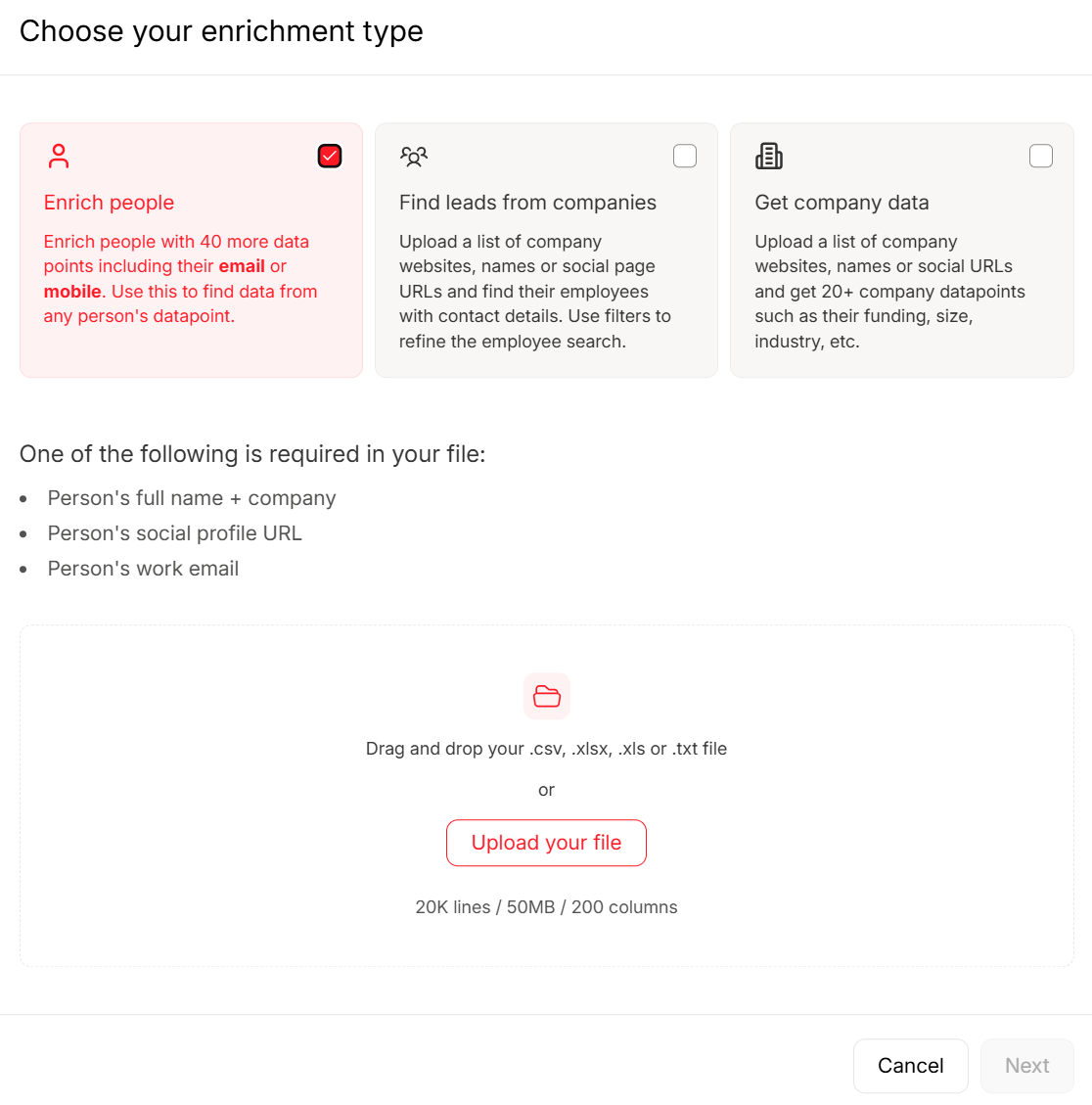
We've watched teams launch beautiful nurture sequences only to see bounce rates above 35% on the first send. One customer, Meritt, had exactly this problem - a 35% bounce rate - before switching to Prospeo's email verification and dropping it to under 4%. The sequence didn't change. The data did.
Before you spend a single hour writing nurture copy, verify your list. Upload a CSV, run it through verification, and remove the invalids. It takes minutes and saves your domain reputation.
Go Beyond Email: Multi-Channel Nurturing
Email is the backbone, but it shouldn't be the only channel. The best nurture programs use surround-sound orchestration - multiple channels triggered by lead behavior, not just a calendar.
| Channel | When to Activate | Example Trigger |
|---|---|---|
| Always on | Any lead enters the funnel | |
| Retargeting ads | Mid-funnel evaluation | Pixel fires on /pricing without conversion |
| SMS | High-intent signals only (requires consent) | Demo request or 3+ pricing page visits |
| Direct mail | Enterprise deals with 5+ person buying committees | Lead score crosses 50 but no demo booked |
| Sales call | BOFU engagement | Lead score crosses MQL threshold or engages with ROI calculator/demo video |
The key is triggering channels based on engagement signals, not blasting every lead across every channel simultaneously. And don't forget post-sale nurturing - onboarding sequences, adoption check-ins, and expansion campaigns use the same principles. The best teams nurture across the entire customer lifecycle, not just pre-sale.
Five Mistakes That Kill Your Pipeline
Mistake 1: Treating nurturing like a newsletter. A monthly newsletter isn't a nurture campaign. It's scheduled content with no behavioral logic. Real nurturing branches based on what a lead does - opens, clicks, page visits, inactivity. If your "nurture" is the same email to everyone on the same schedule, you're sending spam with better formatting.
Mistake 2: One-size-fits-all drips. A technical buyer evaluating your API docs needs different content than a VP evaluating ROI. Tag leads by entry point and persona, then branch accordingly. Segmentation is the difference between a drip and a strategy.
Mistake 3: Email-only nurturing. If your entire nurture strategy lives in one channel, you're invisible the moment someone closes their inbox. Layer in retargeting, direct mail for enterprise, and sales calls triggered by lead score thresholds.
Mistake 4: Violating the 3:1 ratio. Three value touches before one ask. Most teams flip this - every email has a "book a demo" CTA. By email three, the lead has mentally unsubscribed even if they haven't clicked the button yet.
Mistake 5: Ignoring data quality. You can build the perfect sequence, nail the content mapping, and score leads flawlessly - and still fail because 30% of your emails bounce. Verify your list before you launch. Bad data doesn't just hurt one campaign; it damages your sender reputation for every future send.
Measure Pipeline, Not Open Rates
Vanity metrics aren't nurture KPIs. Open rates tell you about subject lines. Click rates tell you about copy. Neither tells you whether nurturing is actually generating revenue.
Three metrics that matter:
Pipeline influenced. How much pipeline touched a nurture sequence before converting? Compare nurtured vs. non-nurtured cohorts side by side. If you can't run this report, your attribution setup needs work before your nurture program does.
Sales cycle shortened. Are nurtured leads closing faster? Even a 10-15% reduction in cycle length compounds across your pipeline. For context, B2B website conversion benchmarks vary wildly by industry - B2B SaaS averages 1.1%, IT & Managed Services hits 1.5%, and Legal Services runs 7.4%. Your nurture program should be pushing those numbers up. If you want more context, compare against the average B2B lead conversion rate.
Dormant accounts reactivated. How many leads that went cold re-engaged after entering a nurture sequence? This is the metric that justifies re-engagement workflows and proves nurturing isn't just for new leads.
Look - most teams don't have a nurturing problem. They have a data quality problem wearing a nurturing costume. If your bounce rate is in the double digits, stop tweaking subject lines and go clean your list. The best-written email in the world doesn't matter if it lands in a spam folder or never gets delivered at all.
Nurturing a 5-10 person buying committee means you need direct contact data for every stakeholder - not just the one who downloaded your guide. Prospeo gives you 300M+ profiles with verified emails and 125M+ direct dials, so you can run multi-threaded nurture campaigns across the entire account.
Stop nurturing one contact when you need to win the whole committee.
FAQ
How long should a lead nurture campaign last?
Most B2B nurture campaigns run 30 days for mid-market deals and 60-90 days for complex enterprise sales with multi-stakeholder buying committees. Start with a 30-day, 6-8 email sequence and extend based on engagement data - if clicks stay above 3% past email eight, keep going.
How many emails should be in a nurture sequence?
Six to eight emails works for most B2B deals with 30-day sales cycles. Enterprise deals with 60+ day evaluations can stretch to ten. Engagement drops sharply after email eight, so adding more rarely helps - trim instead of padding.
What's the difference between lead nurturing and lead generation?
Lead generation fills the top of your funnel with new contacts; lead nurturing moves those contacts toward a buying decision through sequenced, behavioral communication. Gen creates the audience, nurturing builds the relationship. You need both sharing the same content strategy.
How do I know if my nurture campaign is working?
Compare pipeline influenced and sales cycle length for nurtured vs. non-nurtured cohorts. If nurtured leads convert at a higher rate and close 10-15% faster, your program is delivering ROI. Open rates and click rates are useful for optimizing individual emails but don't measure business impact.
What's the best way to verify emails before a nurture campaign?
Tools like Prospeo offer free tiers that let you clean a small list before your first send. The key is running verification that catches not just invalid addresses but also catch-all domains, spam traps, and honeypots - those are the ones that silently wreck your sender reputation without showing up as hard bounces.