

How to Respond to Buying Signals: Scripts, Timing Rules, and the Mistakes Killing Your Pipeline
The average business takes 47 hours to respond to a new lead. That's almost two full days of silence while your buyer keeps shopping. Knowing how to respond to buying signals - and how fast - is the difference between pipeline and "we went with someone else."
Here's the thing: sales cycles compressed from 11.3 to 10.1 months last year, and 83% of buyers define requirements before they ever talk to sales. By the time you see a signal, you're already late. Hot signals like demo requests and pricing intent need a response within 15 minutes. Use the signal to shape your message, never to announce your tracking. And treat stacked signals as priority - single signals are usually noise.
The Signal-Response Matrix
Not all signals deserve the same urgency. A pricing-page visitor who's also engaging with emails is a different animal than someone who downloaded one ebook.
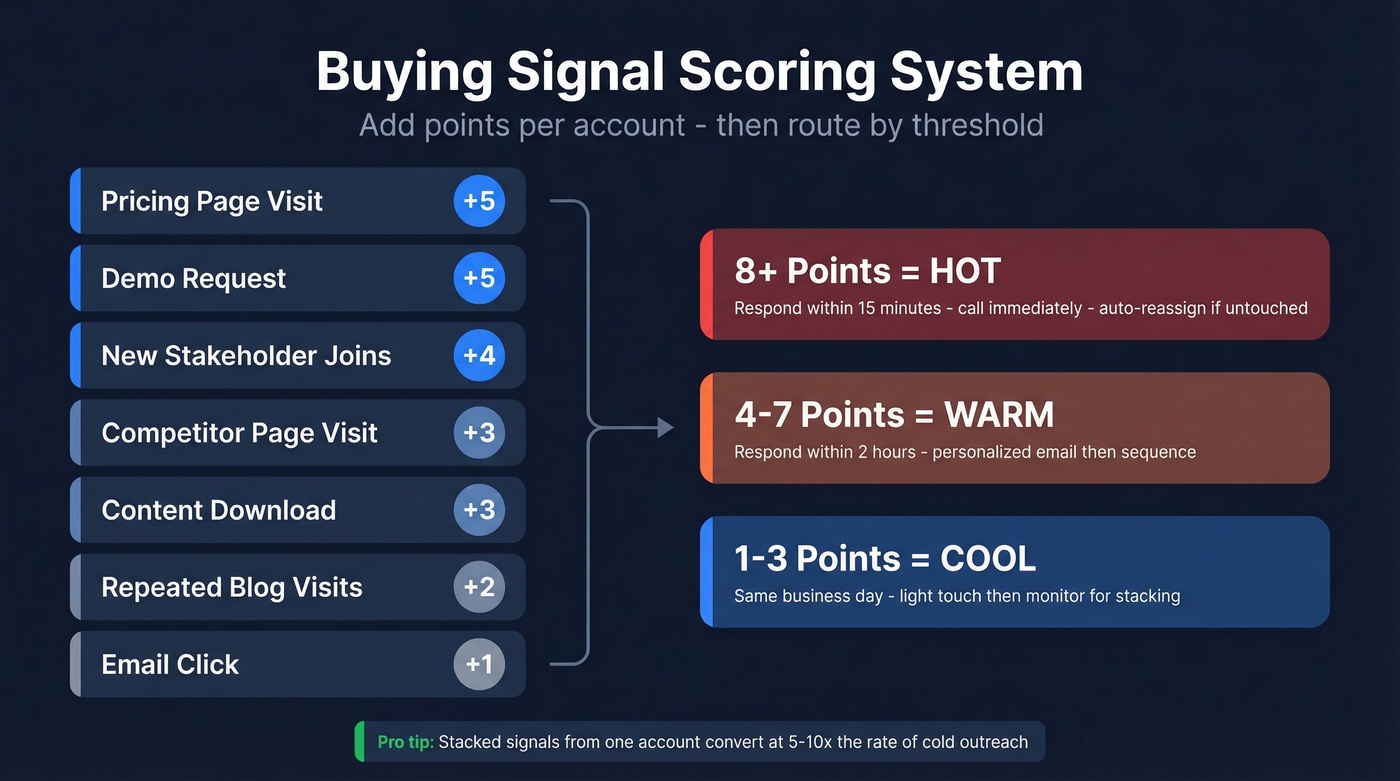
Responding within 5 minutes makes you 21x more likely to qualify a lead than waiting 30 minutes. That's why the matrix below is built around urgency, not "interesting activity." We've seen teams waste entire afternoons chasing single-signal accounts that never convert. The math changes when you stack signals: two or three indicators on the same account convert at 5-10x the rate of cold outreach, which is why the scoring layer below exists in the first place.
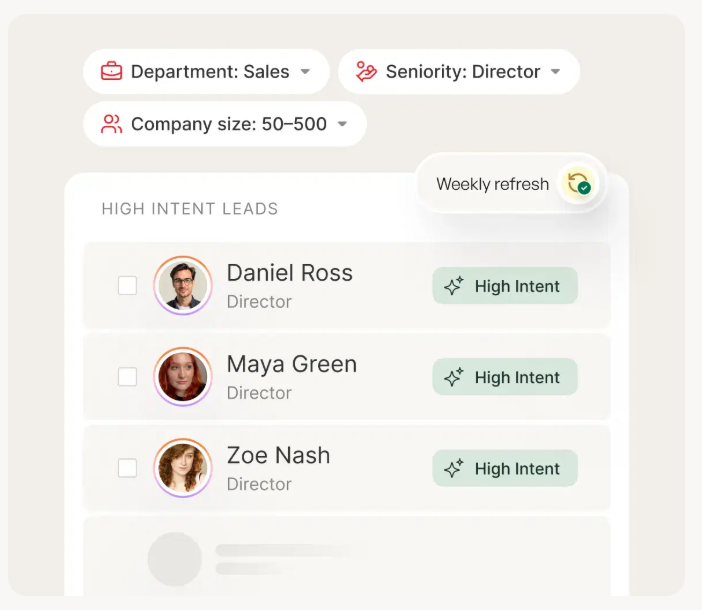
| Signal | Strength | Response Window | Recommended Action |
|---|---|---|---|
| Demo request | 🔴 Hot | Within 15 min | Call immediately, confirm time |
| Pricing page + repeat opens | 🔴 Hot | Within 15 min | Personalized email, then call |
| Asks about pricing on call | 🔴 Hot | Real-time | Pivot to discovery/close |
| Competitor comparison page | 🟠 Warm | 1-2 hours | Email addressing their eval |
| Multiple content downloads | 🟠 Warm | 2 hours | Nurture with relevant asset |
| New stakeholder joins thread | 🟠 Warm | 2 hours | Loop in, re-anchor value |
| Single blog visit | 🔵 Cool | Same day | Add to sequence, monitor |
| Growth signals (hiring, funding) | 🔵 Cool | Same day | Trigger-based outreach |
A simple scoring layer makes this operational: +5 pricing page, +5 demo request, +3 competitor page, +3 content download, +1 email click, +2 repeated blog visits in a short window, +4 new stakeholder. 8+ points = Hot, 4-7 = Warm, 1-3 = Cool. (If you need more examples, see buying signals and buyer readiness signals.)
One more reality check: most B2B deals are buying-committee deals. When you see multiple stakeholders engaging, treat it as intent - not "extra contacts."
Scripts by Signal Type
Rule number one: use the signal to choose the angle, not to narrate the surveillance. "I saw you on our pricing page" is a fast way to make a serious buyer feel handled.
Pricing Intent (Email)
Subject: Quick question about [use case] Hi [Name] - quick one. When [role] teams evaluate [category], it usually comes down to [Problem A] vs. [Problem B]. If you tell me which one matters more, I'll send the exact breakdown (and pricing approach) that tends to fit. Open to 15 minutes this week?
Repeat Engagement (Call Opener)
"Hi [Name], it's [You] at [Company]. Can I borrow three minutes? If it's not relevant, I'll hang up. The reason I called: we've been helping [their role] teams in [industry] fix [specific problem] without [common downside]."
The three-minute time-box gives the prospect an easy exit. If they stay, you've earned the next question. We've tested this opener across dozens of campaigns, and the "I'll hang up" line consistently disarms gatekeepers better than any clever hook. (More openers: how to start conversations and talk tracks.)
Competitor Evaluation (Email)
Subject: [Competitor] vs. [You] - the real tradeoff Hi [Name] - if you're comparing options, here's the tradeoff that actually matters: [Differentiator framed as a choice]. If you want, I'll walk you through where we win, where we don't, and what I'd pick in your shoes. 15 minutes?
Response Timing SLAs
Speed wins because buyers reward it. Outreach data puts it bluntly: 78% of buyers purchase from the first vendor to respond.
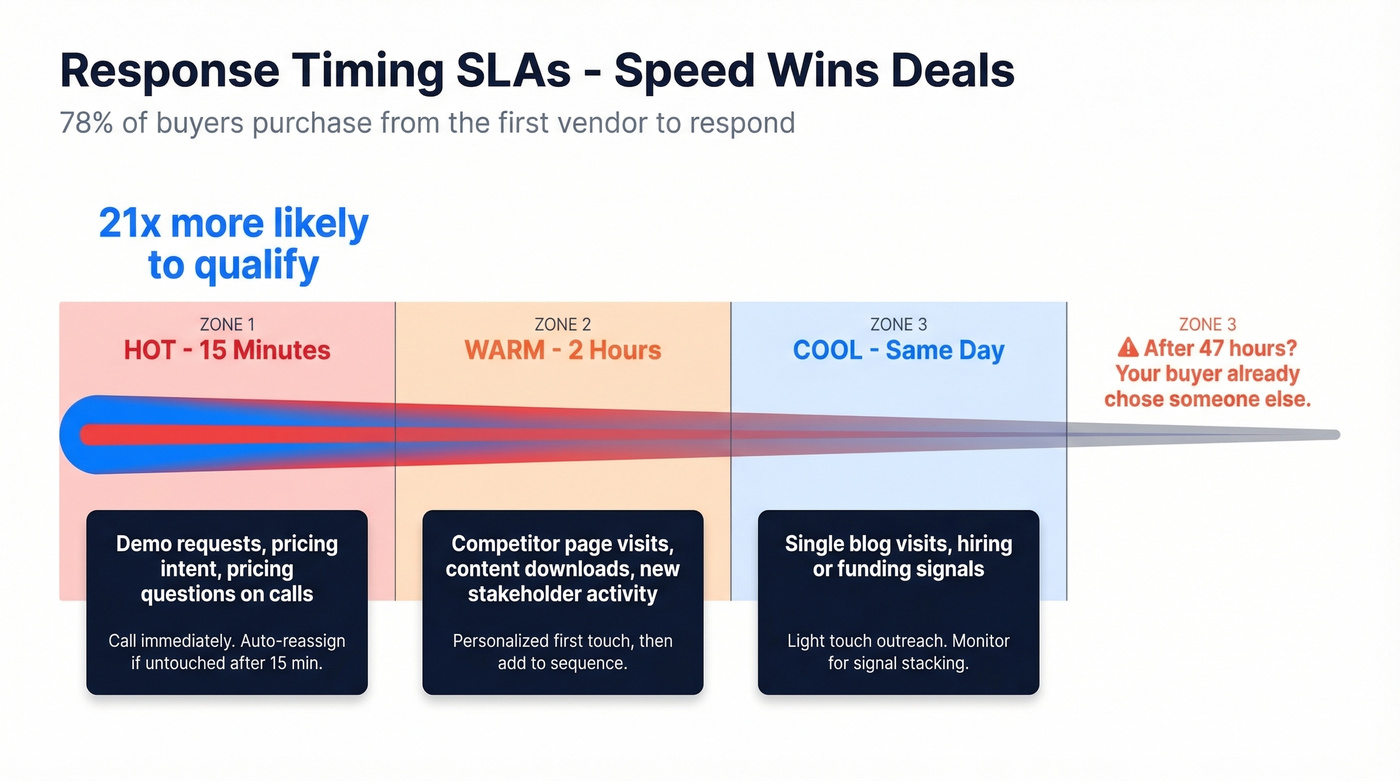
Use SLAs that match signal decay:
- Hot: within 15 minutes. Alerts plus automatic reassignment if untouched.
- Warm: 2 hours. Personalized first touch, then sequence.
- Cool: same business day. Light touch, then watch for stacking.
In our experience, the biggest "hidden leak" isn't effort - it's deliverability. A 15-minute response is worthless if your email bounces and your call list is full of dead numbers. One team we worked with had a sub-10-minute response time but a 32% bounce rate, which meant a third of their "fast responses" never arrived. They didn't have a speed problem; they had a data quality problem (see sales data quality and email response time).

A 15-minute response means nothing if your email bounces. Prospeo delivers 98% email accuracy and 125M+ verified mobile numbers on a 7-day refresh cycle - so your fast responses actually land.
Fix the data before you fix the speed.
Five Mistakes That Kill Pipeline
1. Treating all signals equally. Score them and only escalate when the account crosses your Hot threshold. Otherwise you're just creating busywork. (If you want a deeper scoring model, use buyer intent signals.)
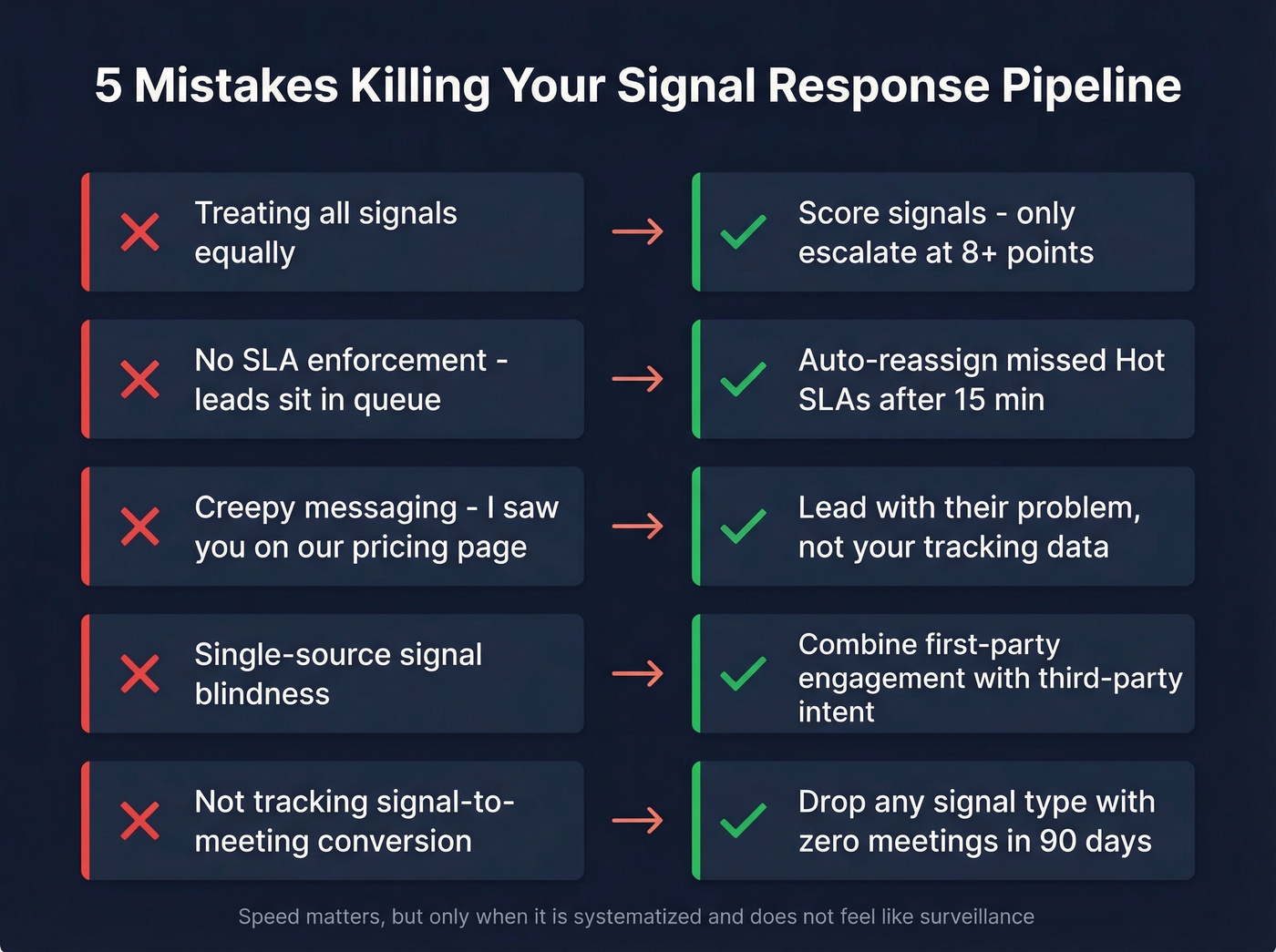
2. No SLA enforcement. Alerts are table stakes. Missed Hot SLAs should auto-reassign, not sit in a queue while a rep finishes lunch.
3. Creepy messaging. Talk about outcomes and tradeoffs, not what you "noticed." The consensus on r/salestechniques is the same: speed matters, but only when it's systematized and doesn't feel like surveillance.
4. One-source signal blindness. Combine first-party engagement with third-party intent so you don't chase ghosts or miss buyers researching elsewhere. (Related: B2B intent data and B2B intent signals.)
5. Not tracking signal-to-meeting. Keep the signals that book meetings. Delete the ones that only create activity. If a signal type hasn't produced a meeting in 90 days, drop it from your scoring model.
Tools for Signal Detection
Intent data is a $4.49B market in 2026, and the pricing spread is wild. Bombora typically runs $12K-$40K/year. 6sense can reach $300K+ in enterprise setups. Apollo starts at $49/user/month. Databar is a budget-friendly option at $39/month.
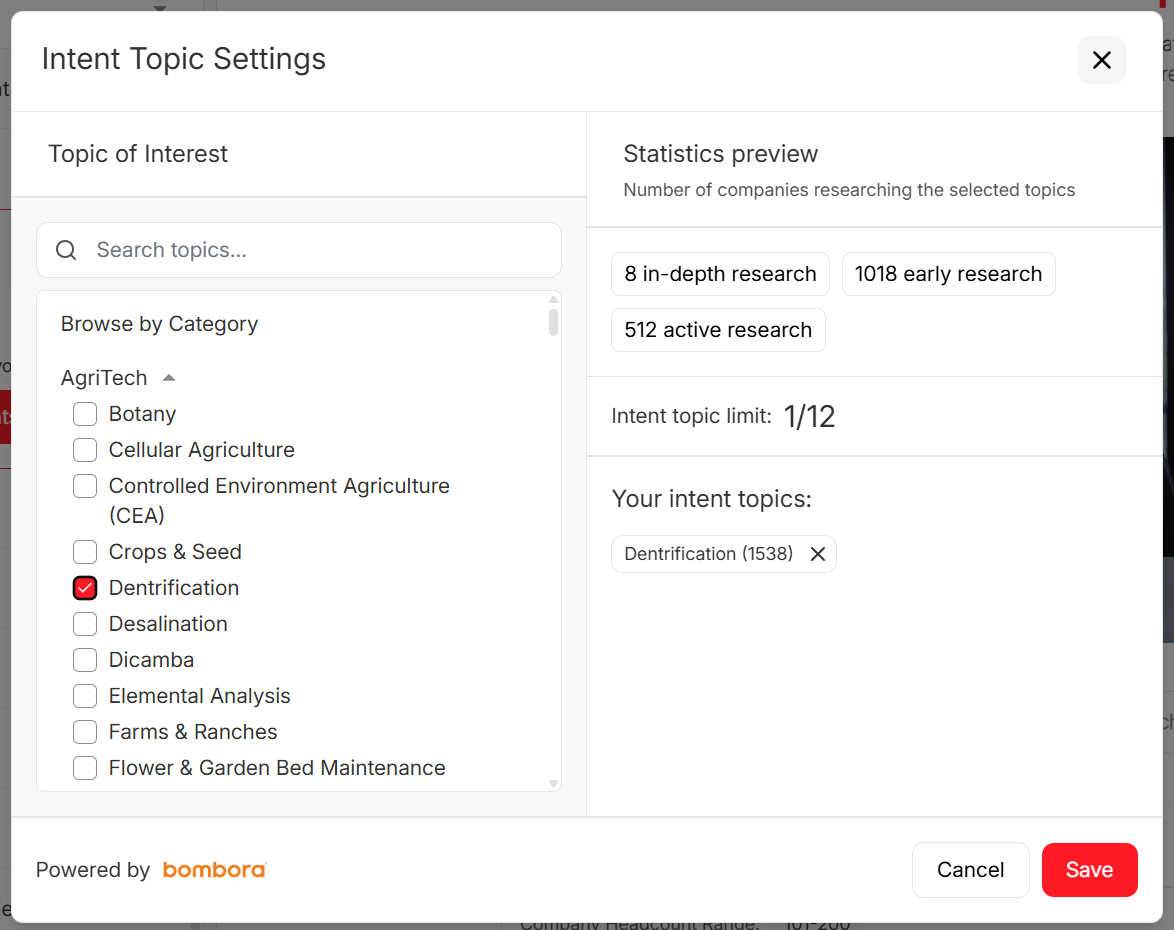
For teams that want intent detection and verified contact data in one place, Prospeo pairs Bombora-powered intent across 15,000 topics with 300M+ profiles, 143M+ verified emails, and 125M+ verified mobile numbers - all on a 7-day refresh cycle. Credit-based pricing starts at roughly $0.01 per email with a free tier, so you're not signing a six-figure contract just to test the workflow. (If you’re comparing vendors, start with buyer intent tools and intent data platforms.)
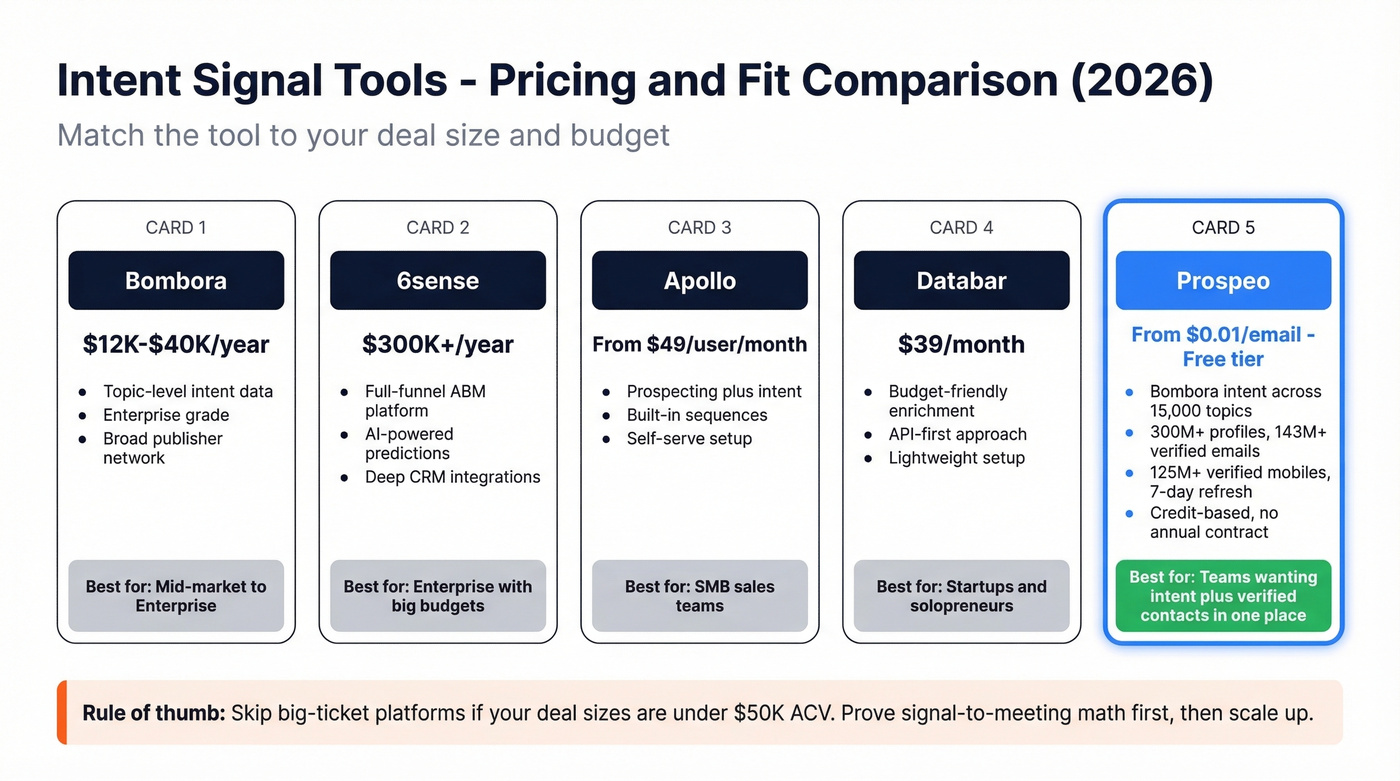
Skip the big-ticket platforms if your deal sizes are under $50K ACV. You'll burn more on the tool than you'll close in the first year. Start with something self-serve, prove the signal-to-meeting math, then scale up.
Layer Bombora-powered intent across 15,000 topics with 300M+ verified profiles - starting at $0.01/email. Spot stacked buying signals and reach the right person with direct dials and emails that don't bounce.
Stop chasing dead signals. Start reaching real buyers.
Generate Signals, Don't Just Detect Them
Let's be honest: if your deal sizes sit below five figures, you don't need a "perfect" intent stack. You need a repeatable way to start conversations. The best reps prompt buying signals by sending a sharp point of view that forces a response - "Why?", "How?", "When?", "How much?" (For outbound structure, see buying signals for outbound.)
That approach wins more deals than staring at dashboards, especially as buyers do more work before they ever reply. Responding to buying signals matters. But creating the conditions that produce them is the real edge.
FAQ
What are the strongest buying signals in B2B sales?
Demo requests, pricing intent - meaning pricing page visits combined with repeat email engagement - and multi-stakeholder activity like a new decision-maker joining the thread. Score these as Hot and respond in minutes, not hours. Stacked signals from the same account convert at 5-10x the rate of cold outreach, which is why single-signal chasing rarely pays off.
How fast should you respond to a buying signal?
Hot signals demand a response within 15 minutes. Teams that hit this window are 21x more likely to qualify the lead. Warm signals get 2 hours; cool signals get same business day. A "hot" action from Monday is often dead by midweek, so enforce SLAs with auto-reassignment rather than hoping reps check their alerts.
What tools detect buying signals automatically?
Bombora ($12K-$40K/year), 6sense ($300K+/year enterprise), Apollo (from $49/user/month), Databar ($39/month), and Prospeo (intent data across 15,000 topics plus verified contacts at ~$0.01/email with a free tier). The best setup pairs intent detection with accurate contact data so you can act immediately - not spend 30 minutes hunting for an email address.
How do you avoid sounding creepy when acting on intent data?
Lead with the prospect's likely problem or tradeoff, never with what you tracked. Instead of "I noticed you visited our pricing page," try "When [role] teams evaluate [category], it usually comes down to X vs. Y - which matters more to you?" Let the signal inform your angle, not your opening line.