

The Data-Backed Inbound Sales Strategy That Actually Converts
Marketing hit the MQL target last quarter. SDRs started working the list and half the emails bounced. The other half went to people who'd downloaded a whitepaper six months ago and forgot your company existed.
That's the inbound plumbing problem - leads look good in the dashboard but fall apart on first contact. Let's fix your inbound sales strategy with numbers, not platitudes.
The Short Version
Three things separate teams that convert inbound leads from teams that waste them:
- Respond to every demo request within 5 minutes. Over 99% of companies don't.
- Score leads before your SDR touches them. A simple point system keeps reps focused on buyers, not browsers.
- Verify contact data before first outreach. A bounced email hurts deliverability and can kill the conversation before it starts.
Inbound Sales Benchmarks Worth Knowing
Most teams guess at what "good" looks like. Here's what the data actually says.
| Funnel Stage | Benchmark | Source |
|---|---|---|
| Visitor to demo request | Under 1% for sites with 25K+ visitors | Default (n=100) |
| Form fill to qualified | 85.9% | Chili Piper (4M submissions) |
| Qualified to meeting booked | 66.7% with scheduler vs 30% without | Chili Piper (4M submissions) |
| Visitor to qualified lead | 2.9% - 1.7% form, 1.2% call | Ruler Analytics (100M datapoints) |
Two things jump out. If you're converting more than 1% of 25K+ monthly visitors to demo requests, you're outperforming most B2B software companies. And the gap between 30% and 66.7% qualified-to-booked? That's mostly operational - scheduling friction, not lead quality.
We pulled these numbers from vendor reports so you don't have to dig through lead gates to find them.
The 5-Step Inbound Sales Playbook
1. Map Content to Buyer Intent
Datapad's CMO shared that intent-driven SEO content drives roughly 400 product signups per month - organic visitors arriving with purchase intent because the content matched their search behavior. Top-of-funnel content drives volume. Mid-funnel comparison keywords drive qualified traffic. Bottom-of-funnel pricing pages and case studies drive demo requests.
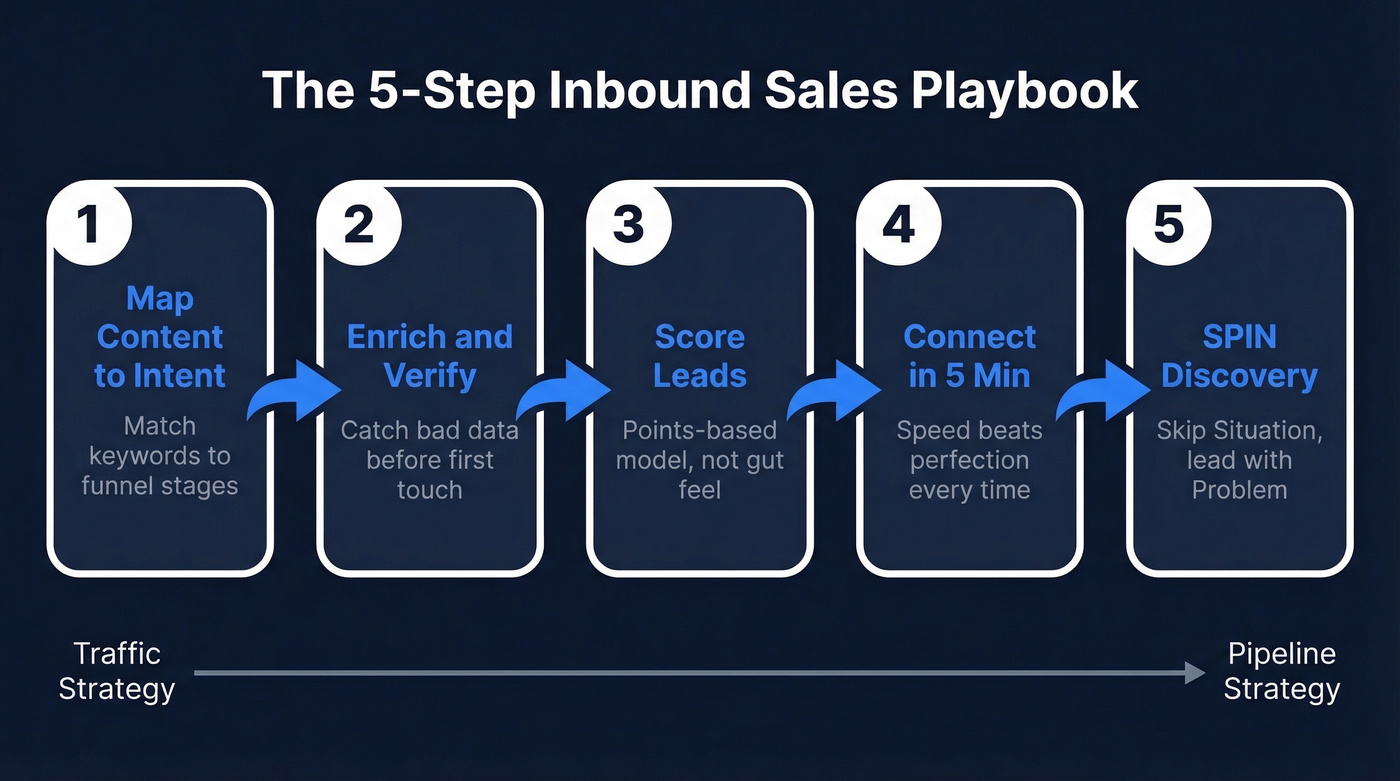
If your content calendar doesn't map to these stages, you've got a traffic strategy, not a pipeline strategy. Big difference.
2. Enrich and Verify Before First Touch
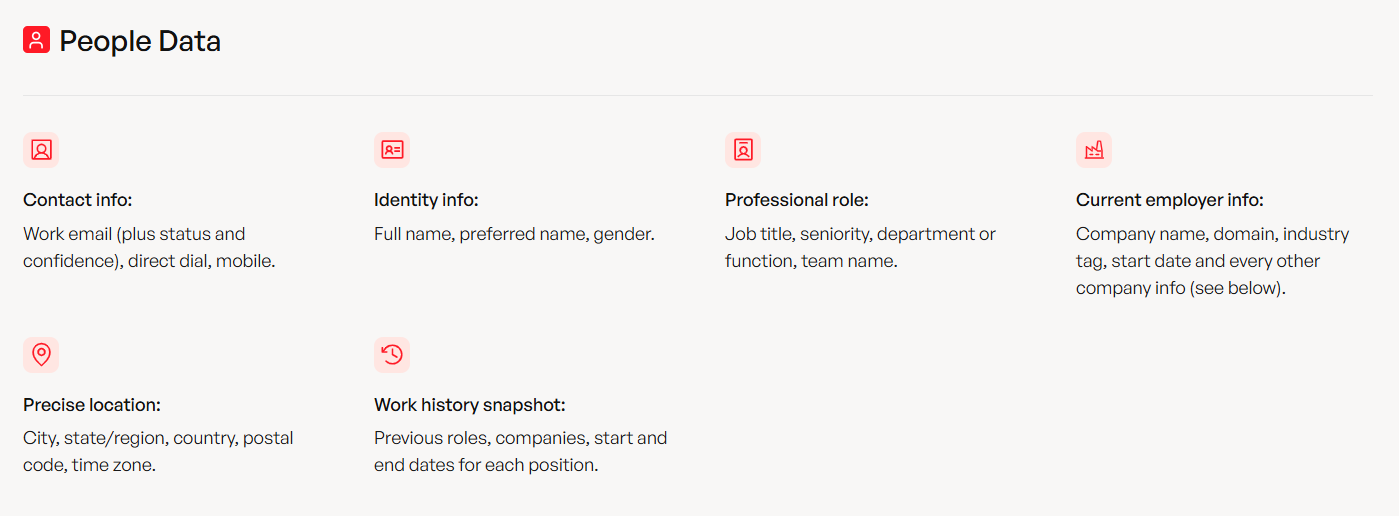
Inbound leads arrive with incomplete data. Wrong emails, missing phone numbers, outdated job titles. If your SDR's first action is sending an email to an unverified address, you're gambling with your domain reputation on every send.
We've seen teams cut their bounce rate from 30%+ to under 5% just by adding a verification step before first outreach. Running every inbound lead through Prospeo before first touch returns 50+ data points per contact with 98% email accuracy, catching bounces and bad data before they do damage. The free tier covers 75 email verifications per month plus 100 Chrome extension credits - enough to test the workflow on your next batch of form fills.
If you want to compare options, start with data enrichment providers and a dedicated guide to email bounce rate benchmarks.
3. Score Leads With a Simple Model
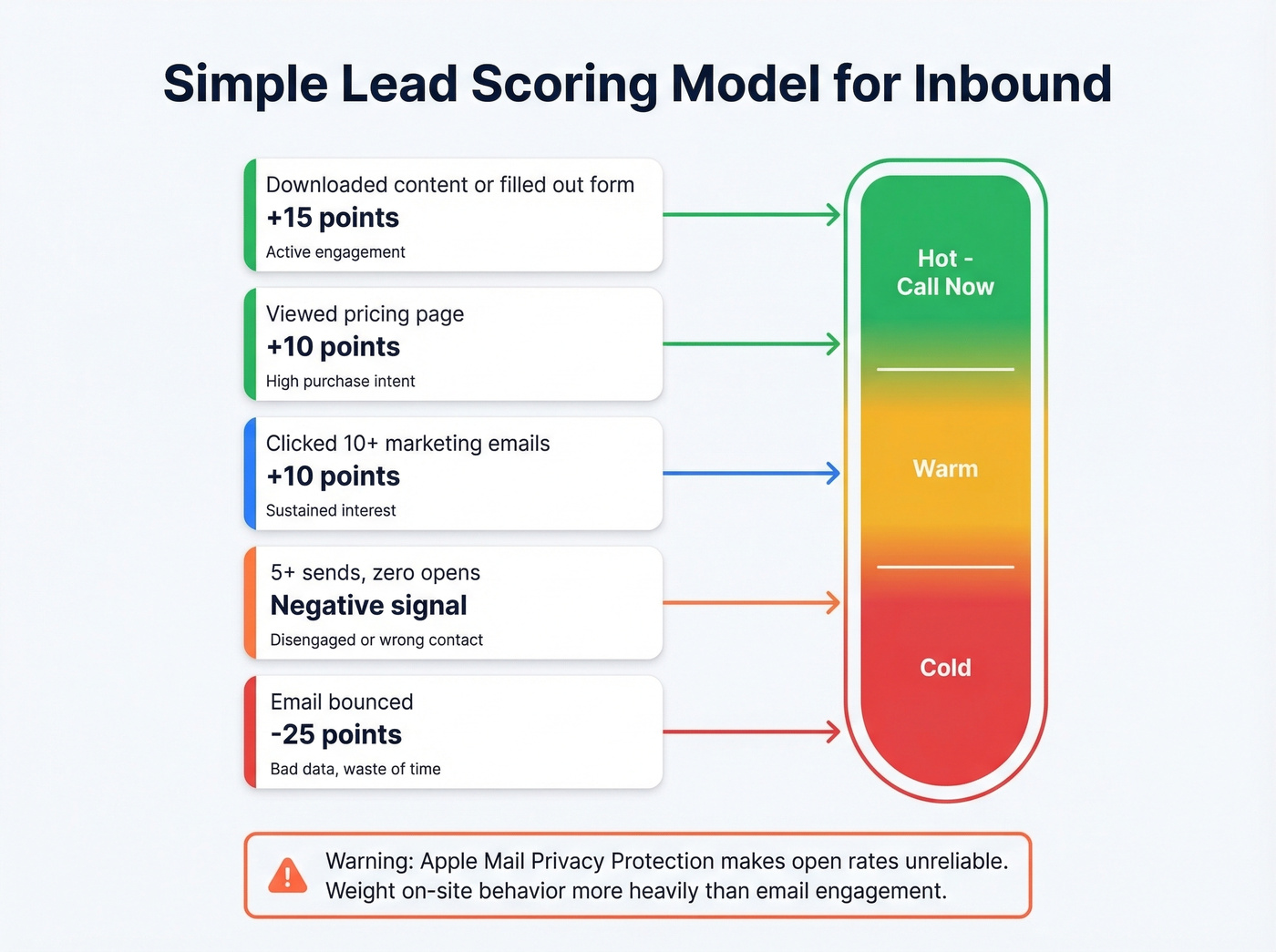
Not every form fill deserves a phone call. This point-based model, adapted from Belkins' HubSpot implementation, keeps reps focused:
| Signal | Points | Why |
|---|---|---|
| Viewed pricing page | +10 | High purchase intent |
| Downloaded content / form fill | +15 | Active engagement |
| Clicked 10+ marketing emails | +10 | Sustained interest |
| Email bounced | -25 | Bad data, waste of time |
| 5+ sends, zero opens | Negative signal | Disengaged or wrong contact |
One important shift: Apple Mail Privacy Protection has made open rates unreliable. Weight on-site behavior - pricing page views, feature page visits - more heavily than email engagement. If your scoring model still leans on opens, recalibrate now. (If you need a deeper framework, use a dedicated lead scoring setup.)
4. Connect Within 5 Minutes
Zero of the 114 companies called within 5 minutes.
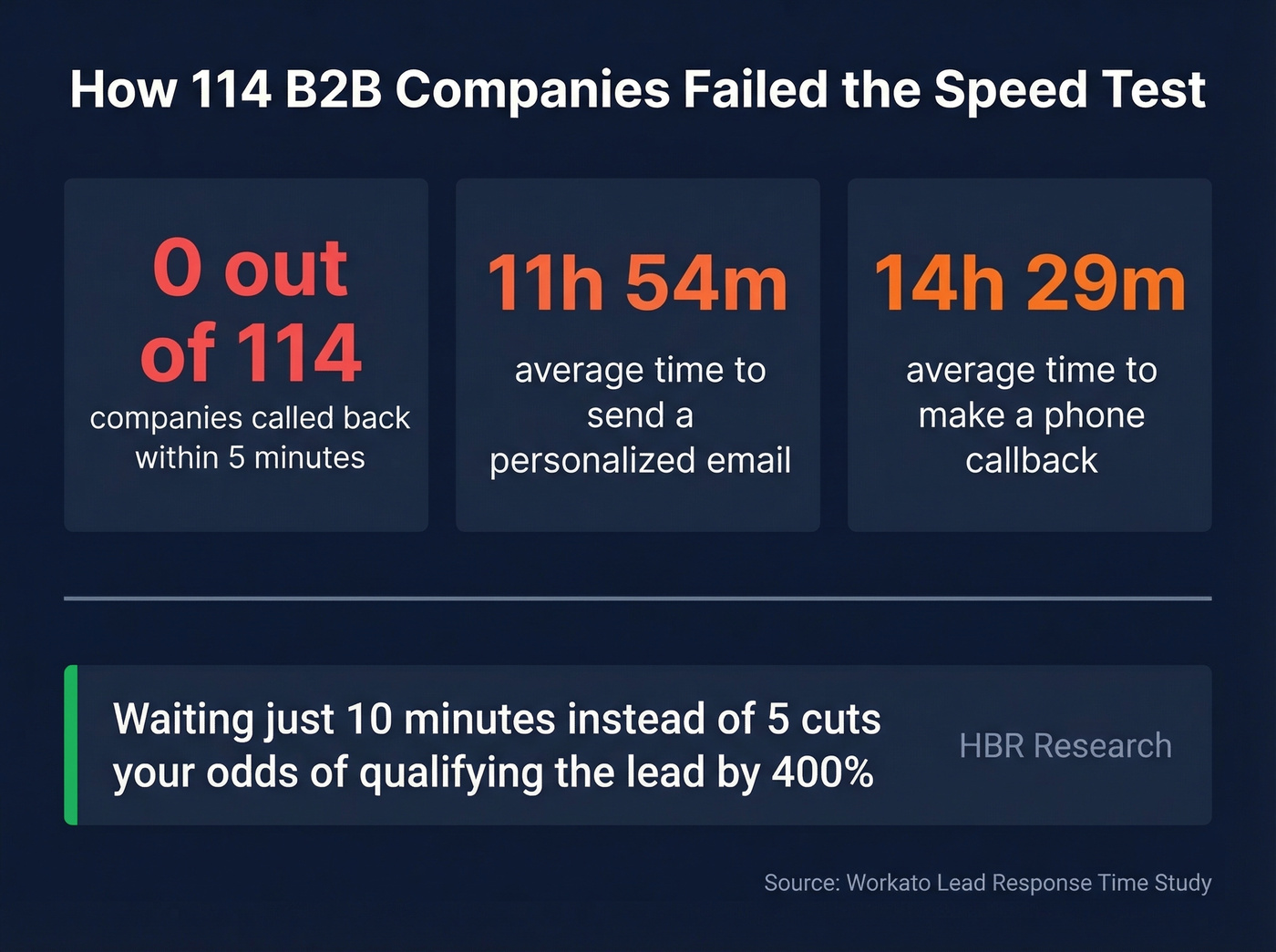
That's the headline from Workato's experiment, where they filled out demo requests at 114 B2B companies and measured response times. The average personalized email took 11 hours and 54 minutes. The average phone callback? 14 hours and 29 minutes. Nearly 1 in 5 companies never responded by email at all. Workato cites HBR research showing that waiting just 10 minutes instead of 5 decreases your odds of qualifying the lead by 400%.
If this is your bottleneck, treat it like a RevOps project: tighten lead status, fix lead generation workflow handoffs, and track sales operations metrics that expose routing lag.
5. Run Discovery With SPIN - But Skip Situation
The SPIN framework - Situation, Problem, Implication, Need-payoff - comes from research across 35,000+ sales calls. For inbound leads, skip Situation entirely. These people already know their situation. They've self-educated and filled out a form.
Instead of: "So tell me about your company."
Lead with: "What's breaking in your current process?"
Problem and Implication questions get to value faster. Respect the homework your buyer already did.
If you want a tighter question bank, pull from proven discovery questions and keep a discovery call script handy for new reps.

A bounced email on an inbound lead is a wasted opportunity. Prospeo enriches every form fill with 50+ verified data points - 98% email accuracy, direct dials, updated job titles - so your SDR's first touch actually lands. 75 free verifications/month, no contract.
Stop gambling your domain reputation on unverified inbound leads.
Speed-to-Lead Is the Highest-Leverage Fix
On r/sales, SDRs describe receiving 15-30 signup leads per day - delivered 24 hours after the prospect actually signed up. That's not a sales problem. That's a routing problem.
In our experience, the teams that fix routing first see the biggest conversion jumps - before they touch messaging, scoring, or anything else. The operational fixes are straightforward: adding a form scheduler doubles conversion from roughly 30% to 66.7% per Chili Piper's data. Removing a redundant second form fill increases conversion by about 50%. Default claims their routing customers convert up to 70% more visitors to demos than the industry average.
Here's the thing: none of this requires new software. Most CRMs already support instant lead assignment. The problem is that nobody's configured it.
Inbound vs. Outbound: When Each Wins
If your average deal size is under $25K and you've got decent organic traffic, you probably don't need outbound at all yet. Inbound costs 62% less per lead and generates 54% more volume per widely cited HubSpot data. Nurtured inbound leads buy 47% more per Annuitas Group research.
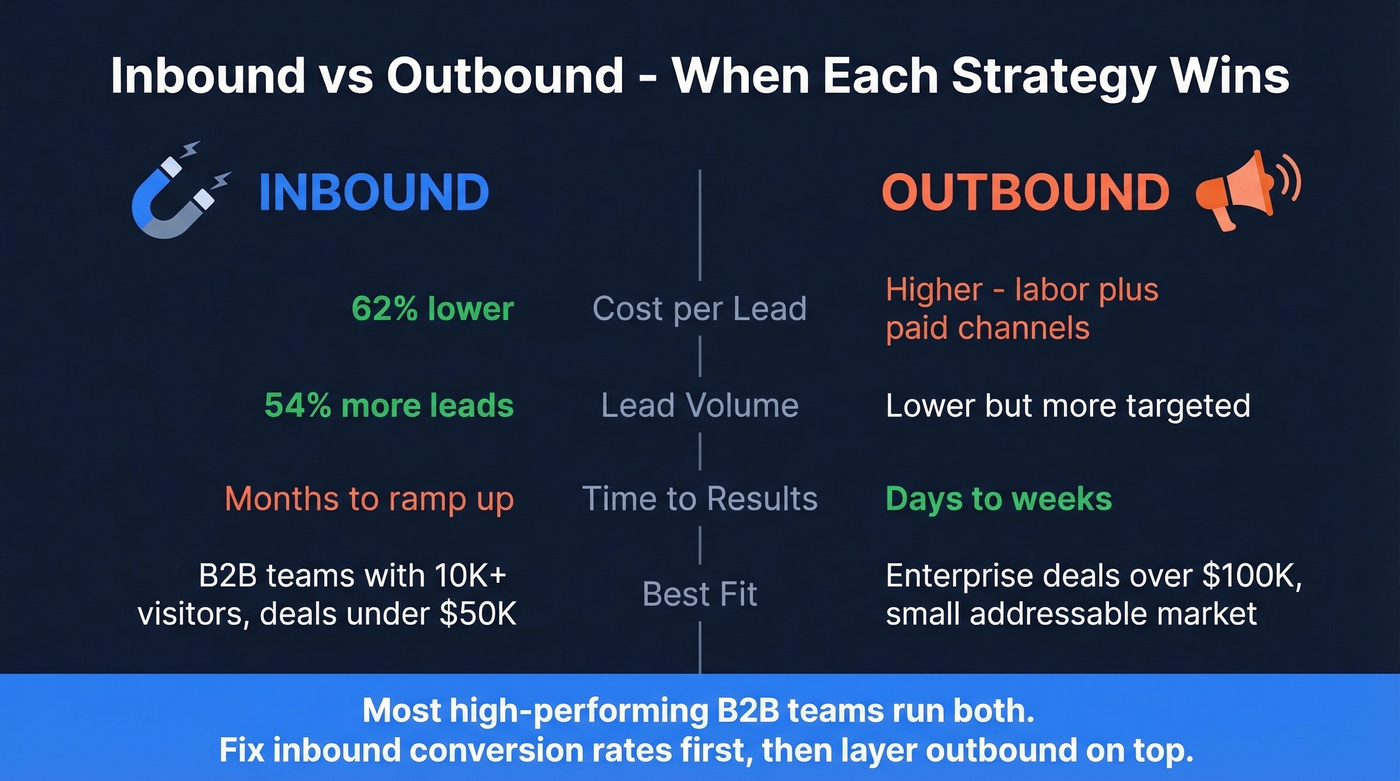
| Factor | Inbound | Outbound |
|---|---|---|
| Cost per lead | 62% lower | Higher - labor + paid channels |
| Lead volume | 54% more | Lower, more targeted |
| Time to results | Months | Days to weeks |
| Best fit | B2B teams with 10K+ visitors, deals under $50K | Enterprise deals over $100K, small addressable market |
But inbound isn't free. A practitioner on r/b2bmarketing reported 80-100 qualified inbound leads with a 20-25% conversion rate and still called the ROI "relatively low." Inbound also demands constant content production - the SEO rankings driving your leads today decay without ongoing investment. Most B2B teams eventually layer outbound on top once the addressable market outgrows organic traffic alone. Skip outbound if you haven't maxed out your inbound conversion rates first.
If you're pressure-testing the economics, compare your funnel to the average B2B lead conversion rate and audit your funnel metrics before you add headcount.
Your Inbound Sales Tool Stack
You need four tools working together, not ten collecting dust.
CRM: HubSpot's free tier handles most early-stage needs. Sales Hub starts around $20-$100+/seat/month depending on tier for sequences and automation. (If you're evaluating options, see examples of a CRM and broader contact management software.)
Form scheduler: Chili Piper typically runs $30-$100+/seat/month depending on package. That 30% to 66.7% conversion lift from instant booking pays for itself in the first week for most teams.
Data enrichment and verification: Prospeo's free tier covers 75 emails/month plus 100 Chrome extension credits, with paid plans at roughly $0.01/email. It returns 50+ data points per contact with 98% email accuracy, plus Bombora-powered intent signals across 15,000 topics for prioritizing in-market leads.
Outbound layer (when ready): Once inbound is humming, tools like Instantly or Smartlead handle cold email at scale. Both integrate natively with Prospeo for verified contact data. When you’re ready to operationalize outbound, start with a ranked list of SDR tools.
Speed-to-lead matters, but speed with bad data is worse than slow with good data. Prospeo's 7-day data refresh catches job changes and outdated emails before your reps waste their 5-minute window on a bounce. At $0.01 per email, verification costs less than one lost deal.
Verify every inbound lead in seconds - before your competitor calls them first.
FAQ
What's a good inbound lead conversion rate?
Across 100M+ datapoints, the average visitor-to-qualified-lead rate is 2.9%. For B2B software with 25K+ visitors, expect under 1% visitor-to-demo. Adding a form scheduler can double your form-to-meeting rate from roughly 30% to 66.7%.
How fast should you respond to an inbound lead?
Within 5 minutes - no exceptions. An experiment across 114 B2B companies found the average personalized email took nearly 12 hours. HBR research shows that waiting 10 minutes instead of 5 cuts your qualification odds by 400%.
How do you verify inbound lead data before outreach?
Run leads through an enrichment tool before first contact. This catches bounces, outdated job titles, and missing phone numbers before they damage your domain reputation. Prospeo's free tier covers 75 verifications per month - enough to validate a week's worth of form fills.
Does an inbound sales strategy work alongside outbound?
Yes - most high-performing B2B teams run both. Inbound handles demand capture from buyers already researching solutions, while outbound targets accounts that haven't entered the funnel yet. The key is treating each channel's leads differently: faster response and intent-based scoring for inbound, personalized sequences for outbound.