

Psychological Sales Tactics That Actually Work in 2026
You've read the same Cialdini summary on 15 different blogs. None of them told you which tactic to use in the first five minutes of a call versus when handling a pricing objection. Referrals convert at 25.56% while cold calls sit at 9.38% - that gap isn't about skill. It's social proof and trust doing the heavy lifting before a rep even opens their mouth.
Here's the thing: "dark psychology" is a content marketing gimmick. These are well-documented cognitive biases. Calling them "dark" makes for good YouTube thumbnails but bad sales strategy. 67% of buyers prefer self-service over talking to a rep at all, so persuasion techniques aren't about tricking people into calls - they're about removing friction from a decision someone already wants to make.
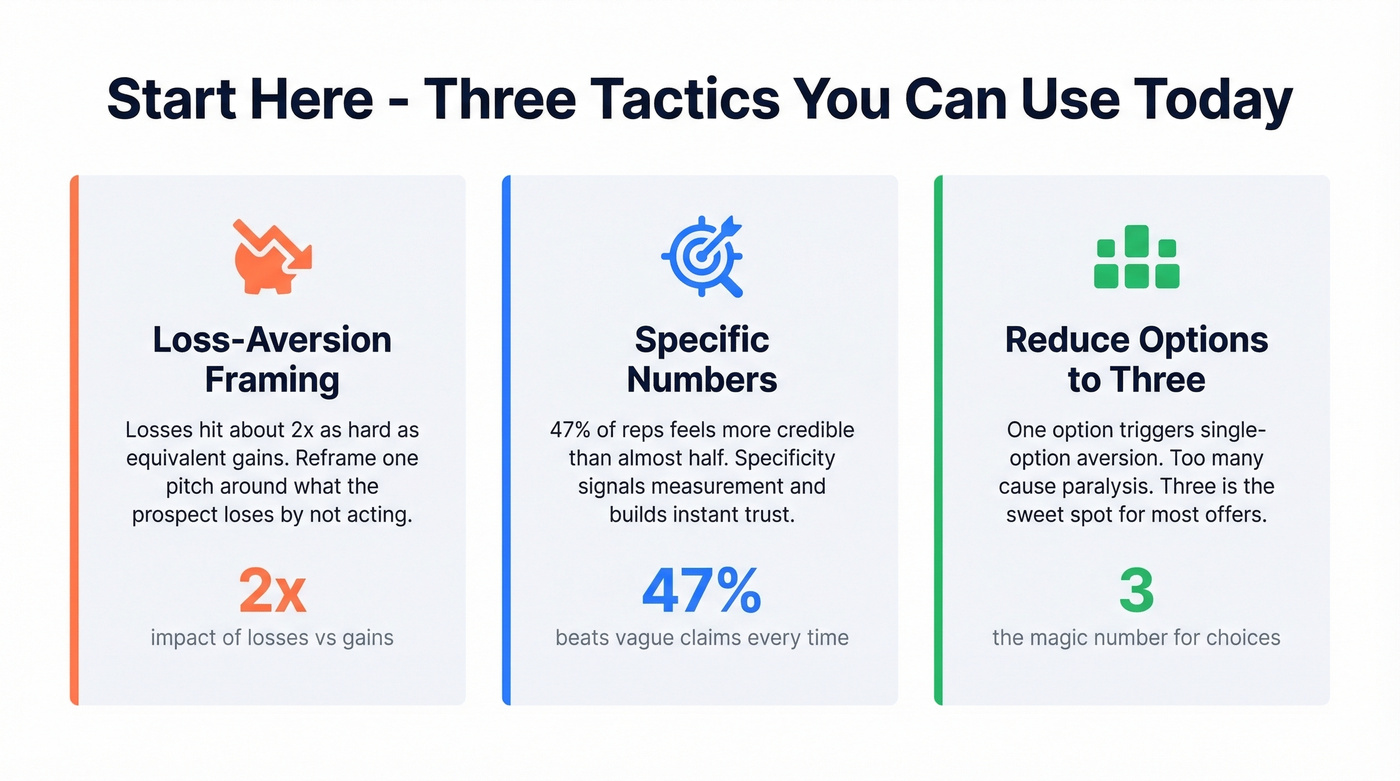
Three Tactics to Start With
- Loss-aversion framing - Losses hit about twice as hard as equivalent gains. Reframe one pitch around what the prospect loses by not acting.
- Specific numbers - "47% of reps" feels more credible than "almost half." Specificity signals measurement.
- Reduce options to three - One option triggers "single-option aversion," and too many create decision paralysis. Three is the sweet spot for most offers.
10 Tactics Mapped by Conversation Stage
Every competitor article lists these tactics in random order. We're organizing by when to deploy them - because timing determines whether a tactic builds trust or destroys it. (If you want the bigger system around this, map these into your sales process and sales funnel.)
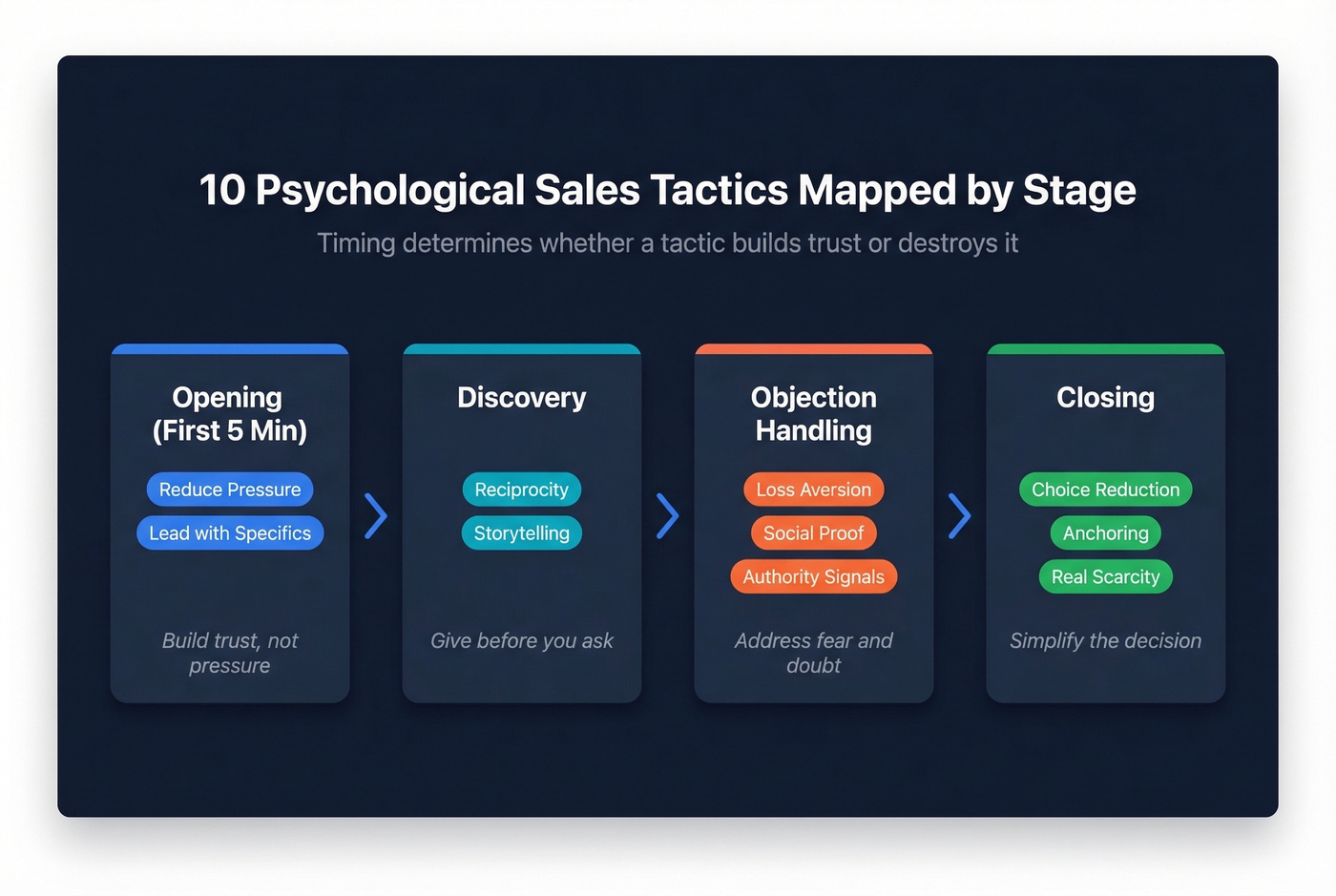
Opening (First Five Minutes)
Reduce pressure. A financial advisor shifted one opening question from a close-oriented frame to a consultative one and watched their consultation-to-client rate jump from 34% to 61% in three months. The mechanism is reactance: restrict someone's freedom to choose and they push back. We've watched reps kill deals in the first 30 seconds by leading with a close - forced urgency, assumptive closes before discovery, rapid-fire qualifying questions all trigger this same reactance response. The most effective openers feel like conversations, not interrogations, and that distinction alone separates top performers from everyone else on the floor. (If your team is still building fundamentals, start with a cold calling system and tighten your sales communication.)
Lead with specifics. "We helped 47% of our clients reduce churn by 12 points in Q1" lands harder than "we help lots of companies reduce churn." Vague claims signal you haven't measured anything. Precision builds credibility before you've earned it any other way. (This is also why data-driven selling tends to outperform "vibes-based" pitching.)
Discovery
Reciprocity. Give insight before asking for anything - a benchmark, a competitive observation, a framework the prospect hasn't seen. This creates a sense of obligation that makes the next ask feel natural rather than extractive. (Pair this with better discovery questions so the value lands.)
Storytelling. One customer story activates different cognitive processing than ten feature slides. Narrative creates empathy and memory. If you're leading discovery calls with a product deck, you're working against how brains actually process information. Let's be honest - nobody remembers your slide about "seamless integration." They remember the story about the VP who nearly lost a deal because her data was six weeks stale. (If you need a structure, borrow from sales deck storytelling.)
Objection Handling
Loss aversion. "You're leaving $40K in pipeline leakage on the table every quarter" hits harder than "you could gain $40K." Prospect theory is the lens here - use it in objections, not in your opener where it reads as fear-mongering. (For a full objection system, see how to reduce sales objection rate.)
Social proof - but enough of it. 87% of consumers read online reviews before making a purchase decision, and 49% trust those reviews as much as personal recommendations. Two testimonials on your sales page aren't enough. Aim for seven to nine with named companies and concrete outcomes. A practical move: ask the prospect on a 1-10 scale how ready they feel to move forward. Anything below 7 tells you exactly which objection to address next.
Authority signals. Third-party validation, certifications, named clients, analyst mentions. Referencing recognized logos, analyst rankings, or executive endorsements makes credibility tangible rather than claimed. Make sure these markers are visible before the prospect raises their first objection, not after. By then you're playing defense.
Closing
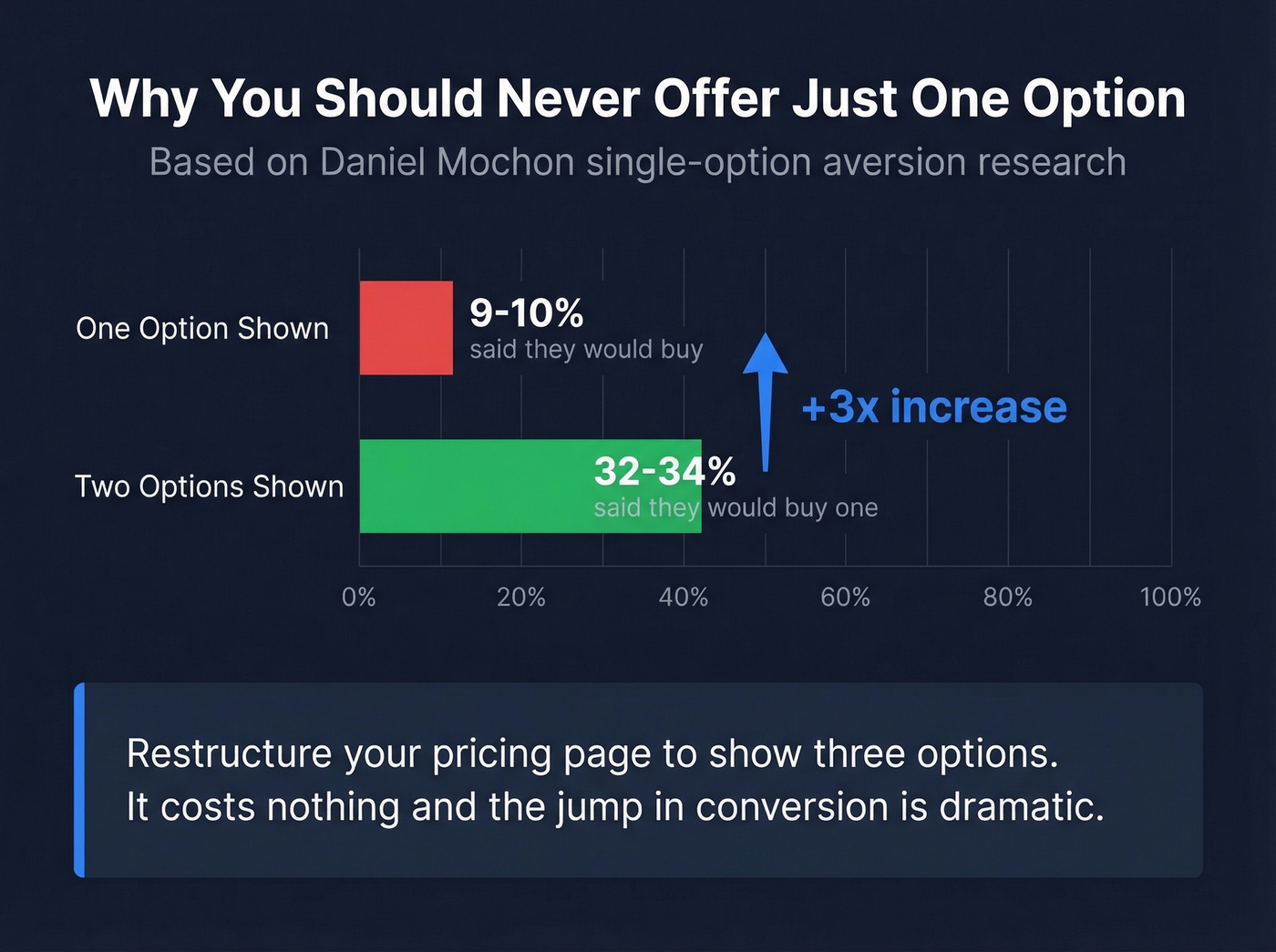
Choice reduction. Three options, not seven. Daniel Mochon's single-option aversion research found that when buyers saw one option, only about 9-10% said they'd buy; when shown two options, about 32-34% said they'd purchase one or the other. The jump is dramatic, and it costs you nothing to restructure your pricing page around it. (If you want a step-by-step close, use these steps to close a sale.)
Anchoring. An MIT and University of Chicago study found that women's clothing priced at $39 outsold the same item at $34. Adding the word "New" to a price tag lifted sales 8.5% with zero discounting. Small framing changes, big revenue impact. (If you want to go deeper on this specific mechanism, see anchor in negotiation.)
Scarcity - only when real. "We onboard three new clients per quarter and two slots are taken" is compelling when it's true. Manufactured scarcity backfires catastrophically. More on that next.

Stop paying for bounced emails. Prospeo verifies every contact with 98% accuracy, refreshed every 7 days.
Start free and only pay for verified contacts
When These Tactics Backfire
Your SDR just got ghosted for the third time this week after sending a "limited-time offer" follow-up. The prospect didn't respond because they've seen that move a hundred times. (If you need better follow-ups that don't rely on fake urgency, use these sales follow-up templates.)
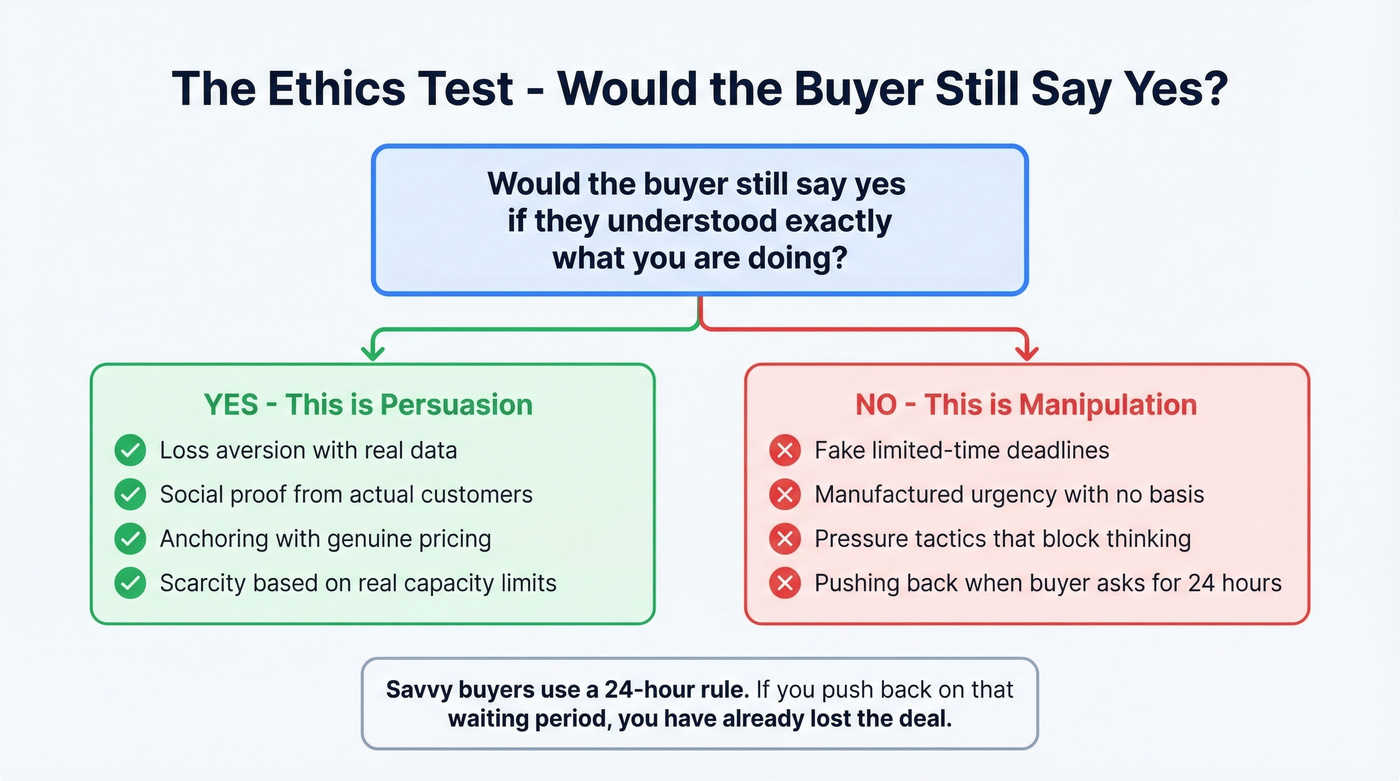
Savvy buyers use a 24-hour rule: if they feel compelled to say yes without thinking, they wait a day. If the seller pushes back on that waiting period, it's a red flag. The consensus on Reddit threads about sales psychology is consistent - manufactured urgency is the fastest way to lose a deal you almost had. In our own outreach testing, fake deadlines tanked reply rates by double digits. The ethical line is simple: would the buyer still say yes if they understood exactly what you were doing?
None of This Matters If Your Email Bounces
Let's break this down. You can master every tactic on this list, craft the perfect loss-aversion frame, stack social proof seven layers deep - and none of it matters if your message lands in a dead inbox. The single highest-leverage move is reaching the right person with verified contact data. Everything else is optimization on top of that foundation. We've seen teams using Prospeo's 98% verified email accuracy and 125M+ verified mobiles book 26% more meetings than those relying on stale databases - that's the difference between a brilliant pitch that lands and one that never gets heard. (If you're troubleshooting deliverability, start with email bounce rate and the full email deliverability guide.)

Your outbound is only as good as your data. With 300M+ profiles and verified emails at ~$0.01 each, Prospeo keeps your pipeline full.
Try it free - no credit card required
FAQ
Is using psychology in sales manipulative?
Ethical persuasion aligns the offer with what the buyer already wants. The test: would the buyer still say yes if they knew what you were doing? Yes means persuasion. No means manipulation. Transparency is the dividing line, not the technique itself.
Which tactic should I try first?
Loss-aversion framing. Reframe one pitch this week around what the prospect loses by not acting. It requires zero new tools, works whether you're closing $5K or $500K deals, and has the strongest behavioral research behind it.
How do I practice these without sounding scripted?
Pick one tactic per week and use it in every call. By Friday it won't feel rehearsed anymore. Record your calls if your team allows it - you'll catch the moments where a tactic lands naturally versus where it sounds forced, and that feedback loop is worth more than any training course.