Sales Intelligence Case Studies That Actually Show the Numbers
Most sales intelligence case studies are vendor marketing dressed up as evidence. Glossy PDFs, cherry-picked quotes, suspiciously round numbers. We dug into the actual metrics - sample sizes, before-and-after deltas, timelines - across four categories. Then we looked at why most teams never get these results.
The Headline Numbers vs. Reality
Across the case studies we reviewed, the wins are real: 91% improvement in connect rates, 762% growth, 77% more revenue per rep. Impressive stuff.
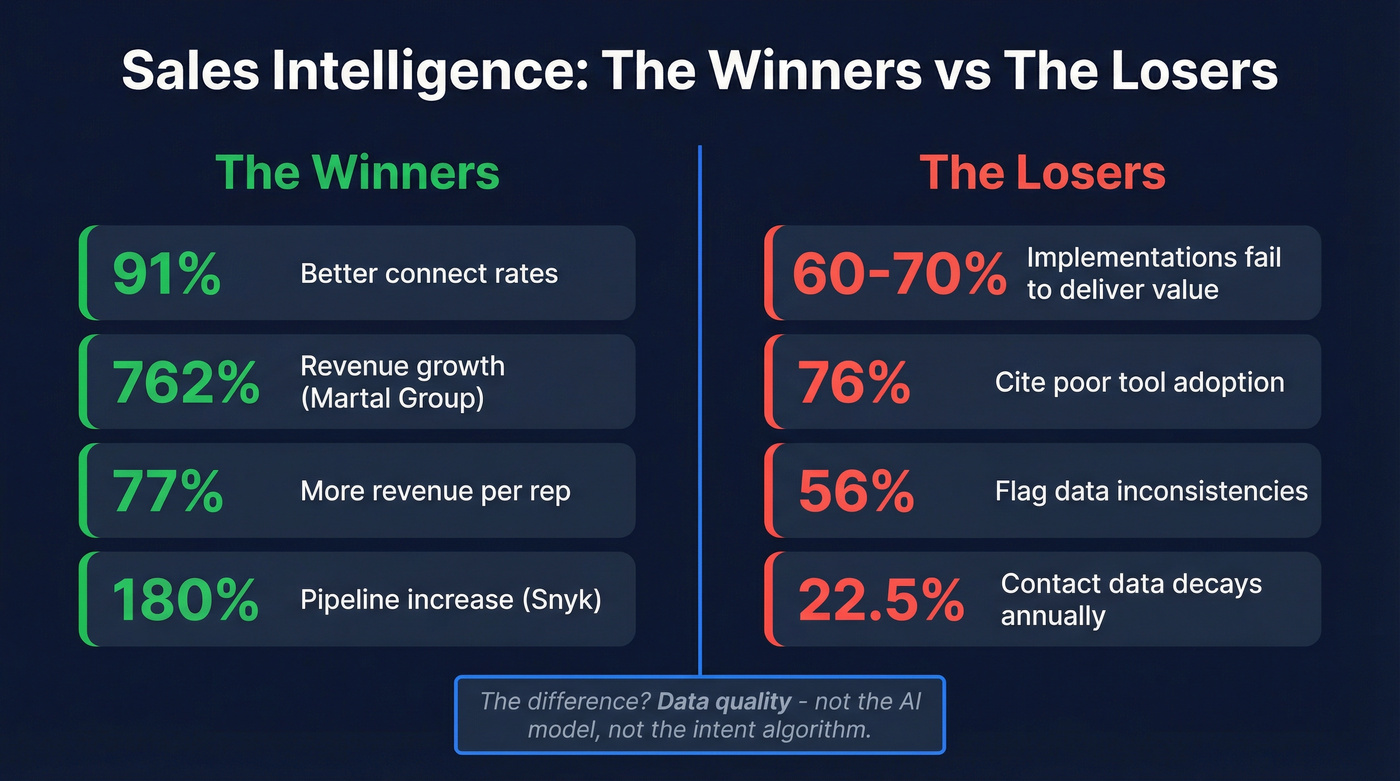
But here's the thing - 60-70% of sales intelligence implementations fail to deliver promised value. The difference between winners and losers almost always comes down to one boring, unsexy factor: data quality. Not the AI model. Not the intent algorithm. The data underneath it all.
The $8.5 Billion Question
The sales intelligence market hit $8.5B in 2025 and is projected to reach $29B by 2035. That's a lot of money chasing a simple promise: help reps sell more by knowing more.
The problem isn't ambition. Reps spend 60% of their time on non-selling tasks, juggle an average of eight tools to close deals, and 42% feel overwhelmed by their stack. Overwhelmed sellers are 45% less likely to hit quota. The industry keeps buying more intelligence tools while reps drown in the ones they already have.
Contact Data Results Worth Studying
ZoomInfo - Enterprise Impact at Scale
ZoomInfo's 2025 Customer Impact Report surveyed 11,000+ revenue professionals. The numbers are hard to argue with: connect rates jumped from 23% to 44%, win rates climbed from 32% to 46%, average deal size grew from $70K to nearly $100K, and sales cycles shortened by 21%.
The intent data angle deserves its own callout. One customer credited a single competitor-research alert with saving a $2M account. Another attributed 25% of their yearly quota to intent signals. These are vendor-selected anecdotes, sure, but they illustrate what happens when contact data and buying signals actually work together. ZoomInfo typically runs $15K-$50K+/year - serious money, but the enterprise ROI case is well-documented.
Prospeo - When Accuracy Fixes Everything Else
Enterprise case studies get all the attention. But some of the most dramatic improvements come from fixing something simpler: email accuracy.
Meritt tripled pipeline from $100K to $300K/week. Bounce rates dropped from 35% to under 4%. Snyk - with 50 AEs prospecting 4-6 hours weekly - saw bounce rates fall from 35-40% to under 5% and AE-sourced pipeline climb 180%, generating 200+ new opportunities per month.

These aren't intent-data stories. They're data-accuracy stories. When a third of your emails bounce, nothing downstream works - not your sequences, not your pipeline math, not your forecasting. A 98% accuracy rate and 7-day refresh cycle at roughly $0.01/email delivers pipeline impact that rivals platforms costing 50x more.

Meritt tripled pipeline. Snyk added 200+ opportunities per month. Both started by fixing one thing: bounce rates. Prospeo's 98% email accuracy and 7-day refresh cycle deliver the same foundation - at $0.01 per email.
Be the case study, not the cautionary tale.
Intent Data & ABM Results at Scale
Intent and ABM platforms produce the most eye-popping numbers - partly because they measure a different thing entirely. Contact data tools improve efficiency. Intent tools change who you target.
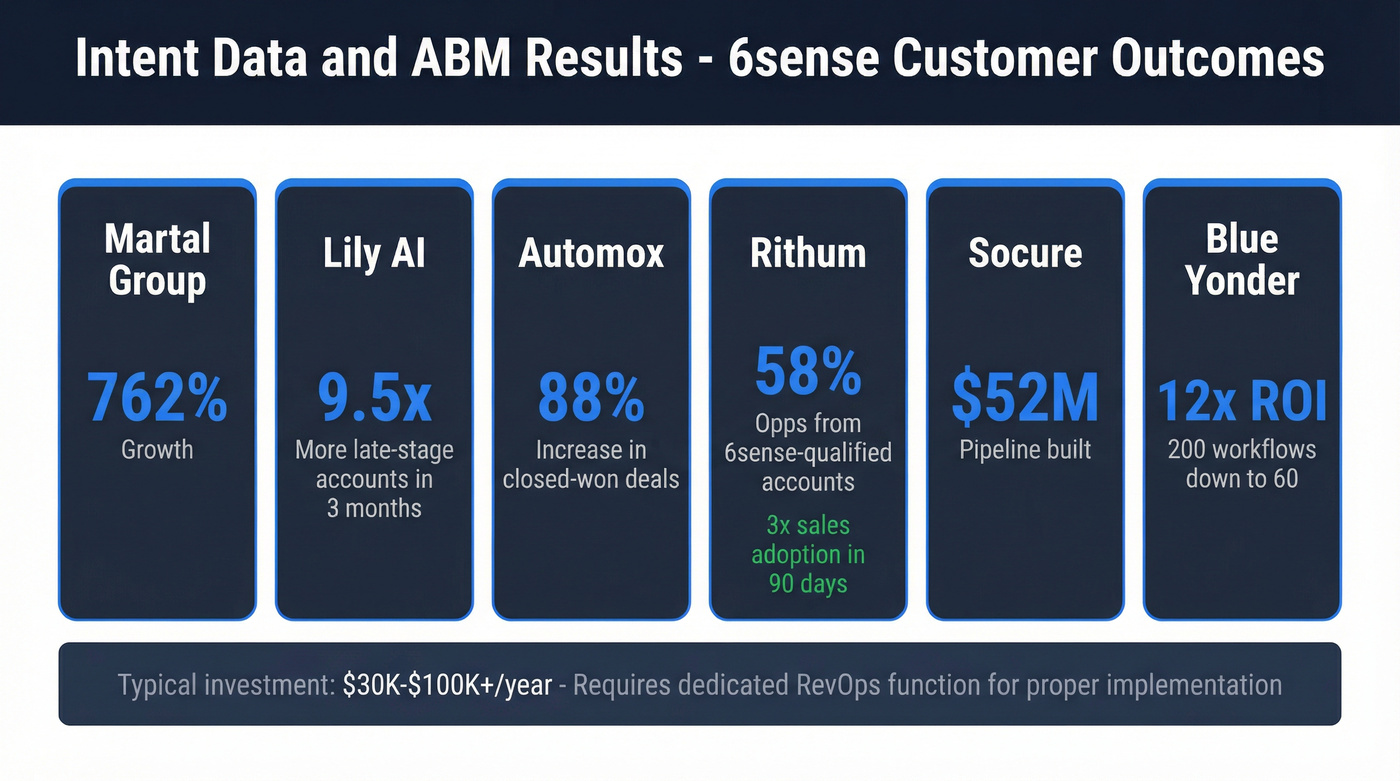
Martal Group reported 762% growth using 6sense's psychographic targeting. Lily AI saw a 9.5x increase in later-stage accounts within three months, with 69% of closed opportunities from accounts 6sense flagged as strong fits. Automox posted an 88% increase in closed-won deals.
The Breakthrough 2025 awards added more: Rithum drove 58% of all opportunities from 6sense-qualified accounts with 3x sales adoption in 90 days, Socure built $52M in pipeline, and Blue Yonder hit 12x ROI while consolidating 200 workflows down to 60.
6sense typically runs $30K-$100K+/year. These results come from organizations with the budget and ops maturity to implement ABM properly. Skip this category if your team doesn't have a dedicated RevOps function - you'll spend the first year configuring instead of selling. (If you want a reality check on platform fit, see 6sense vs ZoomInfo.)
Conversation Intelligence & AI Automation
Gong - Revenue Intelligence at Scale
Here's the macro context that makes Gong's data matter: average annual revenue growth decelerated to 16% in 2025, and quota attainment fell from 52% to 46%. Teams are trying to do more with less.
Gong's analysis of 7.1M sales opportunities across 3,600+ companies found that teams regularly using AI tools generate 77% more revenue per rep. Organizations embedding AI into GTM are 65% more likely to increase win rates. Their Hive case study showed +44% meetings booked, +30% pipeline growth, and 20-30% cost savings from tool consolidation. Gong typically runs around $100-$150/user/month. If you're evaluating this category, start with sales conversation science and a clear sales coaching plan.
Harley-Davidson - The Famous 2,930% Claim
This stat gets thrown around constantly without context. A 2017 HBR article documented how Harley-Davidson's NYC dealership used Albert (by Adgorithms) to increase leads by 2,930%. The "48 bikes in 48 hours" campaign nearly doubled previous sales records. After six months, the dealership attributed 40% of motorcycle sales to the AI platform.
It's a real result. But it's from 2017, and it's marketing automation rather than sales intelligence specifically. We include it because it still shows up in every "AI in sales" deck we've ever seen, and people deserve the actual context.
Why Most Implementations Fail
The case studies above are the winners. Let's talk about the losers.
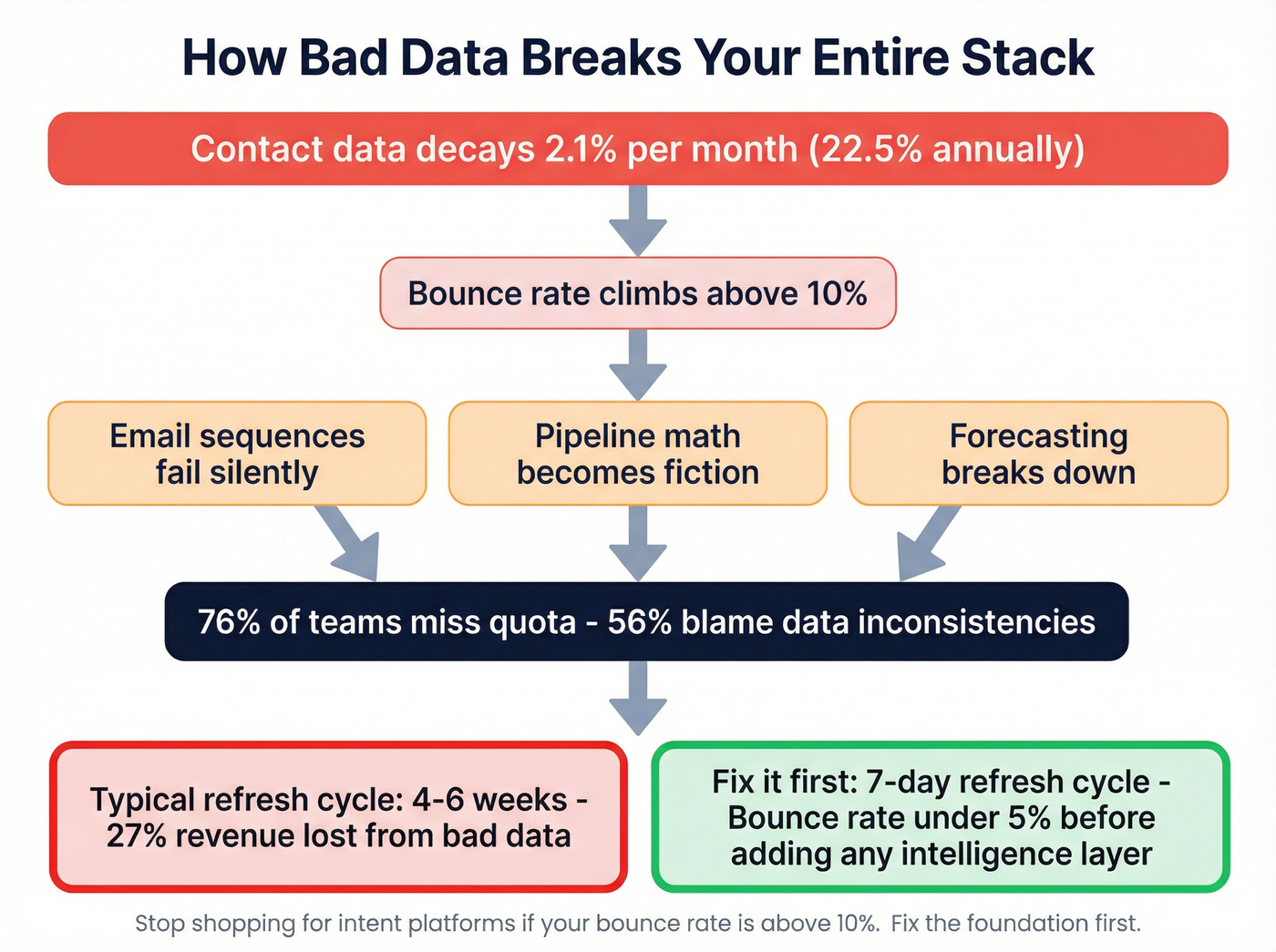
76% of companies cite poor tool adoption as a primary reason they miss quota. Fewer than 37% of reps actually use their CRM. And 56% of organizations flag data inconsistencies as a major obstacle. The consensus on r/sales echoes this constantly: teams buy sophisticated intent or AI tools on top of a rotten data foundation, then wonder why nothing works. (If this sounds familiar, start with CRM hygiene and CRM verify.)

B2B contact data decays at 2.1% per month - roughly 22.5% annually. US companies lose an estimated 27% of revenue from inaccurate customer data. When your database rots on a 4-6 week refresh cycle, every tool sitting on top of it inherits the rot. For the deeper benchmarks and math, see B2B contact data decay.
If your bounce rate is above 10%, stop shopping for intent data platforms. Fix your contact data first. The fanciest ABM tool in the world can't close a deal routed to a dead inbox. Start with hard bounces and a proper email deliverability checklist.
76% of teams miss quota because of poor adoption. 56% blame bad data. You don't need another intelligence layer - you need a data foundation that doesn't rot. Prospeo refreshes every 7 days while competitors wait 6 weeks.
Fix the data underneath before you buy anything else.
Tools Behind These Case Studies
| Platform | Category | Standout Metric | Best For | Pricing |
|---|---|---|---|---|
| Prospeo | Contact data accuracy | Pipeline $100K to $300K/wk (Meritt) | SMB/mid-market accuracy | Free tier; ~$0.01/email |
| ZoomInfo | Contact data + GTM | Connect rate 23% to 44% (11K+ survey) | Enterprise GTM | $15K-$50K+/yr |
| 6sense | Intent data + ABM | 762% growth (Martal) | ABM at scale | $30K-$100K+/yr |
| Gong | Conversation intelligence | 77% more revenue/rep (7.1M opps) | Revenue intelligence | ~$100-$150/user/mo |
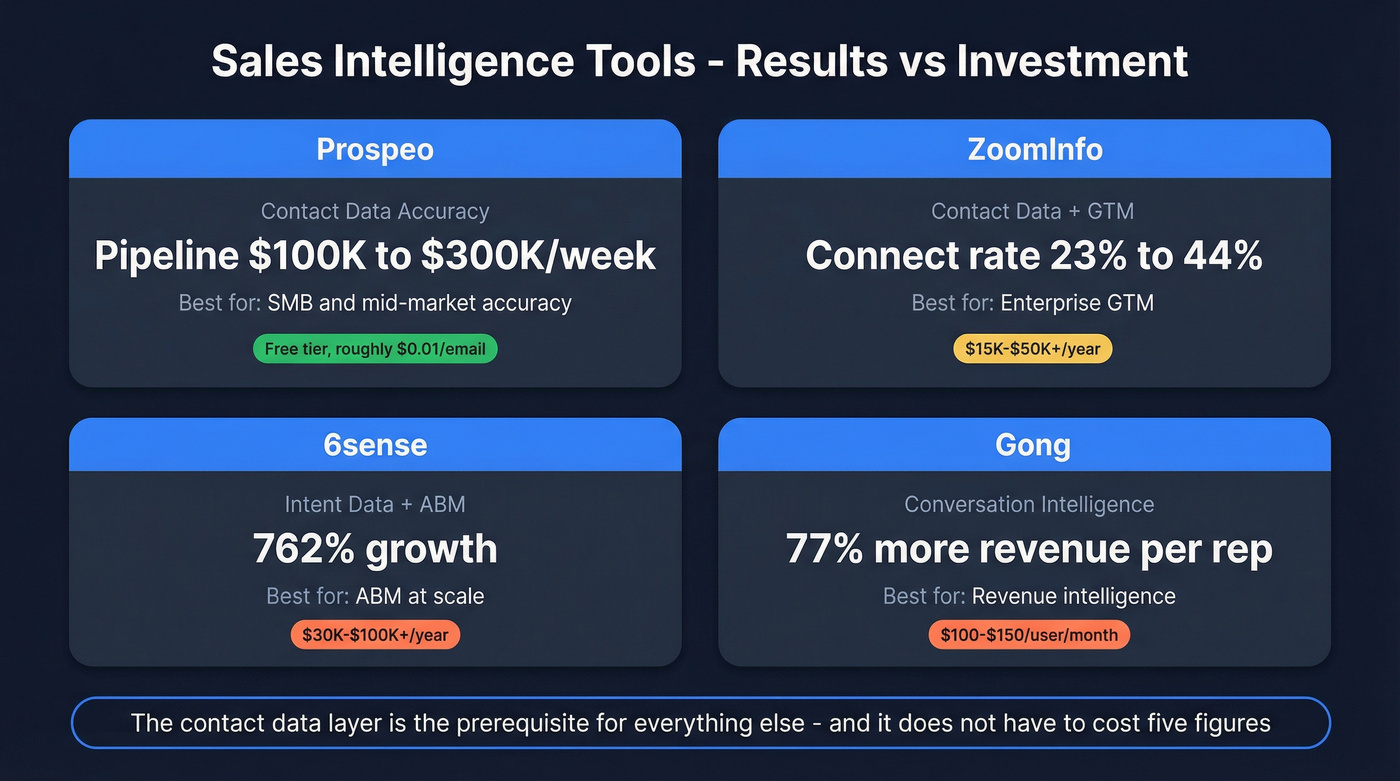
The pricing contrast tells its own story. Enterprise platforms deliver enterprise results - but the contact data layer, which is the prerequisite for everything else, doesn't have to cost five figures. If you're building a lean stack, use this sales tools checklist and map it to a modern B2B sales stack.
FAQ
How long before sales intelligence shows ROI?
Most documented results appear within 90 days. Lily AI saw 9.5x more later-stage accounts in three months. Rithum hit 3x sales adoption in 90 days. The prerequisite is clean data from day one - teams that skip data hygiene spend the first quarter debugging instead of selling.
What's the biggest reason sales intelligence fails?
Bad data. B2B contact data decays at 2.1% per month. If your bounce rate exceeds 5%, no amount of intent signals or AI scoring will save your pipeline. A 7-day refresh cycle exists specifically to solve this, because the intelligence layer is only as good as the data underneath it.
Where can I find reliable sales intelligence case studies?
Start with vendor impact reports that disclose sample sizes. ZoomInfo's 11,000-respondent study and Gong's 7.1M-opportunity analysis are the gold standard for transparency. Ignore any case study that doesn't share a timeline, a baseline metric, and a methodology note.
Is there a free tool to test sales intelligence ROI?
Prospeo offers 75 free email credits and 100 Chrome extension credits per month - enough to run a real outbound test. Compare your current bounce rate against 98% accuracy to calculate the pipeline impact before committing to a paid plan.