

Cold Email Subject Lines That Get Opened in 2026 (With Examples + Testing)
Most "cold email subject lines that get opened" advice is stuck in a world where open rates meant something.
In 2026, a big chunk of your "opens" are machines. Apple Mail Privacy Protection and security scanners inflate open rates, so you can "win" the subject line test and still lose pipeline.
I learned this the annoying way. We had a sequence where open rates jumped overnight - everyone celebrated - then meetings stayed flat for two weeks. Nothing was wrong with the copy. The measurement was wrong, and we optimized the wrong thing.
So yes, you'll get a swipe file of subject lines that reliably earn attention. But the real goal is delivered -> read -> replied -> booked, because you want emails that get opened and read, not just "opened" in a dashboard.
Hot take: if your average deal size is small, you don't need clever subject lines. You need clean data, clean deliverability, and a subject that looks like an internal note - not a campaign.
What you need (quick version)
The checklist (print this mentally)
- Keep it short: 2-4 words is the top-performing length in the Belkins/Reply.io analysis of 5.5M emails (46% opens at 2-4 words).
- Start with relevance, not hype: a 2-4 word relevance hook beats a "value prop" subject.
- Use a plain question when you've earned it: Belkins found question-based subject lines at 46% opens.
- Add connection when it's real: a company-name connection works when there's an actual reason you're reaching out.
- Personalize lightly: Belkins found 46% opens with personalization vs 35% without.
Mini decision tree (pick one path)
- If you have a real trigger (post, hiring, funding, tool change) -> Specific trigger/reference Example: "Re: SOC 2 vendor reviews" when they published a security post.
- If you don't have a trigger but you have a clear ICP pain -> 2-4 word relevance hook Example: "pipeline coverage" when you sell to RevOps and can point to a coverage gap.
- If you have a credible connection (customer overlap, integration, partner angle) -> Company-name connection Example: "[Co] x [Co]" when you share a customer or ecosystem overlap.
- If you're unsure you've got the right person -> Permission-based ask Example: "Right person?" when you're targeting a function with messy ownership.

Test first (in this order):
- 2-4 word relevance hook
- Plain question
- Company-name connection
The uncomfortable truth in 2026: open rates are a noisy KPI
Open rates aren't a reliable optimization KPI anymore. They still help with basic diagnostics (for example, "are we getting blocked?"), but they're awful for deciding which subject line wins - especially if your goal is humans reading your email, not security tooling.

Validity found Apple's Privacy Proxy made up 73.11% of pixel-loading "reading environments." Translation: a lot of "opens" happen inside an Apple-controlled black box, not on a human screen, and prefetch timing changes can make opens swing even when real engagement doesn't.
Brevo documents that its open rate calculation includes system-detected opens (including Apple MPP) and also includes bot activity - security scanners that load pixels, click links, and fire events like a real person.
Twilio calls these machine opens. They aren't fraud. They're just the modern inbox doing modern inbox things.
Even clicks get messy. Link tracking protection and security scanning can strip UTMs and trigger "clicks" during scanning, so if you're using click attribution to judge subject lines, you're grading your copy with a ruler that keeps changing length.
Here's what we track instead:
- Bounce rate (hard + soft): if this is high, subject lines aren't your problem.
- Spam complaint rate: the silent killer of inbox placement.
- Reply rate (overall): the metric that matters for cold outbound.
- Positive reply rate: "yes / interested / send info / loop in X."
- Meeting rate: the metric your CFO respects.
- Reply distribution by step: step 1 vs follow-ups tells you whether your opener or your follow-up system is weak.
Treat opens as a smoke alarm, not a steering wheel.

You just read it: skip subject line testing if your bounce rate is ugly. Prospeo's 5-step email verification delivers 98% accuracy - so your A/B tests measure copy performance, not list decay. At $0.01 per email with a 7-day data refresh, you're always sending to real inboxes.
Fix the list first. Then optimize the subject line.
Inbox placement checklist (before you touch subject lines)
If your email lands in spam or promotions, your "perfect" subject line is just decoration.

Do the boring stuff first.
This isn't just a Yahoo thing or a Gmail thing. The major mailbox providers have converged on the same reality for bulk senders: authenticate, make unsub easy, keep complaints low, and don't behave like a botnet.
Do this
- Keep spam complaints under 0.3%. Yahoo's threshold is explicit: <0.3%. Treat that as your universal ceiling.
- Authenticate properly: SPF + DKIM.
- Publish DMARC with at least p=none and ensure DMARC passes with aligned From: domain (relaxed alignment is usually acceptable). "DMARC exists" isn't the same as "DMARC passes." (If you need the full setup walkthrough, see SPF + DKIM.)
- Add one-click unsubscribe (List-Unsubscribe header) and a visible unsubscribe link.
- Honor unsubscribes within 2 days (Yahoo's requirement; other providers expect the same behavior).
- Send like a human, not a blast machine: consistent daily volume beats spikes. (More on safe volume in sending limits.)
- Keep your copy tight: Gong's benchmarks align with <=100 words and 3-4 sentences for cold email bodies. (If you want first-line ideas, use these email opener examples.)
A practical Gmail note: Gmail doesn't publish a single magic complaint number the way Yahoo does, but in practice the same rule holds - once complaints creep up, inbox placement drops fast and recovery is slow.
Don't do this
- Don't "warm up" by blasting junk to seed lists. That's how domains get burned. (If you're debating warmup, read Automated Email Warmup.)
- Don't buy giant lists and pray. Bad data turns into bounces, complaints, and throttling. (See B2B contact data decay before you scale.)
- Don't run open-based automations ("if opened, send X"). MPP triggers them randomly and you end up spamming the wrong people. (A better KPI stack is in email outreach analytics.)
One lever that moves deliverability immediately: verify your list before you send, so bounces don't poison your sender reputation and your tests don't get corrupted by list decay.
Skip subject line testing entirely if your hard bounce rate is ugly or you're getting throttled. Fix the list and the sending pattern first.
Cold email subject lines that get opened: the 2-4 word rule (and 6 more rules)
Seven rules. None of them require creativity.

They require restraint.
Rule 1: Lead with relevance in 2-4 words
Belkins' dataset is blunt: 2-4 words hit 46% opens. One-word subjects dropped to 38%, and once you get past 9-10 words you're down at 34-35%.
Why it works: it's scannable on mobile, it reads like a real internal note, and it signals "this is about your world."
Examples:
- "security review"
- "new hire ramp"
- "pipeline coverage"
- "SOC 2 question"
If you need context, put it in the first line of the email, not the subject.
Rule 2: Don't pitch in the subject (or the first sentence)
Gong's cold email analysis found pitching reduces replies up to 57%. That's not a rounding error. That's your pipeline disappearing. (If you want a full system, start with a B2B cold email sequence.)
Examples:
- Bad: "Cut onboarding time by 30%"
- Better: "onboarding question"
Rule 3: Use questions, but make them real questions
Belkins found question-based subject lines averaging 46% opens. The email has to deliver an actual question, not "Quick question" followed by a product dump.
Examples:
- "Right person for this?"
- "Worth exploring?"
- "Question on renewals"
Rule 4: Personalize lightly (and only when it's true)
Belkins found personalization lifted reply rate to 7% vs 3% without personalization. That's the difference between "nice activity" and "real pipeline." (Avoid the common traps in AI cold email personalization mistakes.)
Good personalization:
- Company name when there's a real reason: "[Their Co] x [Your Co]"
- A real trigger: "Re: your SOC 2 post"
Bad personalization:
- "Hey {{FirstName}}!!!" with nothing specific inside
Rule 5: Kill buzzwords. Use numbers only when the number is the point.
Gong found buzzwords and numbers reduce opens up to 17.9%. I've watched teams tank performance by "optimizing" subject lines into ad copy, then acting surprised when inbox placement and replies slide.
Buzzwords to kill on sight:
- "synergy"
- "transform"
- "ROI boost"
- "game-changer"
Numbers: default to no numbers unless the number is the point (for example, "SOC 2," "ISO 27001," "Q4 renewals").
Rule 6: Don't use empty subjects in cold outbound
Empty subjects inflate opens and drain replies. Gong-derived benchmarks show the tradeoff clearly: +30% opens but -12% replies.
If meetings are the goal, you want clarity and continuity, not a trick that makes your email look broken.
Rule 7: Match the subject to the first line (tight continuity)
If the subject is "security review," the first line should be something like:
"Noticed you're hiring security analysts - quick question about how you handle vendor reviews today."
Not:
"We're the leading AI platform for..."
Continuity reduces insta-deletes and earns replies even when opens stay flat.
The concept most subject line lists miss: "internal camouflage"
Internal camouflage is simple: write a subject that looks like it belongs in an internal thread - short, specific, operational.

If your subject reads like a banner ad, it gets treated like one.
Swipe file: cold email subject lines that get opened (by scenario)
Quick "pick one" decision tree:
- Have a real trigger? -> Specific trigger/reference
- No trigger, but clear pain? -> Relevance hook (2-4 words)
- Real connection? -> Company-name connection
- Unsure it's the right person? -> Permission-based ask
- Following up? -> Follow-up / bump / breakup
- Warm intro? -> Referral / forwarded feel
Micro-guidance that matters more than people admit: subject + preview text are a pair. On mobile, many recipients see the subject plus preview text and decide in under a second, so write the first line so it completes the subject naturally and doesn't start with "Hope you're doing well" (which is basically invisible at this point).
Also, avoid "Newsletter" as a cold subject. In a practitioner analysis of 2,500+ subject lines, it showed up as a worst-performing pattern because it signals low intent and "mass send."
Permission-based ask
Use these when you're not sure you've got the right person, or when the ask is sensitive (pricing, security, process changes). Keep the body equally respectful.
- "Right person?"
- "Wrong person?"
- "Worth a quick note?"
- "Quick question"
- "Can I ask?"
- "Who owns this?"
- "Point me to the owner?"
- "Is this on your radar?"
- "Should I close this?"
- "Ok to send details?"
Guidance: permission-based works best when your first line shows minimal homework (role + company context) and your ask is small.
Relevance hook (2-4 words)
These are your default A/B test candidates because they're short, scannable, and not salesy.
- "security review"
- "vendor onboarding"
- "new hire ramp"
- "pipeline coverage"
- "forecast accuracy"
- "renewal risk"
- "usage drop"
- "support backlog"
- "SOC 2 question"
- "partner channel"
Guidance: pick hooks that map to a real operational moment. If you can't write a matching first line in 10 seconds, don't use the hook.
Company-name connection
These work when there's a credible reason you're reaching out: shared customers, integration ecosystem, same investor, same hiring pattern, same tool stack, same geography expansion.
- "[Co] x [Co]"
- "About [Co]"
- "[Co] question"
- "[Co] + [Co]"
- "Idea for [Co]"
- "[Co] hiring"
- "[Co] onboarding"
- "[Co] -> [Outcome]"
- "Noticed [Co]"
- "[Co] intro?"
Guidance: don't force it. If the only "connection" is "we both exist," it reads like a template and performs like one.
Specific trigger/reference
Highest upside, highest effort. When it's real, it's a cheat code.
- "Re: your [post/topic]"
- "Your [initiative]"
- "Question on [initiative]"
- "[Tool] rollout"
- "Congrats on [news]"
- "[Job post]"
- "New [role] hire"
- "[Event] follow-up"
- "Noticed [change]"
- "[Competitor] move"
Guidance: the trigger has to be specific enough that a human believes it. "Loved your recent post" isn't a trigger. "Your post on SOC 2 vendor reviews" is.
Referral / forwarded feel
Use these when you actually have a mutual, or when you're referencing a real internal-style thread. Don't fake "FW:" games - security teams hate that, and some filters treat it as spoof-y behavior.
- "[Mutual contact] suggested I reach out"
- "[Mutual contact] -> you"
- "Intro from [name]"
- "[Name] mentioned you"
- "Following up on [name]"
- "Re: [name]"
- "Looping you in"
- "Quick intro"
- "Connecting you two"
- "Passing this along"
Guidance: if you name-drop, your first line should explain the context in one sentence. No mystery.
Follow-up / bump / breakup
These are for steps 2-5. Keep them short and slightly self-aware. Follow-ups matter: Instantly's benchmark shows 42% of replies come from follow-ups. (If you need cadence rules, start with SDR cadence best practices.)
- "bumping this"
- "any thoughts?"
- "worth a try?"
- "should I close this?"
- "still relevant?"
- "wrong timing?"
- "park this?"
- "quick nudge"
- "last try"
- "ok to drop?"
Guidance: follow-up subjects work when the email adds something small: a sharper question, a relevant trigger, or a clearer "why you, why now."
Timing note (field pattern): Tue-Thu tends to perform well, and 8-11am recipient local time is a strong starting window. Don't romanticize timing, though - bad targeting beats perfect timing every time, and I've never seen a send-time tweak rescue a list that was wrong to begin with.
What to avoid (with "bad -> better" rewrites)
If it sounds like marketing copy, it gets treated like marketing copy: ignored, filtered, or deleted.
The best cold subjects use internal camouflage: they look like a real operational thread ("security review," "renewal risk"), not a campaign headline. That's why punctuation and hype backfire. ALL CAPS, "!!!", and urgency phrases ("limited time") don't create urgency - they create distrust and trigger filtering patterns.
And don't chase the empty-subject trick. It inflates opens and kills replies. You're not trying to win a scoreboard; you're trying to start conversations.
| Bad subject | Why it hurts | Better subject |
|---|---|---|
| "Boost your ROI fast" | Ad copy vibe | "pipeline coverage" |
| "Transform your outreach" | Buzzwordy | "outreach question" |
| "Partnership opportunity" | Salesy | "[Co] x [Co]" |
| "Increase revenue by 30%" | Numbers + pitch | "revenue question" |
| "Revolutionary AI platform" | Spam-filter bait | "quick question" |
| "Hi!!!" | Punctuation spam | "Right person?" |
| "Limited time offer" | Promo language | "Worth exploring?" |
| "Newsletter" | Low-intent pattern | "Idea for [Co]" |
| "Can we hop on a call?" | Too big an ask | "Worth a quick note?" |
Note: we shorten company placeholders to "[Co]" because long bracketed subjects wrap badly on mobile.
Testing protocol that works when significance is unrealistic
Look, you don't have the sample size for "real" A/B tests most of the time.
That's normal.
Bloomreach's example math is sobering: to detect a 20% lift from a 40% open rate, you need ~592 people per variant. Most outbound teams don't have clean, comparable lists that big per segment, and even if they did, open tracking is noisy enough now that you're still arguing with the data.
So use a protocol built for reality: test cleanly, judge by replies, and keep expectations grounded. If you're trying to improve cold email subject lines that get opened by actual humans, optimize for human outcomes, then use opens only as a supporting signal. (If you want a fuller framework, see A/B testing lead generation campaigns.)
Step 1: Define the KPI stack (in order)
- Deliverability guardrails: bounce rate, spam complaints, inbox placement
- Reply rate (overall)
- Positive reply rate
- Meeting rate
- Opens/clicks (supporting signals only)
Step 2: Test one variable at a time
Pick one:
- Subject line type: relevance hook vs question vs company connection
- Length: 2-4 words vs 6-8 words
- Personalization: none vs company vs trigger
Don't change the subject, first line, and CTA at the same time. That's not testing. That's chaos.
Step 3: Use realistic sample sizes
For outbound, 100-200 sends per variant is enough to pick a direction using reply rate and positive reply rate. You're not publishing a peer-reviewed paper; you're trying to stop wasting sends.
If you want rigor, use a sample size calculator (Personizely, HubSpot, and Litmus all have solid ones) and accept what the math tells you: you need more volume than you want to send, and you need cleaner segmentation than most teams start with.
Step 4: Run it across a full weekly cycle
Run long enough to smooth out day-to-day randomness. Keep sending patterns consistent so you aren't "testing" a Tuesday spike.
Step 5: Set performance expectations that match 2026 reality
Instantly's benchmark:
- Average reply rate: 3.43%
- Top quartile: 5.5%+
- Top 10%: 10.7%+
- Follow-ups drive 42% of replies
Gong's reality check is even harsher: 344 cold emails per meeting on a massive dataset. If you're sending 200 emails and expecting 10 meetings, you aren't bad at subject lines. You're under-sending relative to the math, or you're targeting the wrong people, or both.
Step 6: Interpret results without lying to yourself
- If opens jump but replies don't: you wrote curiosity that didn't pay off.
- If replies jump but opens don't: your subject's doing its job - keep it.
- If everything drops: deliverability or list quality is the culprit, not creativity.
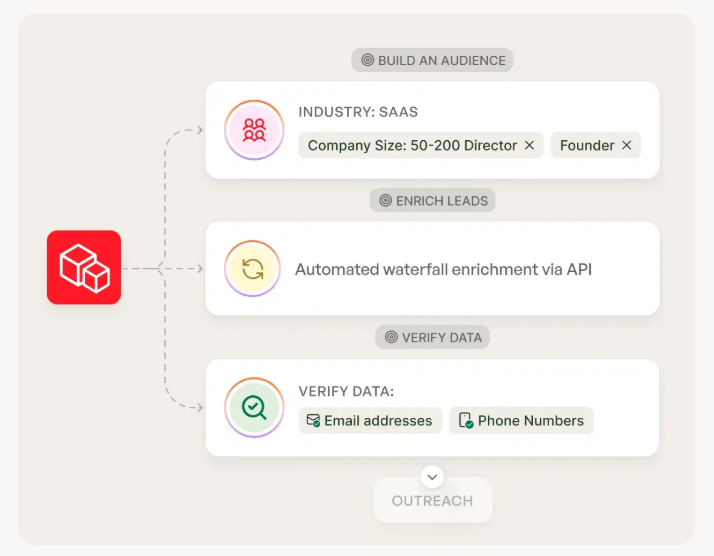
The article says it plain: bad data turns into bounces, complaints, and throttling. Prospeo gives you 143M+ verified emails refreshed every 7 days - not the 6-week-old records that poison your sender reputation and corrupt every test you run.
Stop decorating spam folders with clever subject lines.
FAQ
Do question-mark subject lines increase opens in 2026?
They can, as long as the email delivers a real question and a small, credible ask. Otherwise they backfire and suppress replies. Use them for permission-based outreach ("Right person?") and aim for one clear question in the first line, not a hidden pitch.
What's the best length for a cold email subject line?
2-4 words is the best starting point for most B2B outbound. Belkins found 2-4 word subject lines hit 46% opens, while 1-word lines dropped to 38% and 9-10+ words fell to 34-35%.
Should I personalize with first name/company name - or is that spammy now?
Personalization works when it's true and specific, and it's most effective when tied to a real trigger or credible company context. Belkins found personalization lifted reply rate to 7% vs 3% without personalization, but fake personalization gets deleted (and reported) fast.
Why did my open rate jump but replies didn't?
Open tracking is noisy in 2026 because Apple MPP and security scanners create machine opens, and link protection can trigger bot clicks. Treat opens as a diagnostic signal and pick winners using reply rate and meeting rate over at least 100-200 sends per variant.
Should I verify emails before testing subject lines?
Yes. Verification protects deliverability so your results reflect messaging, not list decay. Prospeo verifies in real time with 98% email accuracy and refreshes data every 7 days, which helps keep bounces low and complaint risk down before you run tests.
Summary: how to get more opens that actually matter
Cold email subject lines that get opened in 2026 are short, relevant, and internal-looking.
Start with 2-4 word relevance hooks, keep subject + first line tightly aligned, and test using reply/meeting rate with deliverability guardrails so you're optimizing for humans, not bots.