

Best Sales Outreach Tools in 2026: Honest Picks for Real Teams
Your sequencer is sending 5,000 emails a month, but almost 20% of cold emails land in spam before a human ever sees them. The average cold email response rate sits at 5.1% - and that's for teams doing it right. Pick the wrong sales outreach tools, or the wrong combination, and you're burning domains, wasting budget, and watching pipeline dry up.
The difference between a good outreach stack and a bad one isn't features. It's whether your emails actually reach inboxes with accurate data behind them.
Our Top Picks (TL;DR)
| Tool | Best For | Starting Price |
|---|---|---|
| Prospeo | Verified emails & data accuracy | Free (75 emails/mo) |
| Instantly | High-volume cold email | $30/mo (annual) |
| Lemlist | Multichannel personalization | $63/user/mo (annual) |
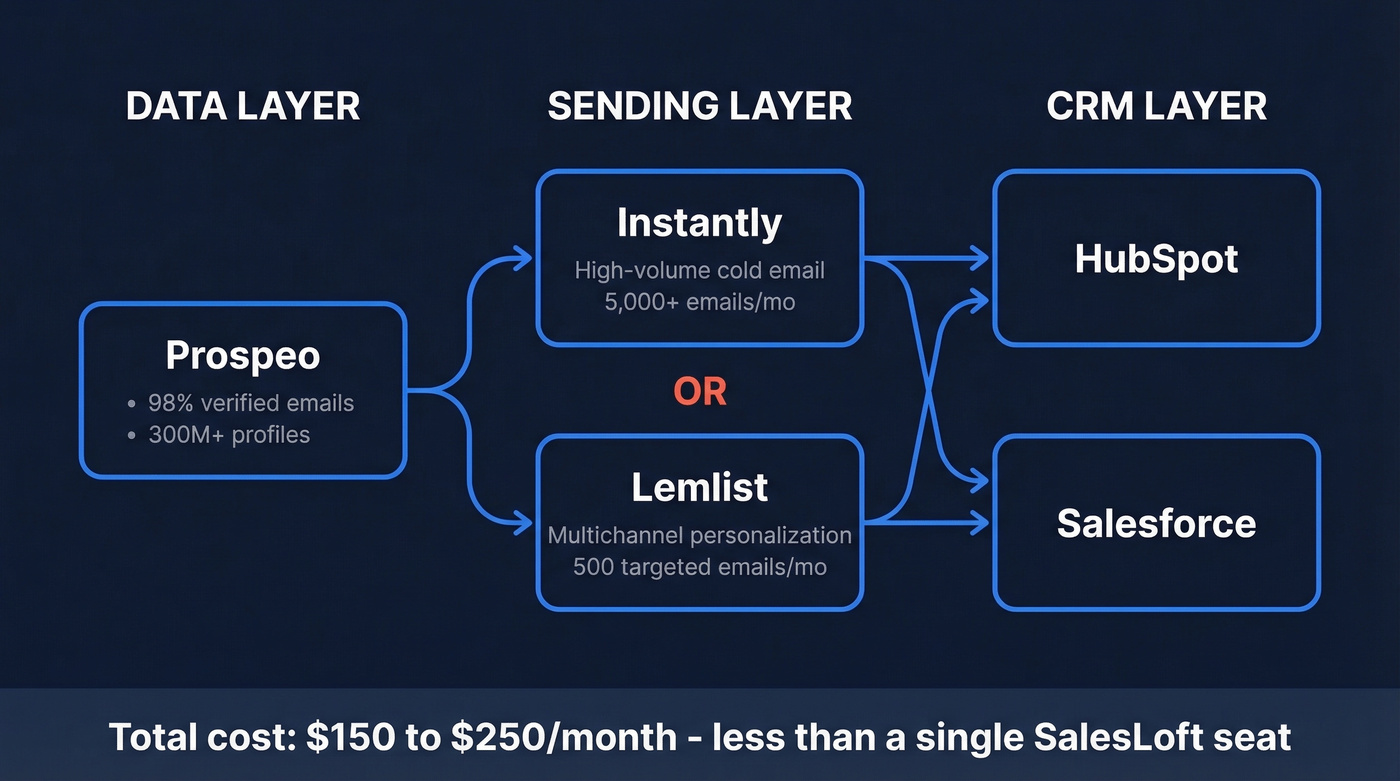
The stack we recommend: Prospeo for data + Instantly or Lemlist for sequencing + HubSpot or Salesforce for CRM. That's roughly $150-$250/month for a lean setup, depending on seats and CRM tier - a full outbound engine that can come in at or below the cost of a single SalesLoft seat.
What Actually Matters When Choosing
Sales teams get buried in 47-feature comparison charts. Here are the five criteria that actually determine whether your outreach works - plus one emerging factor worth watching.
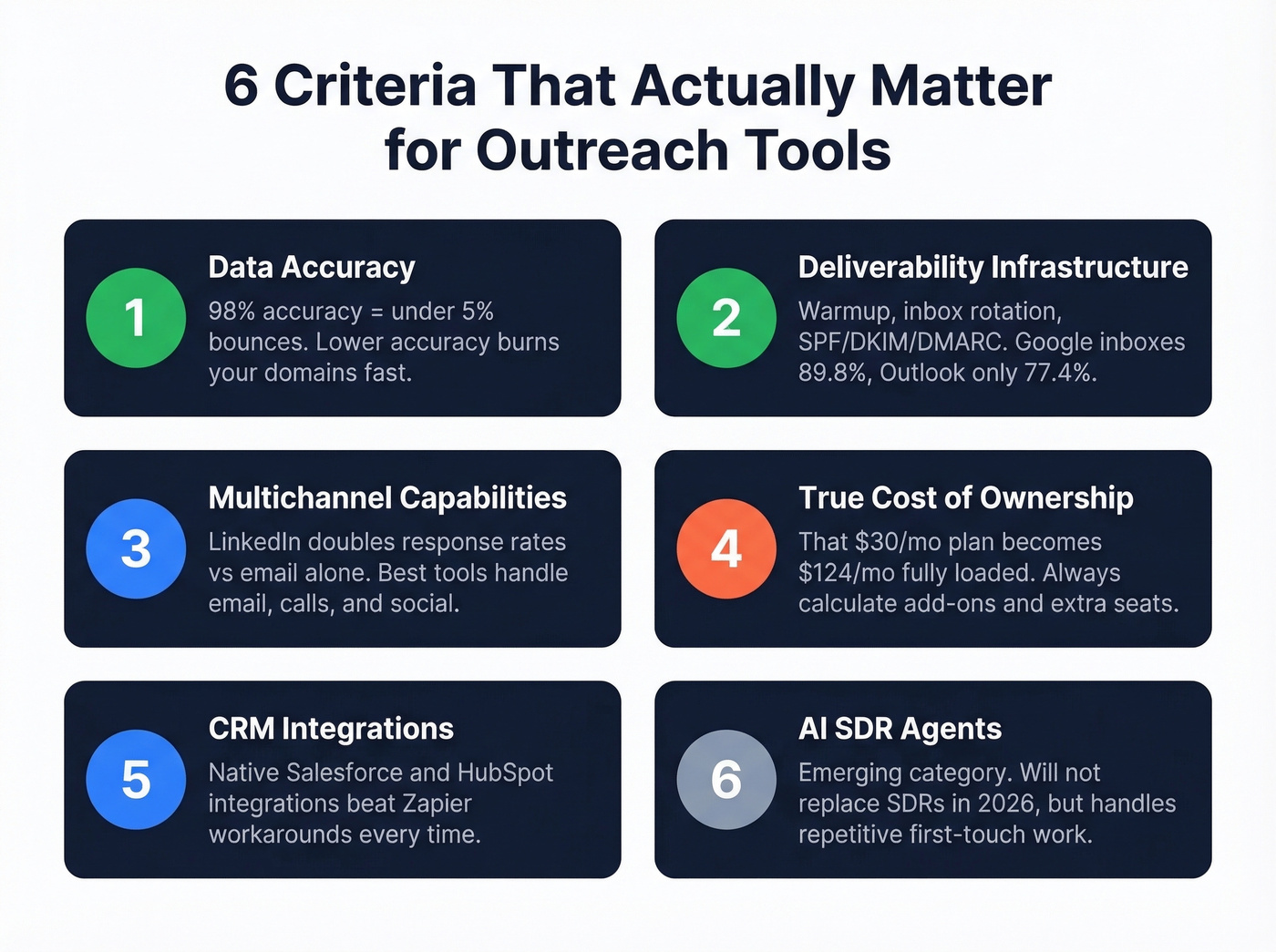
1. Data accuracy and verification. Your sequencer is only as good as the data feeding it. A 98% email accuracy rate dramatically reduces bounces; lower accuracy burns domains fast. This is the single highest-leverage variable in your stack, and it's what separates the best outreach software from everything else. (If you want to go deeper, compare data enrichment options too.)
2. Deliverability infrastructure. Warmup, inbox rotation, SPF/DKIM/DMARC authentication, blacklist monitoring. Google delivers 89.8% of emails to inbox; Microsoft only manages 77.4%. If your prospects live in Outlook, you need better warmup and authentication than the defaults. (More on this in our email deliverability guide.)
3. Multichannel capabilities. Email-only outreach leaves money on the table. LinkedIn outreach delivers double the response rate compared to cold email alone, and 81% of decision-makers engage with tailored cold outreach. The best tools now handle email, calls, and social touches in a single sequence. A detailed breakdown on r/coldemail highlights timezone-based sending and multichannel drips as the features that actually move reply rates. (If you're building sequences, start with a solid B2B cold email sequence.)
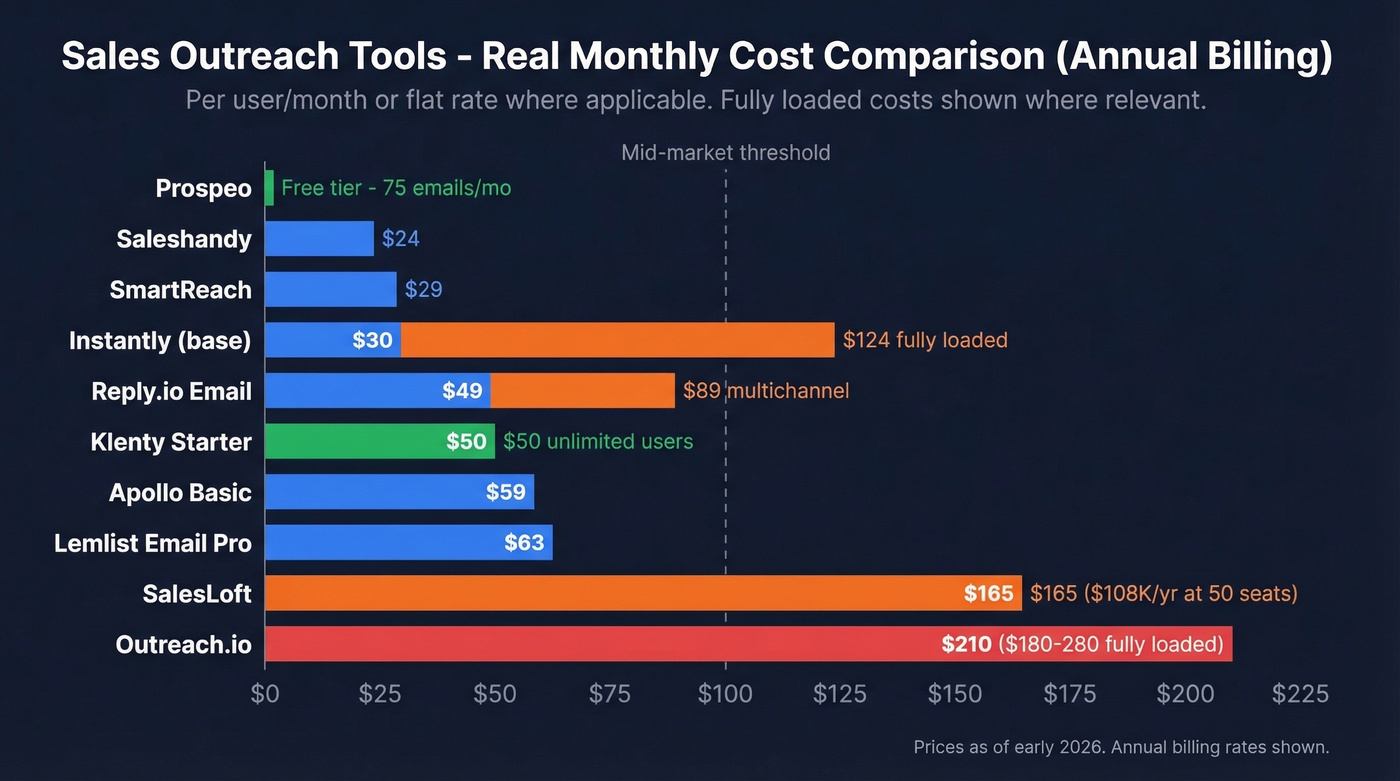
4. True cost of ownership. That $30/month plan looks great until you add the CRM module ($47), the lead finder ($47), and extra senders ($9 each). Always calculate the fully loaded cost for your team size. (This is also why teams track email velocity and sender limits early.)
5. CRM integrations. If data doesn't flow cleanly into Salesforce or HubSpot, your reps will ignore the tool within a month. Native integrations beat Zapier workarounds every time. (If you need a setup walkthrough, see how to connect outreach tool to CRM.)
6. AI SDR agents. Tools like Reply.io's Jason AI are automating prospecting and initial outreach. The category is shifting fast - AI agents won't replace your SDRs in 2026, but they'll handle the repetitive first-touch work that burns out junior reps. Factor this in if you're building a stack meant to last 18+ months. (Related: AI cold email outreach.)

10 Best B2B Outreach Tools Reviewed
Prospeo - Best for Verified Contact Data
Use this if: You need verified emails and direct dials that won't bounce, and you want a data layer that plugs into whatever sequencer you already use.
Pair it with a sequencer if: You need built-in email sending - Prospeo is the data engine that feeds your sending platform.
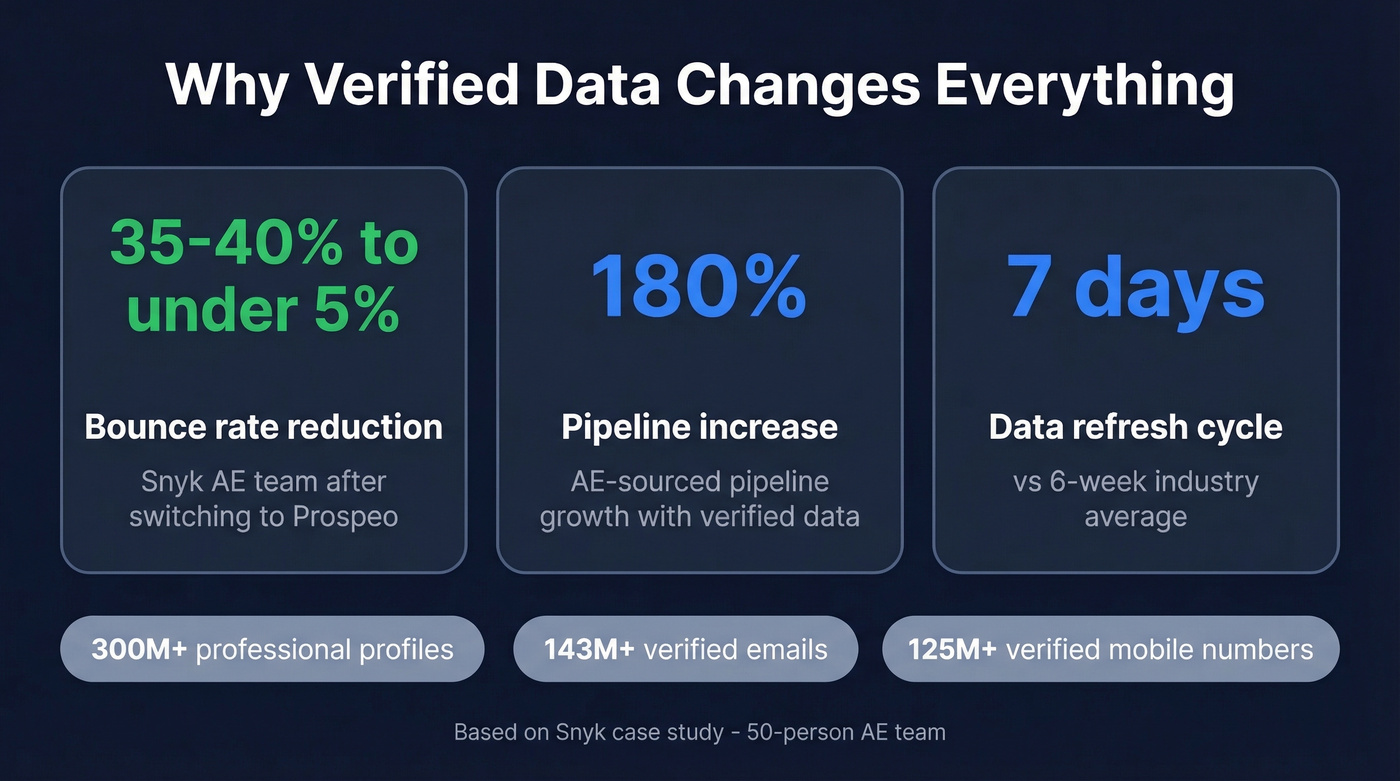
Prospeo's B2B database covers 300M+ professional profiles, 143M+ verified emails, and 125M+ verified mobile numbers. The 98% email accuracy comes from a proprietary 5-step verification process that handles catch-all domains, spam traps, and honeypots - the stuff that quietly destroys your sender reputation with other providers. (If you're troubleshooting bounces, start with email bounce rate benchmarks and fixes.) Data refreshes every 7 days, compared to the 6-week industry average, which means you're not emailing people who changed jobs last month.
The proof point that sold us: Snyk's 50-person AE team was running 35-40% bounce rates before switching. After moving to Prospeo, bounces dropped under 5%, and AE-sourced pipeline jumped 180%. That's not a marginal improvement - that's a completely different outbound program.
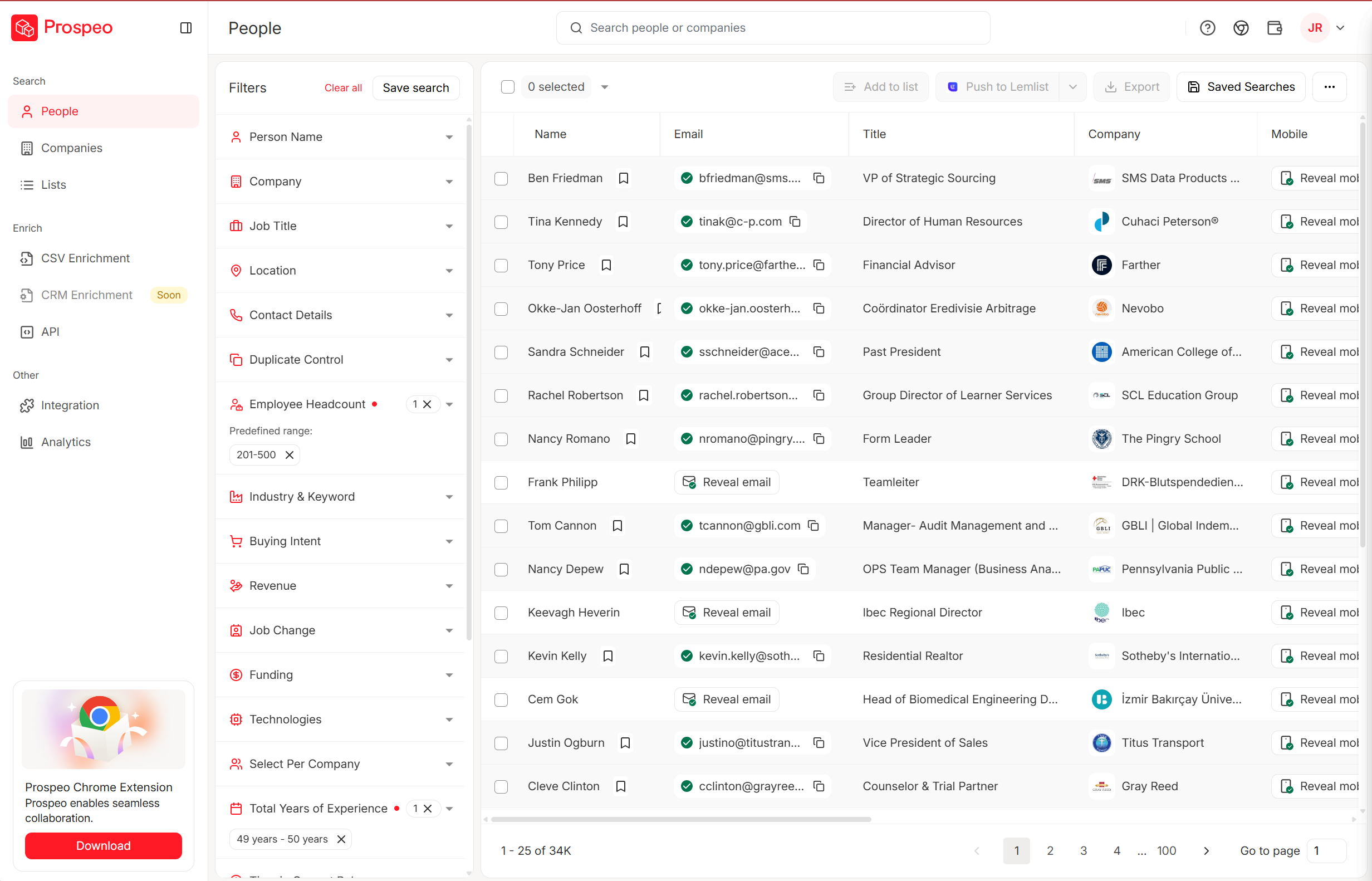
Native integrations with Instantly, Lemlist, Smartlead, Salesforce, HubSpot, Clay, Zapier, and Make mean it slots into whatever stack you're already running. Pricing starts free with 75 verified emails plus 100 Chrome extension credits per month. Paid plans run about $0.01 per email with no contracts.
Instantly - Best for High-Volume Cold Email
Use this if: You're sending at scale (10,000+ emails/month) and need unlimited email accounts with built-in warmup.
Skip this if: You need a CRM, lead database, or multichannel sequences without paying for separate modules.
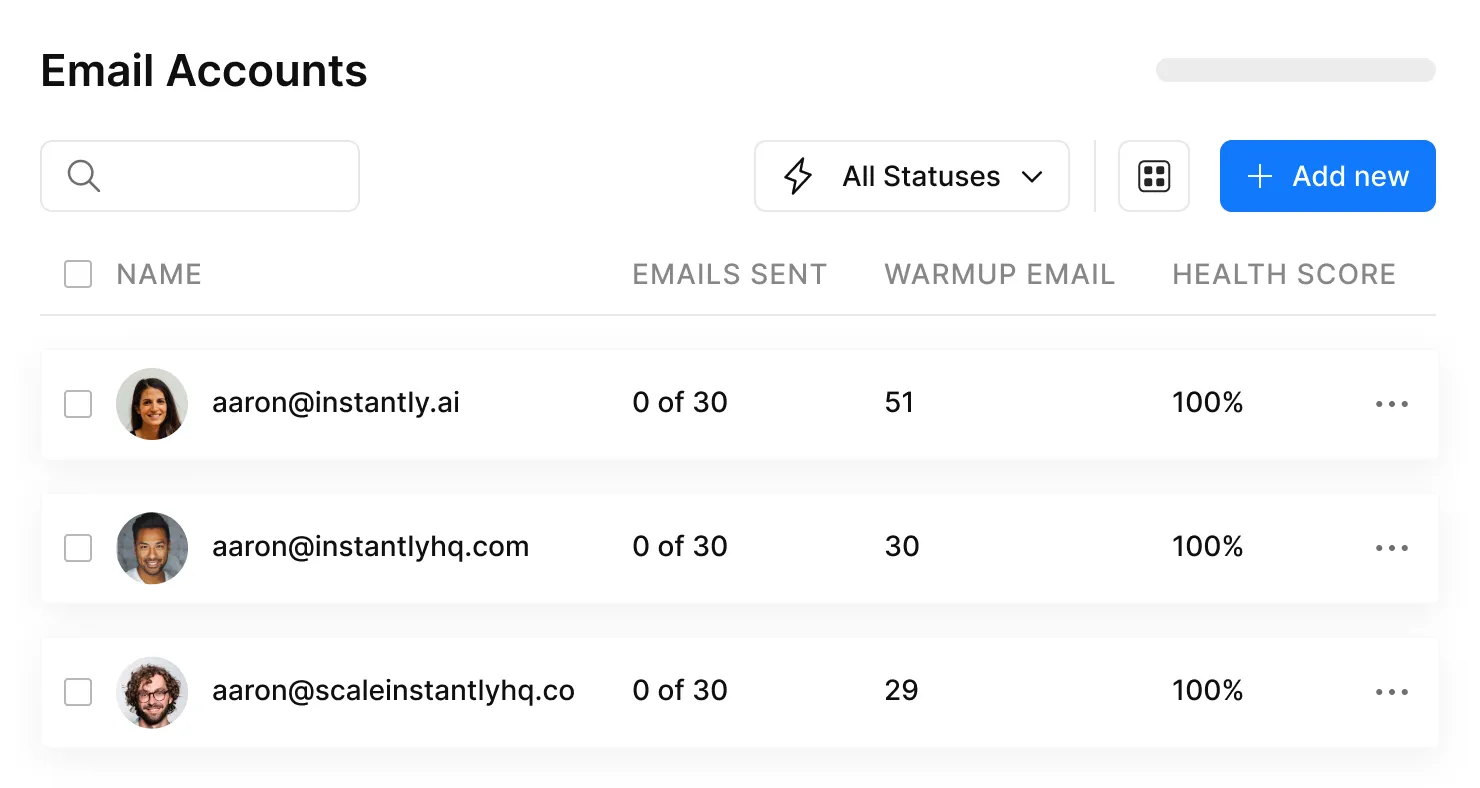
Instantly's Growth plan starts at $37/month (or $30/month on annual billing) for 5,000 emails and 1,000 uploaded contacts with unlimited email accounts and warmup included. The Hypergrowth tier jumps to $77.60/month annually for 100,000 emails. That's genuinely cheap for pure volume.
Here's the thing: the base plan is just sending. Lead Finder costs $47/month extra. CRM is another $47/month. A fully loaded Instantly stack for a serious outbound team runs about $124/month on annual billing - still reasonable, but not the $30 headline number. Reddit practitioners also flag shared infrastructure risk at lower tiers, meaning your deliverability can suffer from other users on the same IP pools.
Lemlist - Multichannel Done Right
Lemlist's image personalization is what practitioners praise most - dynamic images with the prospect's name, company logo, or website screenshot embedded directly in the email. It's the kind of feature that actually gets replies, not just opens.
Email Pro runs $63/user/month annually with 3 email senders and 200 enrichment credits. Multichannel Expert at $87/user/month adds 5 senders, 400 credits, a built-in dialer, and LinkedIn and WhatsApp automation. Extra senders cost $9/month each; calling numbers are $15/month.
If you're sending 500 highly personalized emails a month instead of 5,000 generic ones, Lemlist will outperform every volume-first platform on this list. The 14-day free trial gives you full Multichannel Expert access - generous enough to run a real test. (For copy ideas, pull from these cold email subject line examples.)
Apollo.io - Best Database for Prospecting
Apollo's free plan (100 credits/month) is the obvious starting point for teams that want to prospect and sequence from one platform. Paid plans start at $59/user/month (Basic), then $99 (Professional), and $149 (Organization, minimum 3 seats). The database is massive and the enrichment is solid.
Big database means nothing if emails bounce, though. Apollo's deliverability controls are weaker than dedicated sequencers, and practitioners flag less control over domain setup. We've seen teams pair Apollo's database with a separate sending tool - which kind of defeats the "all-in-one" pitch. (If you're comparing sources, see our roundup of sales prospecting databases.)
Saleshandy - Best Budget Sequencer
Saleshandy starts at just $24/month annually for 6,000 emails/month. It's the cheapest entry point on this list for actual sequence sending. The catch: add-ons pile up at scale, and the tool lacks the deliverability sophistication of Instantly or Lemlist. For solo founders or two-person teams running modest volume, it's hard to beat on price.
Klenty - Best Value for Growing Teams
Klenty's Starter plan ($50/month annual) includes 75,000 emails, 15,000 monthly contacts, and - crucially - unlimited users. That pricing model is absurdly cost-effective for growing teams. A 5-person SDR team pays the same as a solo rep.
Growth ($70/user/month) adds CRM automation and multichannel. Plus ($99/user/month) includes 4,000 AI credits and 1,000 calling minutes for US/Canada. SOC 2 Type II certified with a 14-day free trial. If you're evaluating outreach software on a budget, Klenty's Starter tier is the best value in this category.
Reply.io - Best AI SDR Option
Reply.io's email plans start at $49/user/month, with multichannel at $89/user/month. The standout feature is Jason AI SDR - an AI agent that handles prospecting and initial outreach for $500-$1,500/month. Multichannel drips get praise from users, though deliverability isn't as advanced as dedicated sending platforms. If you're experimenting with AI-driven outbound, Reply is worth a trial. Skip it if you need enterprise-grade deliverability controls. (More options here: SDR tools.)
SmartReach.io - Best for Timezone Sending
SmartReach starts at roughly $26-29/month annually for 10,000 emails and gets called out in r/coldemail breakdowns for timezone-based sending that actually works. Add multichannel support (email, calls, WhatsApp tasks) and the ability to buy domains and inboxes inside the ecosystem, and you've got a surprisingly complete stack. For teams selling across multiple time zones, the reply rate lift from sending at the right local time is real. (If you're optimizing timing, see the best time to send cold emails.)
SalesLoft - Enterprise Only
SalesLoft's Advanced tier lists at roughly $150-180/user/month annually. At 50 seats, that's around $108,000/year before negotiation. Typical negotiated discounts run 35-45% off list. The dialer add-on costs $7,500/year for 25 users.
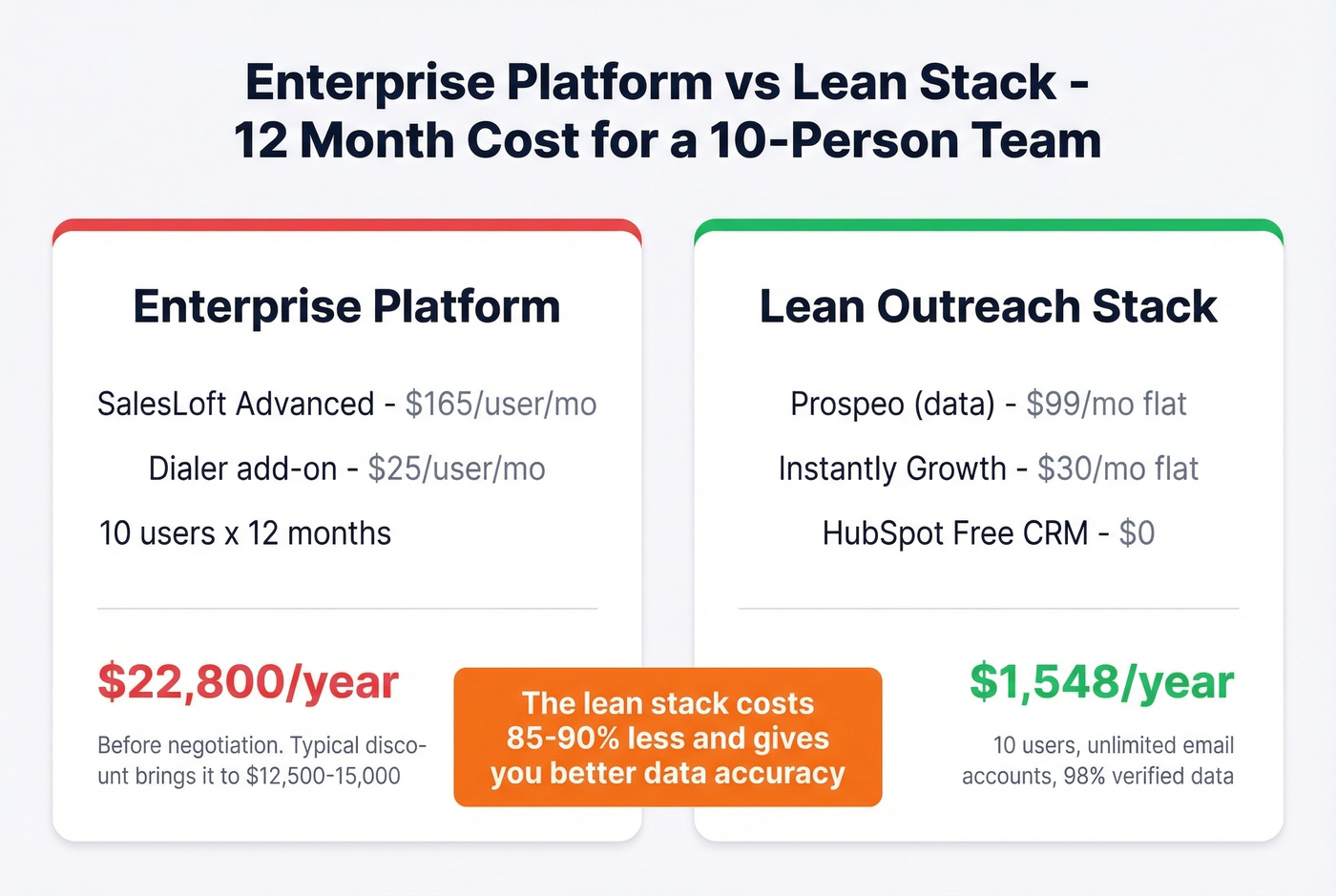
Hot take: If your team is under 25 reps, you're overpaying for SalesLoft. The platform is built for enterprise sales orgs that need governance, analytics, and a single pane of glass. One negotiation tip - bundle calling during your initial purchase for 35-50% off, versus 20-25% if you add it later.
Outreach.io - Best for Revenue Intelligence
Outreach doesn't publish pricing, which tells you something about the buying experience. Engage (base) runs $100-140/user/month. Add Kaia ($30-50/user/month), Deal ($30-50), and Forecast ($20-40), and you're looking at $180-280/user/month fully loaded. Implementation fees range from $5,000 to $25,000.
Three weeks in a sales cycle just to find out you can't afford it. That's the Outreach experience for mid-market teams. It's genuinely powerful if you're enterprise with 50+ reps and need revenue intelligence layered on top of sequencing. Everyone else should look elsewhere.
Honorable Mentions
Smartlead starts at $39/month with modular pricing. It's gaining traction for cold email at scale, and worth evaluating if Instantly's shared infrastructure concerns you.
HeyReach is purpose-built for social outreach at $79/sender/month (Starter), with an Agency plan at $999/month for 50 senders. It handles the social side that most other tools on this list ignore.

Bad data is the #1 reason outreach stacks underperform. Prospeo's 98% email accuracy and 7-day refresh cycle mean your sequencer sends to real inboxes - not job-changers and spam traps. Snyk cut bounce rates from 35% to under 5% and grew AE-sourced pipeline 180%.
Feed your outreach tools data that actually connects.
You just compared 10 sales outreach tools. None of them matter if your contact data bounces. Prospeo plugs into Instantly, Lemlist, Smartlead, and your CRM natively - 300M+ profiles, 143M+ verified emails, starting at $0.01 per lead with no contracts.
Stop burning domains. Start with verified data.
Pricing Comparison
Here's every tool side-by-side so you can compare the real costs.
| Tool | Starting Price | Free Tier? | Per-User or Flat? | Hidden Costs |
|---|---|---|---|---|
| Prospeo | ~$0.01/email | Yes (75 emails/mo) | Credit-based | Credits scale with volume |
| Instantly | $30/mo (annual) | Limited | Flat | CRM +$47, leads +$47 |
| Lemlist | $63/user/mo | 14-day trial | Per-user | Senders +$9, numbers +$15 |
| Apollo.io | $59/user/mo | Yes (100 credits) | Per-user | Min 3 seats on top tier |
| Saleshandy | $24/mo | Trial only | Flat | Add-ons at scale |
| Klenty | $50/mo | 14-day trial | Flat (Starter) | Domains +$30 each |
| Reply.io | $49/user/mo | Trial only | Per-user | AI SDR $500-1,500/mo |
| SmartReach.io | ~$26-29/mo | Trial only | Flat | Domain/inbox purchases |
| SalesLoft | ~$150/user/mo | No | Per-user | Dialer, chatbot add-ons |
| Outreach.io | ~$100/user/mo | No | Per-user | $5K-25K implementation |
Why Deliverability Matters Most
Average email deliverability across platforms is 83.1% - meaning nearly 17% of your emails never reach the inbox. Of those, 10.5% land in spam and 6.4% simply vanish. Those numbers get worse on Microsoft (77.4% inbox placement) while Google sits at 89.8%, Yahoo at 87.3%, and Apple at 82%.
If your prospect list skews toward corporate Outlook accounts, you need better warmup, stricter authentication, and cleaner data than the average team.
Advanced personalization can double cold email response rates, but personalization means nothing if the email hits spam. The chain is simple: bad data leads to bounces, bounces damage domain reputation, damaged reputation means the spam folder, and the spam folder means a dead channel. Verify your list before it enters any sequence. Stack Optimize, an outbound agency, built from $0 to $1M ARR by maintaining 94%+ client deliverability and sub-3% bounce rates - all by making data verification the first step in every campaign, not an afterthought. (If you're cleaning lists, start with spam trap removal.)
How to Build Your Stack
You don't need one tool that does everything. You need 2-3 tools that each do one thing exceptionally well. The winning formula: a data/verification layer + a sequencer + a CRM.
Let's be honest: if your deals average under $10K in contract value, you probably don't need SalesLoft or Outreach-level tooling. A $150-$250/month stack will outperform a $50K/year enterprise platform on the metrics that actually matter - deliverability and reply rate - because you'll spend the savings on better data and more testing. The best sales outreach tools aren't the most expensive ones; they're the ones that keep your data clean and your emails out of spam.
Five mistakes we see teams make repeatedly:
- Mass messaging without personalization - volume without relevance is just spam
- Leading with product features instead of the prospect's problem
- Either ignoring follow-ups entirely or spamming 8 touches in 5 days (use these sales follow-up templates instead)
- Targeting the wrong people (great data into the wrong ICP is still waste) - use an ideal customer profile template
- Never A/B testing subject lines, CTAs, or send times
The teams that win at outbound in 2026 aren't the ones with the most expensive tools. They're the ones with clean data, proper deliverability hygiene, and sequences that sound like a human wrote them.
FAQ
What's the best free outreach tool for sales?
Prospeo offers 75 free verified emails per month with no credit card required - the most generous free tier for verified contact data. Instantly and Apollo also have free plans, but with tighter limits on contacts or sending credits.
Do I need a separate email verification tool?
Yes, if your platform doesn't include real-time verification with catch-all handling. Even a 5% bounce rate compounds quickly across campaigns and can land your domain on blacklists within weeks.
Is cold email still effective in 2026?
The average response rate is 5.1%, with most campaigns falling between 1-5%. Advanced personalization doubles those numbers. The channel works - but only with verified data, proper deliverability setup, and messages that don't read like templates.
SalesLoft or Outreach - which one?
Both are strong for 50+ rep teams. SalesLoft is typically easier to benchmark and negotiate. Outreach has deeper revenue intelligence features. Budget $40K-70K/year for either at roughly 10 seats. For teams under 25 reps, neither is worth the spend.
Can I use multiple outreach tools together?
Absolutely, and you should. A dedicated data layer paired with a sequencer and a CRM consistently outperforms any single all-in-one platform. The tools on this list integrate natively with each other - that's by design.