

How to Build a Technology Go-to-Market Strategy That Actually Works
A sales leader we know watched his executive team spend four months on a GTM "strategy." The output? A new pitch deck with updated colors and a tagline nobody on the floor could remember. Pipeline didn't move. That's not a technology go-to-market strategy - that's theater. And with 90% of B2B buyers researching online before talking to reps, you're losing deals you never knew existed.
Here's the short version: your tech GTM boils down to motion, ICP, and metrics - executed in a 90-day sprint. Pure PLG is overhyped. In a dataset of 30,000 B2B SaaS companies on G2 (with 5+ employees), only 29% are product-led. Start sales-led. Measure CAC payback, not vanity metrics. And if your bounce rate is above 5-8%, fix your data before your messaging.
What a Tech GTM Strategy Actually Is
A GTM strategy isn't a pitch deck or a marketing plan. It's the system connecting your product to paying customers through a specific motion, targeting approach, and measurement loop. Who are we selling to, how do we reach them, and how do we know it's working?
Campaigns, content, and sales plays are execution details that flow from those three answers.
Choosing Your GTM Motion
The PLG-versus-sales-led debate is mostly noise. Across 30,000 B2B SaaS companies on G2, 29% run product-led and 71% run sales-led. PLG gets outsized attention because the winners - Slack, Figma - are highly visible. For most B2B tech companies, especially pre-$5M ARR, sales-led is the right starting motion.
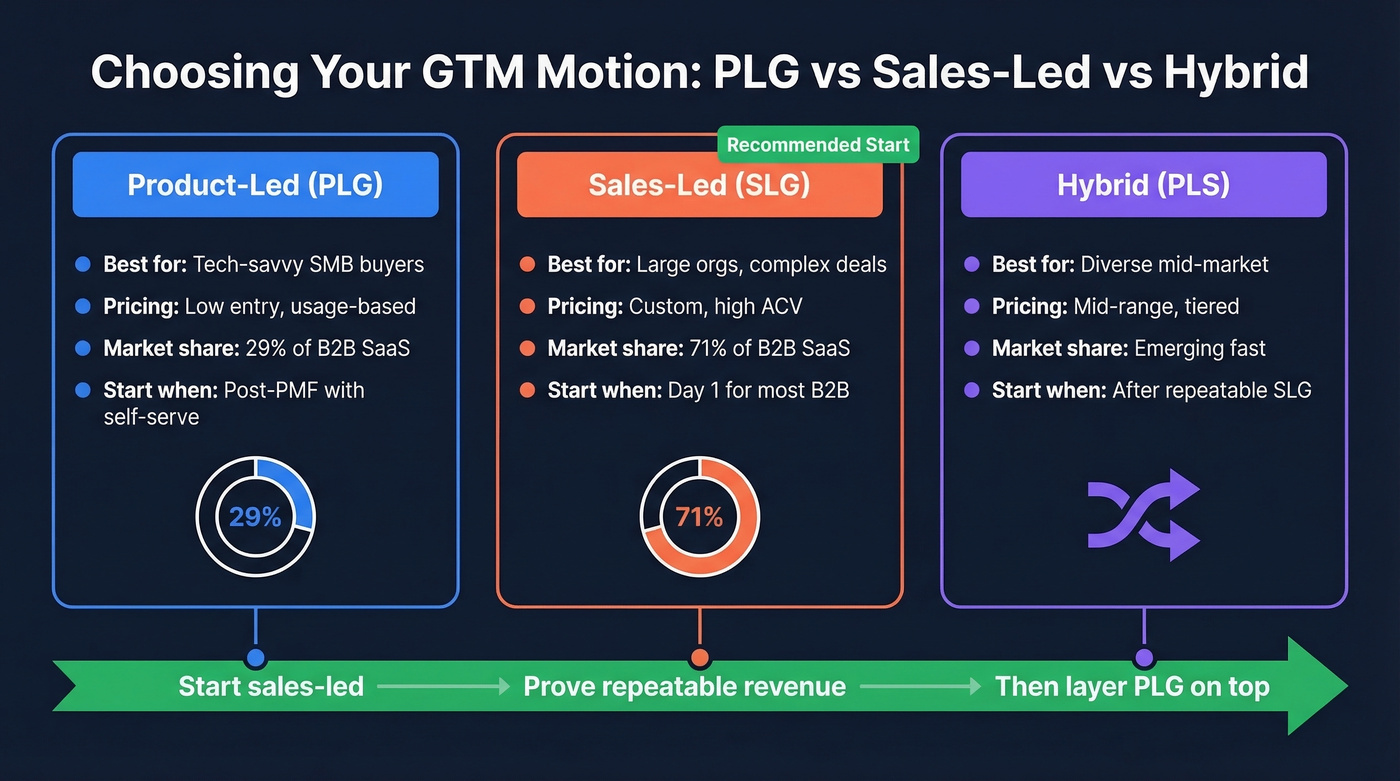
| Criteria | Product-Led | Sales-Led | Hybrid |
|---|---|---|---|
| Best for | Tech-savvy, SMB | Large orgs, complex | Diverse, mid-market |
| Pricing | Low entry, usage | Custom, high ACV | Mid-range, tiered |
| Market share | 29% of B2B SaaS | 71% of B2B SaaS | Emerging |
| When to start | Post-PMF, self-serve | Day 1 for most B2B | After repeatable SLG |
Gartner's go-to-market strategy decision criteria confirm this: technically savvy users in smaller orgs with low entry pricing favor PLG, while nontechnical buyers in large orgs with complex purchasing need SLG. McKinsey's analysis of 107 public B2B SaaS companies found the real outperformance comes from hybrid motions - product-led sales combining self-serve adoption with enterprise muscle.
Start sales-led. Prove repeatable revenue. Then layer PLG on top. Don't try to be Slack on day one.
Define Your ICP Beyond Firmographics
Most teams define their ICP as "Series B SaaS companies with 50-200 employees." That's a firmographic sketch, not a filter. You need an ICP stack you can actually operationalize:
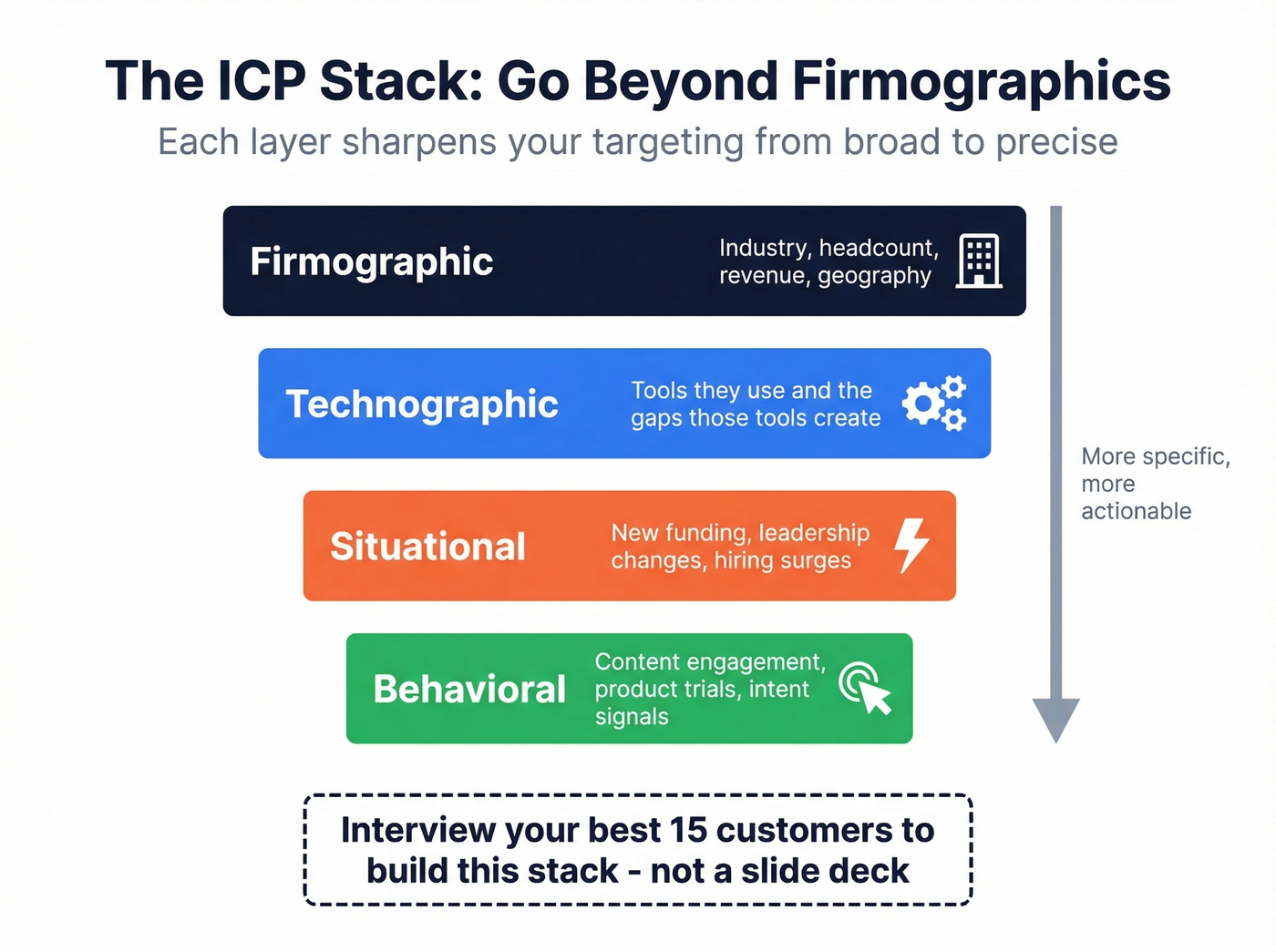
- Firmographic - industry, headcount, revenue, geography (firmographic)
- Technographic - tools they use and the gaps those tools create (Firmographic and Technographic Data)
- Situational - trigger events like new funding, leadership changes, hiring surges (sales triggers)
- Behavioral - content engagement, product trials, intent signals (buying signals)
Interview your best 15 customers. Ask what triggered their search, what they used before, who sat on the buying committee, and what almost killed the deal. That's your ICP - a living filter, not a slide. For market sizing, target 1-5% SOM penetration early-stage and 5-15% in growth-stage over 12-24 months.

You just read that a 35% bounce rate isn't a messaging problem - it's a data problem. Prospeo's 5-step verification delivers 98% email accuracy and 125M+ verified mobiles, so your ICP targeting actually converts. 30+ filters for intent, technographics, and hiring signals mean your GTM motion hits real buyers.
Fix your data layer before you spend another dollar on outbound.
Metrics That Actually Matter
Look - your CEO just asked why you spent $50K on outbound and booked three demos. If you can't answer with unit economics, your GTM has a credibility problem.
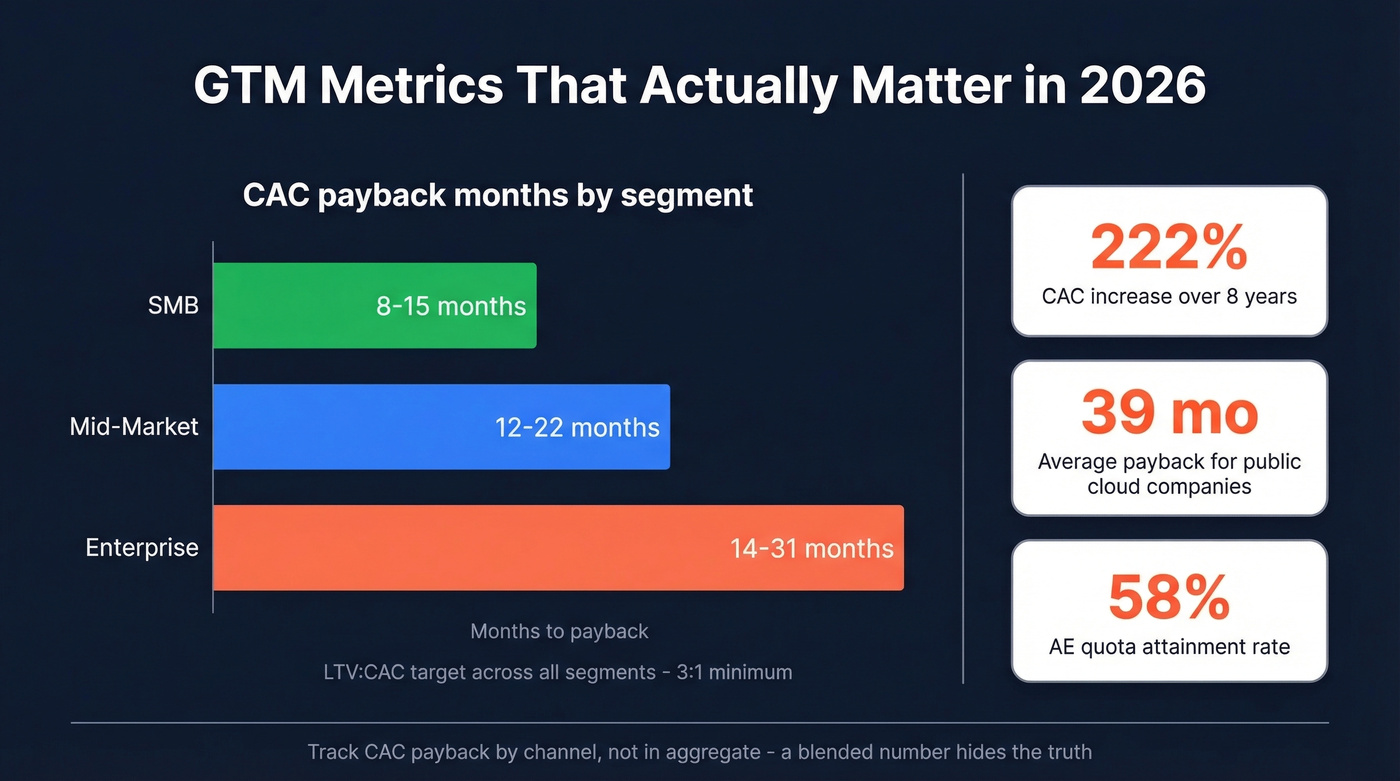
CAC has risen roughly 222% over eight years. Average payback for many public cloud companies has stretched to 39 months. AE quota attainment sits at 58%. These aren't abstract benchmarks. They're the environment you're operating in right now.
| Segment | Avg CAC Payback | LTV:CAC Target |
|---|---|---|
| SMB | ~8-15 months | 3:1 |
| Mid-market | ~12-22 months | 3:1 |
| Enterprise | ~14-31 months | 3:1+ |
Track CAC payback by channel, not in aggregate. A blended number hides the fact that your paid search CAC is 4x your outbound CAC. Every bounced email and wrong number inflates your denominator - which is why data quality is a unit economics problem, not just an ops problem (Cost to Acquire Customer).
AI's Role in 2026 GTM Execution
About 70% of companies now report moderate or full AI adoption in GTM workflows. AI-native companies convert free trials and POCs at 56% versus 32% for non-AI-native peers. That gap is widening.
Max Altschuler of GTMfund puts it simply: "You can do more with less than ever before." Marc Manara at OpenAI frames it differently - AI-assisted lead building that goes beyond database queries into real-time intent matching. One-third of AI-native companies now use hybrid pricing models, and the teams winning are using AI to compress research and personalization cycles, not just to blast more emails (Generative AI Lead Generation). Smaller teams can run motions that used to require 20-person orgs. Even Google's go-to-market approach for its Cloud division has shifted toward AI-first positioning, signaling how deeply this trend runs across the industry.
If your deal sizes are under $15K and your team is under 10 people, AI-augmented outbound will outperform a dedicated SDR team in 2026. We've watched this play out across a dozen launches this year.
Your 90-Day GTM Launch Plan
Buyers spend 17% of their time with any given supplier. You don't have the luxury of a six-month planning cycle.
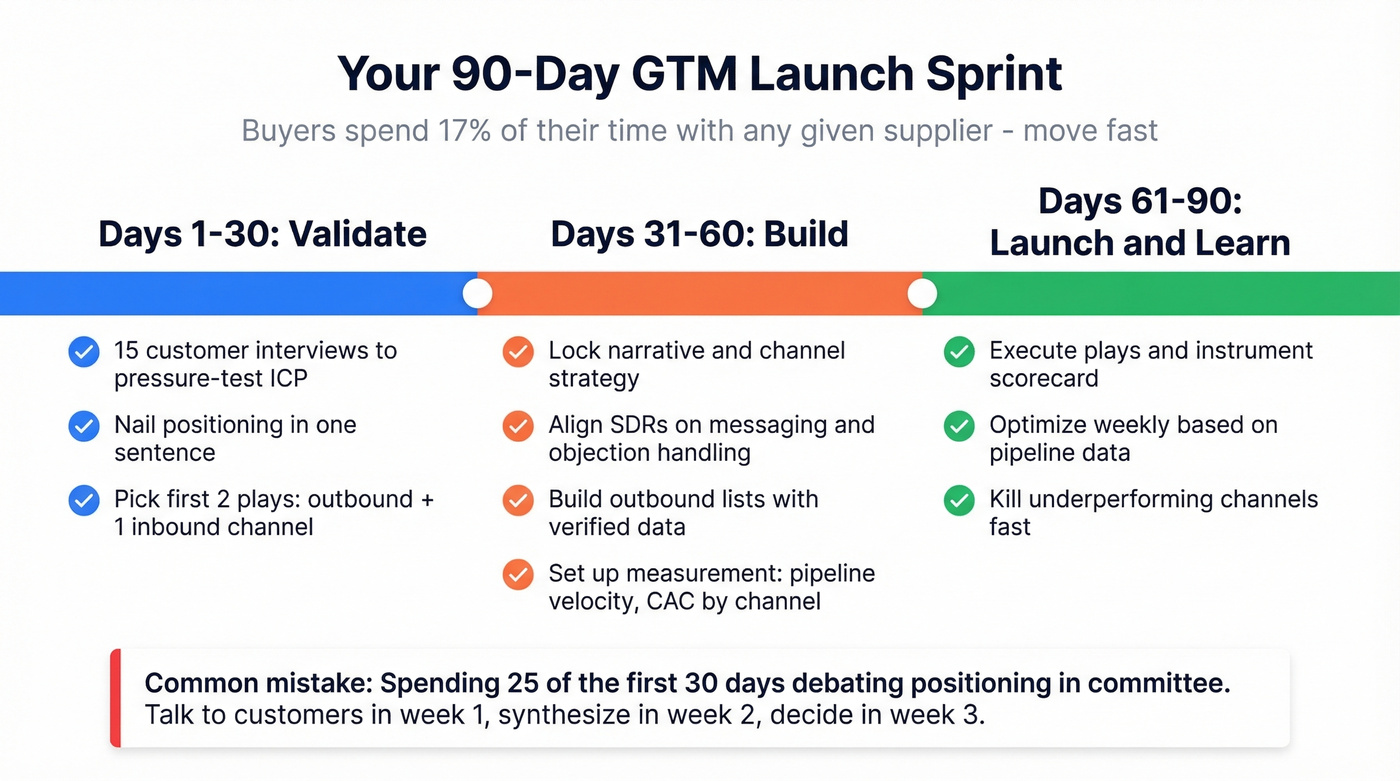
Days 1-30: Validate
- Pressure-test your ICP with 15 customer interviews
- Nail positioning - if you can't explain your differentiation in one sentence, keep working (B2B Brand Positioning)
- Pick your first two plays: outbound plus one inbound channel
Days 31-60: Build
- Lock narrative and channel strategy
- Align SDRs on messaging, objection handling, qualification criteria
- Build outbound lists with verified data - a 35% bounce rate isn't a messaging problem, it's a data problem (Email Bounce Rate)
- Set up measurement: pipeline velocity, stage conversion, CAC by channel
Days 61-90: Launch and Learn
- Execute plays, enable the team, instrument your scorecard
- Optimize weekly based on pipeline data, not gut feel
- Kill underperforming channels fast - sunk cost bias has no place here
Let's be honest about what usually goes wrong in this sprint: teams spend 25 of the first 30 days debating positioning in committee instead of talking to customers. Skip the committee. Talk to 15 customers in week one, synthesize in week two, decide in week three. One person owns the call.
Build Your Prospect Data Engine
The early-stage pattern that works: capture website visitors (including non-converters), enrich with company data, run targeted outbound sequences to drive demos. But the pattern breaks when your data is bad (data enrichment).
We've seen teams burn through entire domain reputations because their "verified" contact list bounced at 35%+. That's infrastructure failure, and it's shockingly common. The consensus on r/sales is that bad data is the silent killer of outbound - threads consistently mention domain reputation damage as the thing nobody warned them about until it was too late.
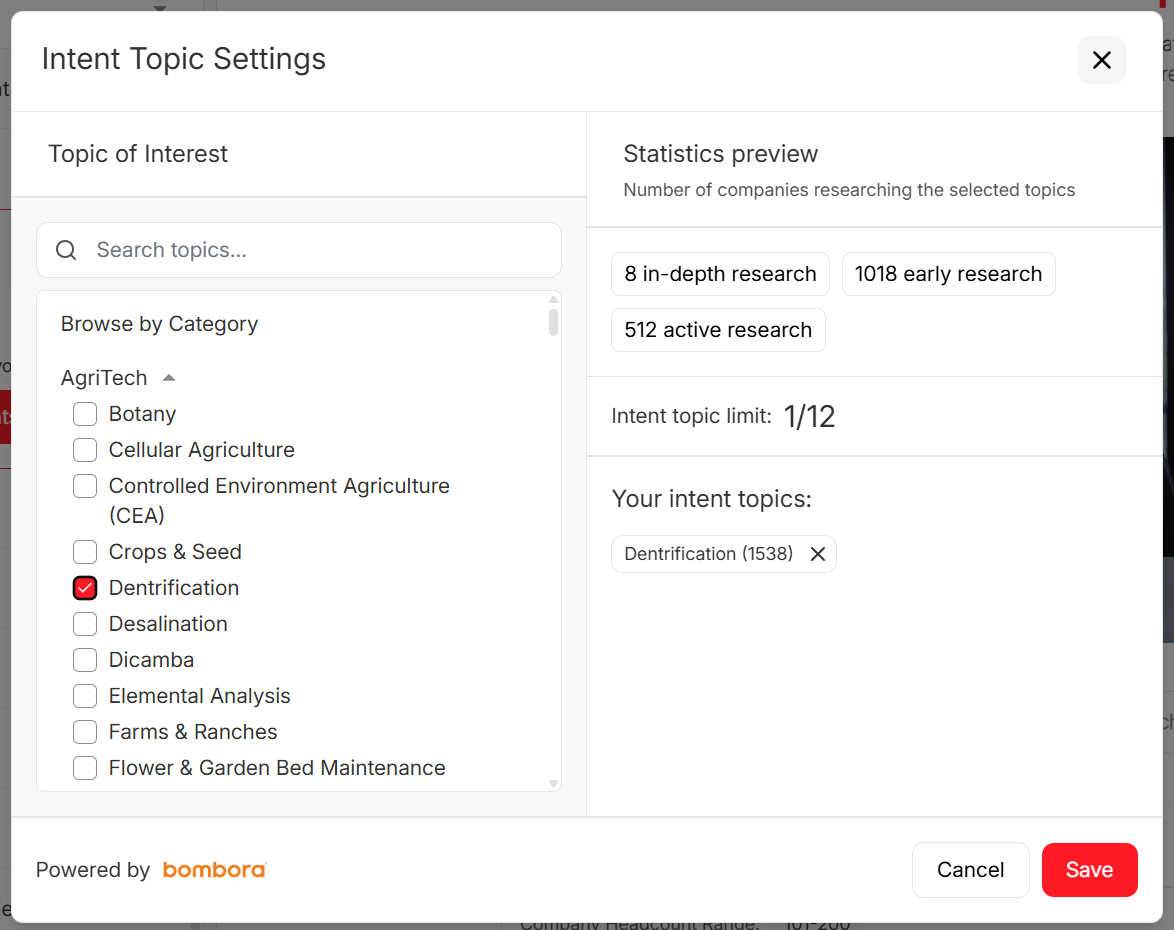
Your GTM stack needs three things at launch: a CRM (HubSpot or Salesforce, ~$25-$150/user/mo depending on edition), a B2B data platform for verified contacts, and an outbound sequencer like Instantly or Smartlead (~$30-$200/mo depending on seats and sending limits). For the data layer, Prospeo covers 300M+ professional profiles with buyer intent across 15,000 topics and technographic filters - so you can operationalize that ICP stack directly rather than building it in spreadsheets (Best B2B Company Data Providers).
Every bounced email inflates your CAC. With CAC payback already stretching to 39 months, you can't afford bad data in your denominator. Prospeo refreshes 300M+ profiles every 7 days - not 6 weeks - so your 90-day sprint runs on contacts that actually pick up.
Cut your CAC payback by reaching real buyers on the first attempt.
GTM Mistakes That Kill Launches
We've watched three patterns sink launches repeatedly.
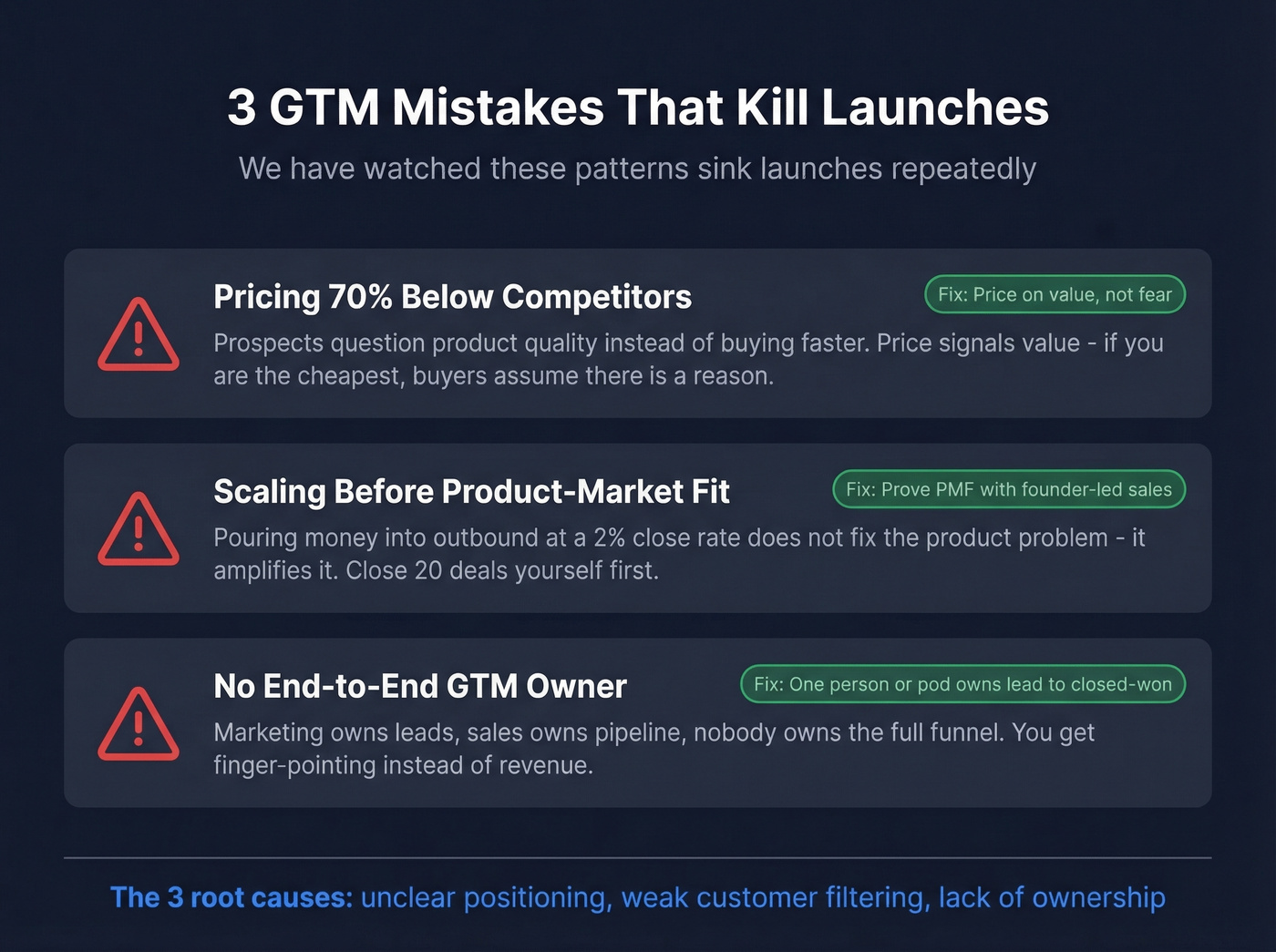
Pricing 70% below competitors. One startup priced aggressively low thinking it would accelerate adoption. Prospects questioned the product's quality instead. Price signals value - and if you're the cheapest option in the room, buyers assume there's a reason.
Scaling before PMF. Pouring money into outbound when your close rate is 2% doesn't fix the product problem. It amplifies it. Skip the growth hire until you've closed 20 deals yourself and can articulate exactly why each one closed.
No end-to-end GTM owner. When marketing owns leads, sales owns pipeline, and nobody owns the full funnel, you get finger-pointing instead of revenue. The three root causes behind most GTM failures are unclear positioning, weak customer filtering, and lack of ownership. A solid technology go-to-market strategy assigns one person - or at minimum one cross-functional pod - full accountability from lead to closed-won. Without that, every other framework in this guide is academic.
FAQ
What's the difference between a GTM strategy and a marketing plan?
A marketing plan covers channels and campaigns. A technology go-to-market strategy is the full system - ICP, pricing, sales motion, metrics - that determines how a product reaches paying customers. Marketing plans execute one slice of the GTM; they don't define the motion or measurement loop.
How long does it take to launch a tech GTM?
A focused team can validate ICP, build outbound lists, and launch first plays within 90 days. If it takes longer than that, you likely have a committee problem - too many stakeholders, not enough ownership.
What tools do you need for a B2B tech GTM launch?
At minimum: a CRM (HubSpot or Salesforce, ~$25-$150/user/mo), a B2B data platform for verified contacts and intent signals, and an outbound sequencer like Instantly or Smartlead (~$30-$200/mo). Add enrichment and intent data once you have a repeatable channel producing pipeline.
Does PLG or sales-led work better for early-stage tech companies?
Sales-led works better for most pre-$5M ARR companies. Only 29% of B2B SaaS companies run product-led motions, and PLG requires post-PMF self-serve readiness. Start sales-led, prove repeatable revenue, then layer product-led growth on top once adoption patterns are clear.