

The Complete Guide to Becoming a Virtual Sales Rep in 2026
You're scrolling Indeed at 11 PM, filtering for "remote sales," and every third listing looks like an MLM. The ones that aren't want three years of experience you don't have. Here's the reality: becoming a virtual sales rep is one of the most accessible six-figure career paths in 2026 - if you know what the role actually looks like, what it pays, and which tools to learn before your first interview.
80% of B2B sales interactions now happen at least partly through digital channels. Reps spend just 28% of their time actually selling, with the rest eaten by admin work, CRM updates, and chasing bad contact data. The reps who earn six figures aren't the ones grinding hardest. They're the ones who've built a system that protects their selling time.
What You Need (Quick Version)
The role in one sentence: You sell a product or service remotely - phone, email, video - and never meet a buyer in person.
Median OTE (on-target earnings): $101K/year (base + commission).
Three non-negotiable skills:
- CRM fluency (HubSpot or Salesforce)
- Prospecting discipline (finding and qualifying leads daily)
- Video presence (you're selling through a screen - own it)
Three tools to learn before day one:
- CRM: HubSpot (free tier gets you started)
- Prospecting data: Prospeo for verified emails and direct dials
- Video: Zoom (free tier works fine)
Equipment basics: A quality headset, a second monitor, and reliable internet. These aren't optional - they're professional equipment.
Learn those three tools and you'll walk into interviews already ahead of most applicants.
What Is a Virtual Sales Representative?
A virtual sales representative markets and sells a product or service entirely through online and remote channels. ZipRecruiter's definition keeps it simple: someone who "markets a product or service through online services." Day to day, that means selling to new and returning customers, following up with leads, scheduling appointments, running demos over video, and answering customer questions - all without leaving your home office.
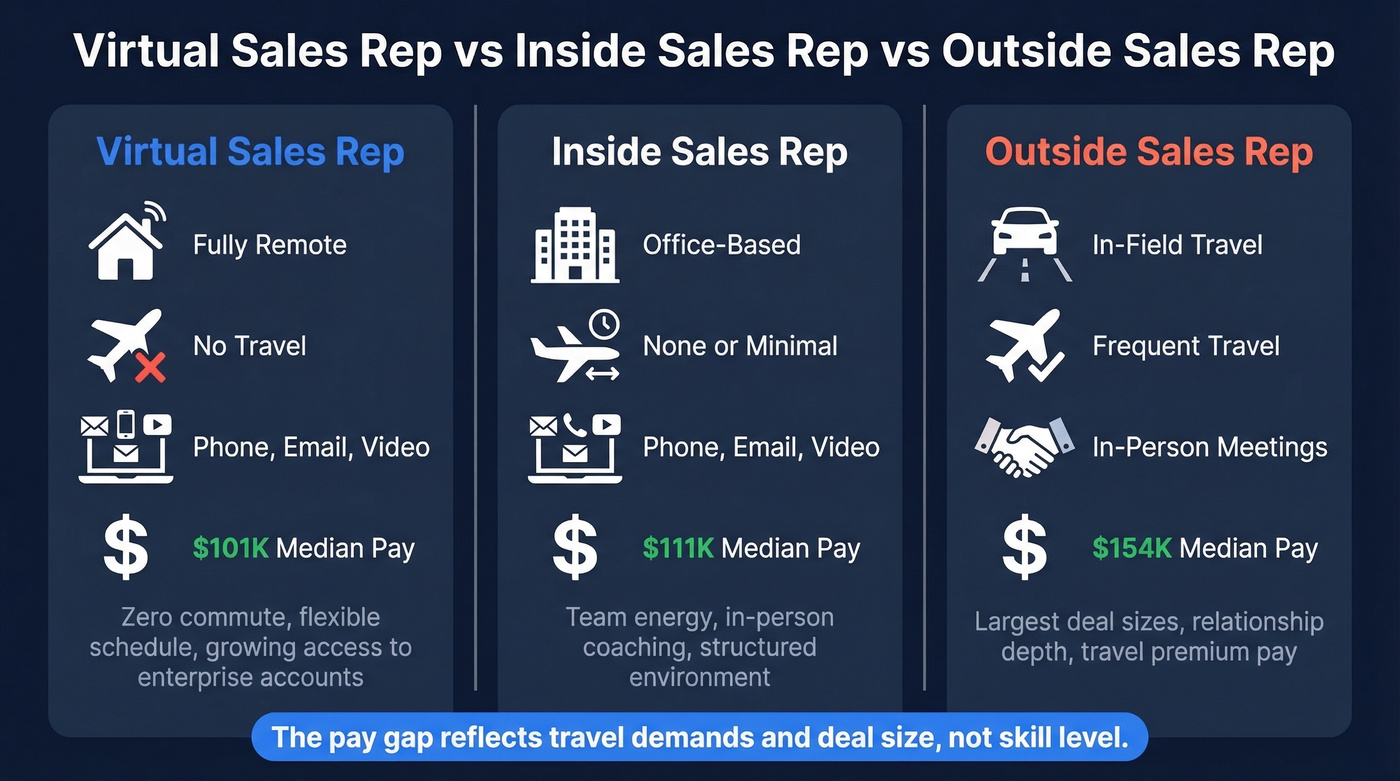
People overthink the distinction between "virtual sales rep" and "inside sales rep." Functionally, they're nearly identical. The real difference is where you sit: an inside sales rep often works from a company office using remote channels, while a virtual sales representative is fully remote. An outside sales rep is in the field, shaking hands, running up travel expenses.
| Dimension | Virtual Sales Rep | Inside Sales Rep | Outside Sales Rep |
|---|---|---|---|
| Location | Fully remote | Office-based | In-field / travel |
| Travel | None | None / minimal | Frequent |
| Channels | Phone, email, video | Phone, email, video | In-person meetings |
| Median Pay | $101K | $111K | $154K |
The pay gap between virtual and outside sales reflects the travel premium and typically larger deal sizes in field roles. But remote reps have zero commute costs, more schedule flexibility, and - increasingly - access to the same enterprise accounts that used to require a plane ticket.
Daily Workflow for Remote Reps
Most people picture someone on the phone all day. The reality is more structured than that - or at least it should be. 57% of B2B buyers are already through their decision-making process before they ever talk to a rep. Your morning isn't about cold-calling into the void. It's about reaching the right people with the right timing.
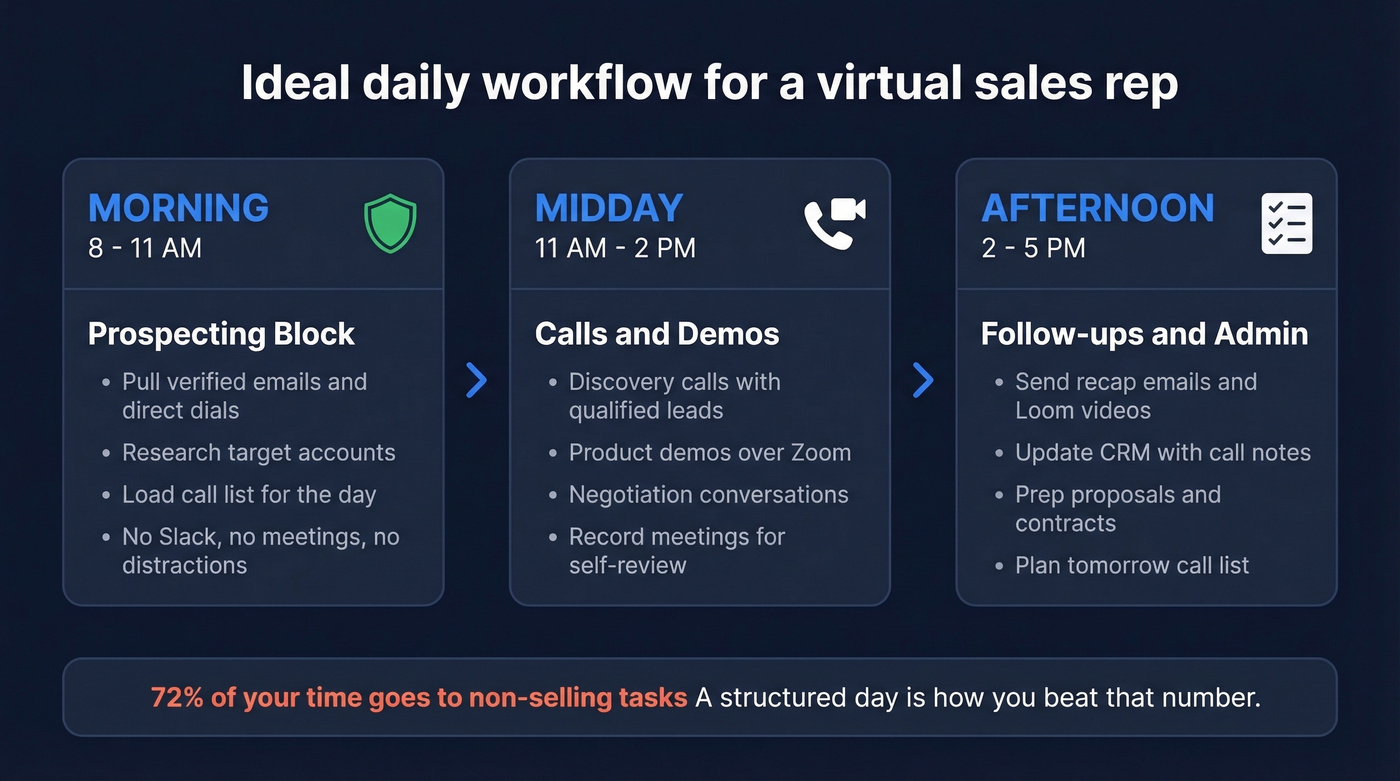
A productive day breaks into three blocks.
Morning (8-11 AM): Prospecting. This is your pipeline-building window. You're pulling verified emails and direct dials, researching accounts, and loading your call list. The best reps protect this block ruthlessly - no Slack, no internal meetings, no CRM cleanup. Whether you're a virtual SDR focused on top-of-funnel outreach or a closing rep running full-cycle deals, this block is sacred.
Midday (11 AM-2 PM): Calls and demos. Discovery calls, product demos, negotiation conversations. This is the revenue-generating core of your day. You're on Zoom, sharing your screen, reading body language through a webcam. Record your meetings with permission - reviewing your own calls is the fastest path to improvement.
Afternoon (2-5 PM): Follow-ups and admin. Send recap emails, update your CRM, prep proposals, and plan tomorrow's call list. A 60-second Loom recap outperforms a wall-of-text email every time - use visuals and micro-content in your follow-ups.
The reps who struggle remotely are the ones who let these blocks bleed together. When 72% of your time goes to non-selling tasks, a structured day isn't survival advice. It's the difference between hitting quota and missing it.
How Much Do Virtual Sales Reps Make?
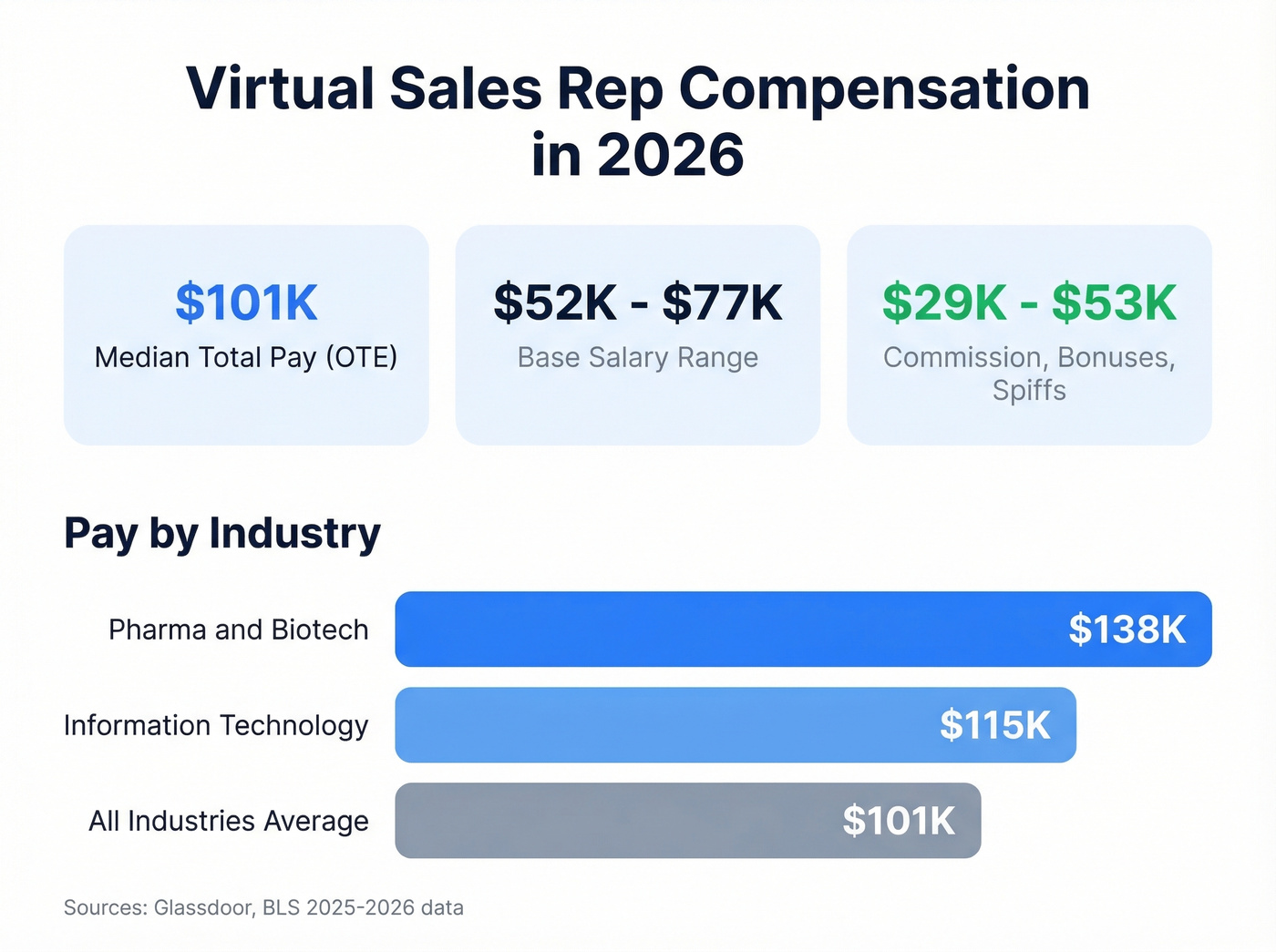
Glassdoor puts the median total pay for a virtual sales representative at $101K/year, with a typical range of $81K-$130K. That breaks down to $52K-$77K in base salary plus $29K-$53K in additional compensation from commission, bonuses, and spiffs. Your OTE - on-target earnings, the number you'll see on every job listing - is what you'll earn if you hit 100% of quota.
For broader context, the BLS median for all sales representatives sits at $73,080. The gap reflects the fact that virtual selling roles skew toward tech and SaaS, where comp runs higher.
Pay by Experience
| Experience | Avg. Base Salary |
|---|---|
| 0-1 years | $53K |
| 1-3 years | $59K |
| 4-6 years | $63K |
| 7-9 years | $66K |
| 10-14 years | $72K |
| 15+ years | $78K |
Pay by Industry
| Industry | Median Total Pay |
|---|---|
| Pharma / Biotech | $138K |
| Information Technology | $115K |
| General (all industries) | $101K |
Commission is the variable that makes or breaks your total comp. Standard splits run 50/50 or 60/40 base-to-variable for SDR roles, shifting toward 40/60 for closers. Top performers with accelerators can genuinely double their base - we've seen it happen consistently in SaaS mid-market roles.
Here's the thing: if someone offers you a "virtual sales" role with no base salary, that's not a sales job. That's a gamble. More on red flags later.
Skills and Qualifications
Hard Skills
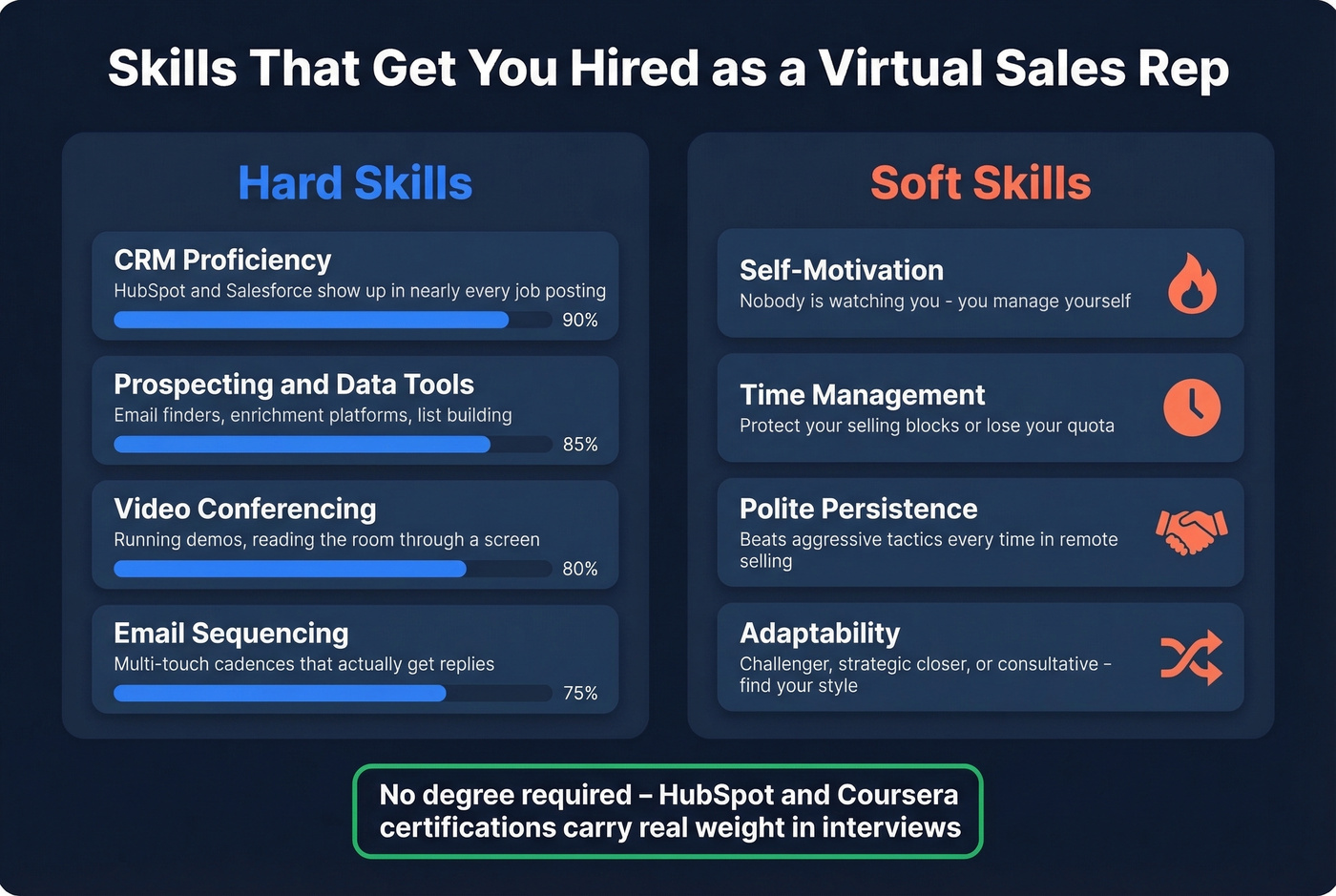
- CRM proficiency - HubSpot and Salesforce show up constantly in sales job stacks (see CRM fluency)
- Prospecting and data tools - email finders, enrichment platforms, list building (compare options in data enrichment tools)
- Video conferencing - running demos, reading a room through a screen
- Email sequencing - building multi-touch cadences that actually get replies (use these drip campaign templates)
Soft Skills
Negotiation matters, but polite persistence beats aggressive tactics in remote selling. Time management is non-negotiable because nobody's watching you - you have to manage yourself. Self-motivation hits different when rejection comes while you're alone in a home office with no colleague next to you who just got the same "not interested" response.
Different selling styles thrive in virtual environments. Some reps succeed as challengers who push buyers to rethink assumptions. Others win as strategic closers who map buying committees methodically. The common thread is discipline - the screen doesn't care about your charisma if you haven't done the prep work.
A bachelor's degree in marketing, communications, or business appears in most job postings, but it's far from required. We've seen plenty of reps break in with an associate degree plus hustle, or no degree at all. HubSpot's free Sales Software certification and Coursera's sales specializations carry real weight in interviews - especially when you can show you've actually used the tools.

Your morning prospecting block is only as good as your data. Prospeo gives virtual sales reps 300M+ verified profiles, 125M+ direct dials with a 30% pickup rate, and 98% email accuracy - so you spend those sacred hours selling, not chasing bounced emails and dead numbers.
Stop wasting your prospecting block on bad data. Get verified contacts in seconds.
Tools Every Remote Rep Needs
Your tech stack is your office. Pick the wrong tools and you'll spend more time fighting software than selling.
CRM
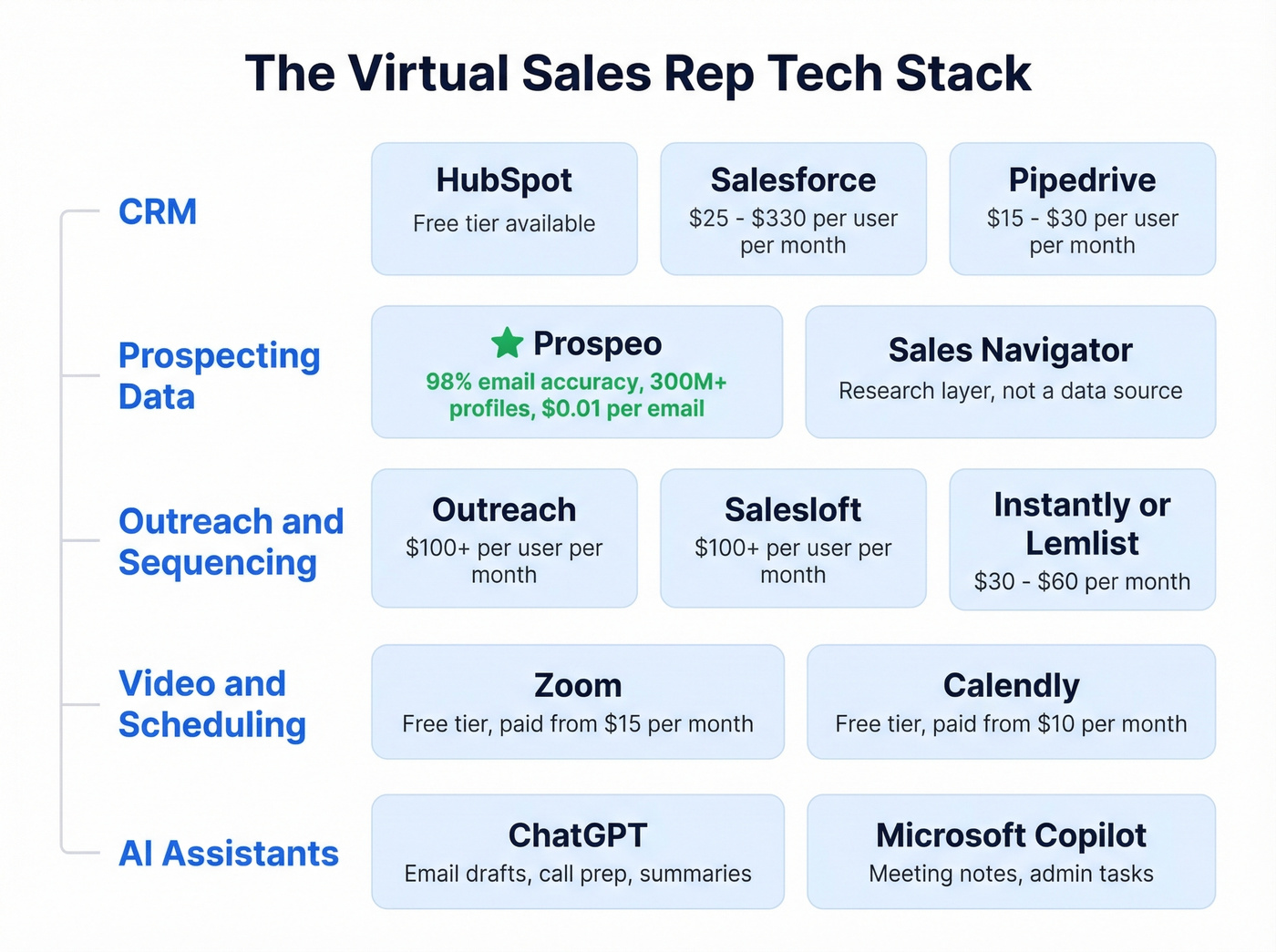
HubSpot is the obvious starting point. The free tier is genuinely usable - contact management, deal tracking, basic reporting. Paid plans start around $20-$30/month per seat when you need more. Salesforce ($25-$330/user/month depending on edition) is what you'll use if your company already runs it - don't choose it on your own unless you enjoy configuration. Pipedrive offers a 14-day trial and is a solid pick for a visual pipeline without the overhead, typically $15-$30/user/month. If you want to go deeper, start with how to choose a CRM and then look at CRM automation software.
Prospecting and Contact Data
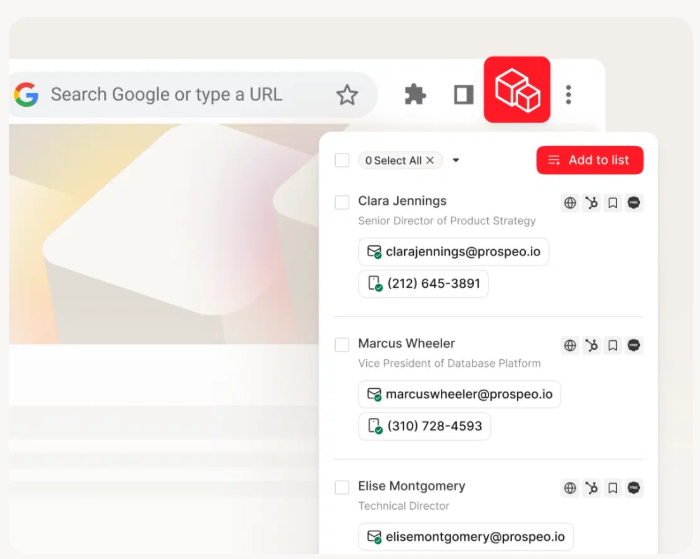
This is where most reps either save or waste hours every week. Prospeo is what our team relies on: 98% email accuracy, 300M+ professional profiles, 125M+ verified mobile numbers with a 30% pickup rate, and data refreshed every 7 days - most competitors update every 4-6 weeks. The Chrome extension lets you find contacts from any website in one click. Teams using Prospeo book 26% more meetings compared to enterprise alternatives, at roughly $0.01 per email. The free tier gives you 75 verified emails per month plus 100 Chrome extension credits - enough to test your first outreach sequences without spending a dime. For comparisons, see the best B2B database and verified contact databases.
Sales Navigator (~$100+/month) works as a research layer for identifying accounts and mapping org charts, but it's not a data source - you still need verified contact info to actually reach people.
Dialers and Email Sequencing
Outreach and Salesloft (~$100-$200+/user/month on annual contracts) are the enterprise standards. If your company provides one, learn it deeply. For solo reps or small teams, Instantly and Lemlist are budget-friendly alternatives for cold email - both start around $30-$60/month and integrate natively with your prospecting data for seamless list imports. If you're building sequences from scratch, use a follow up email sequence strategy.
Video, Meetings, and AI Assistants
Zoom's free tier handles most demo needs. Paid plans start around ~$15/month and add longer sessions plus more admin controls. Pair it with Calendly (free tier available, paid starts ~$10-$15/month) so prospects can book time without the back-and-forth email chain.
ChatGPT and Microsoft Copilot are becoming daily tools for reps - use them to draft personalized email openers, prep for discovery calls, and summarize meeting notes. They won't replace your judgment, but they'll cut your admin time significantly.
Productivity and Communication
Slack (free tier, paid ~$7-$9/user/month) for team communication. Gong is a common call recording and coaching platform in larger orgs, with enterprise pricing that often lands at $100+/user/month - if your company provides it, use it religiously. Listening to your own calls is the fastest way to improve.
How to Get Hired
The path in is more straightforward than most people think.
1. Target virtual SDR and BDR roles at SaaS companies. These are explicitly designed for people with zero sales experience. You'll get structured training, a real base salary, and a clear promotion path to Account Executive within 12-18 months. Companies like HubSpot, Gong, and Salesforce are known for strong SDR programs with real onboarding - expect your first week to include scripts, CRM training, and shadow sessions with senior reps. Many teams now hire virtual BDR/SDR positions as fully remote from day one, so geography is rarely a barrier. To understand the bigger picture, see what B2B sales reps actually do day to day.
2. Get certified before you apply. HubSpot's Sales Software certification is free and takes a weekend. Coursera's sales specializations run $40-$50/month. Both signal that you're serious and already familiar with the tools.
3. Hit the job boards strategically. Indeed lists 36,000+ remote sales jobs. Glassdoor has 27,000+. Filter for "SDR," "BDR," or "sales development" plus "remote." Apply to 10-15 per week, not 50 - quality applications with tailored cover notes beat spray-and-pray every time.
4. Network in remote sales communities. The consensus on r/sales is that breaking into remote selling without experience is absolutely doable if you target the right entry-level roles - search "remote sales no experience" and you'll find dozens of threads with playbooks and company recommendations. Remote work communities on Slack and Discord often share unlisted roles too.
Red Flags to Watch For
Skip any listing that shows these signals:
- Commission-only compensation. No base salary means no real employer investment in your success.
- MLM-adjacent language. "Be your own boss," "unlimited earning potential," "ground-floor opportunity" - run.
- No clear product or company website. If you can't figure out what they sell in 30 seconds, it's not a real sales role.
- "Requires personal investment" or "buy your own leads." Legitimate companies provide your tools and data.
How to Succeed Selling Remotely
The biggest challenge isn't learning the tools or hitting quota. It's the isolation. Funnel Clarity's research confirms what every remote rep already knows: rejection is harder to absorb when you're sitting alone in a spare bedroom.
Motivation after rejection. Set daily activity goals, not just outcome goals. "50 dials and 20 personalized emails" is controllable. "3 meetings booked" isn't always. Track the inputs and the outputs follow. If you want to sharpen the fundamentals, start with these phone sales skills and a proven outbound call script.
Tech reliability kills momentum. Invest in a backup internet connection - a mobile hotspot costs $20-$50/month - a quality headset, and a second monitor. A dropped Zoom call during a demo with a VP is the kind of mistake that costs you real money. I learned this one the hard way during a demo with a Fortune 500 prospect; my Wi-Fi cut out mid-pitch and the deal went cold.
CRM discipline collapses without structure. Update your CRM in real time, not at the end of the day. The moment you finish a call, log the notes. Batch-updating at 5 PM means half your intel gets lost.
Let's be honest about the upside, though: the buyer data backs this up. Only 15-25% of B2B buyers want in-person interaction to make a purchase decision. You're not selling at a disadvantage by being remote. You're selling the way buyers actually want to buy.
AI Sales Agents: The Other Meaning
There's a second meaning of "virtual sales rep" gaining traction - and it's not a human. An AI virtual sales development representative is software that autonomously performs sales tasks using natural language processing, machine learning, and automation. These virtual sales agents engage prospects across email, chat, and SMS, qualify leads, schedule meetings, and recommend next-best actions. If you're evaluating tools, start with AI SDR software and a broader roundup of AI sales tools.
Adoption is accelerating fast. 45% of business leaders say AI agents are already a board-level topic, and 67% report using AI agents in customer-facing operations. Tools like Creatio, Clay, Gong, and Clari are leading the charge.
But AI excels at data entry, meeting prep, lead scoring, and initial qualification - the admin work that eats 72% of a rep's day. It doesn't close complex deals, navigate political buying committees, or build the trust that makes a prospect choose you over a competitor with a lower price.
Our take: if your average deal size is under $10K, an AI agent will genuinely replace the SDR function within two years. Above that threshold, the human rep who uses AI as a teammate - letting it handle CRM updates and lead scoring while they focus on relationships and closing - is the one hitting President's Club.
Virtual Sales Assistant vs Full-Time Hire
For founders or sales leaders evaluating how to build pipeline, this is a common fork in the road. A virtual sales assistant - whether a fractional contractor or an AI-powered tool - handles prospecting, data enrichment, and appointment setting at a fraction of the cost of a salaried rep. Full-time hires bring deeper product knowledge, stronger buyer relationships, and the ability to close complex deals. If you're building a repeatable system, borrow from these pipeline generation ideas and B2B prospecting strategies.
The right answer depends on deal complexity and volume. For high-volume, lower-ACV outbound, a virtual assistant or AI agent can handle the top of funnel efficiently. For enterprise sales with six-month cycles and multi-threaded buying committees, you need a dedicated full-time rep who owns the relationship end to end.
Is This a Good Career in 2026?
The short answer is yes. AccountMakers' 2026 breakdown puts the market at roughly 45% fully remote, 40% hybrid, and 15% in-office sales roles. Companies that insist on in-office sales teams are increasingly the exception.
A contrarian take worth considering: the "virtual sales rep" title is dying. Not because the role is disappearing - because every sales rep is becoming one. The distinction between "remote" and "regular" sales is collapsing.
The career progression is straightforward: SDR to Account Executive to Senior/Enterprise AE to Sales Leadership. Each step roughly doubles your total comp potential. A senior enterprise AE at a growth-stage SaaS company can clear $250K+ in a good year. And you can do the whole thing from your spare bedroom.
FAQ
What's the difference between a virtual sales rep and an inside sales rep?
Both sell remotely using phone, email, and video - the distinction is location. Inside sales typically means working from a company office, while a virtual sales representative is fully remote. The tools, skills, and compensation overlap almost completely, and the line between them continues to blur.
Can you become a virtual sales representative with no experience?
Yes - start as an SDR or BDR at a SaaS company, since these roles are designed for entry-level candidates. Get a free HubSpot Sales certification before applying, target listings with structured training and a real base salary, and avoid anything commission-only.
What tools do virtual sales reps use most?
The core stack is a CRM (HubSpot or Salesforce), a prospecting data tool like Prospeo for verified emails and direct dials, a video platform like Zoom, and an email sequencing tool such as Outreach, Lemlist, or Instantly. Those four categories cover 90% of your daily workflow.
Is virtual selling a stable career path?
Roughly 85% of sales roles in 2026 are either fully remote or hybrid. The BLS projects 4% growth for sales representatives through 2032, and digital selling adoption continues to accelerate as buyers increasingly prefer remote purchasing experiences over in-person meetings.
How much commission do virtual sales reps earn?
Commission typically adds $29K-$53K on top of base salary, with standard splits of 50/50 or 60/40 base-to-variable for SDR roles and 40/60 for closers. Top performers with accelerators and multipliers can realistically double their base pay in a strong quarter.
The best virtual sales reps protect their selling time. Prospeo's Chrome extension (used by 40,000+ reps) pulls verified emails and direct dials from any website or CRM in one click - no tab-switching, no manual research. At $0.01 per email, it's built for reps who need enterprise-grade data without enterprise pricing.
Build tomorrow's call list in minutes, not hours.