

What Is a Lead Generation Strategy (And How to Build One That Works)
A lead generation strategy is the difference between a pipeline that compounds and one that flatlines. Most teams have pieces - a CRM here, a cold email tool there - but no system connecting them. Let's fix that.
What Is a Lead Generation Strategy?
It's the repeatable system that turns strangers into pipeline. It covers how you identify potential buyers, attract their attention, capture their information, and qualify them for sales conversations.
Not all leads are equal. A common B2B lifecycle breakdown:
- IQL - Downloaded a guide or read a blog post. Curious, not buying.
- MQL - Multiple visits, form fills, webinar attendance. Marketing says they're warm.
- PQL - Used your product via free trial or freemium and shown upgrade signals.
- SQL - Sales has vetted them. Budget, authority, timeline - ready for a real conversation.
You'll also see service-qualified leads in some funnels, especially when a support or success team flags an expansion opportunity. Your strategy needs to move people through these stages deliberately, not accidentally.
The 60-Second Version
- Define your ICP tightly. Filter to roughly 1,000 contacts before you touch anything. Broad lists waste money.
- Pick 3-4 channels, SEO first. SEO leads close at 14.6% vs 1.7% for outbound.
- Score every lead. 60+ points = MQL, 80+ = SQL. No scoring means your reps chase ghosts.
- Verify your data before you sequence. You can't nurture a bounced email.
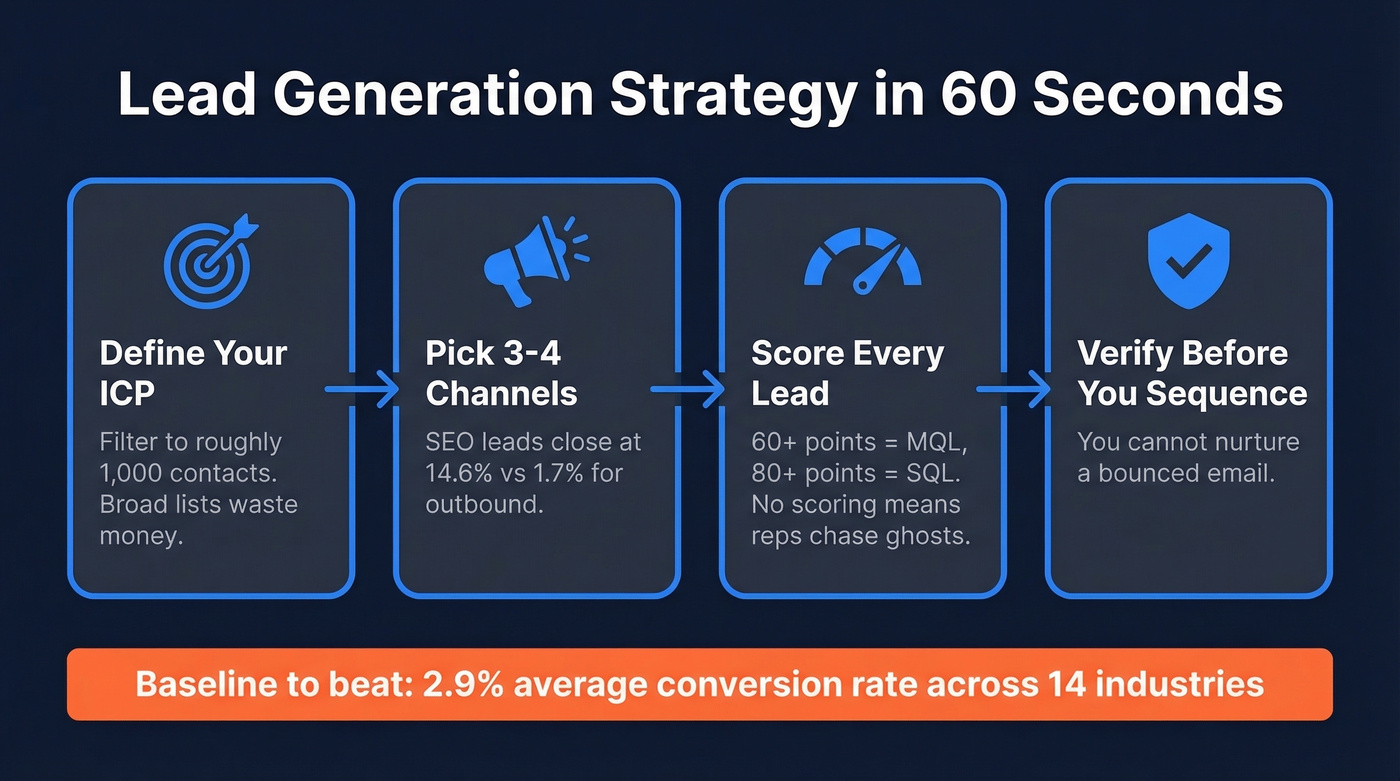
The average conversion rate across 14 industries is 2.9%. That's your baseline. Let's beat it.
B2B vs B2C - Why It Changes Everything
| Dimension | B2B | B2C |
|---|---|---|
| Audience | 6-10 stakeholders per deal | Individual buyer |
| Sales cycle | Often measured in months | Minutes to days |
| Content style | Data-driven, professional | Emotional, visual |
| Top channels | Email, SEO, webinars | Social ads, influencers |
B2B deals involve committees. Your approach needs multi-threading across the economic buyer, the champion, and the technical evaluator - sometimes all three have veto power, and none of them talk to each other about vendor emails. B2C is about speed and emotion. If you're reading this, you're almost certainly building for B2B, so that's where we'll focus.
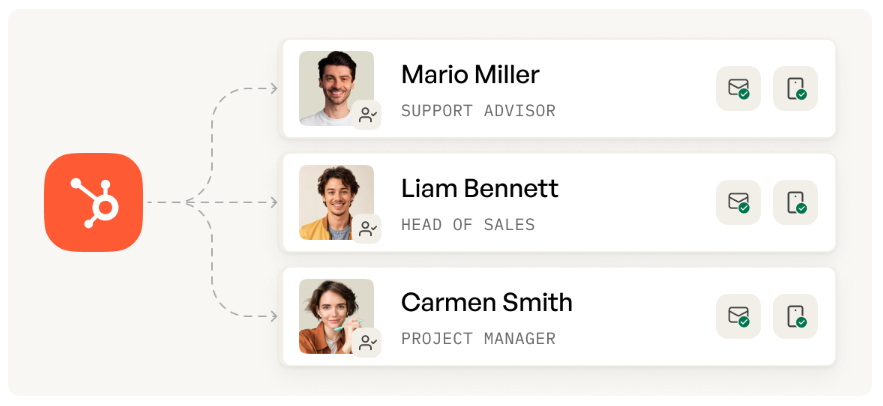
6 Steps to Build Your Strategy
1. Define Your ICP
The biggest mistake teams make is going too broad. A practitioner on r/LeadGeneration put it well: filter your target list down to about 1,000 contacts before you start outreach. That forces precision.
If you want a tighter way to define and size your market, start with your addressable market.
2. Choose Your Channels
SEO leads close at 14.6% vs 1.7% for outbound. Meanwhile, 97% of people ignore cold calls. That doesn't mean outbound is dead - it means you pick your spots.
The winning play for most B2B teams: SEO and content as your foundation, cold email as your accelerant, paid as your amplifier. Three channels done well beats six done poorly. Every time.
If you're building outbound alongside inbound, use a simple B2B cold email sequence to keep execution consistent.
3. Create Lead Magnets
Top-performing landing pages convert at 11%+. The average sits at 2.35%. The gap is almost always specificity.
A generic "Ultimate Guide to X" converts worse than a calculator, benchmark report, or template that solves a narrow problem your buyer actually has right now. Make the magnet so useful they'd almost pay for it.
4. Capture and Verify Leads
B2B contact data decays fast. People change jobs, companies restructure, emails go stale. Without verification, 30%+ bounce rates are common - and that tanks your domain reputation. We've seen teams destroy months of domain warming with a single unverified blast.
Before any contact enters a sequence, verify it. This is non-negotiable.
To keep bounces down and protect deliverability, track your email bounce rate and follow a proper email deliverability guide.
5. Score and Qualify
Lead scoring separates teams that close from teams that chase. Two frameworks dominate.
BANT works for shorter, simpler sales cycles. It's been around since IBM invented it in the 1950s and still works when you need a fast read on readiness. MEDDIC is for enterprise. PTC grew from roughly $195M to $650M in four years after implementing it. If your deals involve procurement, legal review, and multiple sign-offs, MEDDIC is the move.
Set clear thresholds: 60+ points = MQL, 80+ = SQL. Anything below 60 stays in nurture.
If you want to formalize this, use a dedicated lead scoring model and align it with your lead status stages.
6. Nurture and Hand Off
80% of new leads never become customers due to lack of nurturing. Half aren't ready to buy at first contact. The typical B2B buyer needs 6-12 touches before they're ready to talk.
Speed matters too. Responding within 5 minutes increases contact rates by 900%. After 30 minutes, close probability drops 80%. Build automated sequences that fire immediately, then layer in personalized follow-ups as engagement scores climb.
When leads go quiet, keep your follow-ups sharp with proven sales follow-up templates.

You just read that 30%+ bounce rates destroy domain reputation. Prospeo's 5-step verification delivers 98% email accuracy on 143M+ verified addresses - refreshed every 7 days, not every 6 weeks. Your lead gen strategy deserves data that won't torch your sender reputation.
Stop building strategy on top of bad data. Verify before you sequence.
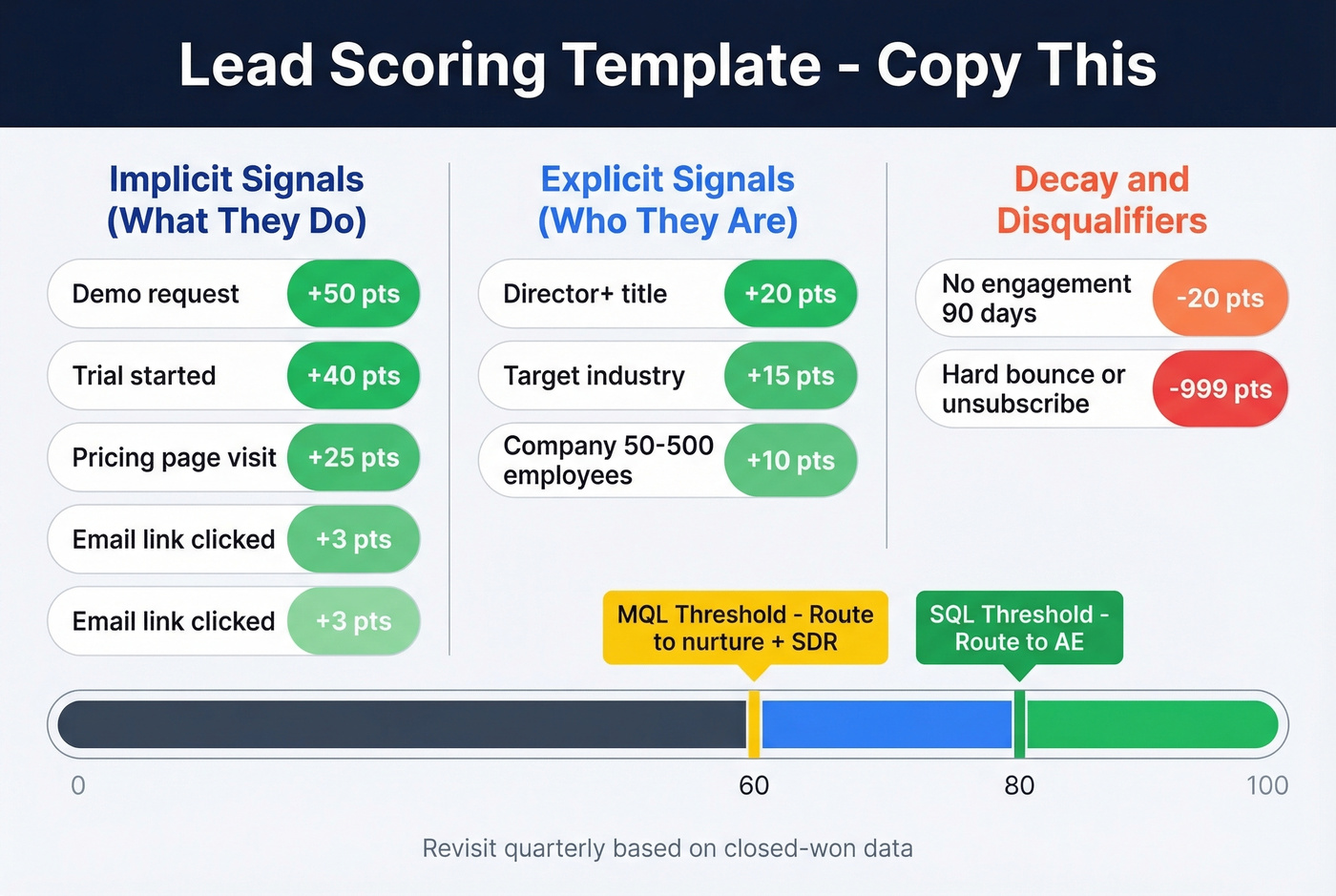
Lead Scoring Template You Can Copy
Two dimensions: explicit measures who they are, implicit measures what they do.
| Signal | Type | Points |
|---|---|---|
| Demo request | Implicit | +50 |
| Trial started | Implicit | +40 |
| Pricing page visit | Implicit | +25 |
| Email link clicked | Implicit | +3 |
| Director+ title | Explicit | +20 |
| Target industry | Explicit | +15 |
| Company 50-500 employees | Explicit | +10 |
| No engagement 90 days | Decay | -20 |
| Hard bounce / unsubscribe | Disqualify | -999 |
Thresholds: 60+ = MQL, route to nurture + SDR. 80+ = SQL, route to AE. Revisit quarterly - if your SDRs say MQLs are garbage, raise the threshold. We adjust ours every quarter based on closed-won data, and the difference between a well-tuned model and a stale one is dramatic.
Mistakes That Kill Lead Gen Campaigns
Here's the thing: most campaigns don't fail because of strategy. They fail because of execution gaps.
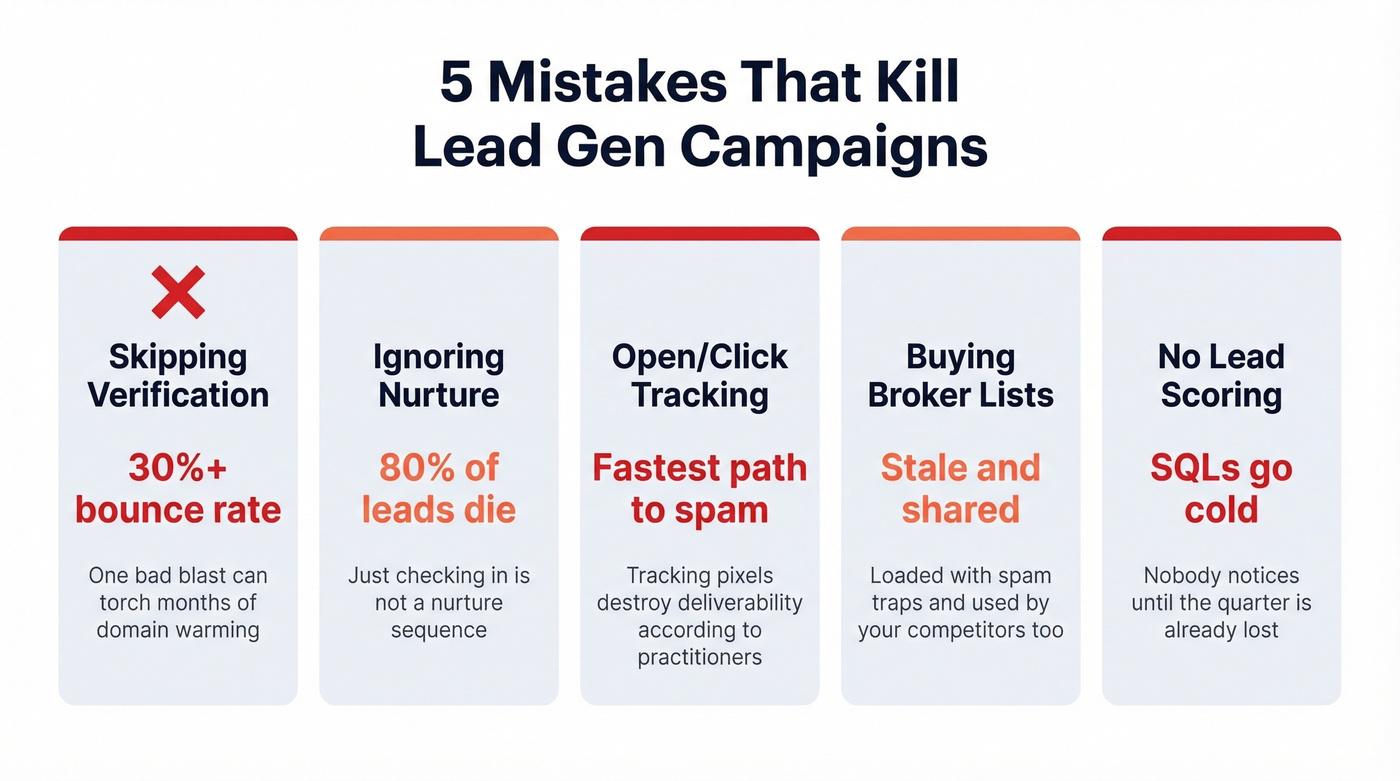
Skipping verification. Sending to unverified lists means 30%+ bounces, which craters your domain reputation. One bad campaign can take months to recover from. We watched a client torch a six-month-old domain in a single afternoon because they imported a purchased list without checking it first.
Ignoring nurture. 80% of leads die without it. If your only follow-up is "just checking in," you don't have a nurture sequence - you have a guilt trip.
Enabling open/click tracking. The consensus on r/LeadGeneration is clear: tracking pixels destroy deliverability. One practitioner called it "the fastest way to land in spam." Don't trust open-rate metrics from tools that inject tracking.
Buying lists from brokers. Purchased lists are stale, shared across competitors, and loaded with spam traps. Build your own list from a verified database instead.
No lead scoring. Without scores, reps waste time on IQLs while SQLs go cold. This is the silent killer - nobody notices until the quarter's already lost.
Skip the 12-tool stack if your average deal size is under $10K. A tight ICP, verified emails, and a three-step sequence will outperform most bloated setups.
The Tools That Matter
Your lead gen stack doesn't need a dozen tools. It needs the right ones in three categories.
| Function | Tool | Starting Price | Best For |
|---|---|---|---|
| CRM | HubSpot | Free; paid from ~$20/mo | Teams under 10 reps |
| Prospecting | Apollo | Free; paid from ~$49/user/mo | Volume prospecting |
| Email sequences | Instantly | ~$30/mo | Deliverability infrastructure |
| Email sequences | Lemlist | ~$39/mo | Personalization features |
In our experience, verification is the single highest-ROI step in any outbound workflow. Prospeo's 300M+ profiles, 7-day data refresh cycle, and intent data across 15,000 topics mean you're finding contacts who are actively researching solutions like yours - not just names on a spreadsheet.
Apollo is powerful for prospecting and sequences, but its contact data is user-contributed and needs external verification before sequencing. One r/LeadGeneration practitioner called Apollo's email infrastructure "terrible" - strong word, but the deliverability warning is real. HubSpot's free CRM is genuinely excellent for smaller teams. For sequences, Instantly wins on deliverability infrastructure, Lemlist wins on personalization. Pick based on your priority.
If you're evaluating your stack, start with a shortlist of outbound lead generation tools and only add complexity when the numbers demand it.

Benchmarks Worth Tracking
| Metric | Benchmark |
|---|---|
| Conversion rate | 2.9% average |
| Cost per lead | $198 average |
| B2B SaaS CAC | $239 combined |
| LTV:CAC ratio | 3:1 healthy minimum |
| Speed-to-lead | Under 5 minutes |
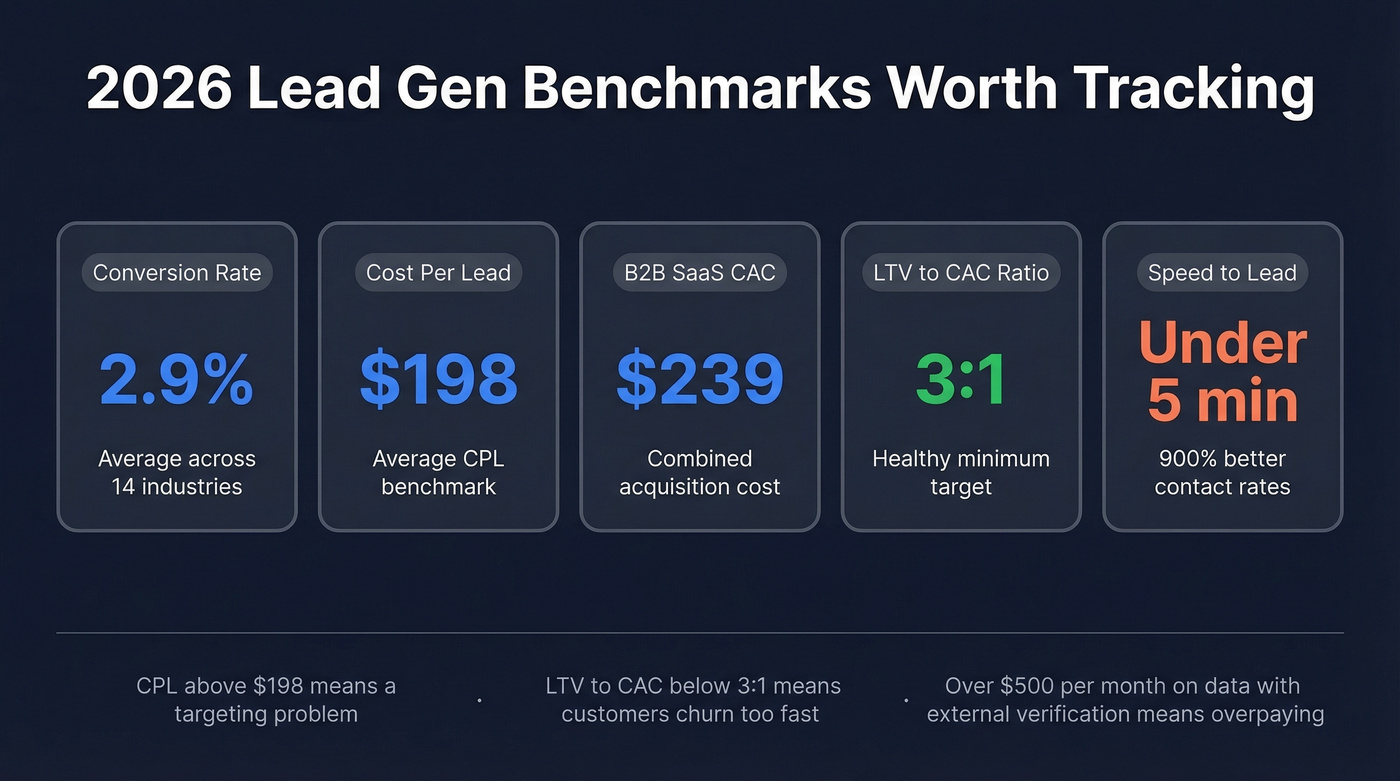
If your CPL is well above $198 and your conversion rate sits below 2.9%, you've got a targeting or channel problem. When your LTV:CAC dips below 3:1, you're spending too much to acquire customers who don't stick around long enough to justify the cost. And if you're spending more than $500/mo on a data tool while still verifying externally, you're overpaying.
To pressure-test your funnel end-to-end, monitor core lead generation metrics and overall pipeline health.
Building a Strategy That Lasts
The best lead generation strategy isn't the most complex one - it's the one your team actually executes consistently. Nail your ICP, verify your data, score ruthlessly, and nurture the rest. Everything else is optimization.
A tight ICP, verified emails, and a three-step sequence beats a bloated 12-tool stack. Prospeo gives you 30+ filters to narrow your list to exactly those 1,000 ideal contacts - by intent signals, technographics, headcount growth, and funding - with verified emails and direct dials attached.
Filter to your ICP, export verified contacts, and start sequencing in minutes.
FAQ
What is a lead generation strategy in simple terms?
It's the end-to-end system a company uses to attract, capture, and qualify potential buyers. It connects your ICP definition, channel selection, lead magnets, scoring model, and nurture sequences into one repeatable workflow that feeds pipeline consistently.
What are the main types of leads?
Four common types by buying readiness: IQL (curious), MQL (engaged), PQL (used product), SQL (sales-ready). IQLs get educational content, MQLs enter nurture sequences, and SQLs get routed directly to a rep.
How long does it take to see results?
Outbound campaigns generate leads within 2-4 weeks. Inbound channels like SEO take 3-6 months to compound but produce leads that close at 8x the rate of outbound - making them the better long-term investment.
What's a good conversion rate?
The average across 14 industries is 2.9%. Top-performing landing pages hit 11%+. If you're below 2%, revisit your targeting criteria and offer specificity before increasing ad spend.
How do I keep lead data accurate?
Run every contact through a dedicated verification tool before loading them into any sequence. A 5-step verification process that catches invalid addresses, catch-all domains, and spam traps keeps bounce rates under 4% - versus the 30%+ common with unverified lists.