How to Automate Deal Reviews: A Practical Guide for Sales Teams
It's Monday morning. There are 47 deals sitting in Stage 3, and your VP wants to know which ones are real. Nobody can answer with confidence because the CRM is a graveyard of stale contacts and self-reported optimism. Gong's research shows CRMs capture about 1% of customer interactions - the other 99% lives in calls, emails, and Slack threads that never get logged.
That's the gap you close when you automate deal reviews with the right data and tooling.
What You Need (Quick Version)
You don't need a $50K/year revenue intelligence suite to start automating pipeline reviews. You need three things:
- Clean CRM data - enrichment and contact verification to kill stale records (see CRM hygiene)
- A scoring framework - Vivun for MEDDPICC/BANT scoring, free to start
- Alerts when deals stall - Momentum or native Slack/CRM notifications (tie this to deal forecast accuracy)
The average sales team runs 8.3 tools costing $187/rep/month, and 73% report overlap waste totaling $2,340/rep/year. Start lean. Add layers only when you've outgrown the basics.
What Is Deal Review Automation?
Deal review automation uses AI scoring, CRM enrichment, and alert triggers to replace the manual prep work that eats up pipeline review meetings. Three terms get conflated constantly:
- Deal review - a pipeline health assessment. Are deals progressing? Where are the gaps? (If you're standardizing the cadence, borrow from an internal QBR format.)
- Deal desk - a cross-functional approval process where sales, finance, and legal sign off on non-standard pricing and terms.
- Quote review - CPQ and pricing approval workflows.
This guide focuses on the first one. The category is maturing fast - Gartner published its first Magic Quadrant for Revenue Action Orchestration in late 2025, which tells you the market has moved well past "nice to have."
Why Manual Reviews Break Down
Reps spend 2-3 hours per day on non-selling activities, and roughly half of that is pure admin - logging calls, updating stages, prepping for reviews. Ask any RevOps manager what they dread most about Monday pipeline calls and you'll hear the same thing: nobody trusts the data. (If this sounds familiar, it's usually one of the classic CRM limitations.)

RevOps spends hours pulling reports and building slides. Managers scan 30+ deals in 45 minutes, relying on gut feel and whatever the rep typed into "next steps" last Tuesday. Nobody trusts the stages. Nobody trusts the close dates. The meeting ends with action items that don't get tracked.
The core problem isn't process - it's data. Automated scoring and alerts are only as good as the information feeding them. (This is why data quality work pays off fast.)

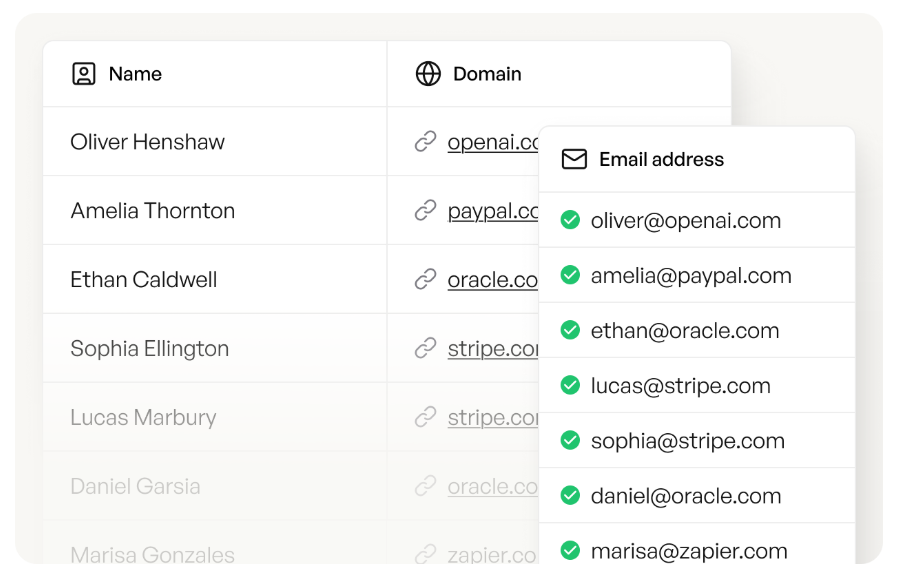
You just read it: the core problem isn't process - it's data. Prospeo enriches your CRM with 50+ data points per contact at a 92% match rate, refreshed every 7 days. That means your deal scoring and pipeline alerts actually work because they're built on verified contacts, not last quarter's guesses.
Fix the data and your deal reviews fix themselves.
What to Automate (and What Not To)
Not everything should be automated. The HeyDan framework draws a useful line between rule-based tasks and high-nuance judgment calls. (For a broader system view, see an automated sales process.)
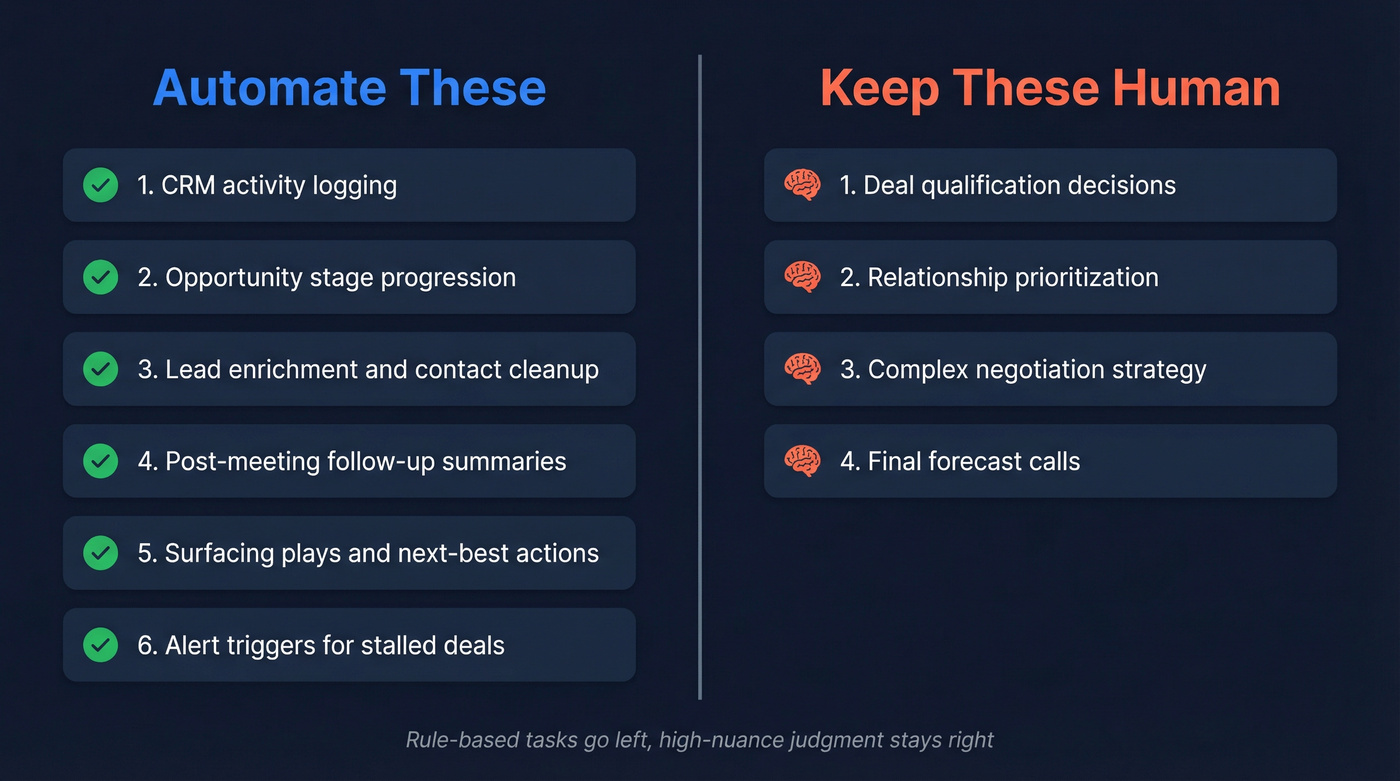
Automate these: CRM activity logging, opportunity stage progression based on signals, lead enrichment and contact data cleanup, post-meeting follow-up summaries, surfacing plays and next-best actions in CRM, and alert triggers for stalled or at-risk deals. (A lot of this is now handled via AI CRM data entry automation.)
Keep these human: deal qualification decisions, relationship prioritization, complex negotiation strategy, and final forecast calls. AI deal coaching can surface the data and recommend next steps, but a human still needs to read the room.
Tools That Automate Deal Reviews
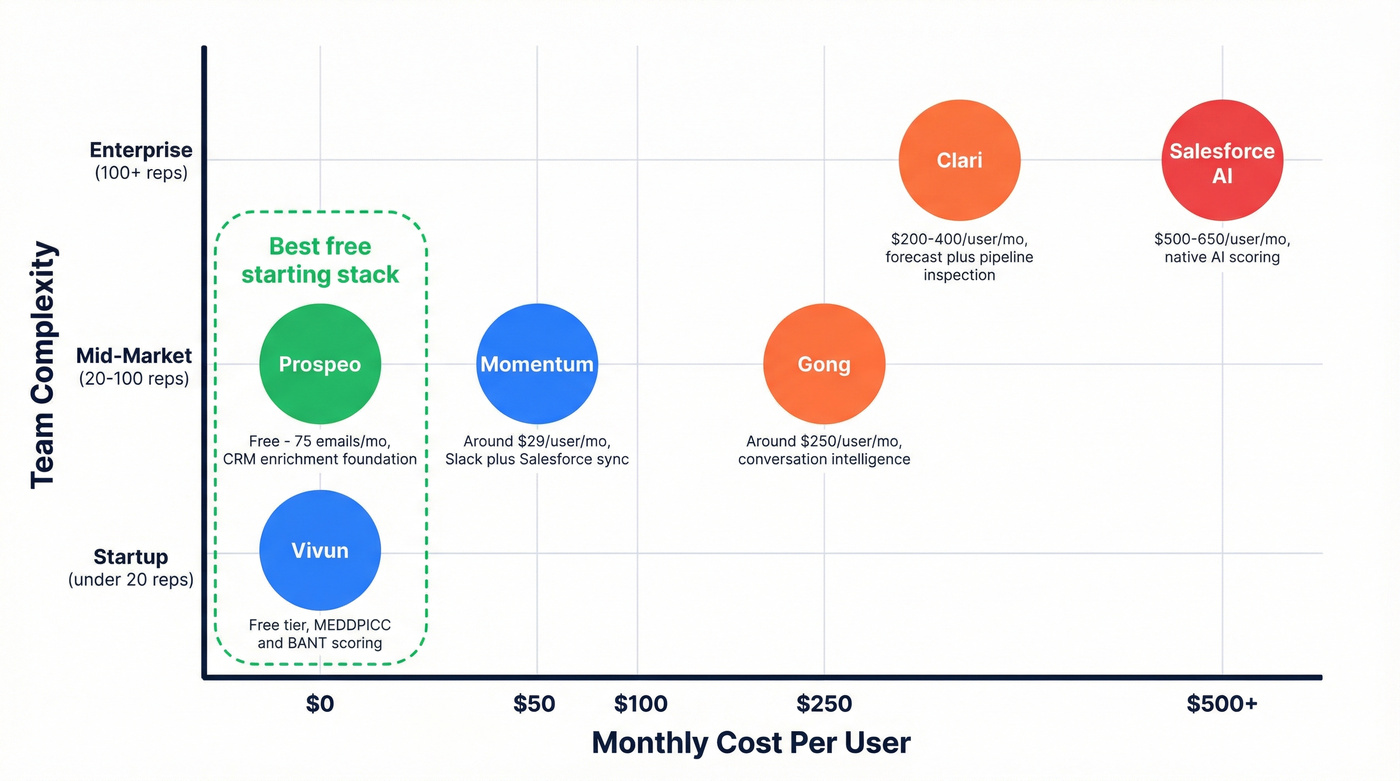
| Tool | Core Automation | Starting Price | Best For |
|---|---|---|---|
| Prospeo | CRM enrichment + verification | Free - 75 emails/mo | Data quality foundation |
| Vivun | MEDDPICC/BANT scoring | $0 free tier | SMBs wanting scoring |
| Momentum | CRM updates + Slack alerts | ~$29/user/mo | Mid-market Slack teams |
| Gong | Conversation intel + risk flags | ~$250/user/mo | Enterprise with 100+ reps |
| Clari | Forecast + pipeline inspection | ~$200-400/user/mo | Enterprise RevOps |
| Salesforce AI | Native AI scoring + pipeline alerts | $500-650/user/mo | Deep SF ecosystem shops |
Vivun
The best free entry point for framework-based deal reviews. Vivun's Deal Review Accelerator runs full MEDDPICC scoring with gap analysis, BANT scoring, and generates re-engagement playbooks for at-risk deals. The free tier supports up to 5 spaces - enough for a startup sales team to standardize pipeline reviews without spending a dollar. Enterprise pricing is custom, likely mid-five-figures annually.
Momentum
Use this if you're a mid-market team living in Slack and Salesforce. Momentum auto-updates CRM fields including MEDDICC and next steps, creates Slack Deal Rooms for real-time collaboration, and triggers alerts when deals go quiet.
Skip this if you're not on Slack. Momentum's power is the two-way Salesforce-Slack sync - without both, you're paying for half the value. Starter plans run around $29/user/month, with median contracts around $16K/year.
Gong
The enterprise standard for conversation intelligence, and its deal boards and risk flags are the closest thing to automated pipeline reviews most large teams have. Gong captures what reps actually say on calls, maps it against deal stages, and surfaces risk signals that self-reported CRM data misses entirely. Its AI deal coaching analyzes talk patterns, objection handling, and competitive mentions to give managers actionable feedback without rewatching every call. (If you're comparing options, start with a shortlist of sales call review software.)
The tradeoff is cost - roughly $250/user/month - and it takes real rollout effort to get meaningful value. For teams under 50 reps, the ROI math gets tough. Reddit threads on r/sales consistently echo this: Gong is fantastic if you have the deal volume to justify it, but overkill for smaller orgs.
Clari & Salesforce AI
Clari merged with Salesloft in late 2025, combining roughly $450M in ARR into a single revenue platform. The post-merger product is still stabilizing. If you're already in the Clari ecosystem, stay put. If you're evaluating fresh, wait until mid-2026 for the integration dust to settle. Expect $200-400/user/month.
Salesforce AI handles basic deal scoring and pipeline alerts natively if you're already on Sales Cloud. Full AI functionality runs $500-650/user/month, which prices out most mid-market teams. Best for orgs that want everything in one ecosystem and have the budget to match.
Look - if your average deal size is under $15K, you probably don't need Gong or Clari. Vivun's free scoring plus clean CRM data will get you 80% of the value at a fraction of the cost. Save the enterprise tools for when you actually have enterprise complexity.
The ROI of Automated Deal Reviews
A Forrester TEI study on Microsoft Copilot for Sales found up to an 8.2% increase in topline revenue over three years. Adjacent benchmarks are equally compelling: 40% reduction in cycle time, 25% improvement in win rates. In adjacent quote-review workflows, Flex boosted its RFQ win rate from 15% to 68% after adopting automated CPQ - similar gains are achievable in pipeline review automation.
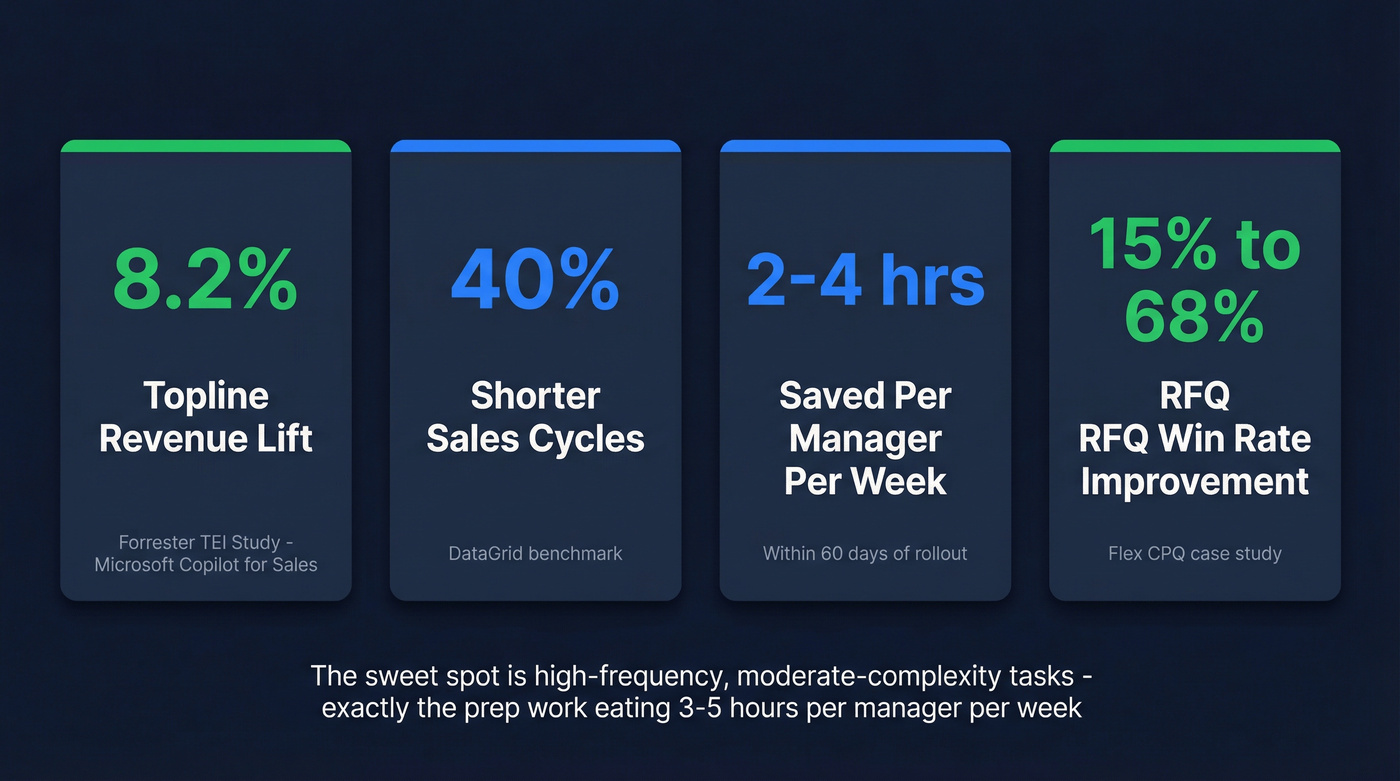
In our experience, the sweet spot is high-frequency, moderate-complexity tasks - exactly the prep work that eats around 3-5 hours per manager per week. If your RevOps team is still building pipeline slides manually, you're burning senior talent on work a $29/user/month tool can handle.
90-Day Rollout Plan
Days 1-30: Fix the foundation.
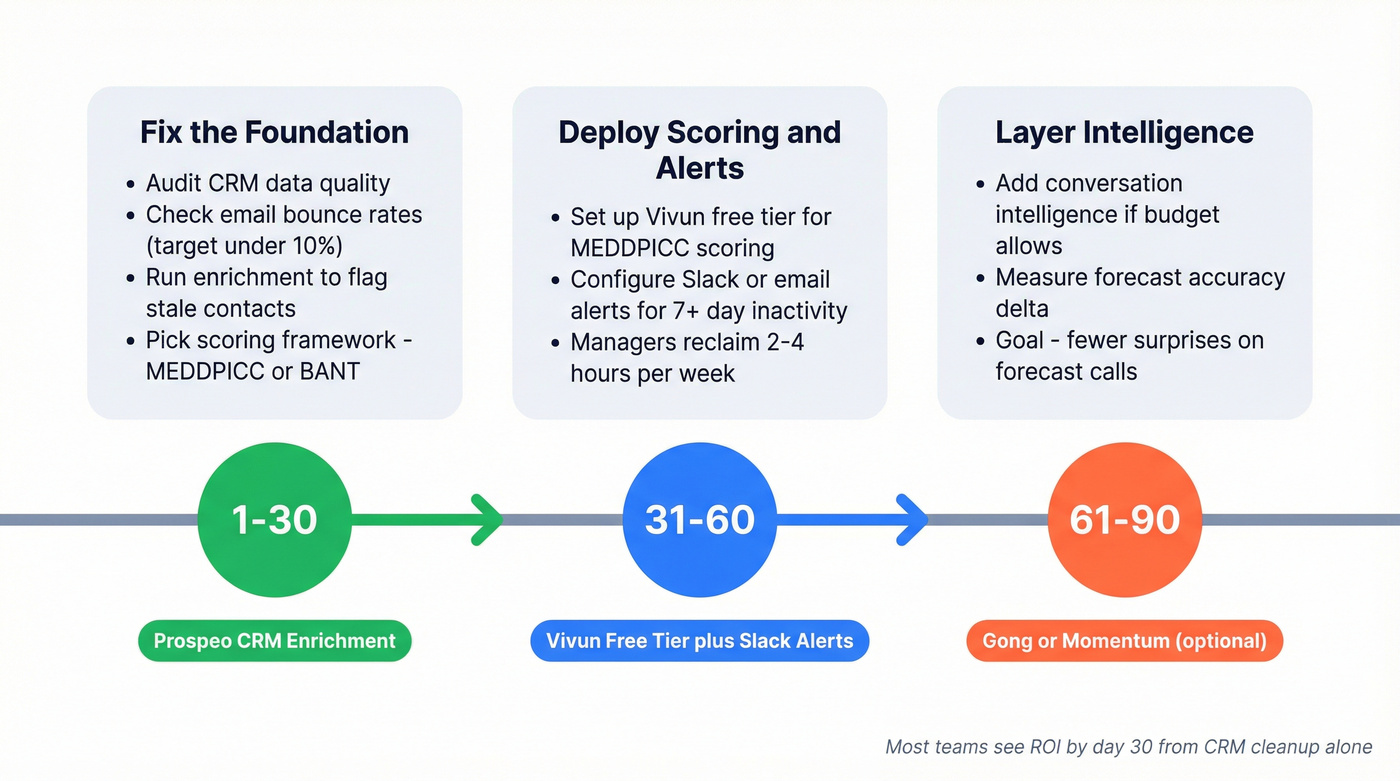
Audit your CRM data quality. Check email bounce rates and contact freshness. Run your pipeline through a CRM enrichment tool to flag stale contacts, update job titles, and verify emails before turning on any automated scoring. Pick a scoring framework - MEDDPICC is the default for B2B, BANT works for transactional sales. Prospeo's enrichment returns 50+ data points per contact at an 83% match rate, so most records come back usable on the first pass.
Here's the thing: most teams skip this phase and wonder why their scoring tools produce garbage. We've seen the first 30 days of CRM cleanup deliver more ROI than any tool purchase. (If you need a repeatable system, use a CRM verify workflow.)
Days 31-60: Deploy scoring and alerts.
Set up Vivun's free tier for MEDDPICC scoring across your active pipeline. Configure Slack or email alerts for deals without activity in 7+ days. Managers typically reclaim 2-4 hours per week at this stage.
Days 61-90: Layer intelligence.
If budget allows, add conversation intelligence or a full revenue platform. Measure the delta in forecast accuracy and deal velocity. The goal isn't more tools - it's fewer surprises on forecast calls.
Stale contacts and dead emails make every deal review a guessing game. Prospeo's CRM enrichment replaces the garbage data feeding your pipeline - 98% email accuracy, 125M+ verified mobiles, at $0.01 per lead. Pair it with Vivun's free scoring and you have automated deal reviews that actually reflect reality.
Stop reviewing deals built on data you don't trust.
FAQ
What's the difference between a deal review and a deal desk?
A deal review assesses pipeline health during forecast calls - are deals progressing, and where are the gaps? A deal desk is a cross-functional team that approves pricing, discounts, and non-standard terms. Different processes, different tools, different stakeholders.
Can I automate deal reviews without a revenue intelligence platform?
Yes. Vivun's free tier handles MEDDPICC scoring, Prospeo's free plan covers CRM enrichment with 75 emails/month, and native Slack alerts catch stalled deals. That stack covers 80% of review prep at zero cost - enterprise platforms are optional until you pass 50+ reps.
How do I know if my CRM data is clean enough for automation?
Check your email bounce rate first. If bounces exceed 10%, your automated scoring and alerts will flag the wrong deals. Run an enrichment pass before turning on any scoring tools - you want verified emails and current job titles as a baseline.
What ROI should I expect?
Forrester benchmarks show up to 8.2% topline revenue lift and 40% shorter cycle times. Most mid-market teams see managers reclaim 2-4 hours per week within 60 days, plus measurable improvement in forecast accuracy by quarter two.