

How to Build a Full Cycle Sales Team That Actually Closes
You're staring at a pipeline report that doesn't add up. Your SDRs booked 200 meetings last quarter, but only 42 turned into real opportunities - and your AEs are blaming the handoff. The CFO wants to know why you're paying $293K per SDR/AE pair when half the leads die before a discovery call even happens.
79% of leads die during team handoffs due to unclear ownership. That stat alone explains why the SDR/AE assembly line is breaking for teams selling lower-ACV deals under $25K. The fix isn't more SDRs. It's building a full cycle sales team with fewer handoffs, better data, and one person who owns the deal from first touch to signed contract.
The Short Version
- Full-cycle works best when your ACV is under $25K, your sales cycle runs under 90 days, and your team has fewer than 10 reps. Above those thresholds, you'll often want more specialization.
- A full-cycle AE saves $85-110K/year versus an SDR/AE pair - and eliminates the handoff where most leads disappear.
- Three non-negotiable tools: a CRM, a verified data platform like Prospeo for accurate contacts, and a sequencing tool. Everything else is a nice-to-have until you've nailed the basics.
What Is a Full Cycle Sales Team?
A full cycle sales team is exactly what it sounds like: one rep owns the entire deal from prospecting through close and into post-sale nurture. No handoff to an AE. No warm transfer to a CSM for the first 90 days. One person, one relationship, one thread of context from first touch to signed contract - sometimes called a 360 salesperson structure because the rep covers every stage of the revenue cycle.
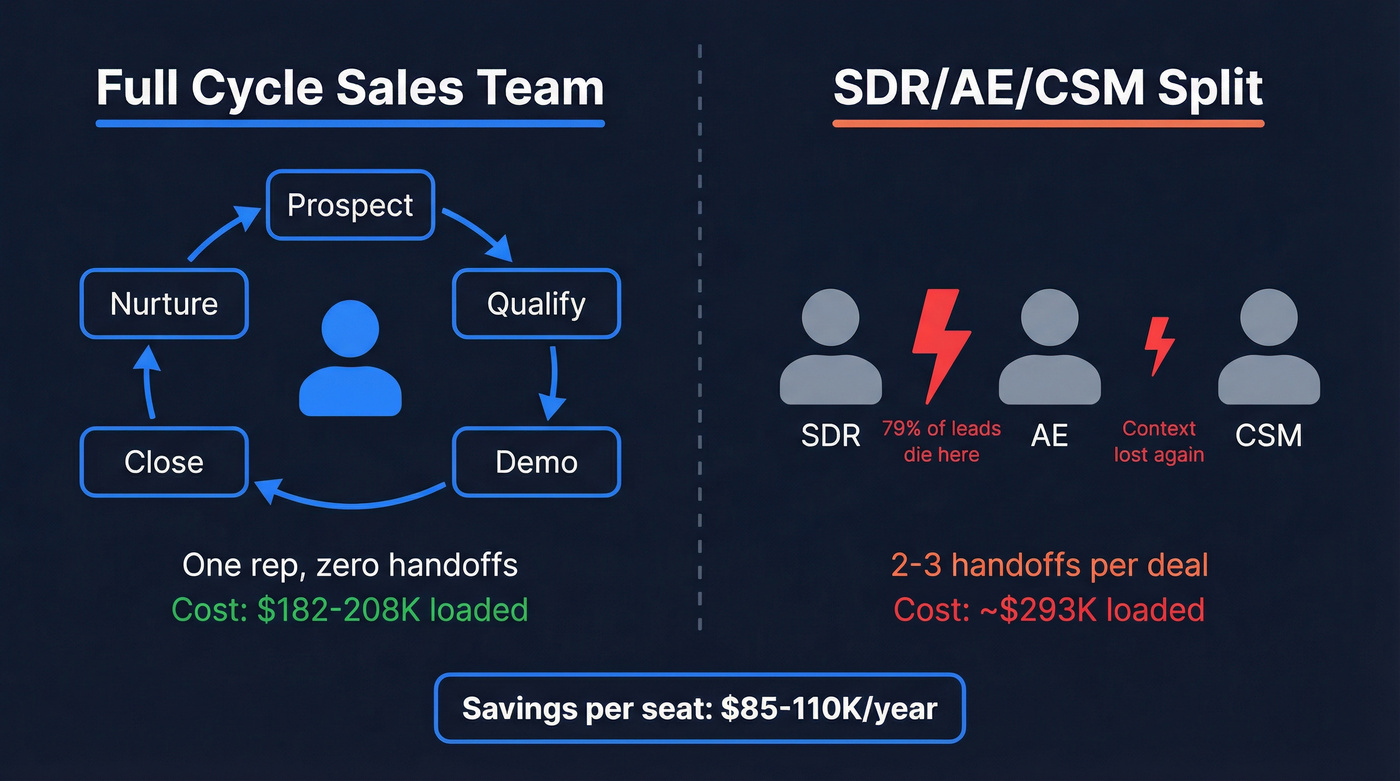
This is the opposite of the SDR/AE specialization model that dominated B2B for the past decade. That model treats sales like a factory: SDRs stamp out raw leads, AEs bolt on the proposal, CSMs oil the machine after the sale. It works at scale. But every seam between stations is a place where deals fall off the belt and nobody picks them up.
| Dimension | Full Cycle | SDR/AE/CSM Split |
|---|---|---|
| Ownership | One rep, end-to-end | 2-3 roles per deal |
| Handoffs | Zero | 1-2 per deal |
| Cost per seat | ~$182-208K loaded | ~$293K loaded |
| Scalability | Harder past 10 reps | Built for scale |
| Relationship depth | High | Fragmented |
The SDR/AE split still makes sense for high-volume enterprise orgs with large teams. For teams selling mid-market deals, though, full-cycle is often the smarter bet.
Why This Model Wins in 2026
The economics of specialization assumed two things: leads are cheap, and handoffs are clean. Neither is true anymore.
Start with the handoff problem. 79% of leads die during team transitions, and 68% never receive proper follow-up. Sales and marketing misalignment costs an estimated $1T annually, and the SDR/AE handoff is one of the most visible fault lines. When ownership changes hands, context evaporates. The SDR knows why the prospect took the meeting. The AE doesn't. The prospect notices.
Speed compounds this. Lead qualification success drops 10x when response time exceeds five minutes, yet only 7% of companies respond within that window. A full-cycle rep who sourced the lead responds faster because they already have context - no calendar ping-pong between SDR and AE.
Then there's the productivity drain. Sales reps spend just 28-36% of their time on revenue-generating activities. Full-cycle reps aren't immune to this, but they eliminate one massive time sink: the coordination tax between SDR and AE calendars, briefing docs, and Slack threads about whether a lead is "qualified enough." (If you're diagnosing leaks like this, see sales pipeline challenges and pipeline health.)
The buyer side has shifted too. B2B buying journeys now involve 27 touchpoints and 5-11 stakeholders. And 61% of B2B buyers prefer a rep-free experience, which means when they do talk to a human, they want one person who knows their entire situation - not someone reading a handoff note for the first time.
Full Cycle vs. SDR/AE: The Real Cost
Let's build the cost model. These numbers come from industry compensation benchmarks and standard fully-loaded multipliers (1.3x OTE for benefits, tools, and overhead).
| Metric | SDR/AE Pair | Full-Cycle AE |
|---|---|---|
| OTE | $225K combined (~$85K SDR + ~$140K AE) | $140-160K |
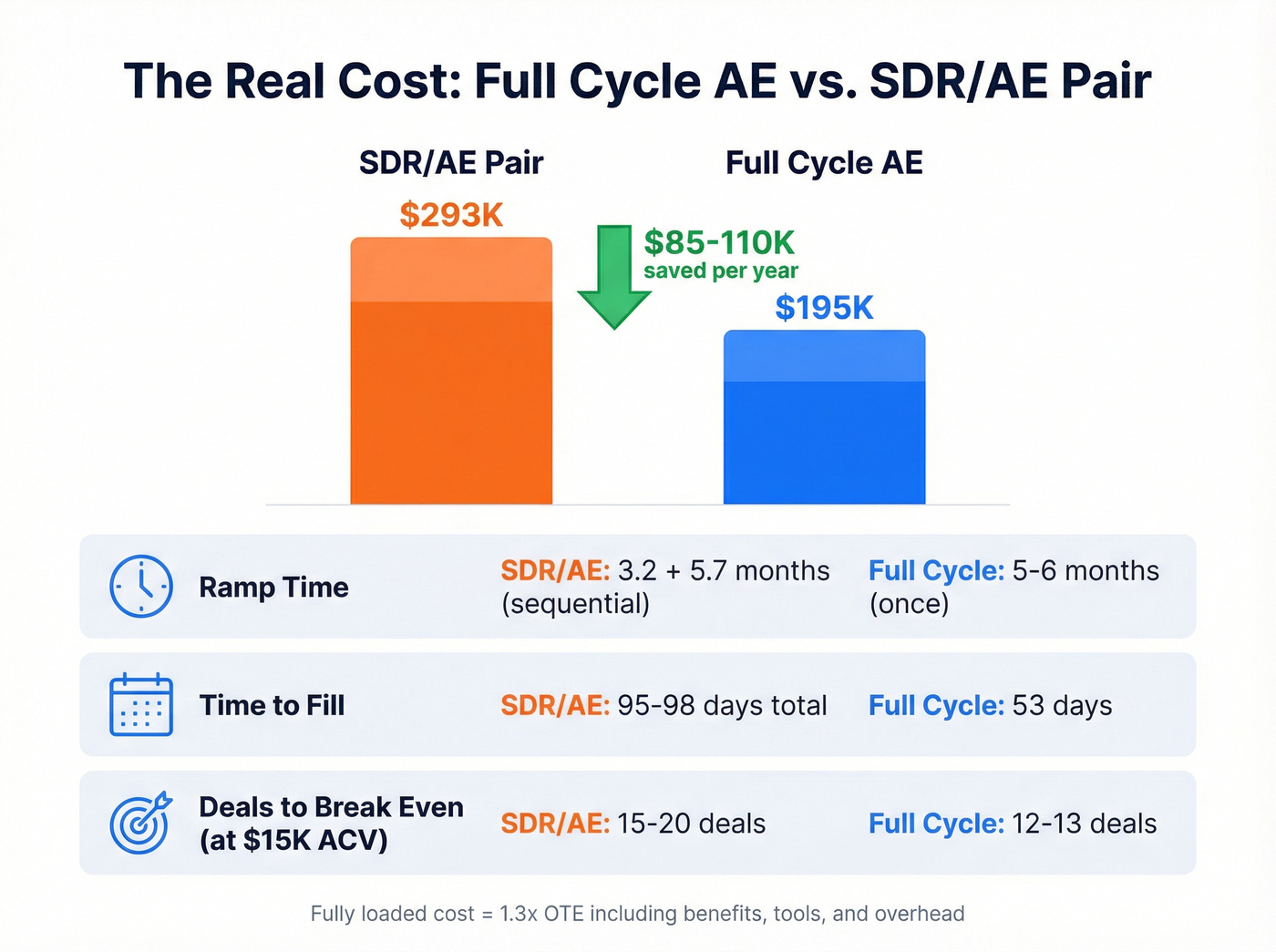
| Fully loaded (1.3x) | ~$293K | ~$182-208K |
| Ramp time | ~3.2 months (SDR) + ~5.7 months (AE) | 5-6 months (once) |
| Time-to-fill | ~95-98 days total (both roles) | ~53 days |
The math is straightforward. A full-cycle AE costs $182-208K fully loaded. An SDR/AE pair costs ~$293K. That's $85-110K in savings per seat, per year - and in our experience, that number is conservative. Teams that reduce ramp complexity by hiring one person instead of two see even larger gains.
Here's the thing: if your ACV is under $15K, you probably shouldn't have SDRs at all. You're paying $225K+ for a pair of people and need 15-20 closed deals just to cover their cost. A single full-cycle rep at $182K needs 12-13 deals. The margin of error shrinks dramatically.
The counterargument is that SDRs generate more top-of-funnel volume. True - but only if those meetings convert. When 79% of handoff leads die, your SDR's 200 meetings become 42 real opportunities. A full-cycle rep booking 8-10 meetings per month with higher conversion rates can match or beat that pipeline number. (To improve conversion, tighten your lead scoring and track lead status consistently.)
Island Sales Model vs. Full Cycle
You'll hear "island sales model" used interchangeably with full-cycle, but there's a meaningful distinction. The island structure is the original version - each rep operates as a standalone unit with minimal process, shared tooling, or management oversight. Think of a car dealership: every salesperson works their own leads, their own way, with their own results.
A modern full cycle sales team keeps the single-owner principle but layers on shared playbooks, standardized tech stacks, and data-driven coaching. You get the relationship depth and zero-handoff benefits of the island approach without the inconsistency that made companies abandon it for the assembly line in the first place.

Your full-cycle reps can't afford to waste time on bad data. Prospeo delivers 98% email accuracy and 125M+ verified mobile numbers - so one rep can prospect, connect, and close without bounced emails killing momentum. At $0.01 per email, you'll spend less on data than you save eliminating a single SDR seat.
Give your full-cycle team the data that actually connects to real buyers.
When Full Cycle Works (and When It Doesn't)
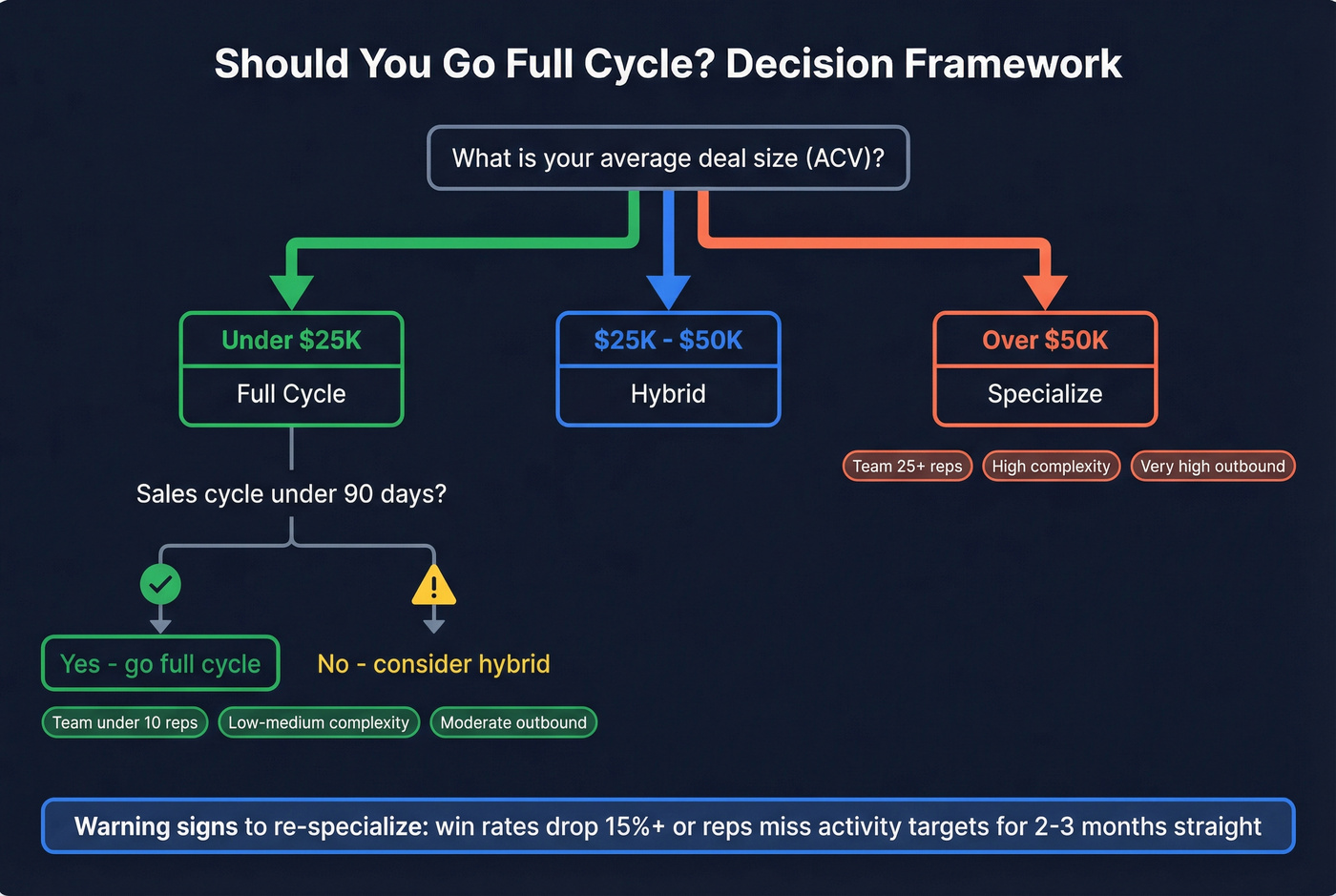
Full-cycle isn't universally better. It's better under specific conditions.
| Variable | Full Cycle | Hybrid | Specialize |
|---|---|---|---|
| ACV | Under $25K | $25-50K | Over $50K |
| Sales cycle | Under 90 days | 90-180 days | Over 180 days |
| Team size | Under 10 reps | 10-25 reps | 25+ reps |
| Deal complexity | Low-medium | Medium | High |
| Outbound volume | Moderate | High | Very high |
The failure mode is real. In complex, long-cycle environments, full-cycle reps get overwhelmed - juggling 20 active opportunities, prospecting 3 hours a day, and prepping for a board-level demo all at once. Win rates drop. Activity targets slip. Burnout follows.
The pragmatic middle ground is a hybrid model. Run full-cycle for your SMB segment where deals close in 30-60 days, and specialize for enterprise accounts where the sales cycle stretches past six months. We've seen this work well for companies in the $5-50M ARR range selling across multiple segments.
Skip full-cycle entirely if your reps don't genuinely enjoy prospecting - most closers don't. That's a valid concern, and it's why hiring profile matters more than org chart design. If win rates drop 15%+ or reps consistently miss activity targets after 2-3 months, that's your signal to re-specialize. The model should serve the revenue, not the other way around.
The AI Stack That Makes It Work
The AI sales tools market hit $3B in 2025 and is growing at ~13% annually. Sellers who effectively partner with AI are 3.7x more likely to meet quota. That gap is what makes full-cycle viable in 2026 - AI handles the admin work that used to require a dedicated SDR. (For more, see generative AI lead generation and best generative AI sales tools.)
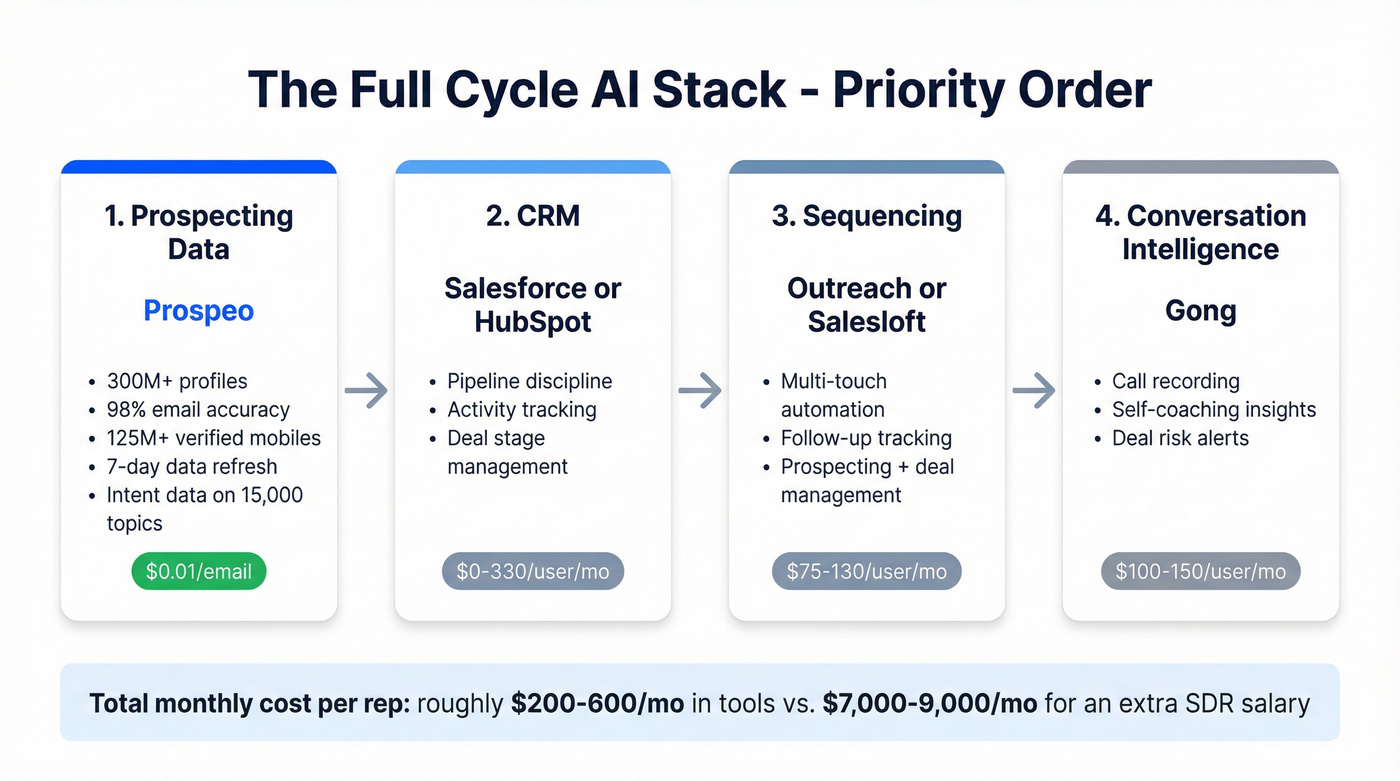
Four tool categories matter, in priority order.
Prospecting Data
Full-cycle reps are the most expensive person on your team. Every hour they spend chasing bad phone numbers or bouncing emails is a direct hit to your cost-per-meeting.
Prospeo covers 300M+ professional profiles with 143M+ verified emails at 98% accuracy and 125M+ verified mobile numbers, all on a 7-day refresh cycle while the industry average sits at six weeks. The platform runs 30+ search filters - buyer intent, technographics, job changes, headcount growth, funding - so reps can build targeted lists in minutes instead of hours. Intent data tracking 15,000 topics flags accounts showing buying signals, and native integrations with Salesforce, HubSpot, Outreach, and Salesloft keep data flowing without manual entry. (If you're standardizing enrichment, compare data enrichment services and lead enrichment.)
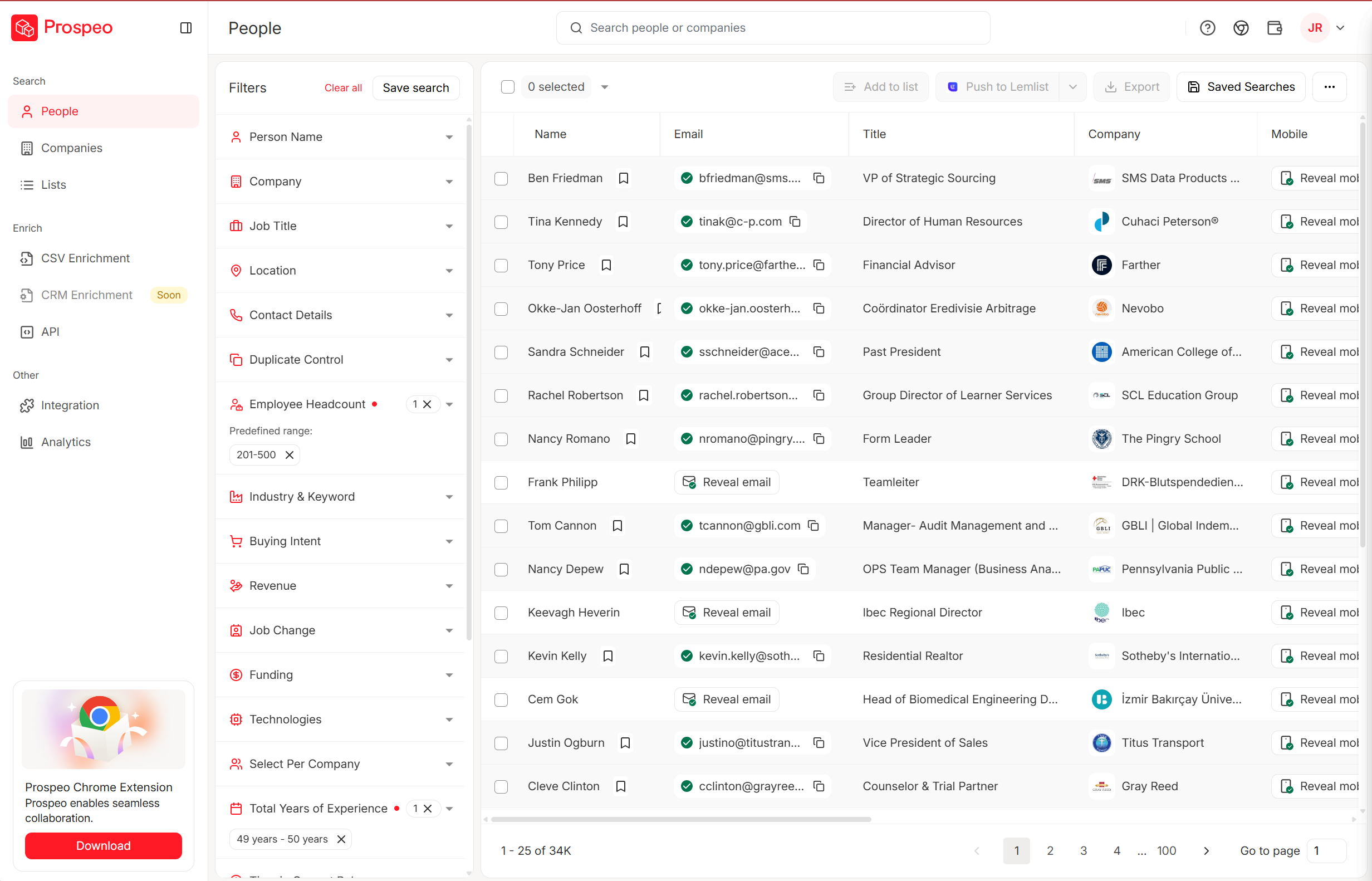
Real numbers from a customer we've worked with closely: Snyk's 50 AEs prospect 4-6 hours per week using Prospeo. Their bounce rate dropped from 35-40% to under 5%, and AE-sourced pipeline jumped 180%, generating 200+ new opportunities per month. That's the kind of productivity gain that makes full-cycle math work. (If deliverability is part of the problem, start with email bounce rate.)
At ~$0.01 per email with a free tier to start, the pricing is a rounding error compared to the cost of a bad-data-fueled prospecting session.
CRM
Salesforce (~$25-330/user/month depending on edition) or HubSpot (free CRM; Sales Hub paid plans start around ~$20/user/month). Full-cycle reps need pipeline discipline more than specialized reps do, because there's no SDR manager watching activity metrics. Your CRM enforces the process when the manager can't. (If you're evaluating options, see examples of a CRM.)
Sequencing & Engagement
Outreach (~$100-130/user/month) or Salesloft (~$75-125/user/month). These automate multi-touch sequences so reps don't manually track follow-ups across 20+ active deals while also prospecting. Without a sequencer, full-cycle reps will drop balls - it's not a question of discipline, it's a question of volume. (To tighten follow-up, use these sales follow-up templates.)
Conversation Intelligence
Gong (~$100-150/user/month) records calls, surfaces coaching insights, and gives full-cycle reps self-coaching data. They're running their own discovery, demos, and negotiations without a manager sitting on every call. Gong fills that gap.
You just saved $85-110K by cutting the SDR/AE pair. Now make your full-cycle rep dangerous. Prospeo's 30+ search filters - buyer intent, job changes, headcount growth - let one person build targeted lists in minutes, not hours. Data refreshes every 7 days, so your reps never dial a number that's already stale.
Stop paying for two roles and start arming one rep with better data.
Comp Plans for Full Cycle Reps
Compensation design is where most full-cycle transitions stumble. You can't hand an AE comp plan to someone who's also prospecting 2-3 hours a day and expect the incentives to align.
| Component | Recommendation |
|---|---|
| OTE range | $140-160K (mid-market) |
| Base/variable split | 55/45 or 60/40 |
| Self-sourced bonus | 5-10% higher rate |
| Quota adjustment | 80% of standard AE quota |
The higher base ratio compensates for prospecting time. Reps building their own pipeline shouldn't be penalized with a lower base just because they're also doing SDR work.
The self-sourced pipeline bonus is the key lever. Offer a 5-10% higher commission rate on deals the rep sourced themselves versus inbound leads. This creates a direct financial incentive to prospect - and it rewards the behavior that makes full-cycle work. Set quota at roughly 80% of what you'd give a pure closer, because full-cycle reps are splitting their time. Expecting 100% of closing quota plus prospecting activity is a recipe for burnout and attrition. (If you're sanity-checking targets, align to sales pipeline benchmarks.)
Hiring the Right Reps
Not every AE can go full-cycle. Not every SDR can close. You're hiring for a specific profile: someone who lights up when you mention prospecting, not someone who deflates. We've interviewed a lot of AE candidates over the years, and that reaction in the first five minutes is the single best predictor of full-cycle success.
Screen for these: genuine prospecting willingness (not just tolerance), curiosity about the prospect's business beyond the deal, self-direction without constant management, and resilience with daily rejection. (To level up outbound, use these sales prospecting techniques.)
Red flags: Reps who've only worked inbound. Anyone who describes prospecting as "beneath them." Candidates who ask "will I have an SDR?" in the first interview.
One interview tactic that works: give candidates a target account and 30 minutes to build a contact list and draft a first-touch email. You'll learn more from that exercise than from any behavioral question about "a time you overcame adversity."
Common Mistakes
1. Skipping the pilot. Always test with 2-3 reps before rolling the model across the team. Run the pilot for one full sales cycle, benchmark against your SDR/AE metrics, then decide.
2. Bad data killing productivity. Verify your contact data before loading it into sequences. Your bounce rate should be under 5%. If it's above that, your reps are wasting the most expensive hours on your payroll chasing ghosts.

3. Outsourcing the wrong stages. 25-50% of outsourced sales projects fall short due to misaligned expectations and inconsistent quality. Outsource list building and lead research. Keep discovery, demos, and closing in-house - those require deep product knowledge that external teams can't replicate.
4. Not knowing when to re-specialize. If win rates drop 15%+ or reps consistently miss activity targets after 2-3 months, it's time to split roles. Full-cycle is a model, not a religion.
That pipeline report you're staring at? The fix isn't hiring another SDR. It's giving one person the tools, the data, and the authority to own the deal from first touch to close. A well-built full cycle sales team with the right tech stack and comp structure will outperform a bloated SDR/AE split at nearly every deal size under $25K.
FAQ
Full cycle sales vs. the SDR/AE model?
Full cycle means one rep handles prospecting through closing and post-sale nurture - zero handoffs. The SDR/AE model splits those into separate roles with 1-2 transitions per deal, where 79% of leads die due to unclear ownership and lost context.
How many deals can a full cycle rep manage?
Most full-cycle AEs manage 15-25 active opportunities while prospecting 2-3 hours daily. Shorter cycles under 60 days allow higher deal volume; anything past 90 days and you'll want to watch for capacity strain and declining win rates.
What tools does a full cycle rep need?
Three essentials: a CRM for pipeline management, a verified data platform for accurate contacts and intent signals, and a sequencing tool for automated follow-ups. Add conversation intelligence once the team exceeds 5 reps.
Can full cycle work for enterprise deals?
Rarely. Enterprise deals with 6+ month cycles and $50K+ ACVs typically require specialized roles to manage multi-stakeholder complexity. Full cycle works best for SMB and mid-market segments with shorter sales cycles and fewer decision-makers.
How long to transition from SDR/AE to full cycle?
Plan 3-6 months. Start with a 2-3 rep pilot, benchmark against your SDR/AE metrics for one complete sales cycle, then iterate before scaling. Rushing the transition is the most common reason it fails.