

How to Optimize Your GTM Workflows in 2026 (Without Adding More Tools)
Companies spend $2 in Sales & Marketing to earn $1 of new ARR - a 14% jump from two years ago. That's not a data problem or a headcount problem. It's a workflow problem.
Fewer than 33% of companies have a formal GTM playbook. The other two-thirds run revenue motions on tribal knowledge and duct-taped Zaps, while the average enterprise RevOps team manages 12-18 tools and more than half of GTM leaders report no meaningful impact from AI despite heavy investment. The MarTech landscape hit 15,384 solutions last year, with 77% of new additions being AI-native. More tools doesn't mean better workflows - it usually means more things breaking in more places.
Organizations with a documented GTM framework see 3x the revenue growth versus those winging it. The gap between "we have tools" and "our workflows produce pipeline" is where the money lives.
What You Need (Quick Version)
- Fix your data layer first. Enrichment and verification come before everything else. Bad data cascades into every downstream workflow. (If you want a checklist, start with data quality.)
- Map workflows before buying tools. Most teams need fewer platforms, not more. Subtract before you add. Use a simple sales tools checklist to spot redundancy.
- Measure outcomes, not activity. Speed-to-lead, bounce rate, pipeline velocity, CAC payback. Not MQL volume. (For the math, see CAC LTV ratio.)
What Does GTM Workflow Optimization Actually Mean?
GTM strategy is what you're doing - ICP, positioning, channels, pricing. Workflow optimization is how it executes. It's the triggers, rules, and integrations that move a lead from anonymous website visitor to booked meeting without a human copying data between tabs.
A workflow is a chain: a trigger fires (form fill, intent signal, job change), an action executes (enrich the contact, route to an AE, enroll in a sequence), and a system of record updates. When these chains are clean, reps spend time selling. When they're broken, reps spend time fixing data in spreadsheets.
The distinction matters because most "GTM optimization" advice is actually strategy advice. Strategy doesn't help when your sequences are bouncing 22% because nobody verified the list (see hard bounce).
Why Most GTM Workflows Fail
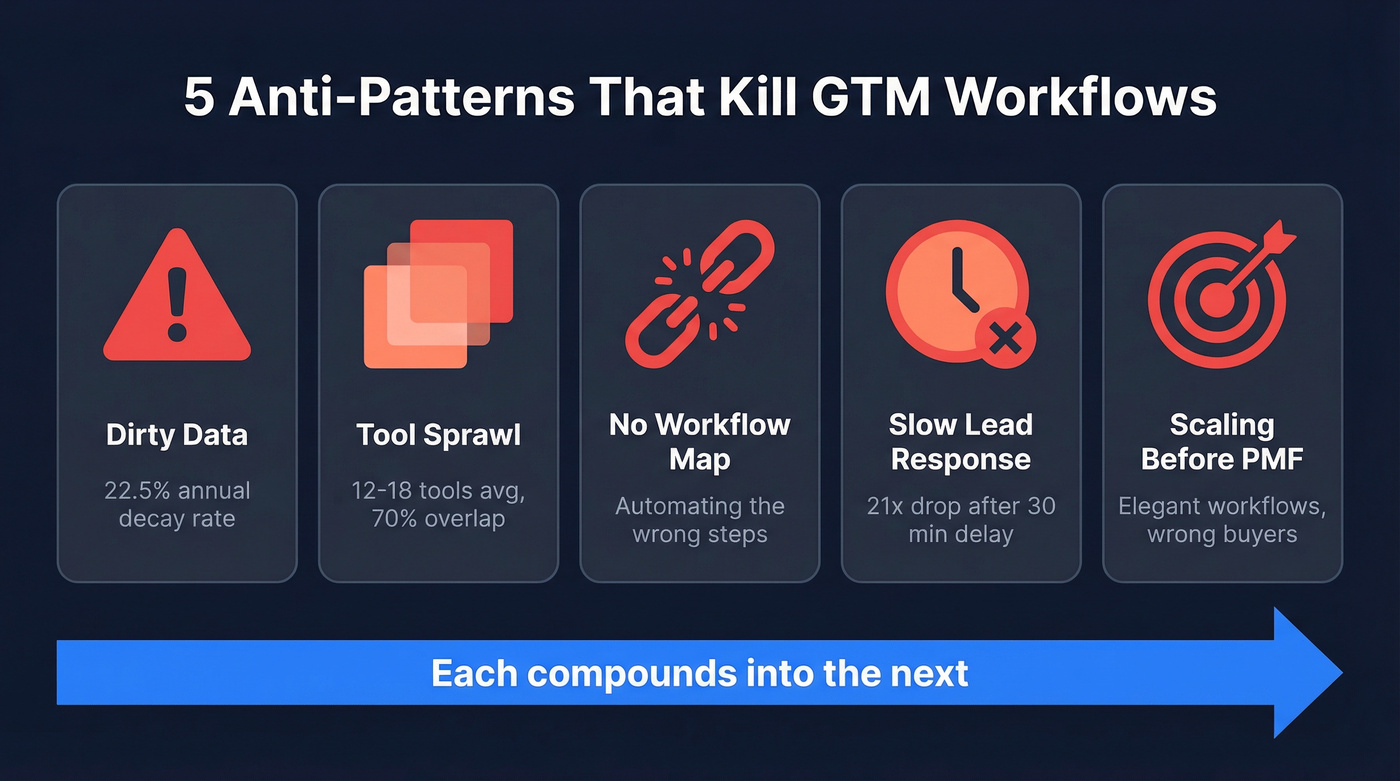
Five anti-patterns kill go-to-market workflows before they produce results.
Automating on Dirty Data
B2B contact data decays at roughly 2.1% per month - that's 22.5% annual degradation. People change jobs, companies rebrand, emails go stale. If your enrichment layer refreshes every six weeks (the industry average), you're building sequences on contacts that are already drifting out from under you. (More benchmarks: B2B contact data decay.)

Tool Sprawl Without Integration
The average RevOps team runs 12-18 tools. ZoomInfo and Apollo have roughly 70% coverage overlap on US business contacts. Teams buy both "just in case," then add Clay for enrichment, a separate verification tool, and three different intent providers. Each redundant tool costs around $20K/year and creates fragile integrations nobody trusts. We've watched teams spend more time maintaining their stack than actually using it. (If you're consolidating, start with a modern B2B sales stack.)
Skipping Workflow Mapping
Here's the thing: we've seen teams buy Outreach before they've mapped a single handoff. They automate the wrong steps, create sequences nobody enrolls prospects into, and wonder why pipeline didn't move. Map first. Automate second. (A good starting point: prospecting workflow.)
Ignoring Speed-to-Lead
35-50% of deals go to the vendor who responds first. A 30-minute delay in follow-up decreases qualification odds by 21x. Most teams route inbound leads through a round-robin that takes hours because nobody configured the routing rules properly. That's not a technology failure - it's a process failure wearing a technology costume. (Related: inbound lead qualification.)
Scaling Before Product-Market Fit
Less technical but just as deadly. Teams pour money into outbound automation before validating that their ICP actually converts. You can build the most elegant workflow in the world - if it's targeting the wrong buyers, it just burns cash faster.

The article says it: data decays 2.1% per month, and the industry refreshes every 6 weeks. Prospeo refreshes every 7 days. Snyk's 50 AEs dropped bounce rates from 35-40% to under 5% and grew AE-sourced pipeline 180% - by fixing their enrichment layer with Prospeo.
Stop building GTM workflows on stale data. Start with 98% accuracy.
The Data Quality Foundation
Every SDR team knows this scenario. You run 10,000 emails through a sequence. Your enrichment provider refreshes data monthly, and the list is three weeks old. Bounce rate comes back at 22%. That's 2,200 wasted sends, damaged domain reputation, and a deliverability hit that tanks the next campaign too. (If you're troubleshooting, use an email deliverability checklist.)
Waterfall enrichment solves part of this - querying multiple providers in sequence, deduplicating, and writing one authoritative record to the CRM. But the enrichment layer itself needs to be accurate and fresh. Stale data in, stale data out. (More on this approach: waterfall alternatives.)
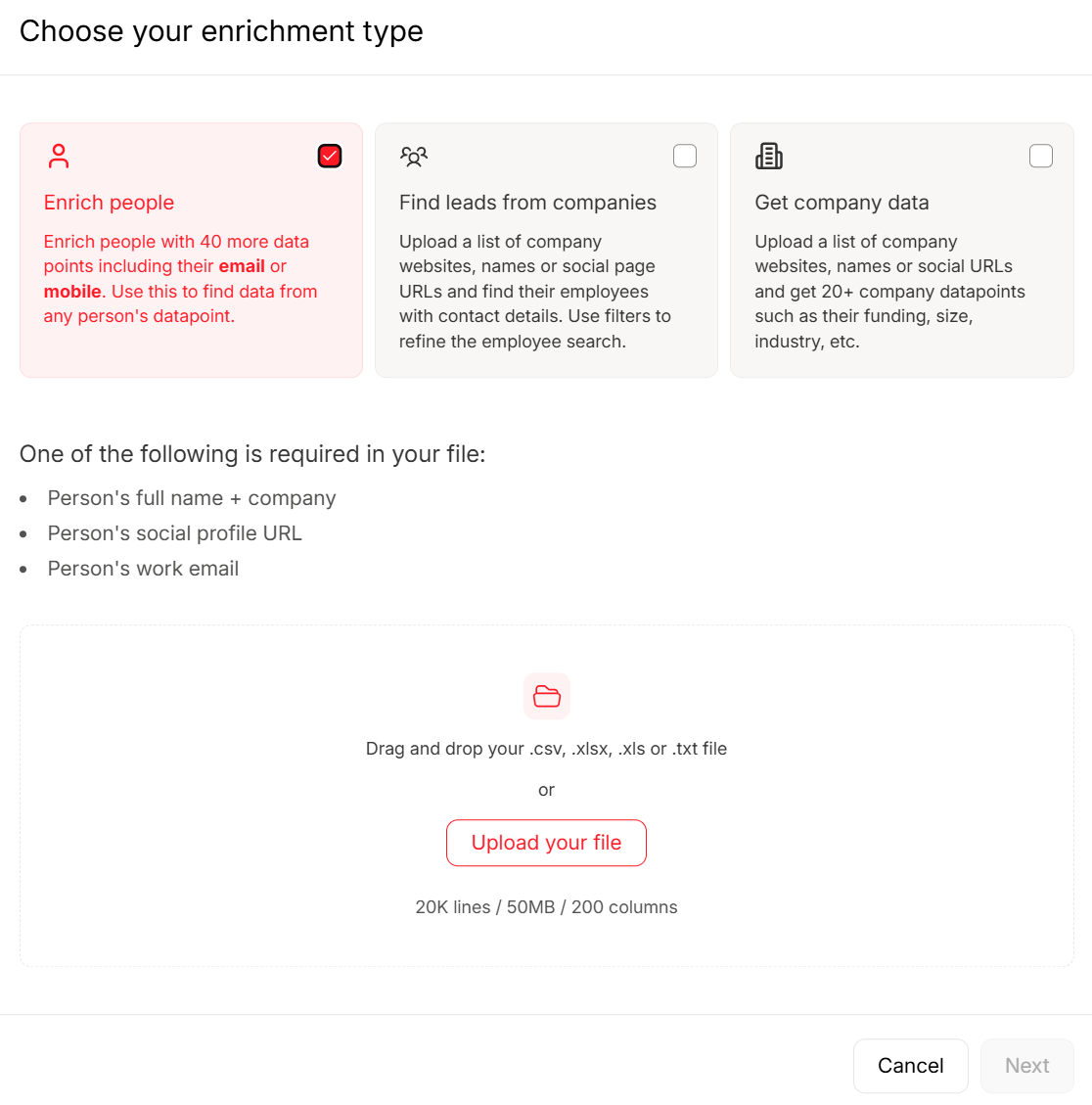
One sales team at Snyk (50 AEs) dropped bounce rates from 35-40% to under 5% and saw AE-sourced pipeline jump 180% after fixing their enrichment layer. That's not a marginal improvement - it's a different business.
A Framework for Optimizing GTM Workflows
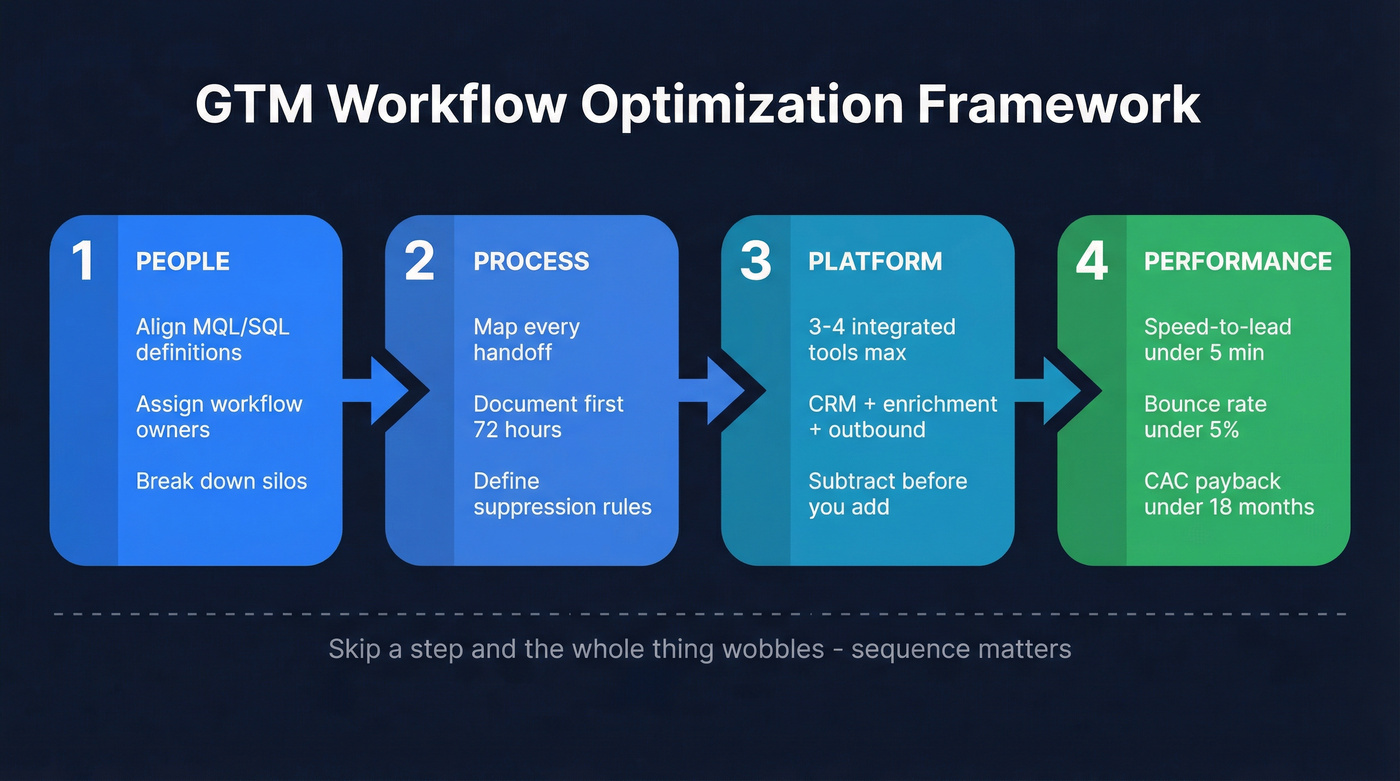
The shift from "growth at all costs" to capital efficiency defines 2026 GTM. The best framework we've found isn't a tool recommendation - it's a sequencing model: People, then Process, then Platform, then Performance. Skip a step and the whole thing wobbles.
People
Before you touch a single tool, align definitions across sales and marketing. What's an MQL? What's an SQL? If your marketing team counts a whitepaper download as an MQL and your sales team ignores anything that isn't a demo request, your workflow is broken at the human layer. Assign workflow owners - someone accountable for each handoff point, not a committee that meets biweekly to discuss handoff points. (If alignment is the issue, start with revenue operations alignment.)
Process
Map every handoff between teams. Literally draw it out. Where does a lead go after it hits the CRM? Who touches it? What's manual that could be a trigger?
Document the "first 72 hours" post-launch optimization sprint - the window where you monitor real-time dashboards and catch broken steps before they compound. This is also where you define rules for dynamic campaign suppression, automatically removing contacts from active sequences when they convert, churn, or match exclusion criteria, so your outbound never targets the wrong people at the wrong time.
Platform
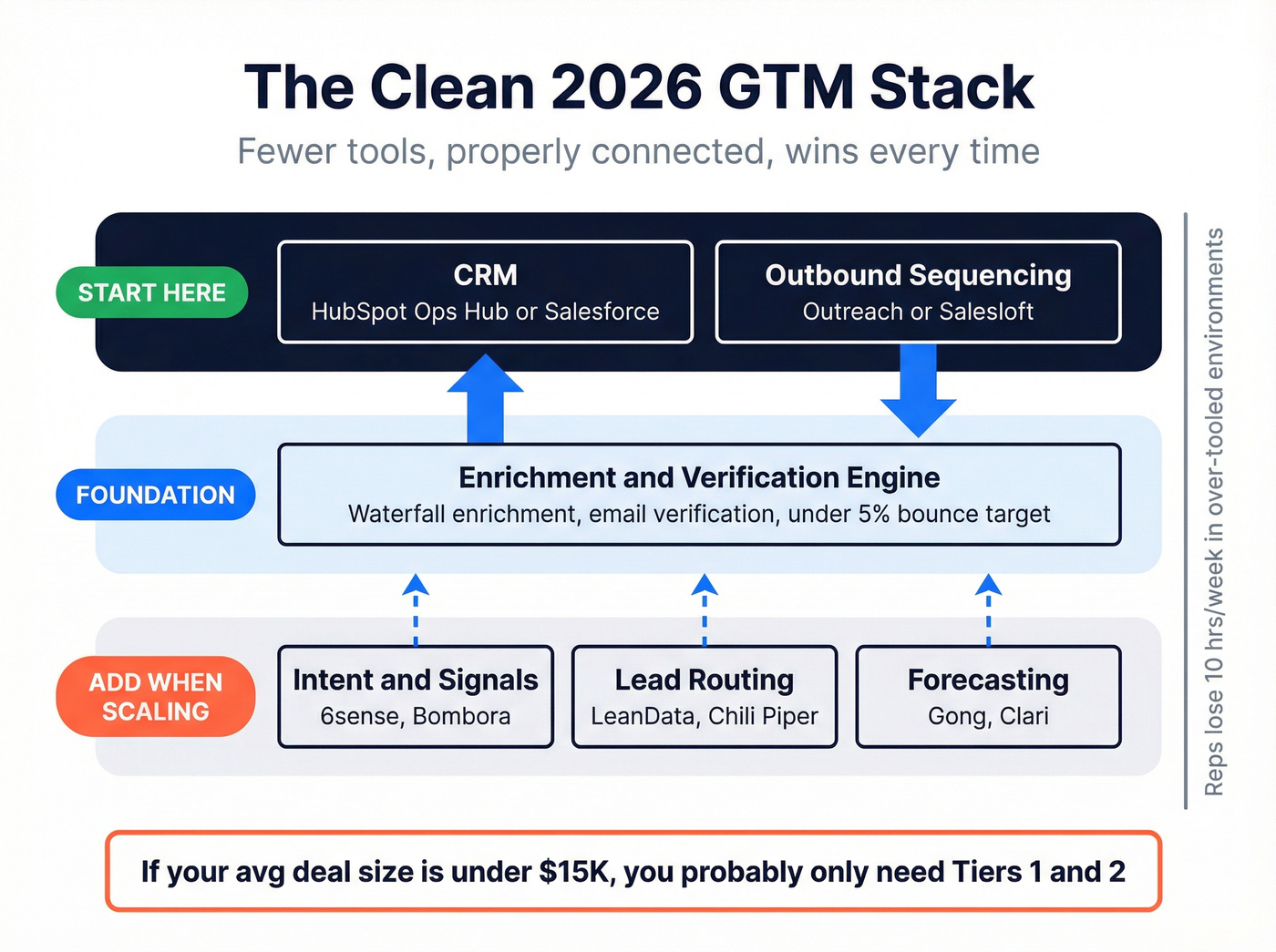
Now - and only now - choose tools by category. A clean 2026 stack is one CRM, one signal layer, one enrichment engine, and one outbound engine working together (plus an ads layer if paid acquisition is core). Top-performing RevOps teams consolidate to 3-4 tightly integrated platforms.
HubSpot Operations Hub deserves a specific callout here. Its data sync and data quality automation features - deduplication rules, data formatting, and programmable automation - make it a strong option for teams that want workflow logic living inside their system of record rather than bolted on externally. (If you're deciding between CRMs, see HubSpot vs Salesforce.)
Marketing automation returns roughly $5.44 per $1 spent - but only when the people and process layers are solid first.
Performance
Set benchmarks before you launch. Target speed-to-lead under 5 minutes, bounce rate under 5%, and CAC payback under 18 months for mid-market. By 2027, Gartner predicts 95% of seller research tasks will begin with AI. 82% of sales reps report more time for client relationships after automating admin work. The teams that benefit are the ones measuring outcomes, not activity.
The Optimized GTM Stack in 2026
Here's what a clean, consolidated go-to-market stack looks like.
| Category | Recommended | Priority | Approx. Pricing |
|---|---|---|---|
| CRM | HubSpot (Ops Hub Pro), Salesforce | Start here | Free-$800+/mo |
| Outbound Sequencing | Outreach, Salesloft | Start here | ~$100-150/user/mo |
| Intent / Signals | 6sense, Bombora, Common Room | Add when scaling | $30K-100K+/yr |
| Lead Routing | LeanData, Chili Piper | Add when scaling | ~$25K-50K/yr |
| Forecasting | Gong, Clari | Enterprise only | ~$100-150/user/mo |
Let's be honest: if your average deal size is under $15K, you probably don't need intent data or a dedicated routing tool. Skip them. A CRM with good automation, a clean enrichment engine, and one outbound platform will outperform a bloated six-tool stack every time. Reps lose 10 hours per week to manual workflows in over-tooled environments. Fewer tools, properly connected, wins.
The Highspot GTM Performance Gap Report found that 98% of leaders say their GTM strategy is active, but only 10% see it driving results. The gap isn't strategy. It's execution. (If you're building the operating system, see revenue workflow software.)
Five Workflows to Optimize First
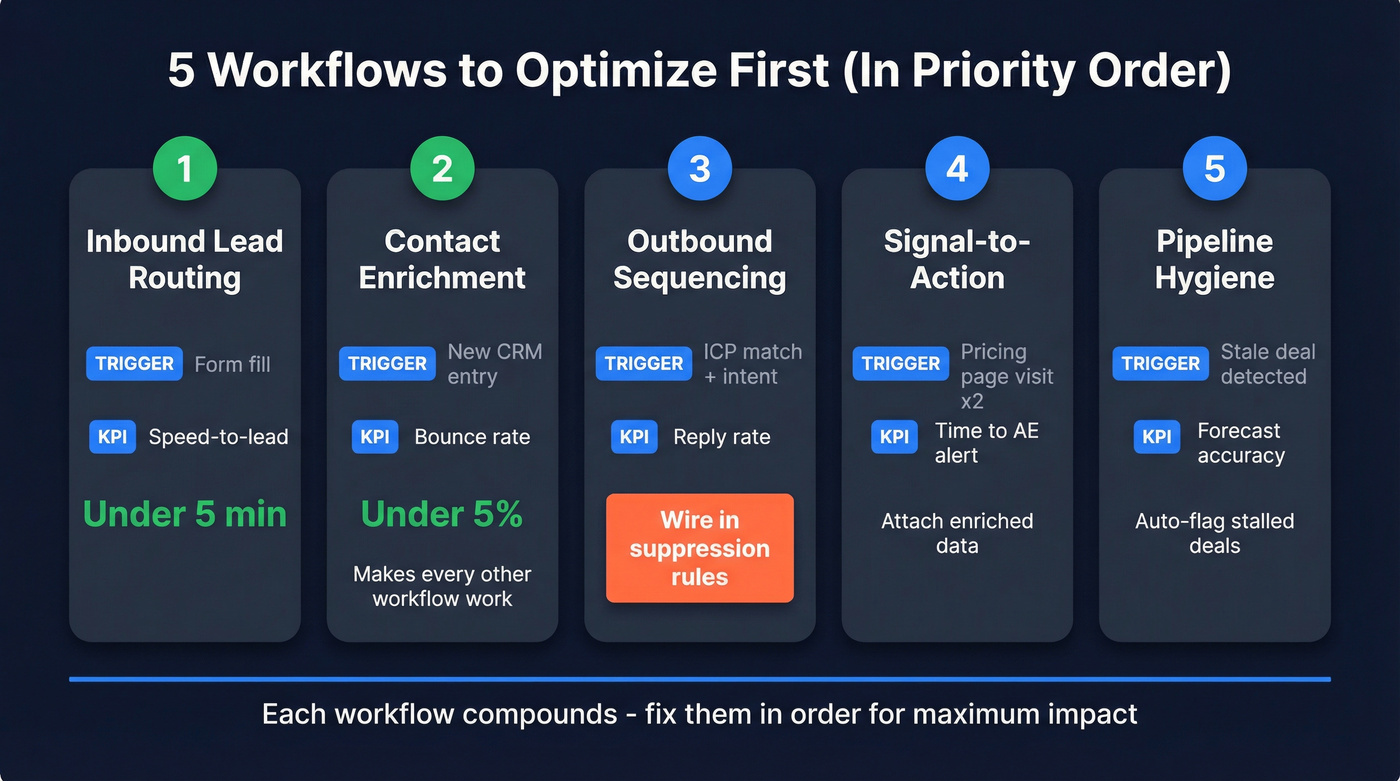
Not all workflows are equal. These five deliver the fastest impact.
1. Inbound Lead Routing
Trigger: Form fill. Action: Score and route to the right AE in under 5 minutes. KPI: Speed-to-lead. Every second of delay reduces conversion by roughly 7%. LeanData or Chili Piper handle this well, but even native HubSpot workflows beat a manual round-robin that takes hours. If your routing takes longer than 5 minutes, you're losing deals to competitors who respond faster.
2. Contact Enrichment and Verification
This is the workflow that makes every other workflow work. When a new lead enters your CRM, it should trigger a waterfall enrichment step that verifies email and mobile before anything else happens. Target a bounce rate under 5%. Bad data here cascades into damaged domain reputation, broken sequences, and forecasts built on phantom pipeline. In our experience, teams that nail this single workflow see the biggest downstream improvement across every metric.
3. Outbound Sequencing with Suppression
Trigger: ICP match plus intent signal. Action: Auto-enroll in multi-channel sequence. KPI: Reply rate. The key is the trigger - don't enroll everyone. Enroll prospects who match your ICP and show buying signals.
Equally important: wire in suppression rules that automatically pull contacts out of sequences when they book a meeting, become a customer, or appear on a do-not-contact list. This prevents the embarrassing "why am I getting cold emails from a vendor I already pay?" scenario and protects your sender reputation.
4. Signal-to-Action Pipeline
Most teams collect intent signals but don't act on them fast enough. When a prospect visits your pricing page twice in a week, that signal should fire an alert directly to the owning AE with enriched contact data attached. Wire the alert into the AE's existing workflow - not a separate dashboard they'll never check. The consensus on r/sales is that intent tools only pay off when the signal-to-action loop is under an hour; anything slower and the buying window closes.
5. Post-Launch Optimization Sprint
Trigger: Campaign launch. Action: Monitor real-time dashboards for 72 hours. KPI: Day-3 pipeline contribution. The first 72 hours tell you whether a workflow is working or needs adjustment. Don't wait two weeks to check - by then, you've burned budget and damaged deliverability on a broken sequence you could've caught on day one.
You don't need 12-18 tools. You need one enrichment engine that actually works. Prospeo replaces your data provider, verification tool, and intent layer - 300M+ profiles, 143M+ verified emails, Bombora intent across 15,000 topics, all at $0.01/email.
Consolidate your stack and triple your pipeline like Meritt did.
FAQ
What's the first GTM workflow to fix?
Contact enrichment and verification. Every downstream workflow - routing, sequencing, forecasting - depends on accurate data. If your bounce rate exceeds 5%, nothing else you optimize will matter until you fix the data layer.
How many tools does a GTM team actually need?
Top-performing RevOps teams run 3-4 tightly integrated platforms: one CRM, one enrichment engine, one outbound tool, and one signal layer. The average team uses 12-18, most of it redundant. Consolidate before you add.
How does AI fit into go-to-market workflows?
AI is most effective when it automates research and routing on top of clean data. Copilots suggest next actions, SDR tools automate sequences, and true AI agents execute multi-step workflows autonomously. Over half of GTM leaders report no impact from AI today - usually because they automated broken processes with bad data. Fix the foundation first, then layer AI on top.
What's a good free tool for enrichment workflows?
Prospeo's free tier includes 75 email credits and 100 Chrome extension credits per month with full verification - enough to test enrichment workflows before committing budget. Hunter offers 25 free searches monthly but caps enrichment depth. For teams running real outbound, the difference between 98% accuracy on a 7-day refresh and lower-accuracy data on a monthly refresh compounds fast across thousands of sends.