

How to Write Cold Emails That Get Responses: A Data-Backed Playbook
You've sent 500 cold emails this month. Four replies. The problem isn't your subject line - it's everything underneath it.
An analysis of 16.5M cold emails found the average reply rate dropped to 5.8%, down from 6.8% the year before. The biggest swings came from deliverability, list hygiene, and targeting - not clever wording. If you're trying to figure out how to write cold emails that get responses, the answer starts before you type a single word.
What You Need (Quick Version)
Before you rewrite a single email:
- Fix your infrastructure. SPF, DKIM, DMARC, domain warming, mailbox rotation. None of your copy matters if you're landing in spam. (If you need the full checklist, start with an email deliverability audit.)
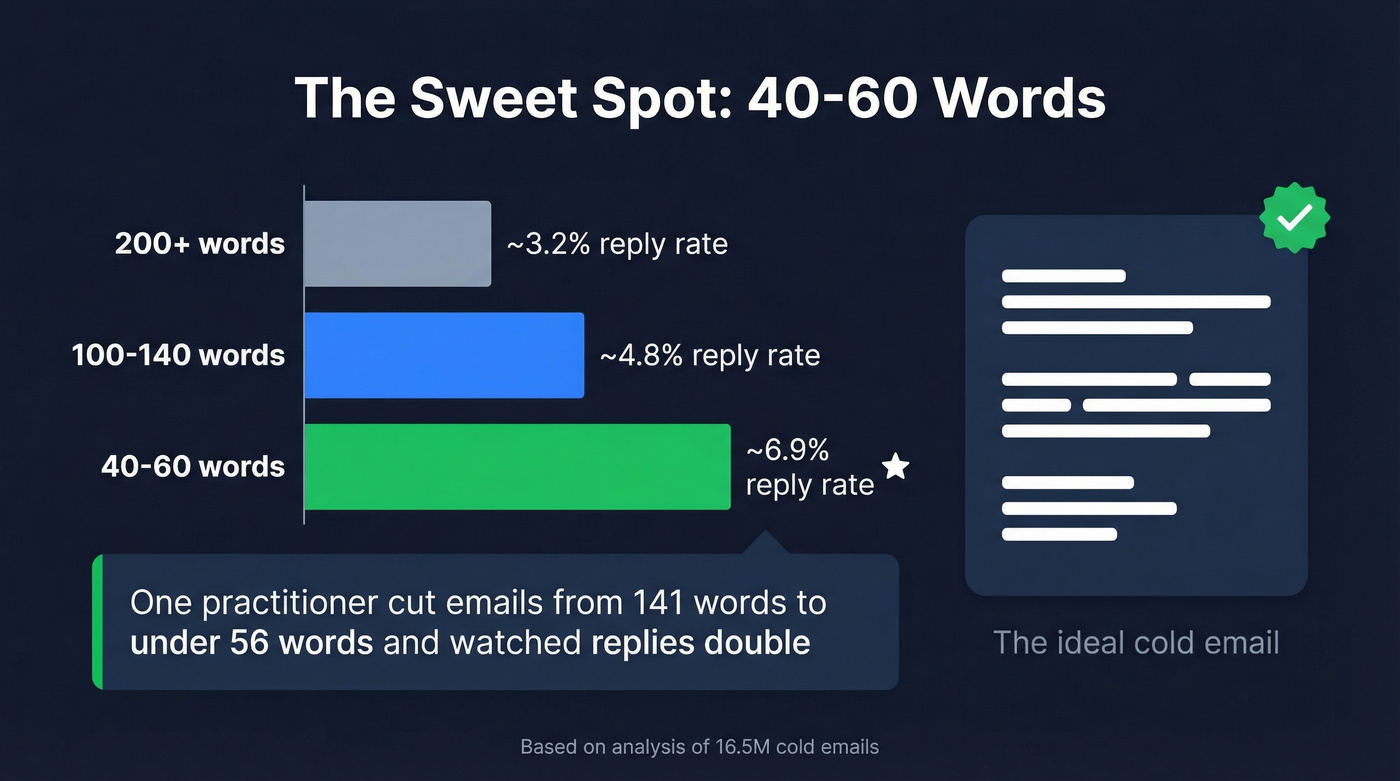
- Write 40-60 word emails with a soft CTA. That's the entire formula.
Fix Your Deliverability First
Here's the thing: most cold email advice starts with "write a great subject line." That's like optimizing your landing page headline when the site is down.
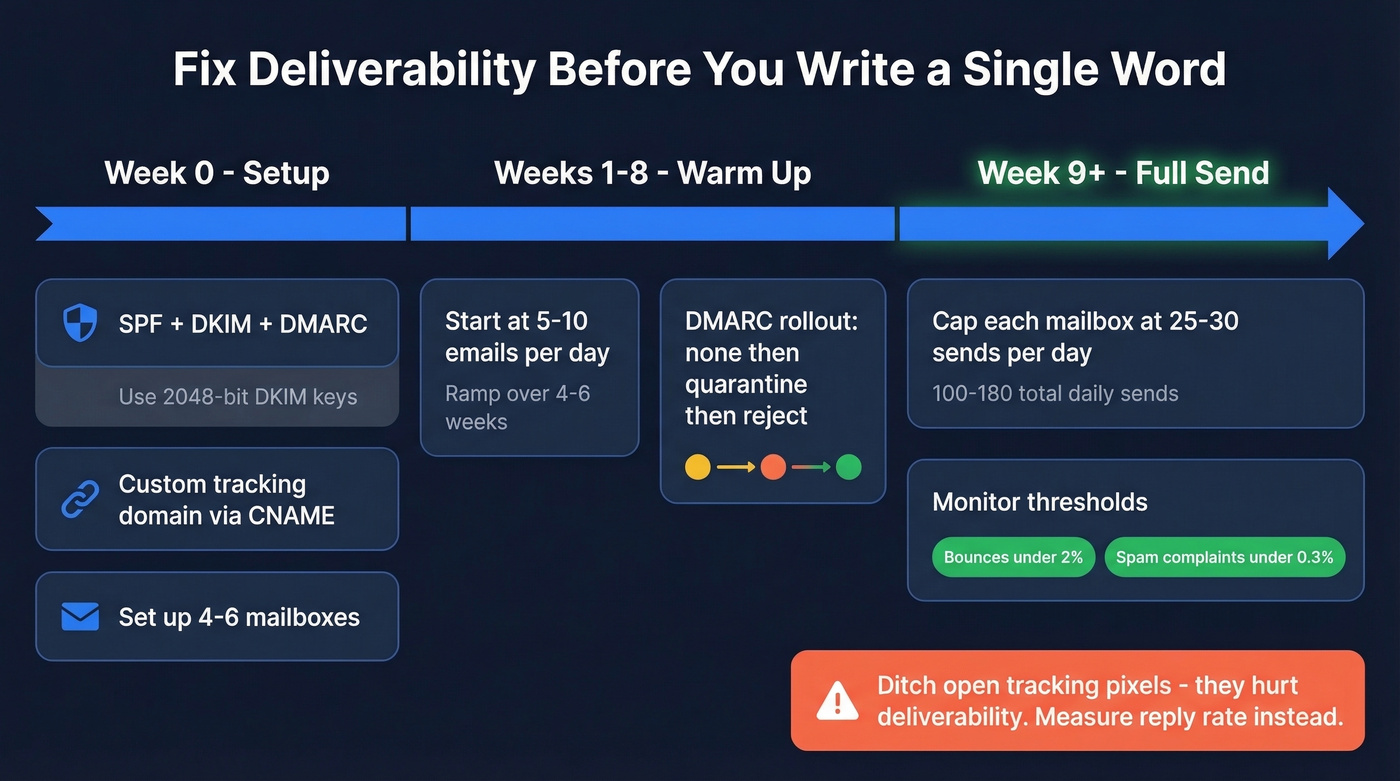
Authentication is non-negotiable. Set up SPF, DKIM, and DMARC on every sending domain. Watch the SPF 10-lookup limit - exceeding it breaks SPF entirely. For DMARC, roll out gradually: p=none for weeks one through four, p=quarantine for weeks five through eight, then p=reject from week nine onward. Use 2048-bit DKIM keys and set up a custom tracking domain via CNAME to isolate your reputation from shared tracking domains (more on tracking domain setup).
Warm up properly. Start new domains at 5-10 emails per day and ramp over 4-6 weeks. Rotate across 4-6 mailboxes, capping each at 25-30 sends daily. That gives you 100-180 sends per day with healthy reputation across all boxes. (If you're scaling volume, follow safe email velocity limits.)
Know your thresholds. Keep spam complaints under 0.3% and bounces under 2%. Ditch open tracking pixels - they add code that hurts deliverability. Measure reply rate instead. It's the only metric that matters. If you're troubleshooting, start with email bounce rate benchmarks and a quick email spam checker pass.
Start With a Clean List
One practitioner on r/Entrepreneur shared a detailed breakdown of going from a 3% reply rate to 6%. The single biggest lever? Dropping their bounce rate from 11% to under 2% by switching from purchased lists to manually verified contacts. Their total stack cost was $420/month and produced 16 qualified leads monthly - proof you don't need enterprise budgets.
Targeting matters too. Emailing 1-2 contacts per company produced a 7.8% reply rate versus 3.8% when blasting 10+ people at the same org. More isn't better - it's spammier. (If you're building lists from scratch, use an ideal customer profile and tighten your firmographic filters.)
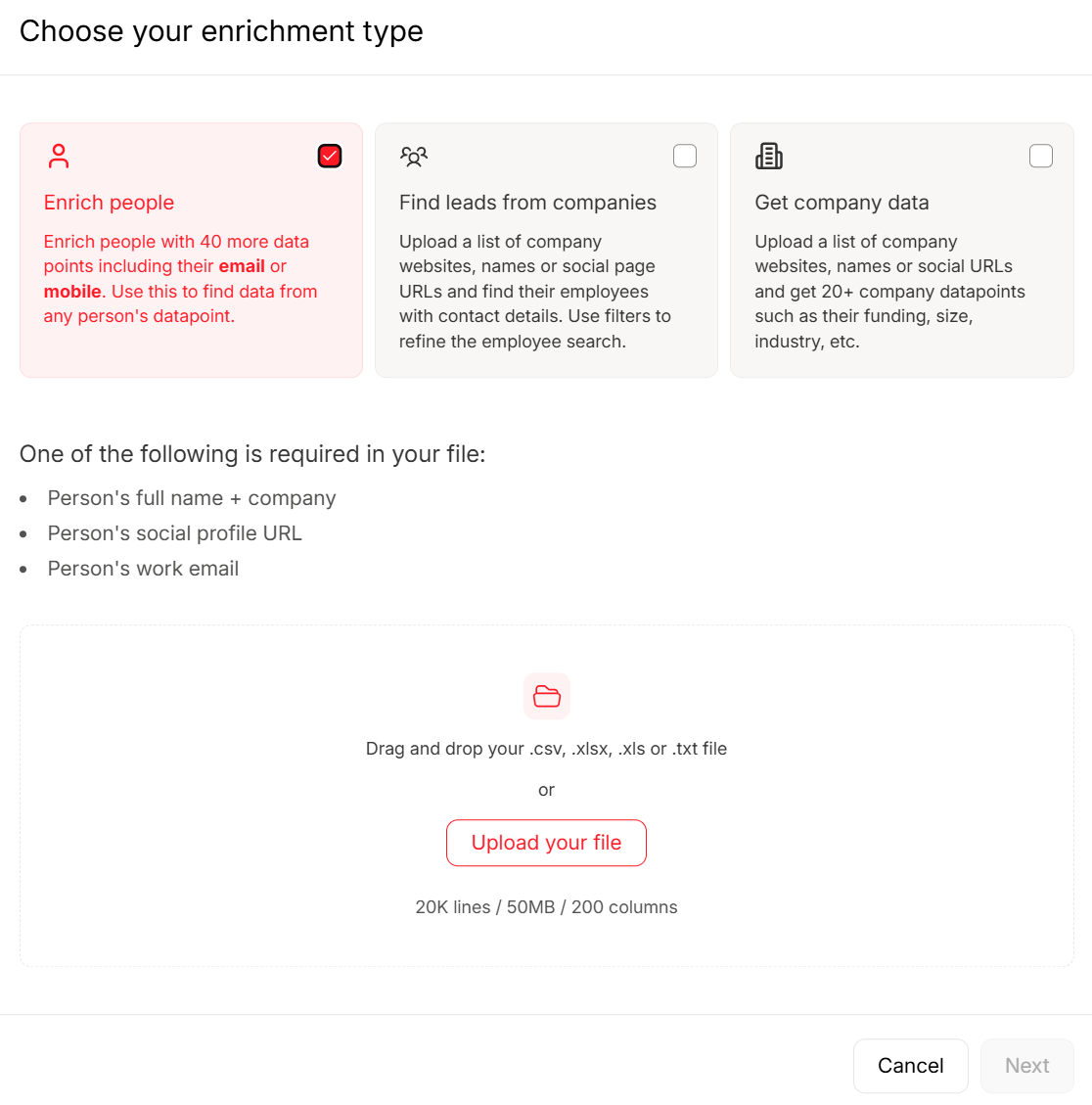

That r/Entrepreneur case study showed bounce rates tanking reply rates. Prospeo's 5-step verification keeps bounces under 2% - with 98% email accuracy across 300M+ profiles refreshed every 7 days, not every 6 weeks.
Stop writing perfect emails to dead inboxes.
Personalization at scale needs accurate data on real buyers. Prospeo's 30+ search filters - including job changes, funding, and tech stack - give you the research triggers this article recommends, already attached to verified contacts.
Build targeted lists in minutes, not hours. 75 free emails/month.
The 40-60 Word Email Formula
The 16.5M-email dataset shows emails with 6-8 sentences and under 200 words hit a 6.9% reply rate. But practitioners are pushing shorter. That same r/Entrepreneur operator cut emails from 141 words to under 56 and watched replies double. A popular r/copywriting format recommendation backs this up: 40-60 words is the sweet spot. (For more structure options, see our guide to emails that get responses.)
Let's be honest - most cold emails fail because they're written for the sender, not the reader. Nobody cares about your company's founding story or your "innovative platform." They care about their problem. Lead with the recipient's pain point, not your product features. If you want a deeper breakdown, borrow a few rules from modern email copywriting.
The structure is simple: personalized trigger, one value prop, soft CTA. Format for mobile - three blocks, max three lines each. (If you're stuck on the ask, use these email call to action patterns.)
Hi Sarah,
Saw Acme just opened a second EMEA office - congrats. When teams scale internationally, outbound list quality usually tanks because the data providers don't cover EMEA well.
We help growth-stage teams keep bounce rates under 2% across regions.
Worth a quick conversation?
That's 47 words. No fluff, no "I hope this finds you well," no three-paragraph company pitch.
Personalize at Scale
The 30 Minutes to President's Club framework cites an Outreach case study where personalized emails had roughly 10% of the volume of generic blasts but generated almost double the meetings. For personalization at scale, build a ranked list of about 10 research triggers - funding round, new hire, product launch, job posting, tech stack change - and create five trigger templates you can swap in. The framework calls this "first is best": use the first relevant trigger you find and move on. Target under three minutes per email. (If you want a system for finding triggers consistently, use this playbook for how to track sales triggers.)
Subject Lines That Get Opened
A 5.5M-email subject line study makes this straightforward. Short, personalized, and phrased as a question wins. Two-to-four-word subject lines hit a 46% open rate, and personalized ones drove 7% replies versus 3% without - a 133% lift. If you want swipeable options, pull from these email subject line examples.
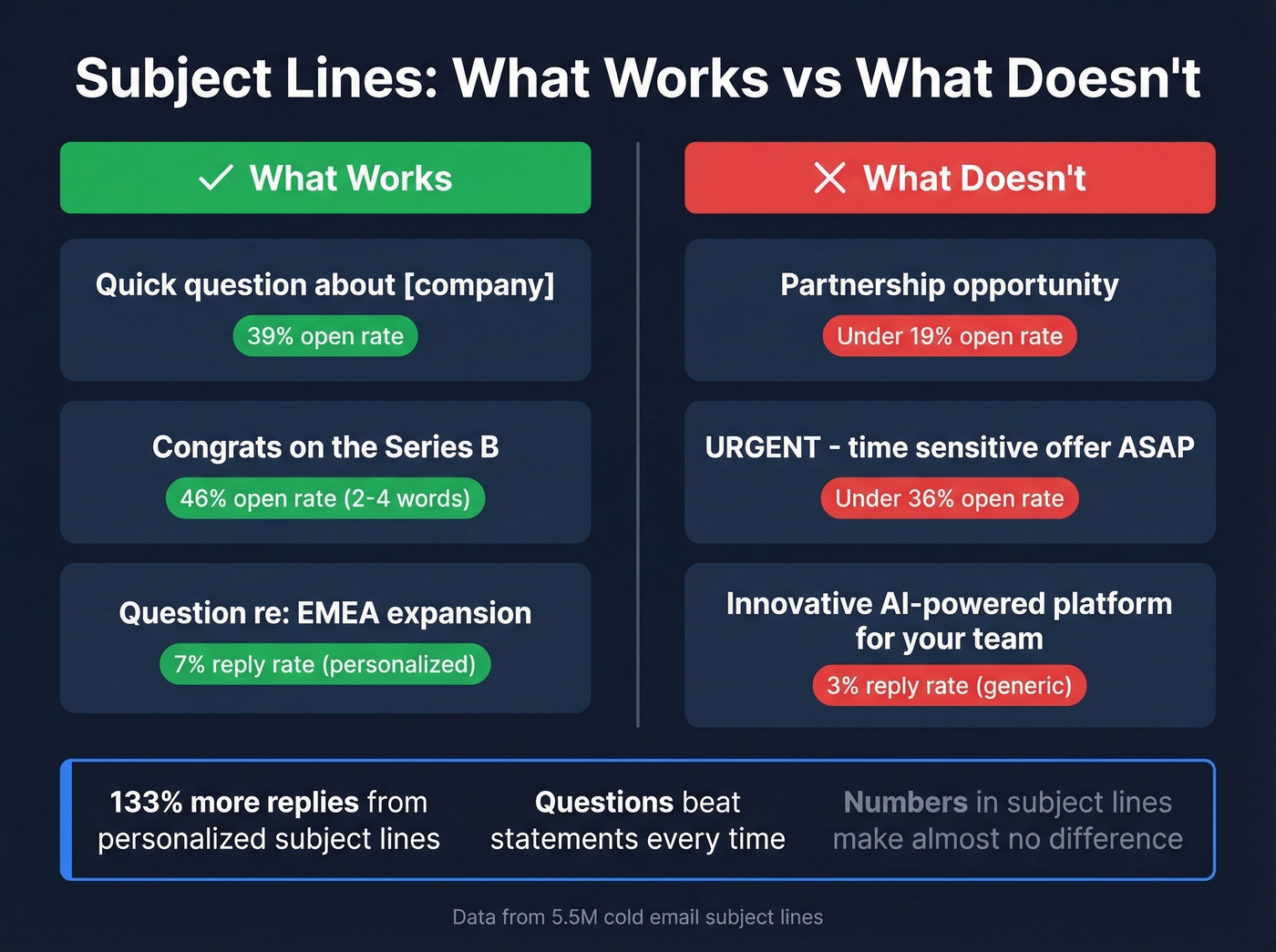
Questions outperform statements. "Quick question" pulled 39% opens. "Partnership opportunity" landed below 19%.
Numbers don't help. The difference was marginal - 27% vs 28% without. Don't overthink it.
Skip urgency words. Hype terms like "ASAP" dragged opens below 36%. Your subject line's only job is getting the email opened. Don't try to sell in it.
Follow Up (Then Stop)
The first follow-up can lift replies by up to 49%. After that, returns collapse. By the fifth email, reply rates drop 55% and spam complaints nearly triple.
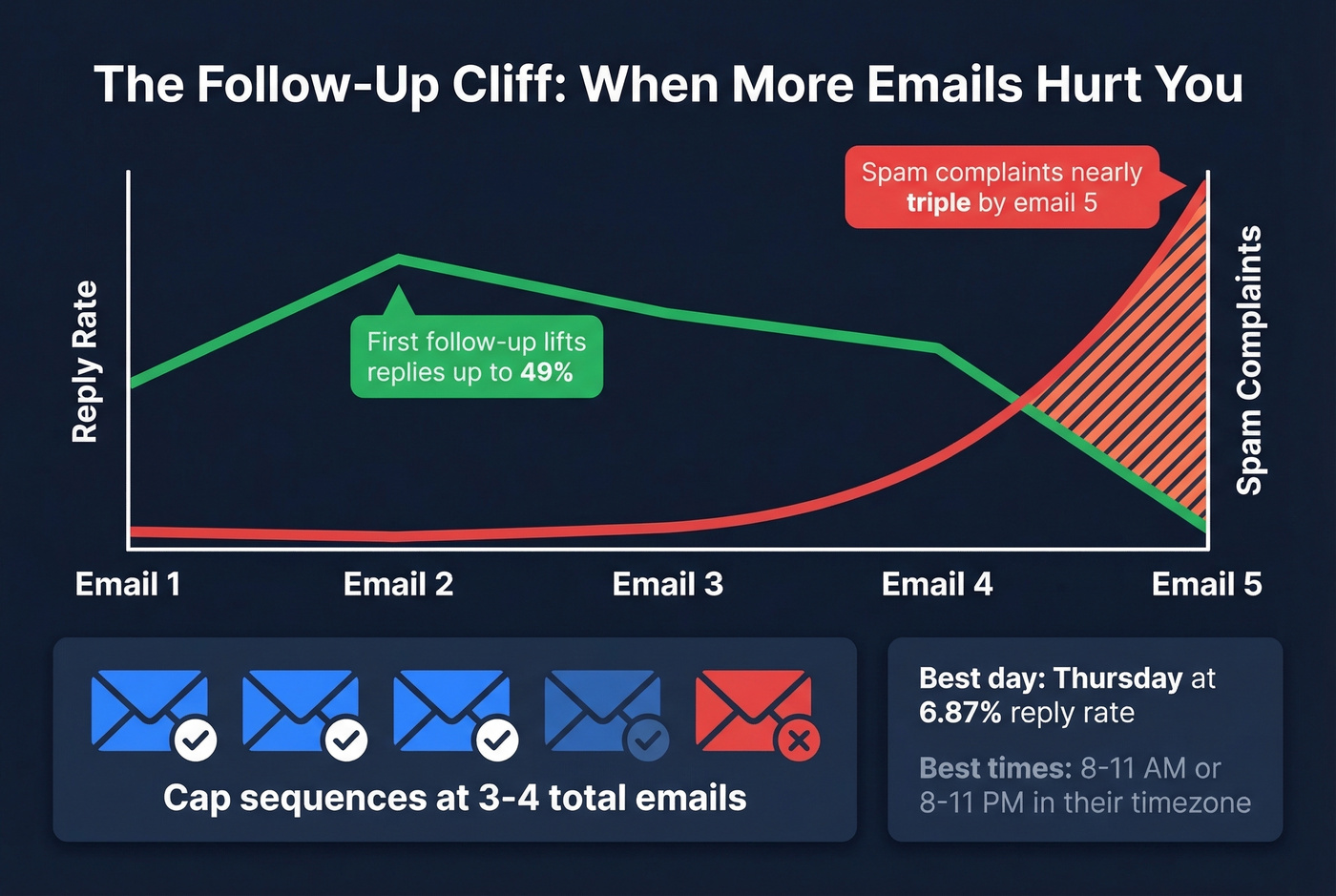
Cap your sequences at 3-4 total emails. Send Tuesday through Thursday, either 8-11 AM or 8-11 PM in the recipient's timezone - Thursday is the best single day at a 6.87% reply rate. Platforms like Instantly (~$30/mo) or Lemlist (~$55-79/mo) handle timezone-based scheduling natively. Skip this if you're only sending 20-30 emails a week; manual scheduling works fine at that volume. (Need copy? Use these cold email follow-up templates.)
Stay Legal
CAN-SPAM applies to B2B - no exceptions. Penalties run up to $53,088 per violating email.
- Use accurate "From," "To," and "Reply-To" headers - no spoofing
- Don't use deceptive subject lines
- Include a valid physical postal address in every email
- Provide a clear opt-out mechanism and honor it within 10 business days
- Identify the message as an ad
You're responsible even if a third party sends on your behalf. Build compliance into your templates from day one.
FAQ
What's a good cold email reply rate in 2026?
The average is 5.8% based on a 16.5M-email dataset. Anything in the 8-12% range is strong; above 15% is exceptional. In our experience, infrastructure and list quality drive more variance than copy does.
How many follow-ups should I send?
Cap at 3-4 total emails. The first follow-up can lift replies by up to 49%, but by the fifth email, replies drop 55% and spam complaints nearly triple. Protect your domain reputation.
How do I verify emails before sending?
Use a verification tool to check every address before it enters your sequence. Keep bounce rates under 2% - anything higher and your sending domain is slowly dying. Prospeo's 5-step verification catches spam traps and honeypots at 98% accuracy, with a free tier of 75 emails per month.
Do personalized cold emails actually perform better?
Yes. Personalized subject lines alone drive 7% reply rates versus 3% for generic ones - a 133% lift. Personalized body copy with a specific trigger like a funding round, new hire, or product launch can nearly double meeting-booked rates compared to mass blasts.