

How to Build an Inside Sales Development Program That Actually Produces Pipeline
A single SaaS SDR in a well-built inside sales development program generates $3M/year in pipeline. Most companies never get close. Not because they hired wrong, but because they skipped the foundation - the ICP work, the onboarding structure, the data hygiene that separates real programs from expensive experiments.
Here's how to build the function right, from ICP definition through KPIs, with the benchmarks that actually hold up in 2026.
What Inside Sales Development Actually Means
Inside sales development is the practice of generating, qualifying, and advancing pipeline remotely - through phone, email, video, and social channels. SDRs research accounts, personalize outreach, and hand qualified opportunities to account executives. That's not telemarketing.
The role has grown fast. 53.7% of US sales reps now work inside roles, up from a minority a decade ago. Many teams that still carry "outside sales" titles run a big chunk of the sales cycle virtually. And with 58-70% of the buying process completed before a prospect talks to a vendor, remote selling isn't a budget alternative to field sales. It's the primary revenue engine.
What You Need Before Hiring
Before you hire a single SDR, nail three things:
- A defined ICP. Specific titles, company signals, pain points, and disqualification criteria. If your reps can't describe the ideal buyer in two sentences, you're not ready. (Use an Ideal Customer Profile Template to standardize this.)
- A 90-day onboarding plan. One week of shadowing isn't onboarding. Structured programs deliver 50% faster ramp times and 40% better retention.
- Verified contact data. If a meaningful share of your emails bounce, your SDRs are wasting time and torching your domain reputation. (See Email Bounce Rate benchmarks and fixes.)
Get these right and that $3M/year benchmark becomes realistic. Skip them and you'll burn through headcount wondering what went wrong.
Inside vs. Outside Sales by the Numbers
| Metric | Inside Sales | Outside Sales |
|---|---|---|
| Cost per interaction | ~$50 | ~$308 |
| Ramp time | 3-4 months | 6-9 months |
| First-year cost/rep | $65K-$95K | $110K-$180K |
| Avg. base salary | ~$59K | ~$87K |
| Non-comp expenses | $2K-$3K/yr | $15K-$40K/yr |
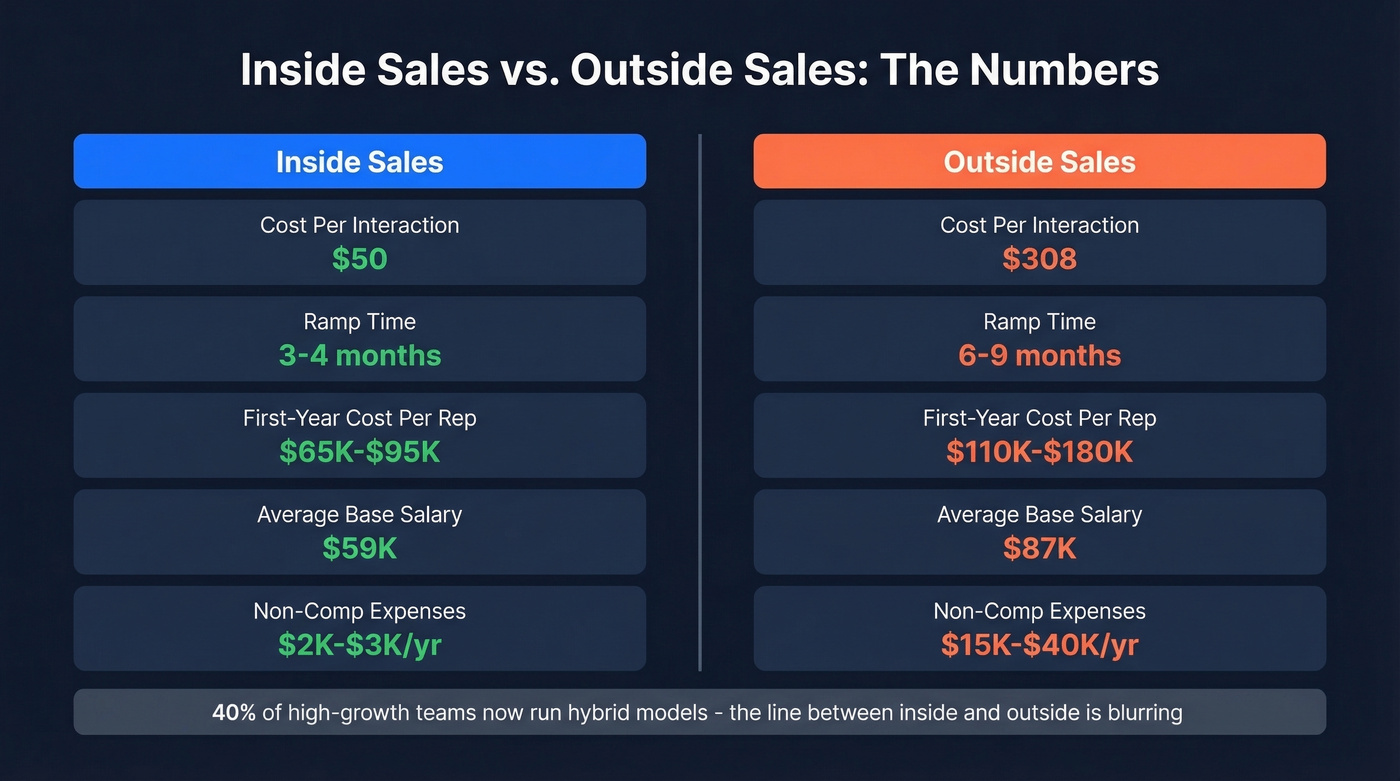
The cost gap is stark. Inside sales runs roughly six times cheaper per interaction, ramps twice as fast, and costs half as much in year one. These categories are collapsing, though - 40% of high-growth teams now run hybrid models, and a thread on r/sales put it bluntly: inside and outside sales are increasingly the same thing, with "outside" just meaning more autonomy and a travel budget.
The real question isn't inside vs. outside. It's whether your deal size and sales cycle justify the overhead of field reps.
Building the SDR Team
The assembly-line model still works best: inbound SDRs qualify marketing leads, outbound SDRs prospect cold accounts, and AEs close. Trying to make one rep do all three creates mediocrity across the board.
Activity benchmarks for a fully ramped SDR land around 30-60 contacts per day, producing roughly 15 meetings per month with a 20% no-show rate - so about 12 attended. Channel preferences have shifted: 42% of SDR teams rank email as their top channel, and 35% say cold calling is their least effective motion. That doesn't mean phones are dead, but your playbook needs a multi-channel cadence, not a dialer and a prayer. (If you need a starting point, use these sales prospecting techniques.)
To plan headcount, reverse-engineer from your revenue target. If your goal is $12M in pipeline and each SDR generates $3M/year, you need 4 fully ramped SDRs. Factor in ramp time and churn, and you're hiring 5-6. (This is easier when you track pipeline health consistently.)

Bad data is the fastest way to kill an SDR program. Snyk's 50-person AE team cut bounce rates from 35-40% to under 5% and grew AE-sourced pipeline 180% after switching to Prospeo's 98% verified emails. At $0.01/email, your reps spend time selling - not cleaning lists.
Give your SDRs data that actually connects them to real buyers.
The 90-Day SDR Ramp Program
A one-week onboarding is a one-week head start on failure. Here's the framework we've seen work consistently across teams of all sizes. (You can also adapt this into a 30-60-90 day plan for new reps.)
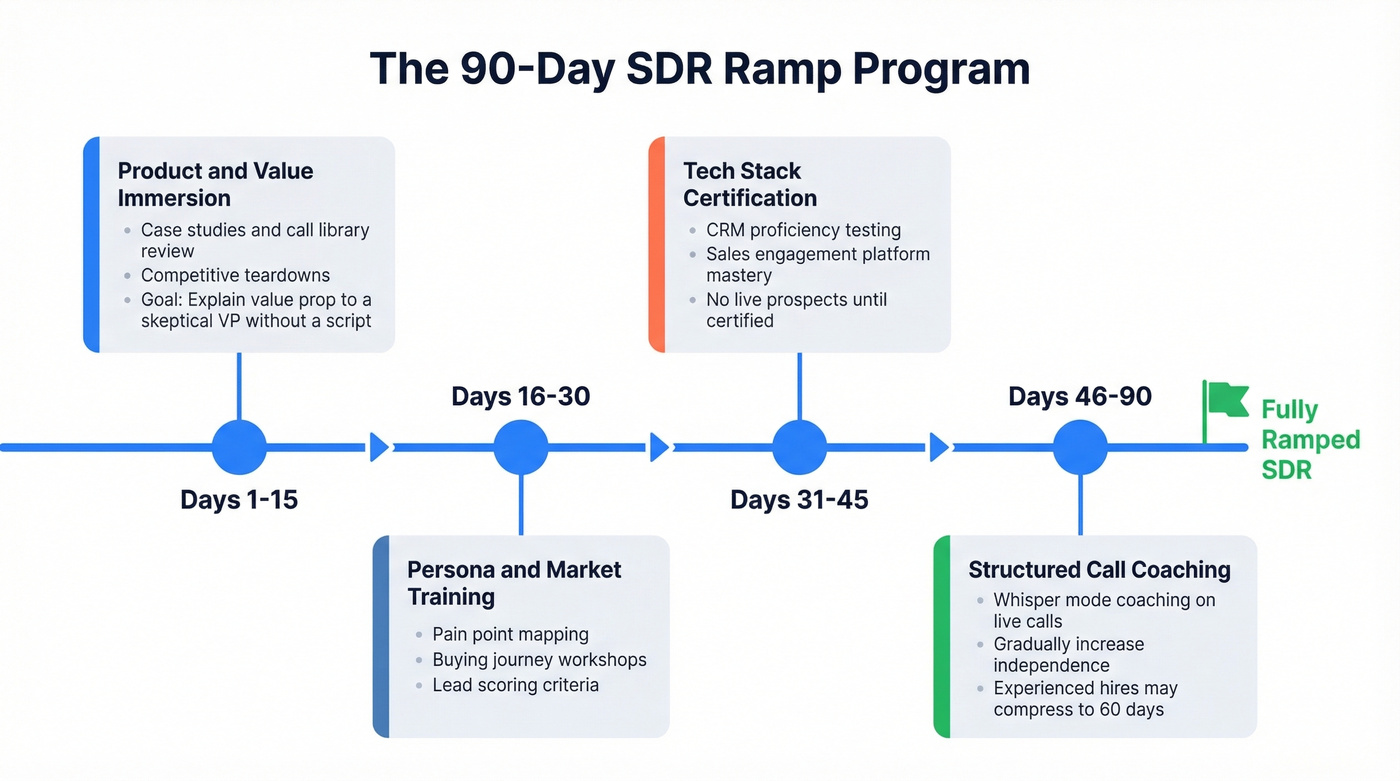
Days 1-15: Product and Value Immersion
Case studies, call library review, competitive teardowns. By day 15, a rep should explain your value prop to a skeptical VP without reading a script. If they can't, they aren't ready for live conversations. (A tight set of sales battle cards helps here.)
Days 16-30: Persona and Market Training
Pain point mapping, buying journey workshops, lead scoring criteria. Reps learn who they're calling and why those people care - not just what to say, but what the buyer has already researched before picking up the phone. (If your scoring is fuzzy, fix your lead scoring model first.)
Days 31-45: Tech Stack Certification
CRM proficiency testing, sales engagement platform mastery, data tools. Don't let reps touch live prospects until they can navigate the stack without hand-holding. We've watched teams skip this step and then wonder why CRM hygiene collapses by month three. (If you're still choosing tools, start with a shortlist of SDR tools.)
Days 46-90: Structured Call Coaching
Put reps on live calls with whisper mode coaching - the coach listens and guides in real time, inaudible to the prospect. Gradually increase independence. Experienced hires can sometimes compress this to 60 days, but never shorter without sacrificing quality.
KPIs That Actually Matter
| Operational | Strategic |
|---|---|
| Calls to conversations | Pipeline created ($) |
| Email open/reply rates | SAL-to-opportunity rate |
| Meetings booked | Revenue influenced |
| No-show rate | Ramp-to-quota time |
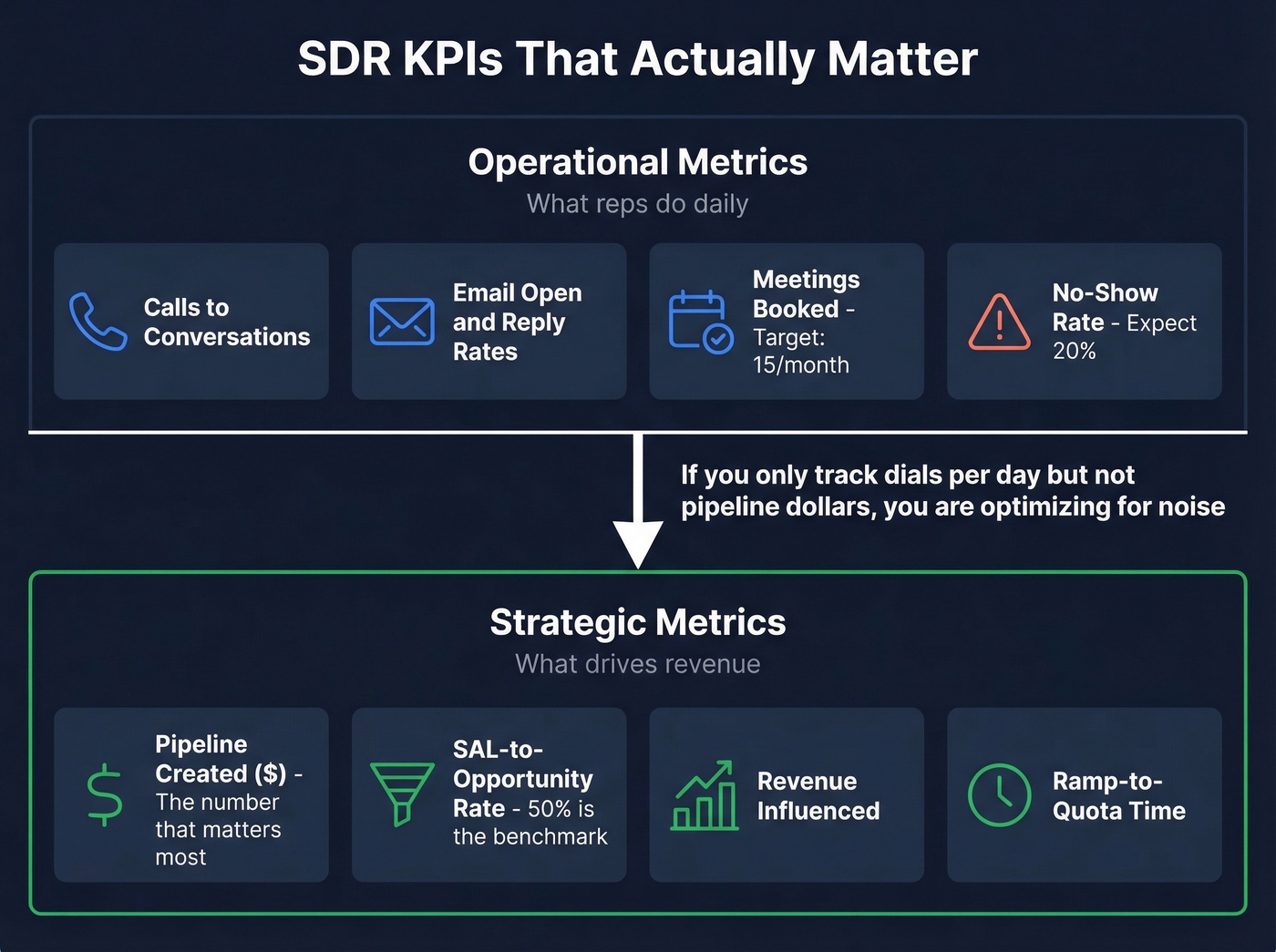
Here's the thing: the numbers that matter most aren't the ones most teams track. Inbound conversion runs 5-10% for low-intent leads and 75-80% for high-intent MQLs like demo requests. About 1 in 2 sales-accepted leads convert to a next step. (For a broader view, align SDR reporting to funnel metrics.)
If your team tracks dials per day but not conversation quality or pipeline dollars, you're optimizing for noise. The r/techsales consensus is clear: "dial monkey" behavior doesn't work in mature markets where buyers have already completed most of their research before picking up the phone.
Mistakes That Kill SDR Programs
No sales-specific hiring scorecard. Generic interviews miss the traits that predict SDR success - coachability, communication under pressure, tool fluency. External recruiters charge ~20% of first-year salary, so getting the scorecard wrong is expensive twice over.
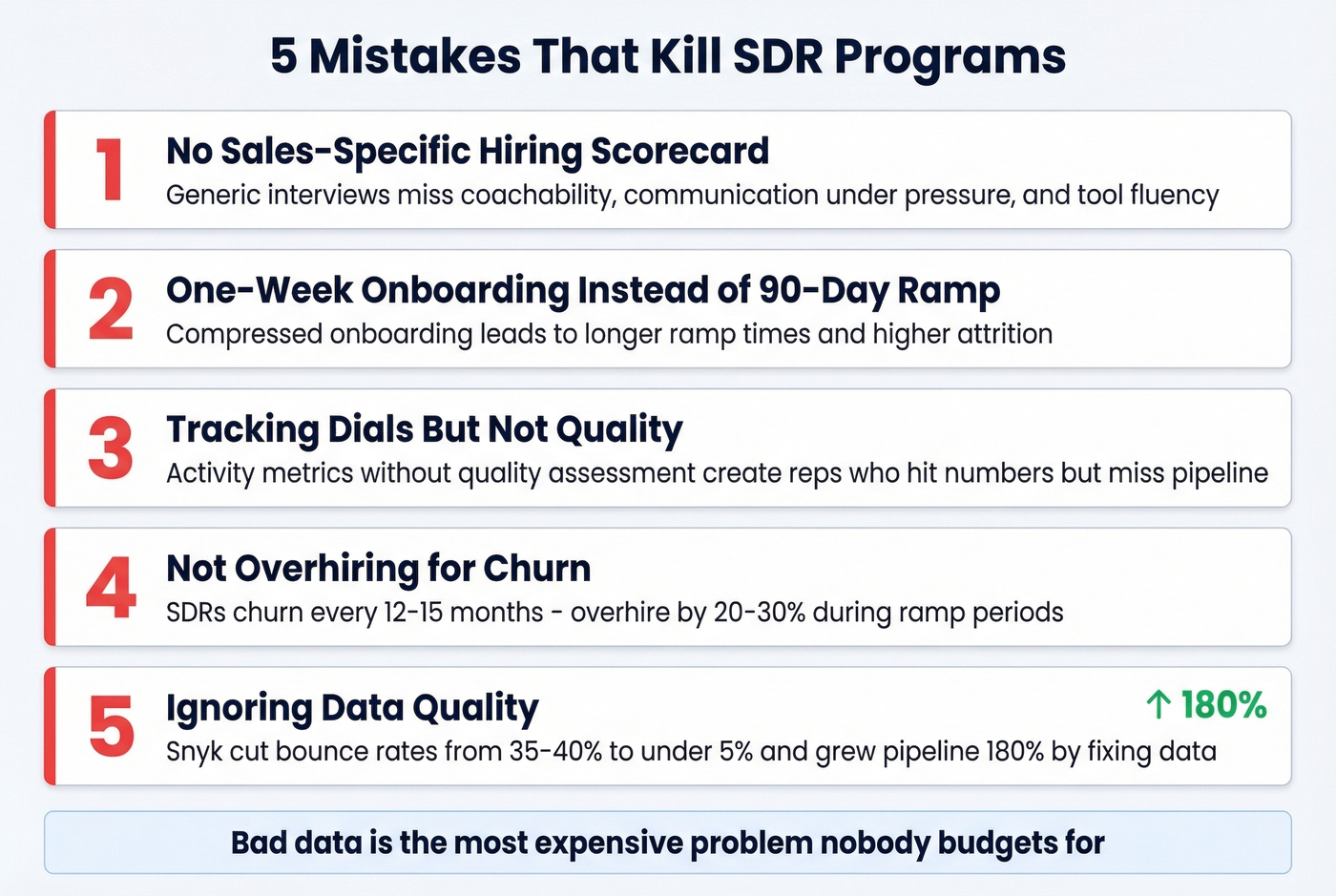
One-week onboarding instead of 90-day ramp. Companies that compress onboarding see longer ramp times and higher attrition. The math doesn't work. Period.
Tracking dials but not quality. Activity metrics without quality assessment create reps who hit numbers but don't generate pipeline. Record calls. Review them. Coach on substance, not volume.
Not overhiring for churn. US-based SDRs churn every 12-15 months. If you're staffing to exact headcount, you'll be understaffed within two quarters. Overhire by 20-30% during ramp periods. (This is also a churn analysis problem, not just a hiring problem.)
Ignoring data quality. This one frustrates us more than any other. Snyk's 50-person AE team was running 35-40% bounce rates before fixing their data pipeline - they dropped to under 5%, and AE-sourced pipeline jumped 180%. In our experience, the teams that fix data quality first see the fastest pipeline improvement. Bad data is the most expensive problem nobody budgets for.

The Essential Tool Stack
Start with three things: a CRM, a sales engagement platform, and verified data. Everything else is optional until you pass 10 reps.
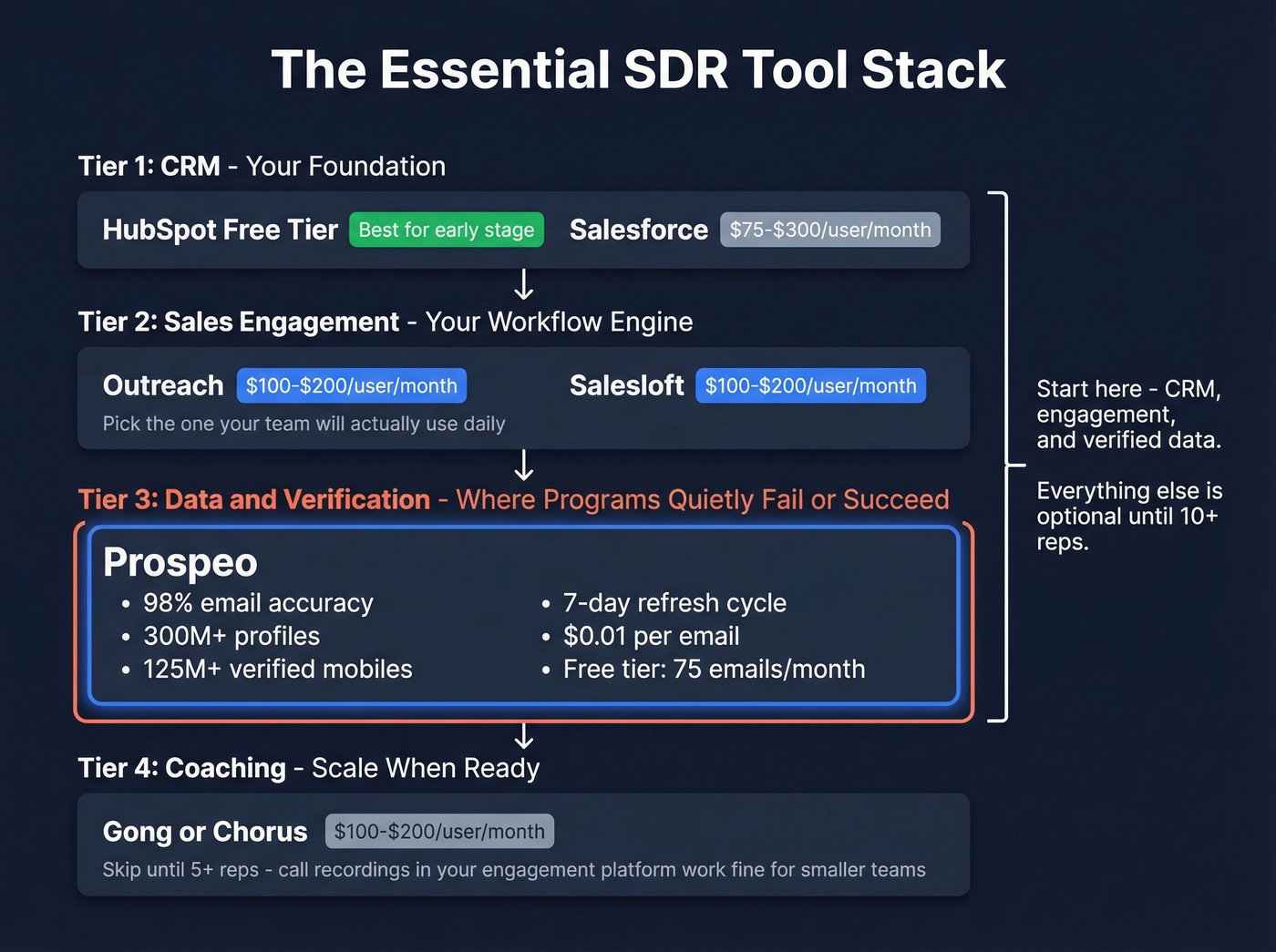
CRM: HubSpot's free tier for early-stage teams. Salesforce typically lands around $75-$300/user/month depending on edition and add-ons. (If you're comparing options, see these examples of a CRM.)
Sales engagement: Outreach or Salesloft typically run $100-$200/user/month. Either works - pick the one your team will actually use daily. (Implementation matters more than vendor; follow an implementing a sales engagement platform checklist.)
Data and verification: This is where most programs quietly fail. Prospeo handles email finding and verification with 98% accuracy across 300M+ professional profiles, refreshed on a 7-day cycle. The free tier starts at 75 verified emails/month with no contracts, which is enough for a solo SDR to validate their ICP before committing budget. At roughly $0.01 per email, it's a rounding error against the $65K-$95K you're spending per rep. (If you're evaluating vendors, compare data enrichment services.)
Coaching: Gong or Chorus typically land around $100-$200/user/month. Skip this until your team is large enough to justify it - call recordings in your engagement platform work fine for teams under 5 reps.
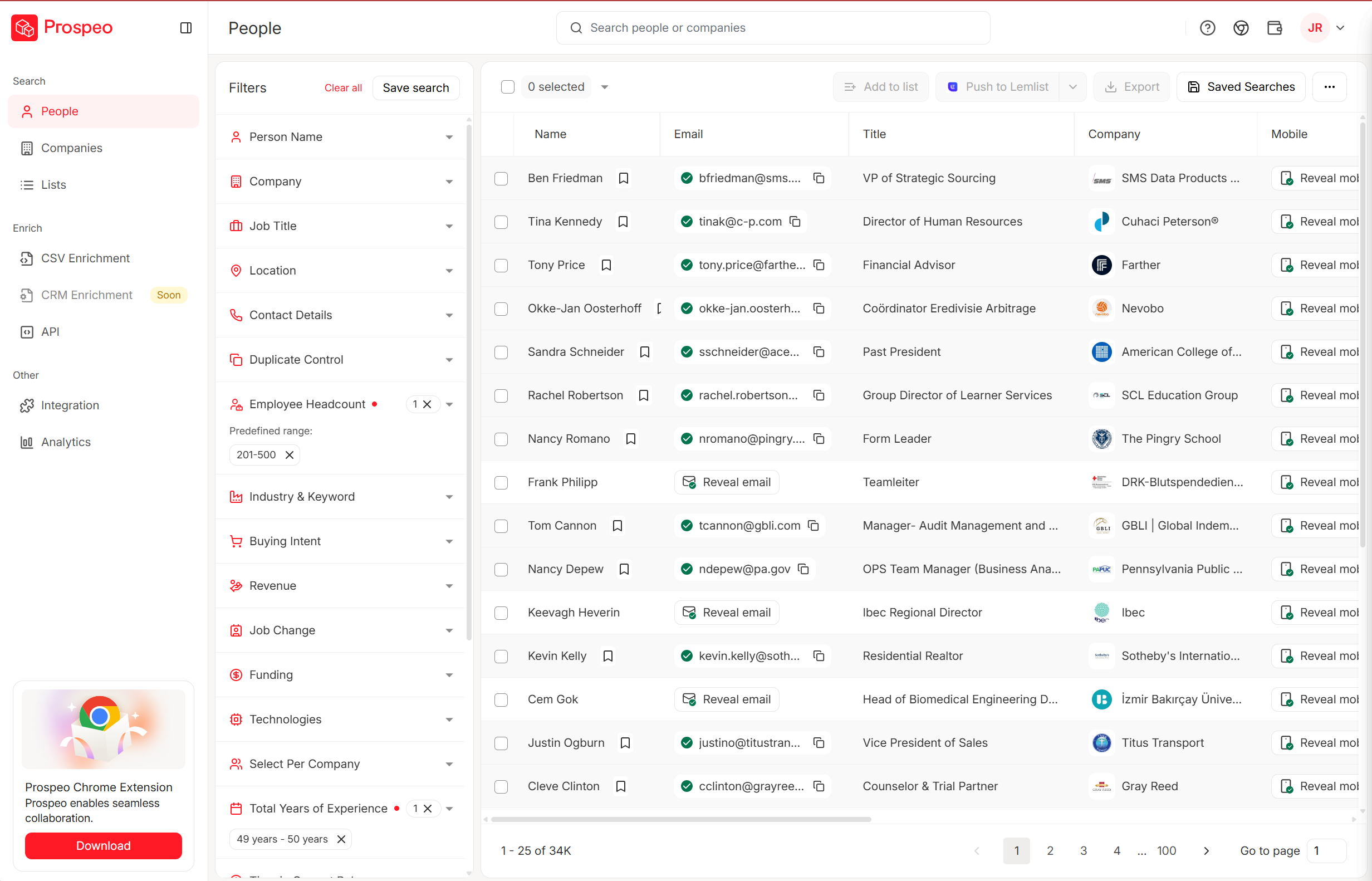
Hitting 15 meetings/month per SDR requires reaching real people at real numbers. Prospeo gives your team 300M+ profiles, 125M+ verified mobiles with a 30% pickup rate, and 30+ filters to build lists that match your ICP - refreshed every 7 days so reps never call stale data.
Stop burning ramp time on bad numbers and bounced emails.
Sustaining Growth Over Time
Let's be honest: if your average deal is under $10K, you probably don't need ZoomInfo-level data or a 15-person SDR floor. But you absolutely need a clear promotion path for the SDRs you do hire.
SDR purgatory is real. The SDR-to-AE path that used to take 12-18 months now stretches indefinitely at many companies. As one r/techsales thread put it, results depend on product, territory, and timing - not some magic pitch.
Build written promotion criteria, a defined timeline, and a track record of actually promoting from within. If your last three AE hires were external, your SDRs have noticed. Sustainable inside sales development depends as much on retention and career development as it does on hiring volume. Lose your top performers to competitors and no amount of new headcount will close the gap.
FAQ
How long does it take to ramp an SDR?
A structured 90-day program gets most SDRs to full productivity in 3-4 months. Without that structure, ramp stretches to 6+ months and early attrition spikes. Invest in onboarding upfront or pay double in turnover costs later.
What's the difference between an SDR and a BDR?
SDRs typically qualify inbound leads while BDRs focus on outbound prospecting. In practice, most companies use the titles interchangeably - what matters is whether the role is inbound-focused, outbound-focused, or blended.
How many meetings should an SDR book per month?
The benchmark is roughly 15 meetings per month. Factor in a 20% no-show rate and you get about 12 attended, with roughly half converting to a qualified next step.
What's a good free data tool for a new SDR team?
Prospeo's free tier includes 75 verified emails and 100 Chrome extension credits per month - enough for a solo SDR to validate their ICP before committing budget. Hunter offers 25 free searches/month but caps enrichment features heavily.
How much does it cost to build an inside sales team?
Budget $65K-$95K per rep in year one including tools and non-comp expenses. Inside sales runs roughly $50 per interaction versus $308 for outside sales - making it the more capital-efficient model for B2B companies selling deals in the $5K-$50K range.