

Lead Sourcing: The 2026 Playbook for B2B Teams
Every lead sourcing guide hands you a strategy deck. You need an operating manual - one that tells you which tool to open Monday morning, what it costs, and how to keep your domain reputation intact by Friday.
Sales reps spend more than half their working hours hunting for leads, and only 28% of those prospects ever convert. The gap between effort and outcome almost always comes down to sourcing quality, not volume. Let's fix that.
What Is Lead Sourcing?
Lead sourcing is the act of proactively identifying prospects who match your ideal customer profile and collecting their contact information. You're not waiting for someone to download a whitepaper or click an ad. You're going out and finding them.
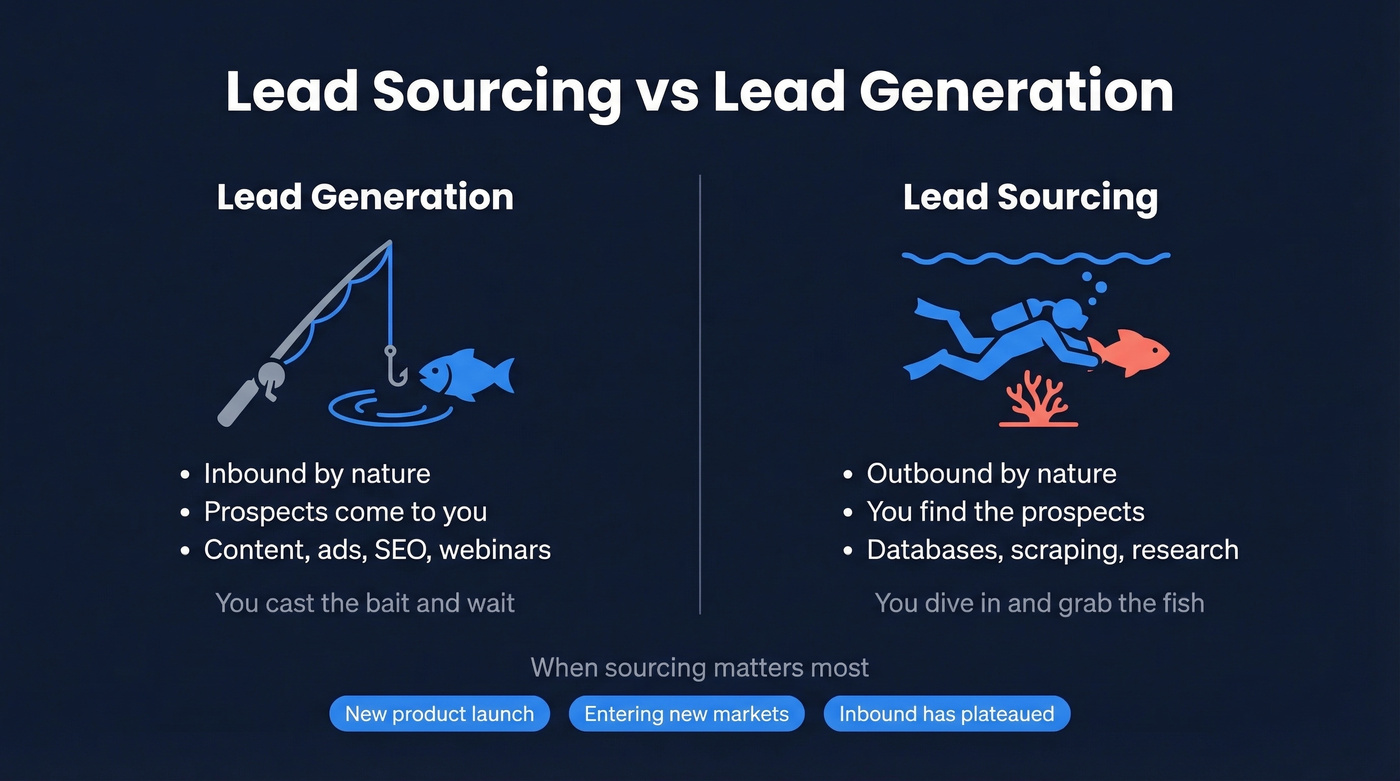
The simplest way to think about it: lead generation is fishing with bait - you cast a line and hope something bites. Sourcing is diving into the water and grabbing the fish yourself. It's outbound by nature, deliberate by design.
This approach matters most in three scenarios. When you're launching a new product and don't have inbound momentum yet. When you're entering a new market where nobody knows your name. And when inbound has plateaued and the pipeline needs a jolt. In all three cases, waiting for leads to come to you isn't a strategy - it's a prayer.
What You Need (Quick Version)
The 3-tool stack for outbound teams:
- Data source - where you find and verify contacts (Prospeo)
- Sequencer - where you send and manage outreach (Instantly)
- CRM - where you track everything (HubSpot CRM, free tier)
Using the entry plans mentioned below, that starter stack comes out to roughly $70/mo and covers 90% of what a 1-5 person outbound team needs. If you want the full Monday-through-Friday operating cadence, skip to the weekly workflow section below. Otherwise, keep reading for the tools, benchmarks, and compliance rules.
Best B2B Lead Sources in 2026
Not all sources are created equal. Here's how they rank for outbound-first teams, ordered by speed-to-pipeline.
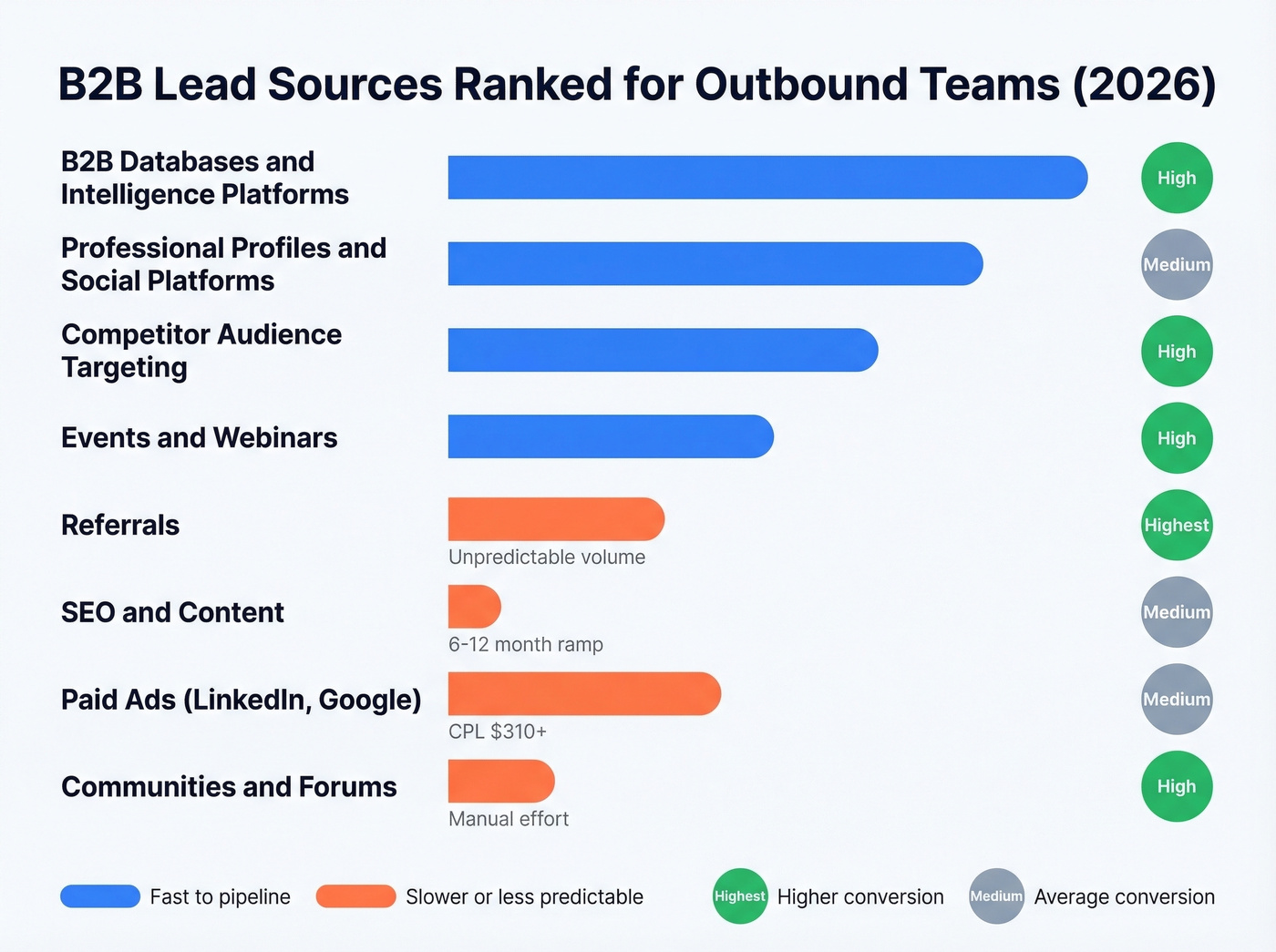
B2B databases and intelligence platforms are the fastest path. You filter by ICP criteria, export a list, and start sequencing the same day. Most outbound teams should spend the majority of their prospecting effort here. (If you’re comparing vendors, start with this breakdown of sales prospecting databases.)
Professional profiles and social platforms are the second layer. Great for research and warm touches, but extracting contact data at scale requires a separate tool.
Competitor audience targeting is underused. Scraping followers, event attendees, or review-site users of a direct competitor gives you a list of people already thinking about the problem you solve. Tools like Clay and Phantombuster make this practical at scale. If you want a deeper system for this, use a competitive intelligence strategy.
Events and webinars produce high-intent leads. Volume is lower, but conversion rates are typically higher than cold lists because someone who attended your competitor's webinar is already in-market.
Referrals remain the highest-converting source in B2B, but they don't scale predictably. Treat them as a bonus, not a channel you can plan around.
SEO and content build compounding inbound over time, but they're a 6-12 month investment. Not useful if you need pipeline this quarter. (If you’re building this channel, see SEO sales leads.)
Paid ads on LinkedIn and Google can generate leads fast, but CPL runs $310+ for B2B SaaS. That math only works for higher-ACV products.
Communities and forums - Slack groups, Reddit, Discord - are underrated for finding warm prospects. The leads are engaged, but the volume is tiny and the effort is manual. The consensus on r/sales is that community-sourced leads convert well but can't be your primary channel.
The Lead Sourcing Tool Stack (With Pricing)
Most teams overbuy tooling. We've watched this play out repeatedly - a 4-person SDR team sitting on a $30K/year data contract because someone in RevOps got excited during a demo. Then Finance asks why you're paying enterprise prices for a tool only four people touch.
Here's the thing: if your average deal size is under $10K, you almost certainly don't need ZoomInfo-level data. A $150/month stack will get you 80% of the results at 5% of the cost.
You need three categories covered. Everything else is optional.
| Tool | Category | Database Size | Pricing | Best For |
|---|---|---|---|---|
| Prospeo | Data + verification | 300M+ profiles | Free-~$39/mo+ | Accuracy at scale |
| Apollo.io | Data + sequencing | 275M+ contacts | Free-$149/user/mo | Free starting point |
| ZoomInfo | Data + GTM suite | 100M+ contacts | $15K-$40K+/yr | Enterprise orgs |
| Clay | Enrichment + AI | 50+ data sources | From $134/mo | Workflow automation |
| Instantly | Email sequencing | N/A | From ~$30/mo | Deliverability |
| Lusha | Data | 45M+ contacts | $29-$99/user/mo | Quick lookups |
| Hunter.io | Email finder | 200M+ emails | Free-$499/mo | One-off lookups |
Prospeo
Prospeo covers 300M+ professional profiles with 98% email accuracy and a 7-day data refresh cycle - the industry average is 6 weeks. At roughly $0.01 per email, it's 90% cheaper than ZoomInfo on a per-lead basis. The free tier gives you 75 verified emails per month to test before committing anything.
The 5-step verification process catches spam traps, honeypots, and catch-all domains before they hit your sequencer. That's the difference between a healthy sending domain and a deliverability disaster. Snyk's 50-person AE team switched to Prospeo and saw bounce rates drop from 35-40% to under 5%, with AE-sourced pipeline up 180% and 200+ new opportunities per month.
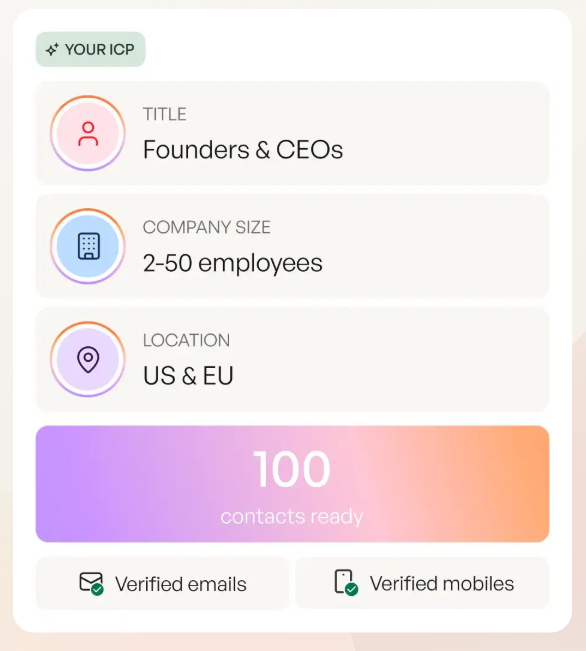
30+ search filters - including buyer intent powered by Bombora, technographics, job changes, and funding signals - mean you're finding contacts who are likely in-market right now, not just contacts who match your ICP on paper. (For more on this layer, see firmographic and technographic data.)

Apollo.io
Apollo is the obvious starting point if budget is zero. The free tier is genuinely useful - you get access to the 275M+ contact database with limited exports, plus a built-in sequencer. Paid plans start at $49/user/month and scale to $149/user/month on higher tiers.
The tradeoff: data accuracy varies by region and role. Apollo's email verification runs looser than dedicated verification tools, so expect to clean lists before sending. Pair it with a verification layer when you care about deliverability. (If you need options, compare Bouncer alternatives.)
ZoomInfo
Use this if you're a 50+ person sales org running outbound, ABM, and intent from one platform and you need the deepest US database available.
Skip this if you're a team under 20 people. A ZoomInfo Professional contract starts around $15,000/year with 2-3 seat minimums and annual commitments. Advanced runs $25,000-$35,000. Elite is $40,000+. ZoomInfo contract negotiations are notorious on Reddit - expect to push back on the initial quote. That's real money for a Series A company, and most of it pays for modules you'll never activate.
Clay
Clay pulls enrichment data from 50+ sources and layers AI personalization on top. It's the glue between your data source and your sequencer. Pricing starts at $134/month with 2,000 enrichment credits, but costs scale quickly with usage. Budget a week of setup before it starts paying off. (If you want the cost math and workflow, see Clay list building.)
Instantly
Instantly handles the sending side - dedicated domains, SPF/DKIM/DMARC setup, warm-up, rotation, and bounce management. From ~$30/month, it's the cheapest piece of the stack and the most important for protecting your domain reputation. (If you want the full checklist, use this email deliverability guide.)
Budget Tier Recommendations
Under $500/mo: Prospeo + Instantly + HubSpot CRM (free). This covers sourcing, verification, sequencing, and pipeline tracking.
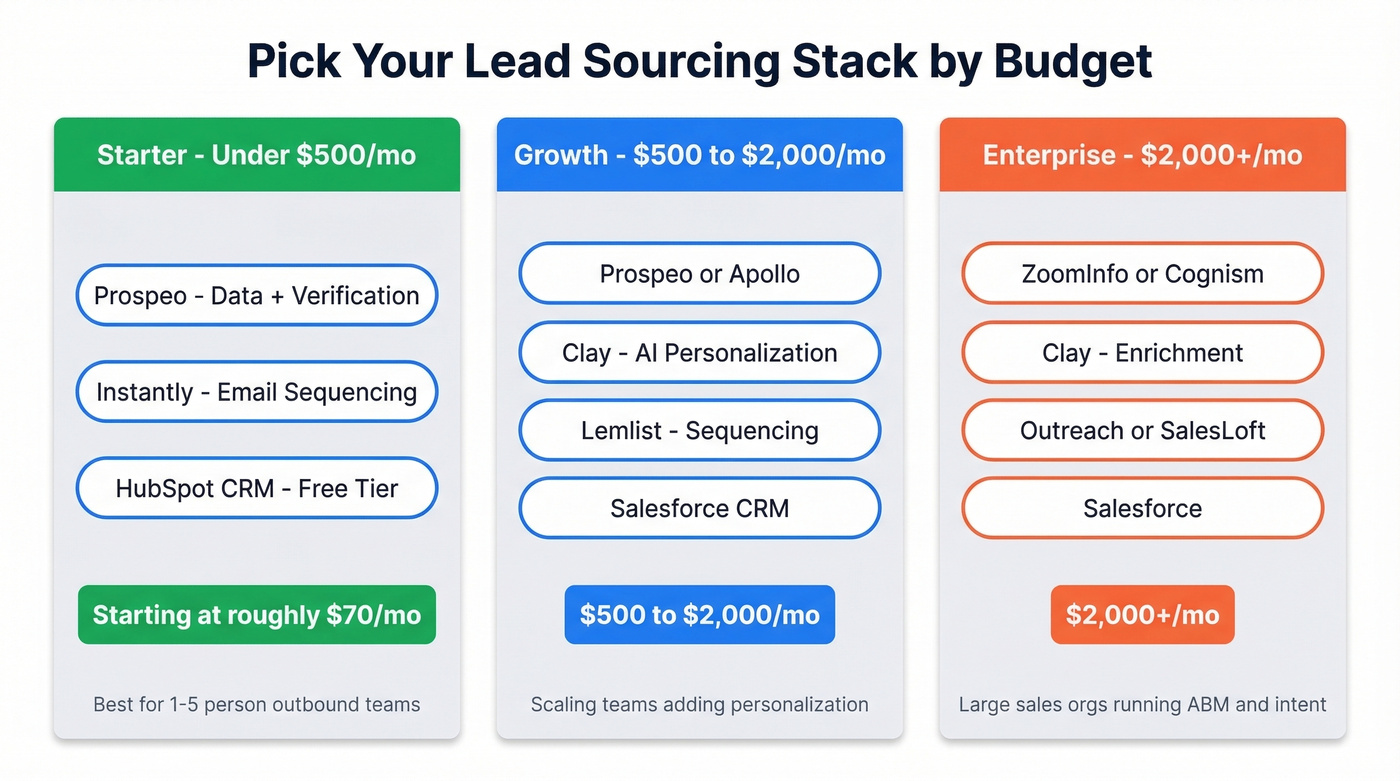
$500-$2,000/mo: Add Clay for AI-driven personalization at scale, plus Lemlist or a comparable sequencer and Salesforce if you've outgrown HubSpot's free tier.
$2,000+/mo: ZoomInfo or Cognism + Clay + Outreach or SalesLoft + Salesforce. Cognism covers 400M+ contacts with custom annual pricing starting around $15K-$25K. This is the enterprise stack - powerful, but complex and expensive.
The Weekly Workflow
Here's the operational cadence that works. We've refined this across multiple teams, and the Monday-through-Friday rhythm keeps pipeline moving without burning out your SDRs.
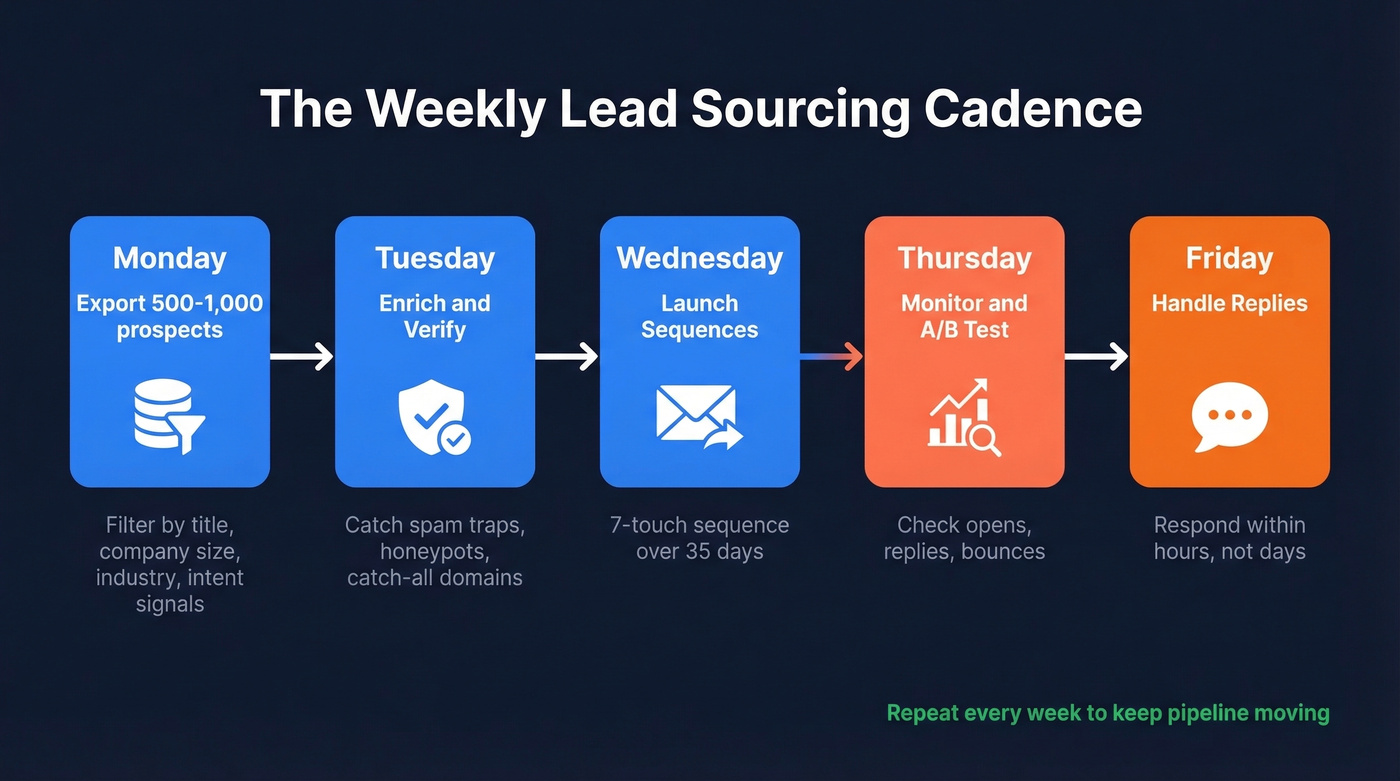
Monday: Export 500-1,000 prospects. Use your data source to pull contacts matching your ICP. Filter tight - job title, company size, industry, and ideally intent signals. Wider filters mean more volume but worse conversion.
Tuesday: Enrich and verify. Run every list through dedicated email verification before it touches your sequencer. Look for a tool that checks catch-all domains, spam traps, and honeypots - not just syntax validation. A 7-day data refresh cycle means you're working with current data, not contacts who changed jobs six weeks ago.
Wednesday: Launch sequences. Load verified contacts into your sequencer and start your campaign. A 7-touch sequence spread over ~35 days works well:
- Intro email
- Social proof
- Value-add content
- Open question
- Different angle
- Urgency trigger
- Breakup email
Thursday-Friday: Monitor, A/B test, handle replies. Check open rates, reply rates, and bounce rates. A/B test subject lines and opening hooks. Respond to replies fast - within a few hours, not a few days.
Deliverability Setup You Can't Skip
Before you send a single email, set up SPF, DKIM, and DMARC on your sending domains. Use dedicated domains, not your primary company domain. Warm them up over 2-4 weeks before running full campaigns.
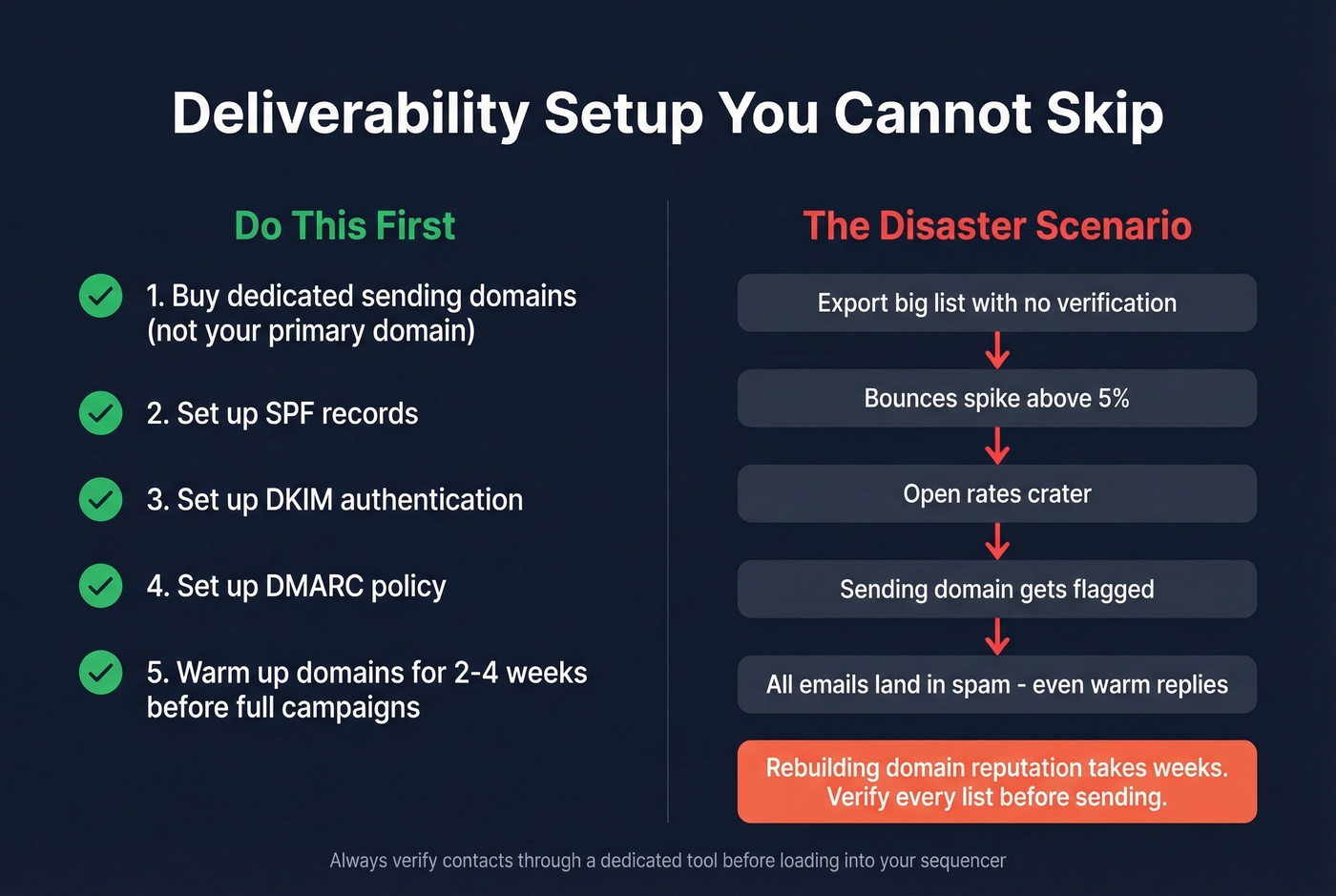
The disaster scenario we've watched play out more than once: an SDR exports a big list from a database with no verification step. Bounces spike. Open rates crater. The sending domain gets flagged, and now every email - including legitimate replies to warm prospects - lands in spam. Rebuilding domain reputation takes weeks. Don't learn this the hard way. (If you’re troubleshooting, start with email bounce rate.)

Your lead sourcing stack is only as good as your data layer. Prospeo gives you 300M+ profiles with 30+ ICP filters - buyer intent, technographics, job changes, funding - so you source in-market prospects, not stale lists. At $0.01/email with 98% accuracy, your $70/mo starter stack actually works.
Source your first 75 verified leads free - no credit card, no sales call.
Bad sourcing data kills domains. Prospeo's 5-step verification catches spam traps, honeypots, and catch-all addresses before they torch your sender reputation. Snyk dropped bounce rates from 35% to under 5% and added 200+ opportunities per month. That's what a 7-day data refresh cycle does versus the 6-week industry average.
Protect your domain and triple your pipeline with data you can actually trust.
How to Qualify Sourced Leads
Sourcing fills the top of the funnel. Qualification determines what moves through it.
An MQL meets your demographic criteria - right title, right company size, right industry. An SQL has confirmed budget, authority, and need. The handoff between these two stages is where most teams leak pipeline, and in our experience, the leak usually isn't a process problem. It's a definitions problem. Marketing and sales literally mean different things when they say "qualified." (If you want a scoring system, use lead scoring.)
Three frameworks worth knowing:
BANT (Budget, Authority, Need, Timeline) is the classic. Simple, fast, works for transactional sales where the question is: can they buy, and will they buy soon?
CHAMP (Challenges, Authority, Money, Prioritization) leads with the prospect's pain instead of your pricing question. Better for consultative sales where the problem isn't well-defined yet.
MEDDIC (Metrics, Economic Buyer, Decision Criteria, Decision Process, Identify Pain, Champion) is the enterprise framework. If your deal cycle is 90+ days with a buying committee, this catches dead deals earliest.
Pick one. Train your team on it. Don't mix frameworks across the same pipeline.
CPL and CAC Benchmarks
Without benchmarks, you're flying blind. Here's what sourcing leads actually costs across industries, based on FirstPageSage's 2026 CPL report:
| Industry | Paid CPL | Organic CPL | Blended CPL |
|---|---|---|---|
| B2B SaaS | $310 | $164 | $237 |
| eCommerce | $98 | $83 | $91 |
| IT & Managed Services | $617 | $385 | $503 |
| Legal Services | $784 | $516 | $649 |
| Cybersecurity | $411 | $404 | $406 |
For context, B2B SaaS customer acquisition cost averages $239, and a healthy LTV:CAC ratio is 3:1 per OpenView Partners. If your blended CPL is approaching your CAC, something's broken in the funnel - you're paying to acquire leads that aren't converting. (To pressure-test your funnel, track funnel metrics.)
Outbound prospecting via databases typically falls on the organic/low end of CPL because the marginal cost per contact is pennies. The real cost is SDR time, which is why verification and targeting matter so much. Every bounced email or irrelevant contact is wasted rep hours.
Tracking Sources Without Overspending
Companies routinely spend $50K-$100K/year on attribution and routing tools like LeanData, HockeyStack, and Dreamdata. Most of them don't need to.
Start with one field in your CRM: first-touch source. Set it at lead creation. Never overwrite it. Populate it via UTM parameters for digital channels and manual entry for offline sources like events, referrals, and outbound. That single field, maintained consistently, answers 80% of the attribution questions your leadership team will ask.
For routing, keep it simple. If the lead matches an existing account, route to the account owner. If they're in a named territory, route to the territory owner. Everyone else goes to round-robin. Set SLAs: 4 hours for inbound demo requests, 24 hours for content leads, with escalation if missed.
Mistakes That Kill Pipeline
Chasing volume over quality. Exporting 10,000 contacts feels productive. Sending to 10,000 unqualified contacts tanks your domain and wastes two weeks of SDR capacity.
Unclear qualification criteria. If marketing and sales can't agree on what "qualified" means before the campaign launches, they'll argue about it after - while leads go cold.
Ignoring intent signals. A prospect researching your category right now is dramatically more valuable than a cold contact who matches your ICP on paper. Layer intent data into your filters. (If you need a practical model, use intent based segmentation.)
Weak data hygiene. Most databases refresh every 6 weeks or longer. A 7-day refresh cycle should be the baseline your data provider meets - anything slower means you're working with stale contacts and eating unnecessary bounces.
Over-reliance on one channel. If 100% of your pipeline comes from cold email and deliverability drops, you have zero pipeline. Diversify across at least two outbound channels.
Delayed follow-up. Response time is one of the biggest predictors of conversion. Fast follow-up beats perfect follow-up every time. (If you need copy you can ship today, use sales follow-up templates.)
Not tracking metrics. If you don't know your reply rate, bounce rate, and meeting-booked rate by source, you can't optimize anything. Measure weekly, not quarterly.
Compliance Rules for B2B Outreach
The penalties for getting this wrong are severe and specific:
- TCPA (US): $500-$1,500 per unsolicited call. Class actions run into millions.
- GDPR (EU): Fines up to EUR 20M or 4% of global revenue. Italy issued a EUR 27.8M fine for unsolicited outreach.
- CCPA/CPRA (California): The B2B exemption expired January 1, 2023. Fines run $2,663 per unintentional violation and $7,988 per intentional one.
Your practical compliance checklist: document your lawful basis for every contact. Legitimate interest for B2B email is valid under GDPR, but you need documentation. Limit data use to the stated purpose. Maintain an audit trail - where the contact came from, when, and under what basis. Segment outreach by geography and consent status. Respond to data subject requests within 30 days. Vet every data vendor for proof of lawful basis and suppression handling. Include a clear unsubscribe mechanism in every outreach email.
Compliance isn't optional, and "we didn't know" isn't a defense. Build it into your workflow from day one.
FAQ
What's the difference between lead sourcing and lead generation?
Lead sourcing is proactive - you identify specific prospects and collect their contact data. Lead generation is passive - you create content or run ads and wait for prospects to come to you. Most outbound teams need both, but sourcing delivers pipeline faster because you control the targeting.
What's a good cost per lead for B2B?
B2B SaaS blended CPL averages $237, but varies dramatically by industry - legal services runs $649, eCommerce sits at $91. Outbound prospecting via databases falls on the lower end because marginal cost per contact is pennies; the real expense is SDR time.
What are the best free tools for sourcing leads?
Prospeo's free tier gives you 75 verified emails per month - enough to test workflows. Apollo.io's free plan offers database access with limited exports plus a basic sequencer. HubSpot CRM is free for pipeline tracking. Combined, that's a functional outbound stack at zero cost.
How do I verify sourced leads before outreach?
Run every list through a dedicated email verification tool before it touches your sequencer. Look for catch-all domain checks, spam-trap removal, and honeypot filtering - not just syntax validation. Bounce rates above 5% will damage your sending domain fast.
Is cold outreach legal under GDPR?
Yes, with conditions. B2B cold email is permissible under the legitimate interest basis, but you need documentation, purpose limitation, and an opt-out mechanism in every message. Penalties for non-compliance reach EUR 20M or 4% of global revenue - build compliance into your process from day one.