

Podcast Lead Generation in 2026: The Practical Playbook
Downloads don't pay the bills. Relationships do - and a podcast is one of the most efficient ways to build them with buyers who'd never reply to a cold email. The catch? Most B2B shows generate zero pipeline because they treat podcast lead generation like broadcasting instead of what it actually is: a conversion system with a microphone attached.
Quick Version
Two models work for generating leads with a podcast:
- Content Engine: Publish episodes optimized for search, repurpose into SEO posts, clips, and lead magnets. Compounds over 6-12 months.
- Outreach Podcast: Invite ideal prospects as guests. Build relationships on-mic, convert off-mic. ROI in 3-6 months.
Both require a follow-up system. Neither works if you just publish and pray.
The Honest Reality
One Reddit poster in r/ContentMarketing summed it up perfectly: after two years of podcasting, the "lead volume was embarrassing." Over in r/msp, people call podcast lead gen a trend pushed by spammers promising "amazing results."
They're not entirely wrong. If you launch a show expecting predictable volume and immediate ROI, you'll be disappointed.
Podcasting is a relationship channel. It creates warm conversations with people who'd otherwise ignore you. But warmth without a conversion system is just content for content's sake. We've seen teams waste 12+ months podcasting without a follow-up cadence, verified contact data, or CRM workflows - and they have nothing to show for it.
Numbers That Matter
619.2 million people listen to podcasts globally in 2026. In the US, 55% of Americans age 12+ tune in monthly. More importantly for B2B: 83% of senior executives listened to a podcast in the past week.
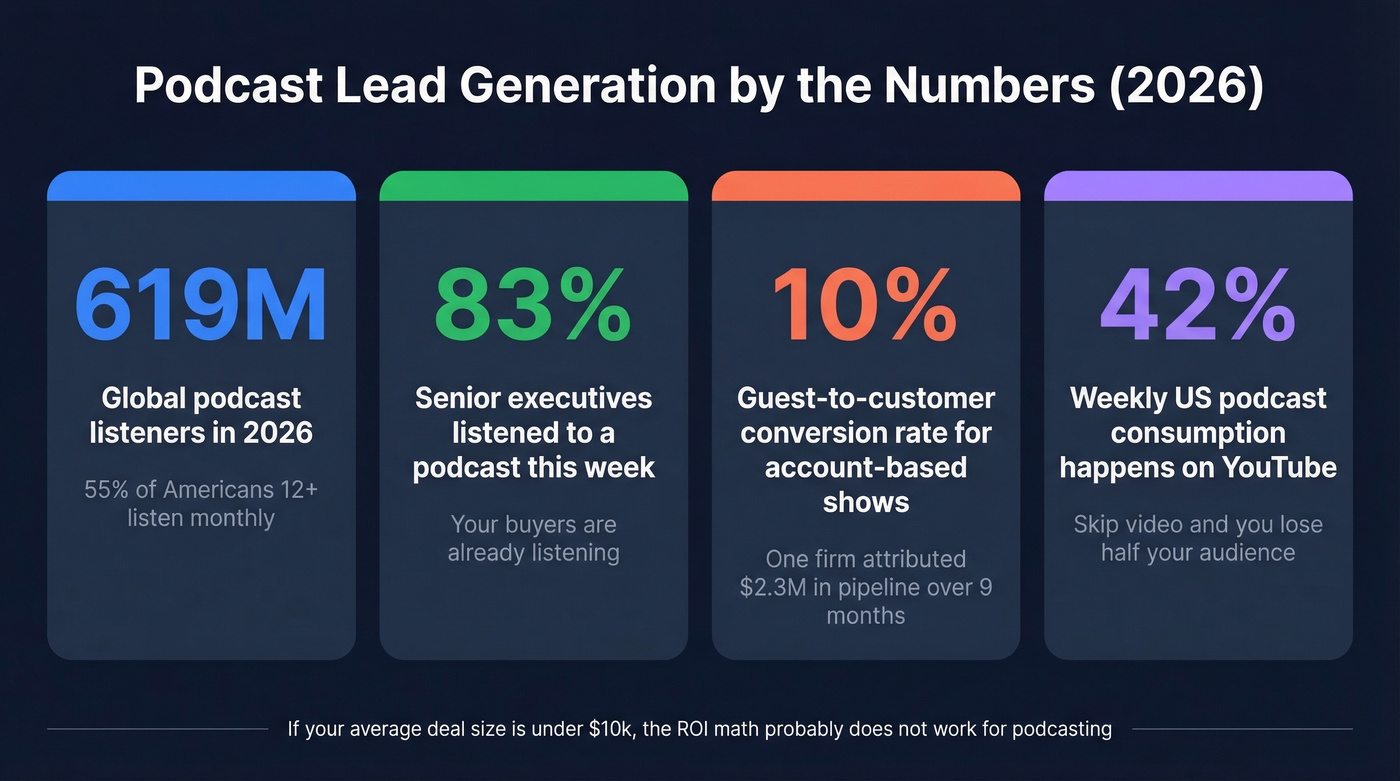
Account-based podcasts see roughly a 10% guest-to-customer conversion rate. One cybersecurity firm attributed $2.3M in new pipeline over 9 months to relationships with podcast guests.
Here's the thing: if your average deal size is under $10k, you probably don't need a podcast. The ROI math only works when a single converted guest relationship can cover months of production costs.
The Two Models Explained
Model 1: Content Engine - Episodes become searchable assets that compound over time. Use this if you're playing a long game with content ops capacity. Skip it if you need pipeline this quarter.
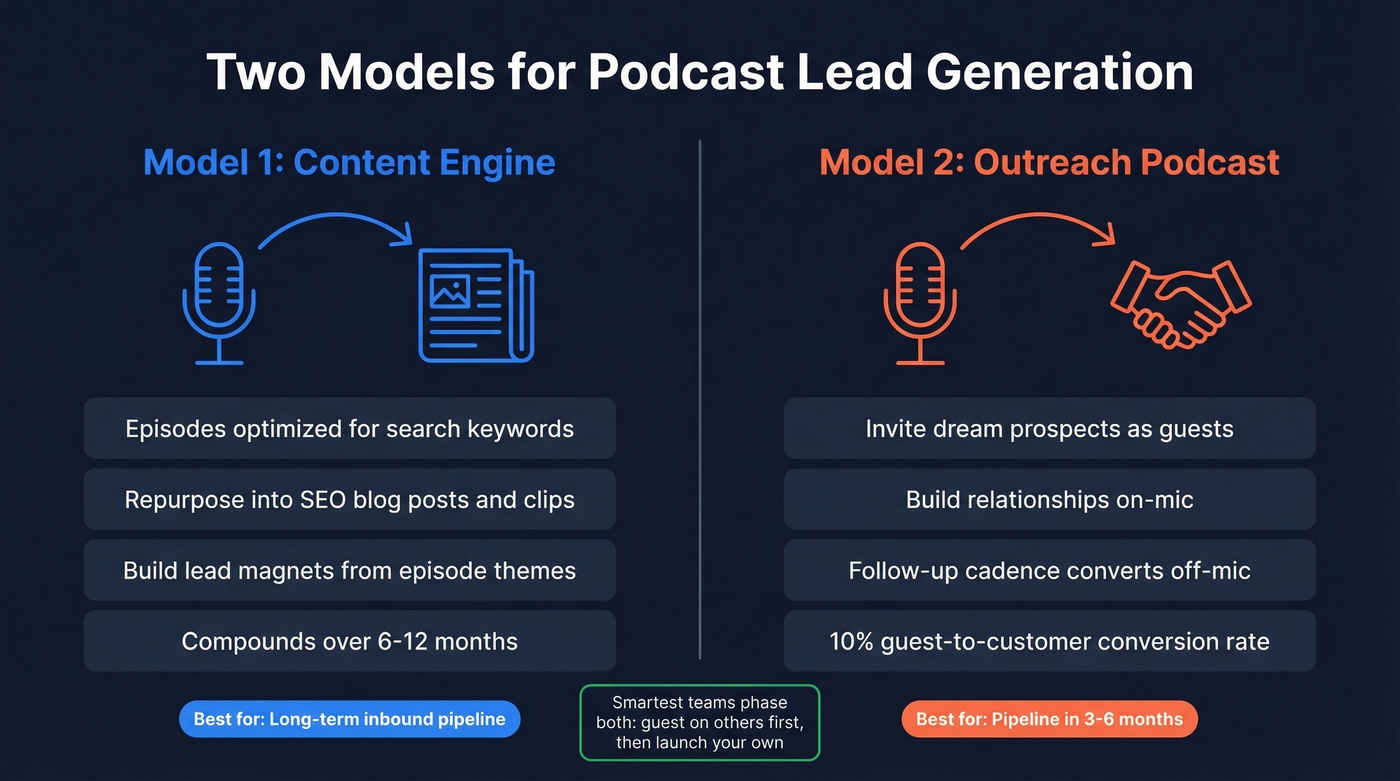
Model 2: Outreach Podcast - Invite dream prospects as guests. The episode builds the relationship; the follow-up closes the deal. In our experience, this outperforms content-only strategies by 3-4x in the first year, and one company generated over $1M in opportunities before releasing a single episode, purely from the outreach process of booking guests.
The smartest teams phase it: guest on other shows in months 1-6 to build credibility, then launch your own in months 7-12 to invite prospects.
Content Engine Deep Dive
Every episode should target a question your buyers are Googling. "How we built our culture" gets zero search volume. "How to reduce SaaS churn below 5%" does. Start there.
Pull the transcript, find the keyword your guest naturally addressed, and rewrite it into a real blog post - not a transcript dump. Structure it with headers, add context, optimize for the keyword. Google won't treat a raw transcript like a real article; treat the rewrite as a standalone asset that earns its own rankings.
Place CTAs in three spots per post: beginning, middle, end. Use a unique trackable URL so you can attribute. Then internal link aggressively - connect every post to your product pages, other episodes, and pillar content. After 6 months of consistent publishing, you've got 24+ SEO-optimized posts feeding your funnel while you sleep.
If you want the benchmarks behind those CTAs, start with lead generation metrics and map them to your funnel metrics.

Your content engine only works if you can capture listeners when they engage. Prospeo's 300M+ database with 98% email accuracy turns anonymous podcast-driven traffic into verified contacts - so every SEO post, clip, and lead magnet feeds real pipeline, not vanity metrics.
Stop publishing into the void. Turn podcast engagement into pipeline.
Outreach Podcast Deep Dive
Build your Dream 200 list - ideal clients, partners, and referral sources. Invite them on your show. Keep episodes around 20-25 minutes, which B2B Marketing's research identifies as the sweet spot for busy executives who'll actually finish the conversation.
To make the Dream 200 real, use an Ideal Customer Profile and apply account-based selling rules before you ever send an invite.
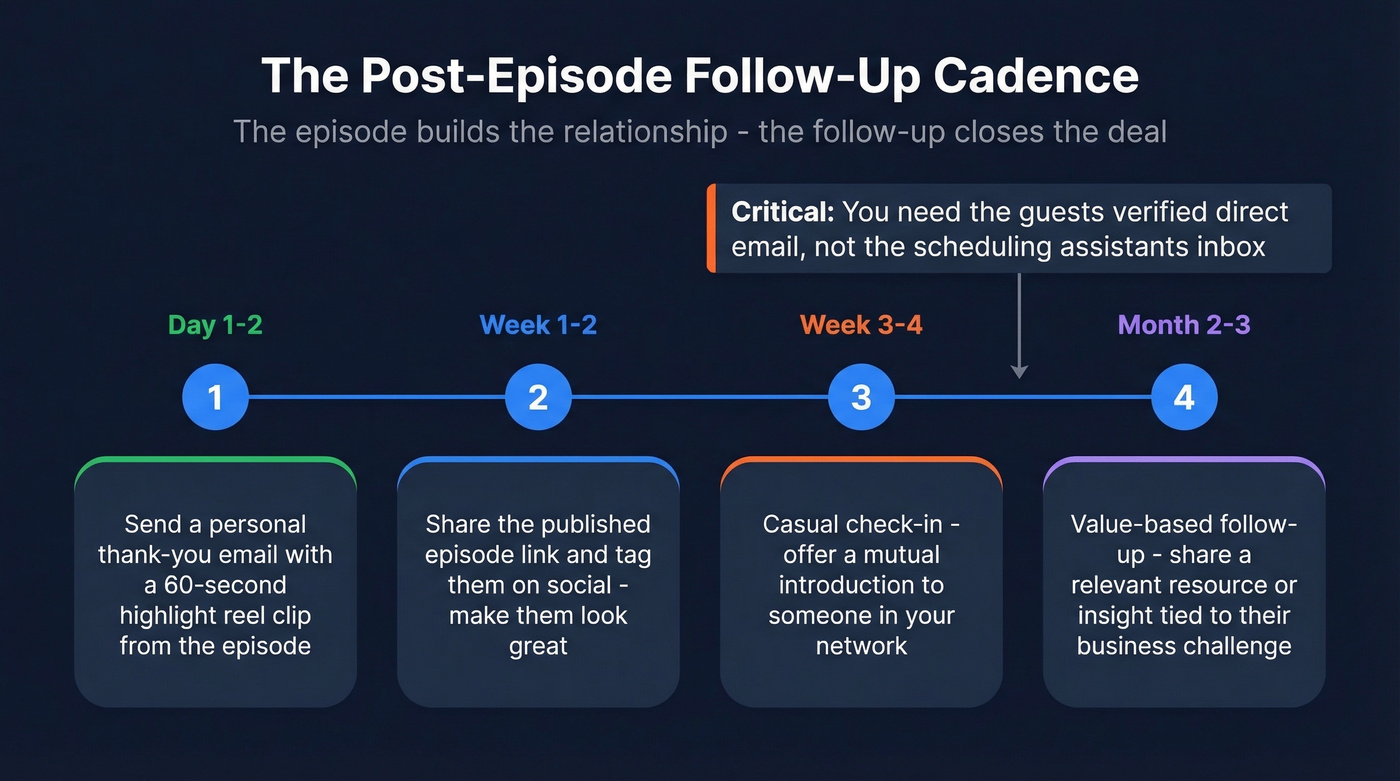
The episode itself isn't the conversion event. The follow-up cadence is:
| Timing | Action |
|---|---|
| Day 1-2 | Thank-you + highlight reel |
| Week 1-2 | Share published episode |
| Week 3-4 | Check-in + mutual intro |
| Month 2-3 | Value-based follow-up |
Before Day 1, you need one thing ready: a verified email and direct mobile for your guest - not the assistant's inbox they used for scheduling. Prospeo's Chrome extension handles this in one click, pulling verified contact details from any website or professional profile so your follow-up lands in the right inbox.
If you need copy that doesn't feel awkward, pull from these sales follow-up templates and adapt them into personalized outreach.
The math works. Book 40 guests in a year, convert 10%, and that's 4 new customers from a channel that also produced 40 pieces of content and dozens of referral opportunities.
Repurpose Like a System
80% of B2B podcasts generate zero attributable pipeline. The difference between the 80% and the 20% isn't production quality - it's whether you squeeze every drop of value from each recording.
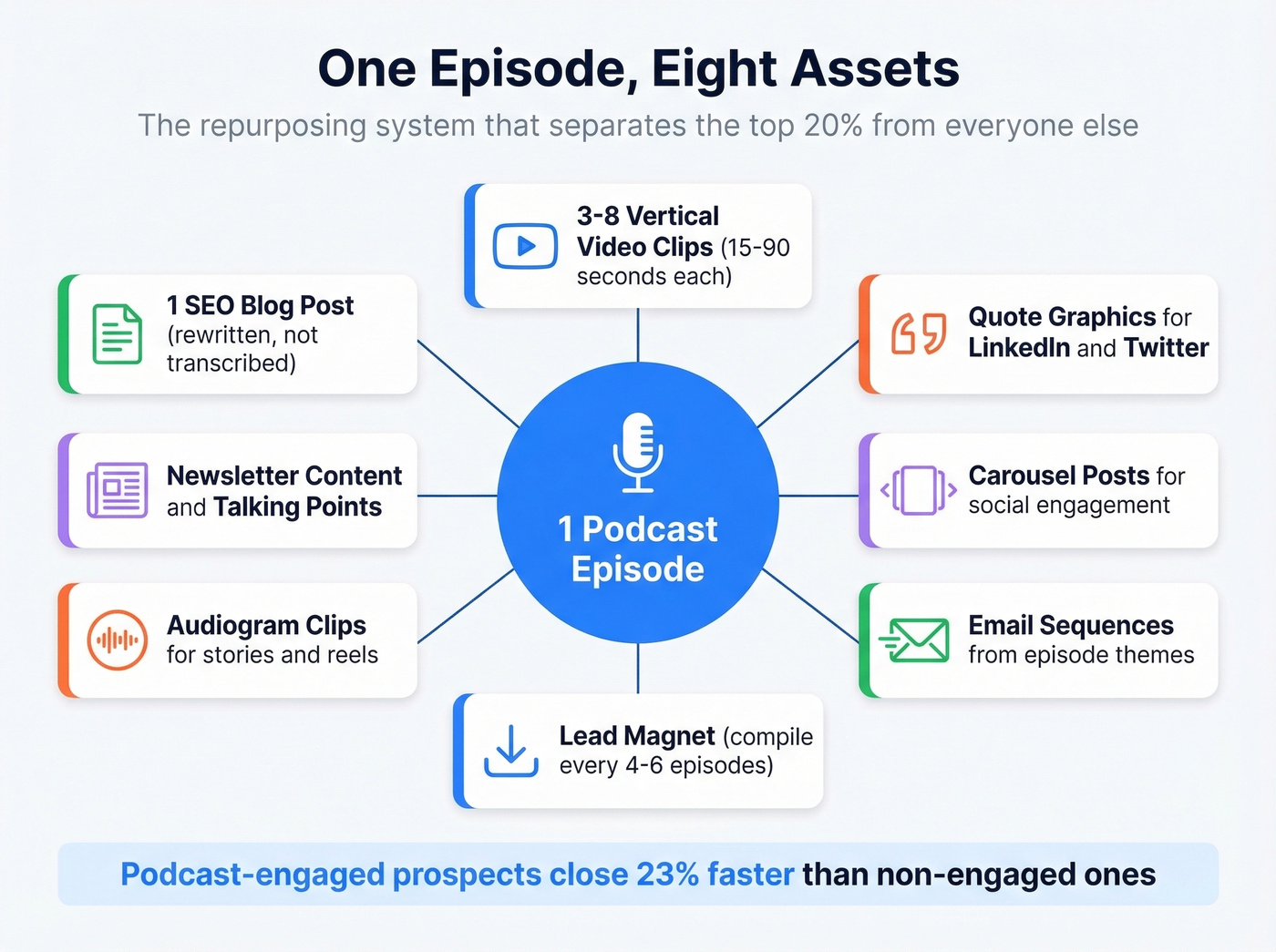
Every episode should produce 3-8 vertical clips, each 15-90 seconds, for social distribution. Write one SEO blog post from the conversation - rewritten, not transcribed. Build email sequences from episode themes, create quote graphics and carousel posts, and compile every 4-6 episodes into a downloadable lead magnet.
Podcast-engaged prospects close 23% faster than non-engaged ones, but only if they encounter your content across multiple channels. When engaged listeners surface, use a tool like Prospeo to capture their verified email and mobile - turning passive engagement into pipeline.
To keep those sequences healthy, watch email deliverability and protect your sender reputation.
Distribute Where People Listen
YouTube owns 42% of weekly podcast consumption in the US. Spotify sits at 15%. Apple Podcasts is down to 7%. And 53% of new listeners prefer video podcasts.
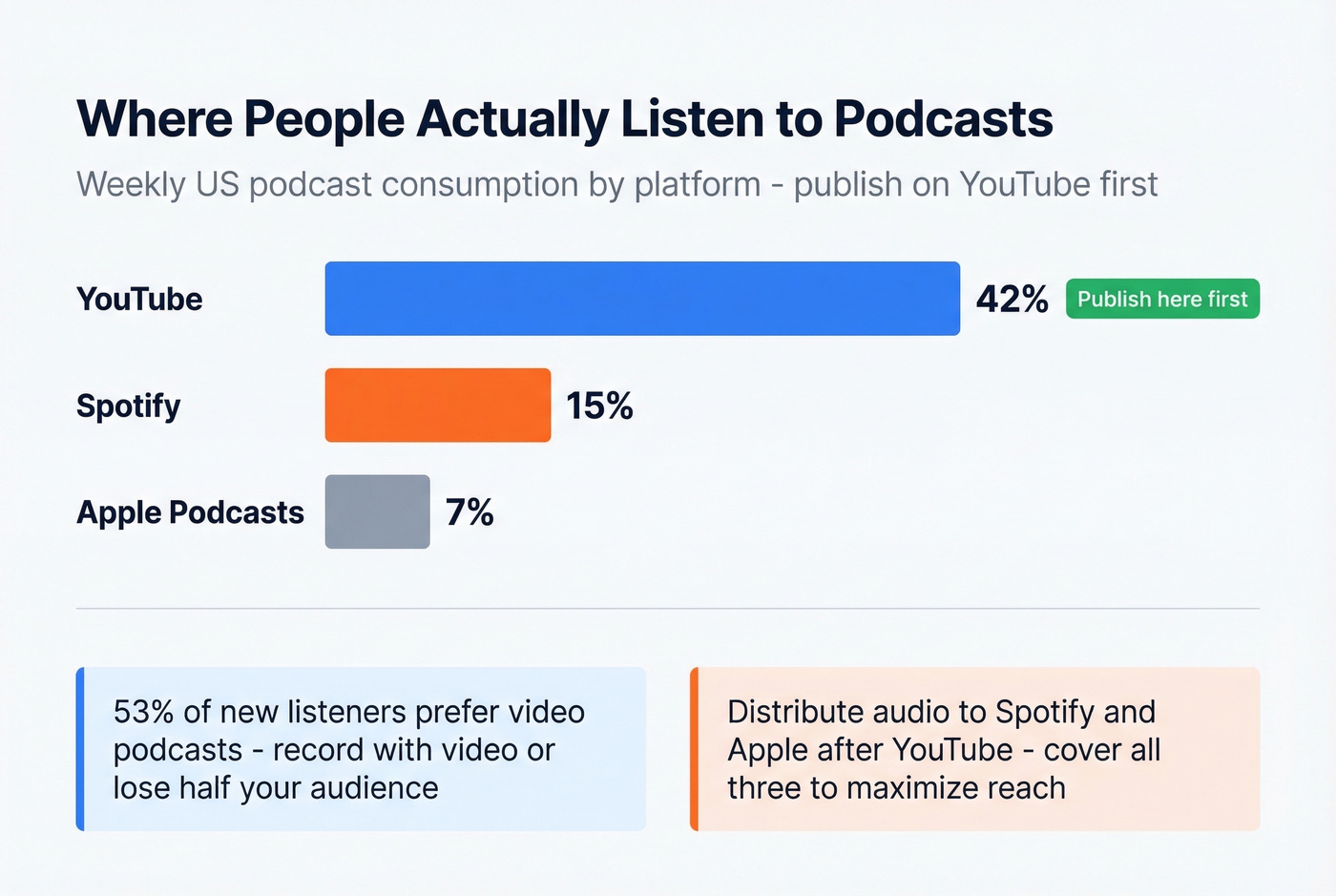
Skip video and you lose half your potential audience. Record with video. Publish on YouTube first, then distribute audio to Spotify and Apple.
Track ROI Accurately
Chartable shut down in December 2024, leaving a gap in podcast attribution. Here's the workaround we've seen work best: tag every CTA with UTM parameters, create short redirect URLs like yoursite.com/podcast pointing to tagged landing pages, and track in GA4 filtered by campaign source.
If you want a cleaner measurement layer, set up a dedicated tracking domain and align reporting to your pipeline health.
For deeper analytics, here's what the main tools run:
| Tool | Price/mo | Best for |
|---|---|---|
| CoHost | $31-$44 | Knowing who listens |
| Captivate | $17-$90 | Hosting + IAB analytics |
| Transistor | $19-$99 | Multi-show hosting |
| Libsyn | $12-$150 | Established shows |
| Simplecast | $15-$35 | Clean analytics UI |
| Spotify Ad Analytics | Free | Ad attribution |
| Podtrac | Free | Third-party tracking |
| Casted | Custom pricing | Enterprise CRM attribution |
Turn Warmth Into Deals
Look - this is where most podcast lead gen falls apart. You've had a great conversation with a VP at a target account. The episode's live. They shared it. And then... nothing happens because you don't have their direct email or mobile.
That's the last-mile problem. Your follow-up cadence is useless without verified contact data, and the scheduling assistant's email won't cut it. Prospeo gives you 143M+ verified emails at 98% accuracy and 125M+ verified mobiles, all refreshed every 7 days. The free tier includes 75 verified emails and 100 Chrome extension credits monthly. At roughly $0.01 per verified email on paid plans, it's the cheapest part of your entire podcast operation.
If you're building this into a repeatable motion, document it as a lead generation workflow and standardize your sequence management.
Building your Dream 200 guest list means nothing if your follow-up lands in the wrong inbox. Prospeo finds verified emails and direct mobiles for decision-makers in one click - 125M+ verified mobile numbers with a 30% pickup rate, so your post-episode cadence actually reaches the guest, not their assistant.
Every guest is a potential deal. Make sure your follow-up actually lands.
FAQ
How long does podcast lead generation take?
The outreach model produces pipeline within 3-6 months. The content engine compounds slower - expect 6-12 months before repurposed assets drive measurable inbound. Most teams see their first guest-to-customer conversion by month 4.
Do I need lots of downloads to generate leads?
No. The guest outreach model works with zero downloads. Even a niche B2B show with 100-500 downloads per episode generates significant pipeline if the right decision-makers are appearing as guests and you're running a proper follow-up cadence.
What's the best CTA format for a B2B podcast?
One single next step, not three. Offer a lead magnet related to the episode topic and use a unique trackable URL so you can attribute leads to specific episodes in GA4.
Should I skip podcasting if my deal size is small?
Probably. For teams with average deal sizes under $10k, the production time and guest coordination rarely pay off. Consider written content or short-form video instead - channels where you can reach higher volume without the per-episode overhead of scheduling, recording, and editing.