

Predictable Revenue: What the Book Got Right, What's Outdated, and How to Build It in 2026
Your VP of Sales just read Predictable Revenue on a red-eye. Now they want SDR teams, cold email cadences, and a "sales machine" by Q3. You've seen this movie before - and you know how it ends. The framework isn't the problem. The copy-paste implementation is.
The top 10% of sales reps drive 65% of all revenue. The bottom 50% drive just 7.6%. That gap isn't about talent - it's about systems. The companies that build real, repeatable revenue engines give their reps better data, better signals, and better feedback loops. Everyone else builds a meeting factory and wonders why the pipeline doesn't close.
Here's the full breakdown: where Aaron Ross's model came from, why most companies butcher it, what's changed in fifteen years, and how to actually build scalable, forecastable sales in 2026.
The Short Version
The Predictable Revenue book introduced a systems approach to outbound sales. Most companies copied the tactics - SDR teams, cold email cadences, meeting quotas - without building the system. Only 34% of enterprises even have a defined revenue framework today.
In 2026, building repeatable revenue requires three things:
- Verified prospect data - your outbound system is only as reliable as the contact data feeding it. Bad emails and dead numbers kill everything downstream. (If you're evaluating vendors, start with data enrichment services.)
- Signal-based outbound - generic spray-and-pray is dead. Triggers like job changes, funding events, and buyer intent separate 18% reply rates from 3%. (More ideas: sales prospecting techniques.)
- A closed-loop feedback system - SDR learnings must flow back to marketing, product, and CS. If intelligence dies in the handoff, you're running an open-loop system and wondering why nothing improves. (This is where RevOps Manager ownership matters.)
The framework isn't dead. The 2011 implementation is.
What Is Predictable Revenue?
It's a methodology for building repeatable, measurable sales processes that enable confident revenue forecasting. The concept comes from Aaron Ross and Marylou Tyler's 2011 book, Predictable Revenue: Turn Your Business Into a Sales Machine with the $100 Million Best Practices of Salesforce.com. The subtitle tells you the origin story: Ross built the outbound sales process at Salesforce that generated over $100M in recurring revenue.
The book arrived at exactly the right moment. SaaS was scaling fast, most companies had no systematic outbound motion, and the idea that you could engineer pipeline the way you'd engineer a product was genuinely novel.
Ross introduced a taxonomy of lead sources - Seeds (word of mouth, organic), Nets (marketing-generated inbound), and Harpoons (targeted outbound) - and argued that most companies over-indexed on Seeds and Nets while ignoring the Harpoons that could actually scale. The core innovation was "Cold Calling 2.0": replacing traditional cold calls with targeted cold emails designed to generate referrals to decision-makers. Instead of dialing into the void, SDRs would email above the target contact, get referred down, and open conversations with built-in social proof.
Underneath the tactics sat a structural argument for role specialization. SDRs prospect and qualify. AEs close. Customer Success expands. Each role has defined metrics, clear handoffs, and a process that can be measured and improved. This was the real insight - not the emails, but the model that turned ad-hoc selling into a system. (If you're building the stack, see SDR tools.)
The book holds a 3.97 rating on Goodreads based on 5,452 ratings - strong for a business book, though reviewers consistently note it could've been half the length. They're not wrong. The principles fit on a napkin. The implementation is what takes work.
Why Most Implementations Fail
Here's the thing: Aaron Ross himself has said the common interpretation misses the point. As he put it, "I can see why people kind of associate it so closely with just like outbound prospecting... That really wasn't the point of the book in a lot of ways." The point was systems design. What most companies built was a spray-and-pray machine.
The failure pattern is remarkably consistent. A company reads the book, hires a team of SDRs, gives them a sequencing tool and a purchased list, and sets a meetings-booked quota. The SDRs blast cold emails. Some meetings happen. Most are garbage. AEs complain about lead quality. SDRs complain about unrealistic quotas. Marketing operates in a parallel universe. Nobody learns anything.
The core problem is that companies bolt the framework onto commercial systems that were never designed to support it. They copy tactics into siloed GTM organizations where information dies in handoffs. SDRs learn which objections kill deals, which messaging resonates, which competitors show up - and none of that intelligence ever reaches marketing, product, or customer success. Without shared intelligence across functions, the system breaks down. (To operationalize this, borrow from sales process optimization.)
The Reddit backlash is even blunter. On r/sales, practitioners blame the era's execution model for "spamming your market with cold email," "shitty cold calls," and treating meetings as the "holy grail of all KPIs." The SDR-to-AE model, as commonly implemented, has plagued buyers with volume-over-value outreach. On r/startups, the consensus is that spray-and-pray teams will decline as easy money disappears - and they're right.
The meetings-booked KPI is the root cause. When you optimize for meeting volume, you get high-activity, low-intelligence outbound. SDRs book meetings that don't convert. AEs waste cycles on unqualified prospects. The pipeline looks full but closes at 8%. That's not a revenue engine. That's predictable waste. (If you're diagnosing this, start with sales pipeline challenges.)
What Changed Since 2011
B2B sales in 2026 barely resembles the world Ross wrote about.
| Metric | 2026 Reality |
|---|---|
| Buying committee size | 25 stakeholders |
| Sales cycle length | 6.5 months |
| Buyer journey pre-sales | 67% |
| Quota attainment | 16% |
| SDR headcount trend | 36% decreased SDR/BDR headcount |
The buying committee explosion alone changes everything. Committees were at 16 stakeholders in 2017 and have ballooned to 25 today. Selling to 25 stakeholders with a single-threaded email approach is impossible. Two-thirds of the buyer journey now happens before a prospect ever talks to sales, which means your outbound has to be relevant enough to interrupt someone who's already doing their own research.
Only 16% of reps hit quota. Reps spend just 28-30% of their time actually selling; the rest goes to CRM admin, internal meetings, and tool management. Meanwhile, 81% of sales teams are already using AI in some capacity, and the gap between AI-enabled and AI-absent teams is widening fast. (If you're building the measurement layer, use sales operations metrics.)
On the SDR front, the Emergence Capital survey of 560+ B2B software companies found that 36% decreased SDR/BDR headcount - the highest cut rate among all sales roles. Only 19% increased headcount. But 44% kept teams the same size, which supports an "evolution, not extinction" narrative. The role isn't dying. It's being compressed: fewer SDRs, better tools, higher expectations per head.

Bad data is why most "predictable revenue" implementations produce predictable waste. When 35% of your emails bounce, no amount of SDR specialization saves your pipeline. Prospeo delivers 98% email accuracy with a 7-day refresh cycle - so every rep in your system is reaching real buyers, not dead inboxes.
Stop building a sales machine on top of broken contact data.
The 2026 Playbook for Repeatable Revenue
The original framework's principles - specialization, process-driven pipeline, forecasting discipline - still hold. The implementation needs a complete overhaul.
Measure Intelligence, Not Meetings
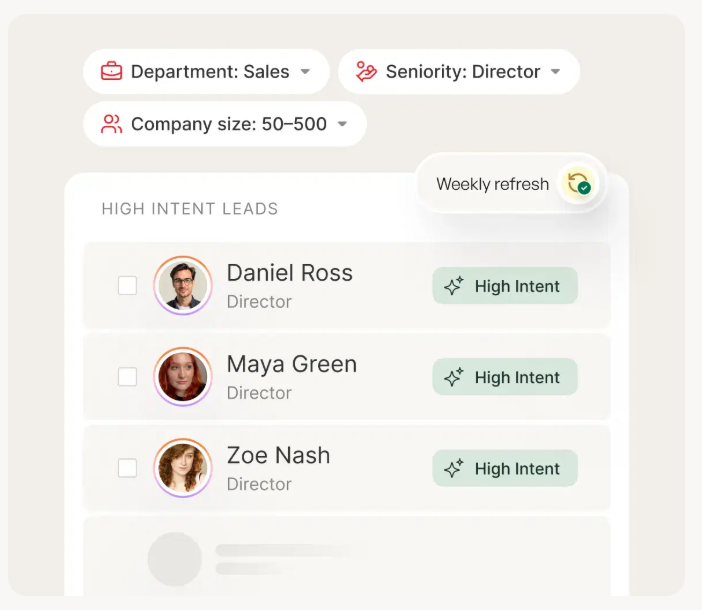
The single most important shift is changing what you measure. Meetings booked is a lagging indicator that incentivizes volume. Intelligence captured is a leading indicator that incentivizes quality.
Every SDR conversation should systematically catalogue objections heard, messaging that resonated, buying stage, competitors mentioned, and organizational dynamics. This isn't optional note-taking - it's structured data entry that feeds back to marketing, product, and CS. When you close the loop, every outbound conversation makes the next one better. This is how sales managers evolve from activity tracking to genuine pipeline intelligence. (A practical starting point: sales activities examples.)
Signal-Based Outbound
Generic outbound is dead.
Signal-based outbound - triggered by buyer intent, job changes, funding events, technographic shifts, or headcount growth - is what separates modern teams from the spray-and-pray era. The numbers back this up: signal-based personalization averages 18% response rates vs. 3.4% for generic outreach. That's a 5x difference from the same SDR, the same sequencing tool, and the same email infrastructure. The variable is relevance. (For a deeper workflow, see how to track sales triggers.)
When you email a VP of Engineering two weeks after their company raised a Series B and posted three DevOps roles, you're not interrupting - you're arriving at the right moment. This is what forecastable revenue generation looks like in practice: not more volume, but better timing.
AI-Augmented SDRs
74% of CEOs expect AI to have the most significant impact on their business - compared to just 3% for CRM. Sellers with high AI competency are 3.7x more likely to hit quota than those without it.
The practical application isn't replacing SDRs with chatbots. It's augmenting fewer, more skilled SDRs with AI that handles research, personalization, and prioritization. Instead of spending 15 minutes on a prospect's profile and annual report, the SDR gets a pre-built brief: recent Series C, three open DevOps roles, and a Datadog-to-Grafana migration flagged in job postings. We've found that teams running this model consistently produce 2-3x more qualified pipeline per SDR than teams still doing manual research - and the reps are less burned out. Predictive tools are accelerating this shift, helping teams forecast which accounts are most likely to convert before the first email goes out. (Related: B2B predictive analytics.)
Cold Email in 2026
Ross's Cold Calling 2.0 concept - targeted emails that generate referrals to decision-makers - still works in principle. The execution needs a deliverability-first update.
Average cold email reply rate sits at 3.43%. SPF, DKIM, and DMARC authentication are table stakes after Google and Microsoft's 2024-2025 mandates. Here's a frustrating stat: 70% of senders stop after one email, but 42% of replies arrive on follow-ups. Most teams quit right before the payoff. Optimal email length runs 50-125 words. (If you need copy patterns, use cold email follow-up templates.)
The 2011 playbook assumed deliverability was a given. In 2026, it's the first thing that breaks. Bad data, poor authentication, and over-sending will tank your domain reputation before your messaging even gets a chance. (Start with an email deliverability guide.)
Data Quality as Infrastructure
Your outbound system is only as good as your data. A 25% bounce rate doesn't just mean missed contacts - it kills your domain reputation, craters reply rates on the emails that do land, and makes every downstream metric unreliable. We've seen teams spend months optimizing sequences and subject lines when the real problem was a contact list that was 30% stale on day one.

Prospeo handles this at the foundation layer with 300M+ professional profiles, 98% email accuracy, and a 7-day data refresh cycle compared to the industry average of six weeks. The search filters go beyond basic firmographics: buyer intent powered by Bombora across 15,000 topics, technographic signals, job changes, headcount growth, and funding data. This is what signal-based outbound actually requires - not just names and emails, but context about why someone is worth contacting right now.
The proof is in the pipeline numbers. Meritt tripled their pipeline from $100K to $300K per week after switching their data layer, with bounce rates dropping from 35% to under 4%.
Building a Forecasting-Ready Pipeline
RevOps is the execution layer that makes revenue actually forecastable. Without it, you have specialized roles operating in silos - which is exactly the failure mode we covered earlier.
The feedback system works like this: SDR learnings flow to marketing (which messaging resonates, which personas engage), product (which objections keep killing deals, which feature gaps surface), and CS (which expansion signals appear during prospecting). Revenue Operations unifies these functions so intelligence compounds instead of evaporating.
Instrument your pipeline with leading indicators - intelligence captured per conversation, signal-to-meeting conversion rates, pipeline quality scores - not just meetings booked. When the board asks for confident forecasting, they're asking for a system. You can't forecast confidently from a pipeline built on volume metrics. (To choose tooling, compare sales forecasting solutions.)
Modern SDR Benchmarks
Context matters when setting targets. Here's where the numbers actually land:
| Metric | Outbound SDR | Inbound SDR |
|---|---|---|
| Daily touches | 60-80 | 40-60 |
| Meetings/month | 8-15 | 15-25 |
| Cold reply rate | 2-8% | N/A |
| SQL conversion | 15-25% | 25-35% |
The phone prospecting "10-3-1 rule" still holds: 10 dials produce roughly 3 connections and 1 qualified conversation. Sequence completion targets should sit at 85%+ - if reps are abandoning sequences early, your targeting or messaging needs work, not your activity quotas.
The distribution of rep performance is brutally uneven. Clari Labs' analysis of 10 million opportunities found that the top 10% of reps drive 65% of all revenue, the top 2% drive 37%, and the bottom 50% account for just 7.6%. This isn't a coaching problem. It's a systems problem. The best reps aren't just more talented; they're working better data, better signals, and better feedback loops. Consistent sales success comes from the system, not individual heroics.
Where It Fits in the GTM Landscape
The predictable revenue model isn't the only GTM motion, and pretending it is will get you in trouble.
McKinsey's analysis of 107 publicly listed B2B SaaS providers found that the line between product-led growth and sales-led growth is blurring fast. The winners are running hybrid motions - product-led sales - where self-serve acquisition feeds into sales-assisted expansion.
The model works best for high-ACV, complex sales with long cycles and enterprise buyers. If you're selling six-figure contracts to buying committees of 25, you need specialized roles, structured outbound, and a forecasting system. That's the sweet spot. (For the enterprise motion, see enterprise B2B sales.)
Skip it if you're selling low-ACV, self-serve products where the buyer expects to sign up, try, and buy without talking to a human. If your average contract value sits below $10K and your product has a free tier, building a full SDR-AE-CS specialization stack will cost more than the pipeline it generates. For those companies, PLG with targeted sales assists on expansion deals is the better motion.
Let's be honest: most B2B companies in 2026 need elements of both, and the ones still debating "PLG vs. sales-led" as if it's a binary choice are already behind. The Ross framework gives you the outbound and forecasting discipline. PLG gives you the self-serve acquisition and product data. The companies winning right now stopped treating these as competing philosophies and started treating them as complementary systems.
There's also an operational dimension the original book barely touched. CPQ systems and billing automation are part of making revenue genuinely forecastable - not just on the pipeline side, but through the entire order-to-cash cycle. If your forecasting is tight but your billing is a mess, you haven't solved the problem.
Implementation Checklist
If you're building or rebuilding a repeatable revenue engine in 2026, here's the sequence that works:
Define your ICP with intent signals, not just firmographics. Industry and company size aren't enough. Layer in buyer intent, technographic fit, headcount growth, and funding stage to identify accounts that are actually in-market. (Use an ideal customer profile template.)
Build verified prospect lists. Prospeo's 30+ search filters - including buyer intent across 15,000 topics, technographics, and job change data - let you build signal-rich lists without stitching together five different tools. Start with the free tier and validate match rates against your CRM.
Design sequences with signal-based personalization. Every email should reference a specific trigger: a recent hire, a funding round, a technology adoption. Generic templates belong in 2011. (If you need structure, follow a B2B cold email sequence.)
Specialize roles but close the feedback loop. SDRs prospect. AEs close. CS expands. But build structured handoff documents that capture intelligence at every stage and route it back upstream. The goal is a system that compounds learning, not just activity.
Instrument the pipeline via RevOps. Track leading indicators - intelligence captured, signal-to-meeting rates, pipeline quality scores - alongside traditional metrics.
Measure what matters. If your primary SDR KPI is still meetings booked, you haven't actually built a revenue engine. You've built a meeting factory.
Signal-based outbound separates 18% reply rates from 3%. Prospeo tracks 15,000 buyer intent topics, job changes, funding events, and headcount growth - the exact triggers that turn cold outreach into warm conversations. Teams using Prospeo book 35% more meetings than Apollo users.
Replace spray-and-pray with signals that actually predict revenue.
FAQ
Is the Predictable Revenue book still worth reading?
Yes - as a systems design book, not a tactics manual. The principles of role specialization, process-driven pipeline, and forecasting discipline are timeless. The specific tactics (especially Cold Calling 2.0 as originally written) need a 2026 update for deliverability mandates, signal-based personalization, and AI augmentation. Read it for the architecture, then modernize the implementation.
What is Cold Calling 2.0?
Aaron Ross's methodology replacing traditional cold calls with targeted cold emails designed to generate referrals to decision-makers. Instead of dialing blind, SDRs email above their target contact to get referred down. In 2026, the concept requires SPF/DKIM/DMARC compliance, signal-based personalization, verified contact data, and multi-touch follow-up sequences.
How many SDRs does a B2B company need?
The typical SaaS ratio runs 1 SDR supporting 1-3 AEs, but the 2026 trend favors fewer, more skilled reps augmented by AI and better data - not headcount scaling. Enterprise teams with long cycles need more SDR coverage; teams with shorter cycles and smaller deal sizes can run leaner with AI-assisted research and prioritization.
What's a good pipeline coverage ratio?
The standard benchmark is 3x - three dollars in qualified pipeline for every dollar of quota. High-ACV enterprise deals with long cycles and lower close rates often need 4-5x coverage to account for deal slippage. Anything below 2.5x means your forecast is essentially a guess.
What tools do I need to build a revenue engine?
Three layers: a verified data source, a sequencing tool, and a CRM with RevOps instrumentation. For the data layer, you need 98%+ email accuracy and weekly refresh cycles - stale data breaks everything downstream. Pair that with a sequencer like Instantly, Smartlead, or Lemlist for outbound execution, and Salesforce or HubSpot for pipeline management. Start with the data layer. Everything else depends on it.