

How to Ask for Meeting Time and Actually Get a Reply
You send 30 meeting requests. Two people reply. One ghosts after the first message. That's not bad luck - it's the math. Across cold email benchmarks, roughly 42% of outbound emails get opened, about 3% get a reply, and just 1% convert to a booked meeting. Knowing how to ask for meeting time the right way is the difference between a booked call and a dead inbox - and the gap is almost always fixable.
Three Rules That Move the Needle
- Keep it under 125 words and propose exactly 2-3 time slots. Emails in the [50-125 word range](https://blog.boomerangapp.com/2016/02/7-tips-for-getting-more-responses-to-your-emails-with-data/) hit response rates above 50%.
- Use a timeline hook, not a problem hook. Timeline-based openers pull 10.01% reply rates vs. 4.39% for problem-focused ones - a 2.3x gap.
- Verify the email before you send. A bounced message kills everything. A 7.5% average bounce rate means roughly 1 in 13 emails never arrives. (If you want the deeper deliverability mechanics, start with bounce rate and the full email deliverability checklist.)
What the Data Says
Length is the easiest lever. Boomerang analyzed 40+ million emails and found the sweet spot sits between 50 and 125 words. Above 125, response rates slide. By 500 words, you're down to about 44%. Your meeting request isn't a memo - trim it.
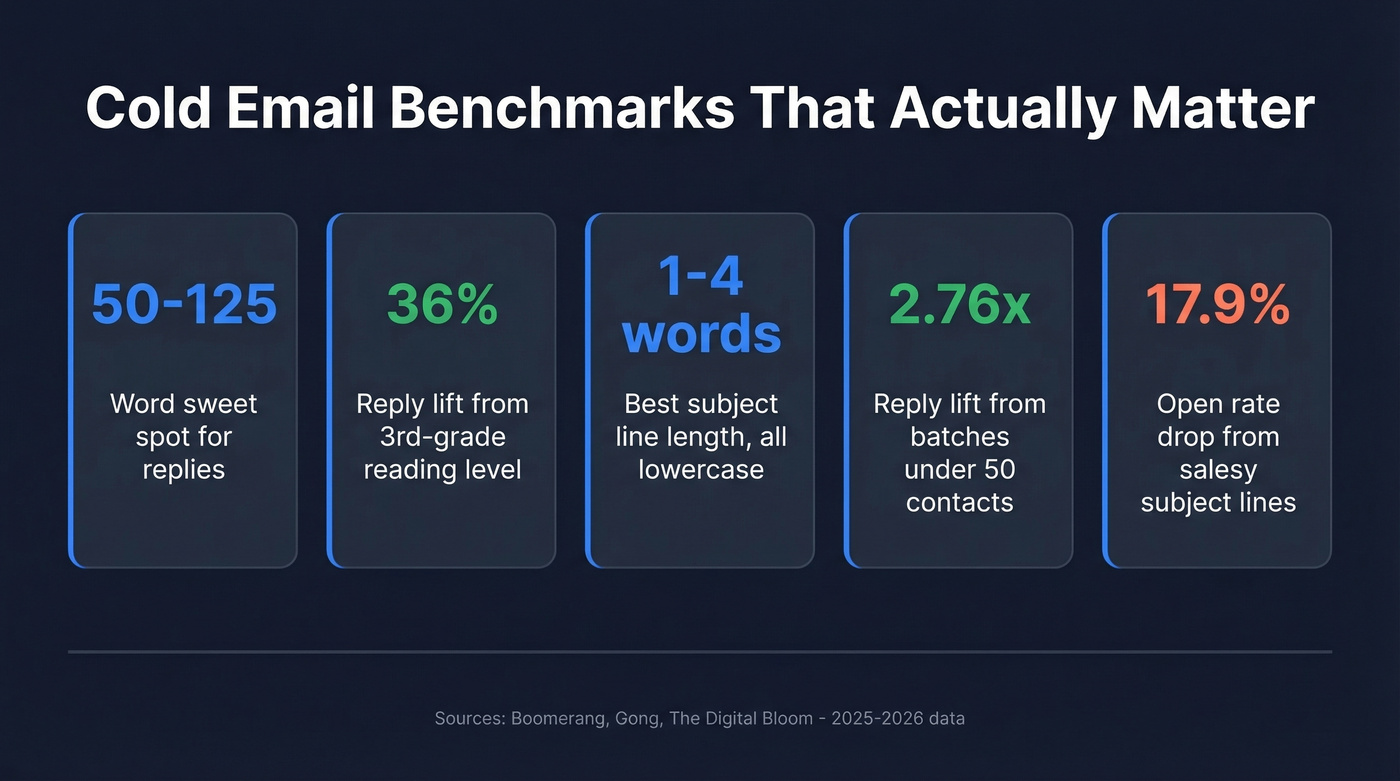
Reading level matters more than most people expect. Emails written at a third-grade reading level saw a 36% lift in responses compared to college-level writing. That doesn't mean dumbing things down. It means short sentences, common words, and zero jargon. (If you want to systematize this, use a simple email copywriting checklist.)
Slightly positive or slightly negative emails pulled 10-15% more responses than completely neutral ones. A little personality goes a long way.
For subject lines, data summarized from Gong research in the 30MPC breakdown points to a simple pattern: 1-4 words, all lowercase, zero salesy language. That drives the highest open rates. Anything that smells like marketing [reduces opens by up to 17.9%]. Mid-morning Tuesday through Thursday in the recipient's local time is a strong default, then test by audience. (For more options, pull from these email subject line examples and the data-backed best time to send cold emails guide.)
One more data point most people miss: campaigns segmented into batches of 50 or fewer contacts see a 2.76x reply lift. If you're blasting 500 people the same email, you're leaving replies on the table.
The 5-Part Meeting Request Framework
Every high-performing meeting request we've tested follows the same skeleton:
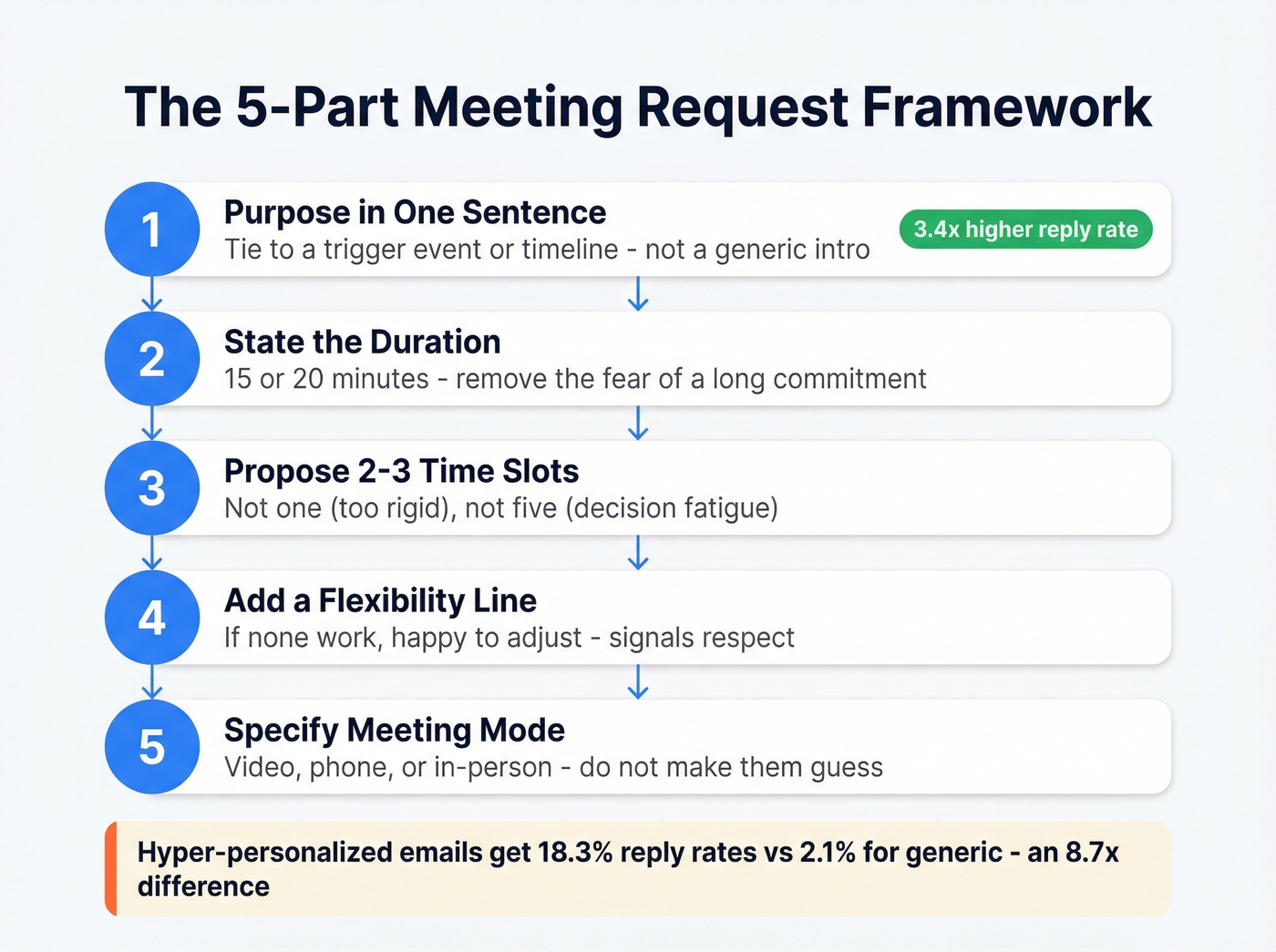
- Purpose in one sentence. Why you're reaching out, tied to a timeline or trigger event - not a generic "I'd love to pick your brain." Timeline hooks convert at 3.4x the rate of problem hooks. (More frameworks: emails that get responses.)
- Duration. "15 minutes" or "a quick 20-minute call" removes the fear of an hour-long commitment.
- Two or three specific time slots. Not one (too rigid), not five (decision fatigue).
- A flexibility line. "If none of those work, happy to adjust" signals respect without desperation.
- Meeting mode. Video call, phone, or in-person. Don't make them guess.
Personalization isn't optional. Hyper-personalized emails that reference a specific business challenge hit 18.3% reply rates vs. 2.1% for generic pitches - an 8.7x difference. (If you need a repeatable process, use this personalized outreach playbook.)
Templates You Can Copy Right Now
Cold Outreach
Subject: next tuesday
Hi {{FirstName}},
{{Company}} just announced {{trigger event}} - congrats. We helped {{similar company}} handle the same transition and cut onboarding time by 30%.
Would a 15-minute call make sense? I'm open Tuesday at 10 a.m. or Thursday at 2 p.m. ET. Happy to adjust if neither works.
Best, {{Your name}}
Why this works: the trigger event proves you did your homework, and two slots make replying frictionless.
Internal / Colleague
Hey {{Name}}, can we grab 20 minutes this week to align on the Q3 pipeline targets before the leadership review? I'm free Wednesday 11 a.m. or Friday 1 p.m. - or send me a couple times that work for you.
Executive-Level
{{FirstName}}, {{mutual connection / trigger event}} caught my attention. I think there's a 15-minute conversation worth having about {{specific outcome}}. Would Monday at 9 a.m. or Wednesday at 11 a.m. work on your end?
Skip the pleasantries. Execs scan, they don't read. Keep it under 60 words.
Cross-Time-Zone
Hi {{Name}}, I know we're working across time zones - I'm in MT and you're in ET. Would 10 a.m. MT / 1 p.m. ET on Thursday work for a quick call? Or I can do Friday at 11 a.m. MT / 2 p.m. ET. Happy to flex.
Always state both time zones explicitly. Avoid very early or very late times in the recipient's local zone - nobody wants a 5 a.m. calendar invite. Calendar invites auto-convert to local time and eliminate confusion entirely.

You just wrote the perfect meeting request - but 1 in 13 emails bounce before they're ever read. Prospeo's 98% email accuracy and 7-day data refresh mean your ask actually lands in the right inbox, every time.
Stop crafting great emails that bounce. Verify first.
Scheduling Link vs. Proposed Times
| Proposed times | Scheduling link | |
|---|---|---|
| Best for | Cold outreach, execs | Warm leads, inbound |
| Feels like | Personal, respectful | Efficient, self-serve |
| Risk | Back-and-forth | Conversation dies |
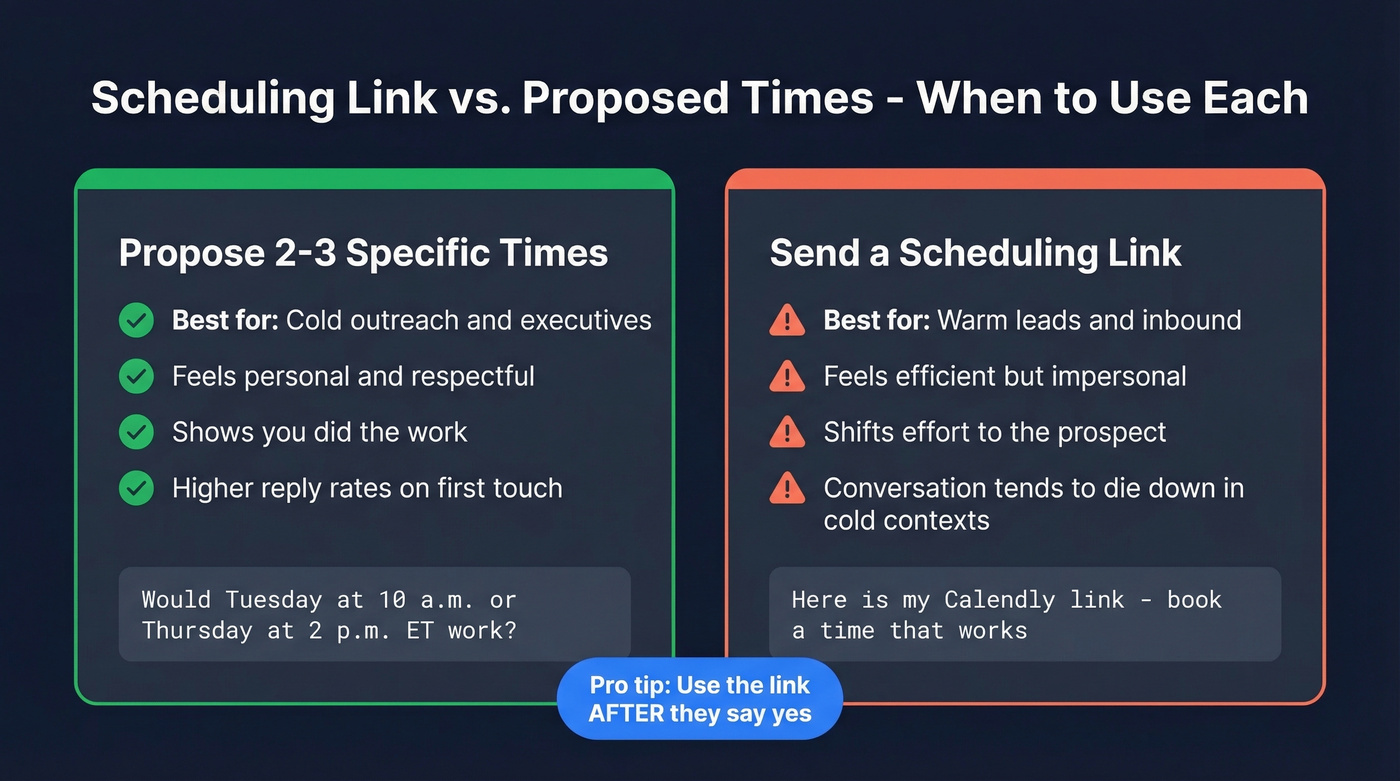
Here's the thing: sharing a Calendly link in a cold email makes prospects feel like they're doing your job. The consensus on r/sales is pretty clear on this one - as one poster put it, "the conversation tends to die down" the moment a scheduling link appears. Save the link for after someone's already said yes.
Who to Target (The Seniority Surprise)
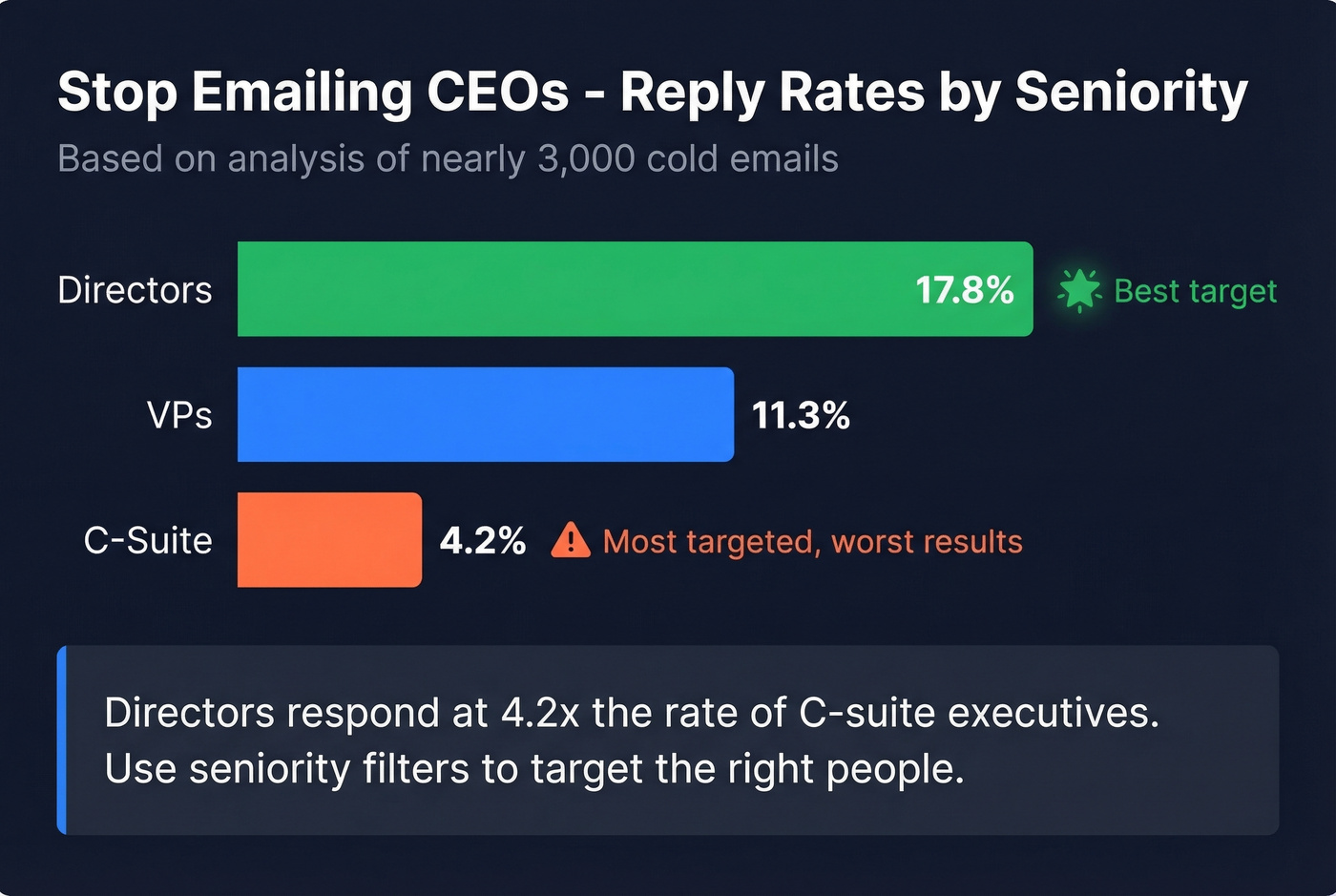
Stop burning meeting requests on CEOs. I've watched teams waste months chasing C-suite inboxes when the data says otherwise. Warmer AI's analysis of nearly 3,000 cold emails found that Director-level contacts respond at 17.8%, compared to just 4.2% for C-suite. VPs came in at 11.3%. (To tighten targeting, start with an ideal customer profile and basic firmographic filters.)
What to Do When They Don't Reply
The first follow-up is more effective than the initial email - 40% more effective. Just one follow-up lifts response rates by 22%. And yet most people send one email and stop. (If you want plug-and-play copy, use these sales follow-up templates or the more specific cold email follow-up templates.)
Use the 3-5-7 cadence: follow up after 3 business days, then 5 more days, then 7 more days. For a benchmarked version, the 3-7-7 cadence (Day 0, Day 3, Day 10, Day 17) captures 93% of total replies by day 10. In our experience, the third follow-up is where a surprising number of replies come from - people who were genuinely busy, not uninterested.
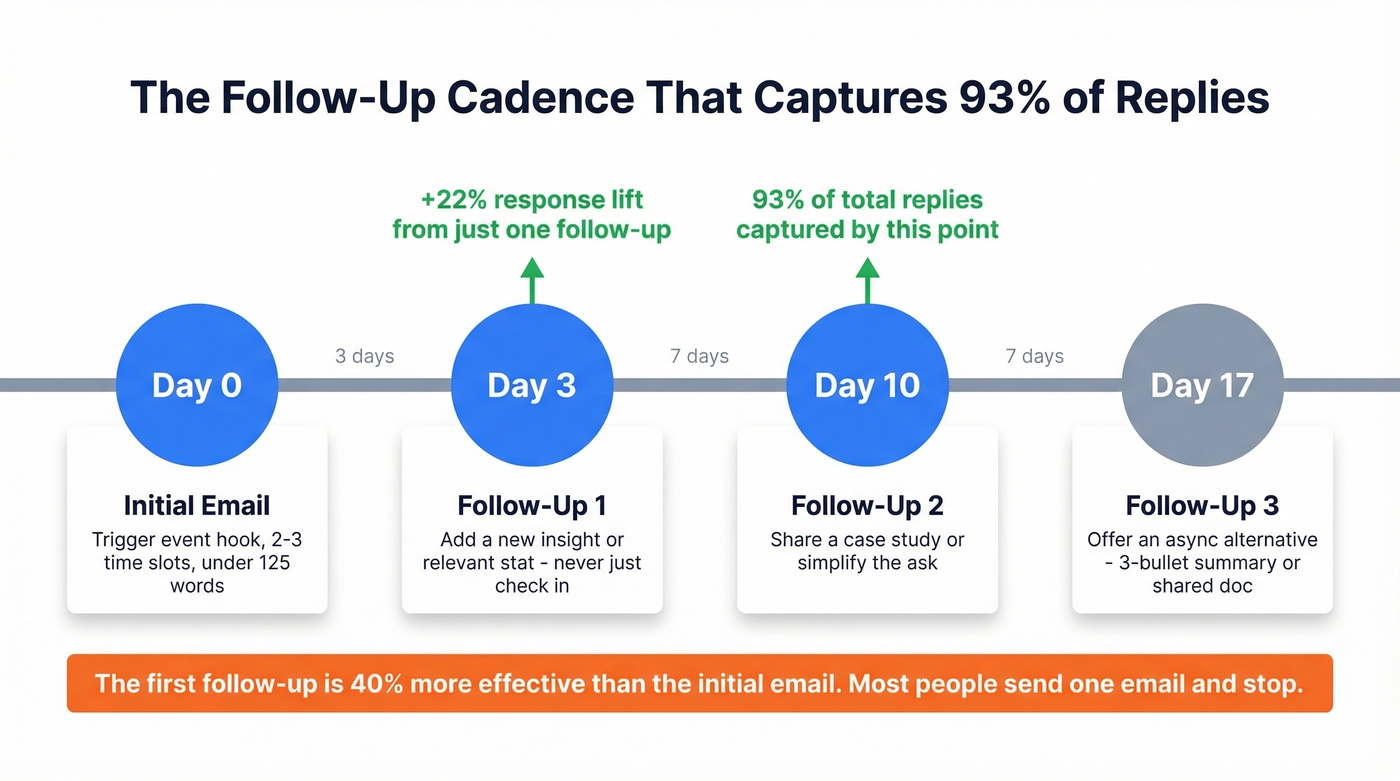
The key is adding value each time. "Just checking in" is the fastest way to get archived. Reference a new insight, share a relevant case study, or simplify the ask. If they still don't bite after three touches, offer an async alternative - a 3-bullet email summary or shared doc that respects their time. (More on wording: how to say just checking in professionally.)
Make Sure Your Email Actually Arrives
None of your templates matter if the email bounces. The average bounce rate across cold email campaigns sits around 7.5%. That's not just wasted effort - it actively damages your domain reputation, which tanks deliverability for every future email you send. (If you're troubleshooting, start with improve sender reputation and an email spam checker.)
Let's be honest: we've all been burned by bad data at some point. Run your list through Prospeo before you hit send. With 98% email accuracy, real-time 5-step verification including catch-all handling and spam-trap removal, and a free tier covering 75 emails plus 100 Chrome extension credits per month, it takes two minutes to upload a CSV and get verified results back.
Directors reply at 17.8% while C-suite sits at 4.2%. Prospeo's 30+ search filters - including seniority, department, and buyer intent - let you target the exact decision-makers who actually respond to meeting requests.
Send fewer meeting requests. Book more meetings.
FAQ
How many time slots should I propose?
Two or three. One slot feels rigid and limits the recipient; more than three creates decision fatigue that stalls the reply. Proposing two concrete options with a flexibility line ("happy to adjust") consistently produces the fastest booking times.
Is it rude to send a Calendly link in a cold email?
For cold outreach, yes - it shifts scheduling effort to someone who hasn't agreed to meet yet. Propose two or three specific times instead. Save the scheduling link for after the prospect says yes, when self-serve booking actually speeds things up.
How long should I wait before following up?
Three business days for the first follow-up, then five more, then seven more. This 3-5-7 cadence captures most replies by day 10. Each follow-up should add new value - a relevant stat, case study, or simplified ask - not just "checking in."
What's the best subject line for a meeting request?
Keep it 1-4 words, all lowercase, with no salesy language - think "quick question" or "next tuesday." Gong data shows marketing-style subject lines reduce open rates by up to 17.9%. Short and casual wins.
How do I verify emails before requesting a meeting?
Use a verification tool like Prospeo to check addresses before sending. With a 7.5% average bounce rate on cold campaigns, even one bounced email hurts your sender reputation. The free tier covers 75 verifications per month - enough to clean a targeted list.