

Cold Calling Sucks. Here's the Data - and What to Do About It.
You made 47 dials yesterday. Three people picked up. One hung up mid-sentence, one asked to be removed from your list, and the third said "send me an email" before disappearing forever. Zero meetings booked. The average cold calling success rate is 2.3%, which means you're not bad at this - you're playing a game with terrible odds and, most likely, terrible data.
Yeah, cold calling sucks. But not for the reasons most reps think.
That 2.3% average isn't a cold calling problem. It's a data problem, a training problem, and a timing problem. Fix those three things and the math changes dramatically.
Three Paths Forward
You don't have to pick just one:
- Make it suck less. Fix your data, timing, and opening line. The biggest fixable reason your dials go nowhere is bad phone numbers - fix the data and everything else gets easier.
- Go multichannel. Pair calls with email sequences and precision targeting. Success rates jump from 2.3% to 4.82% when you combine both.
- Try alternatives. Referrals convert 3.6-20x higher than cold leads. Social selling scales without the rejection spiral.
The Numbers Don't Lie
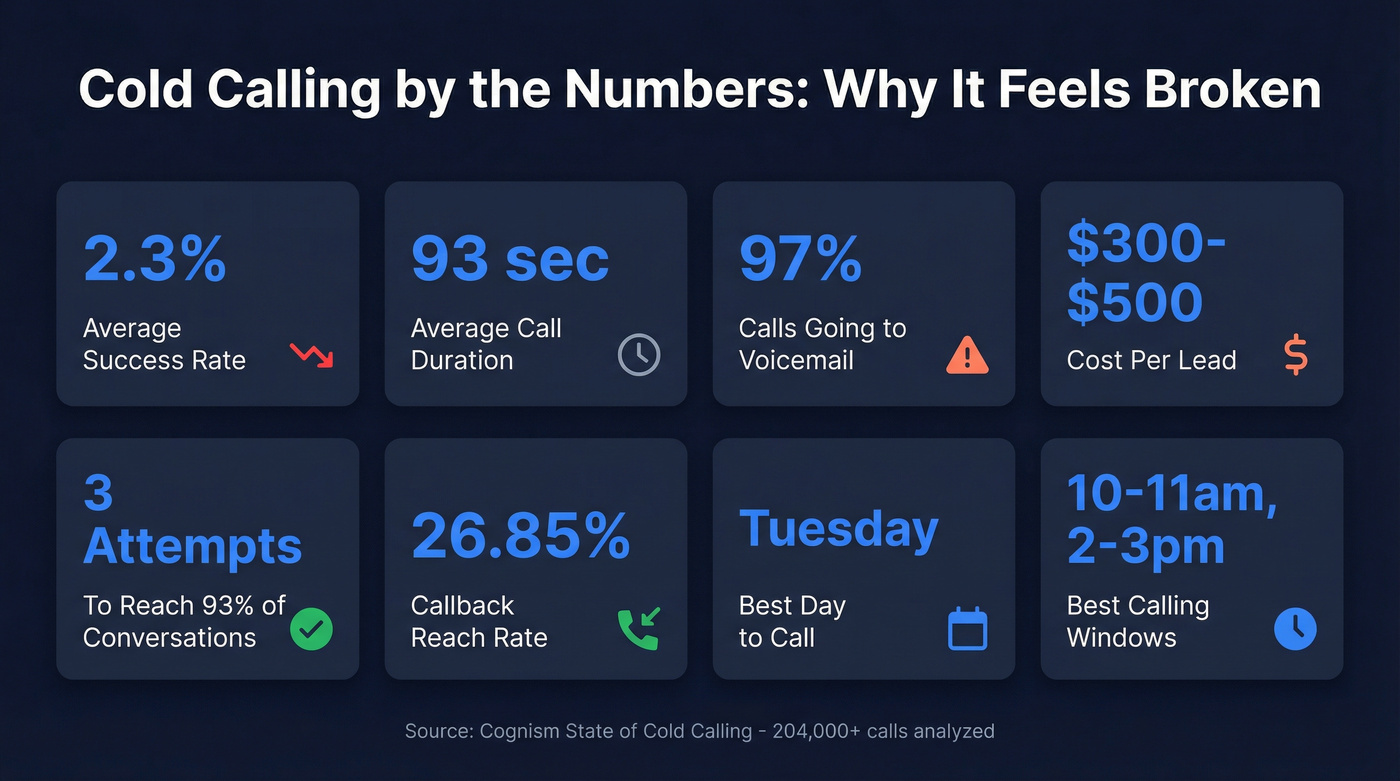
Cognism's State of Cold Calling report analyzed 204,000+ cold calls and 27,000+ conversations. Here's what the data actually looks like:
| Metric | Number |
|---|---|
| Success rate | 2.3% |
| Avg call duration | 93 seconds |
| Attempts to connect | 3 |
| By 3rd call | 93% of conversations |
| By 5th call | 98% of conversations |
| Callback reach rate | 26.85% |
| Best day | Tuesday |
| Best windows | 10-11am, 2-3pm |
Regional success rates for booked meetings tell a similar story: UK teams hit about 8%, US and Europe hover around 6%. Those numbers sound better than 2.3%, but they're still single digits - and they represent the good teams.
The cost side is equally brutal. Cold calling runs $300-$500 per lead when you factor in SDR salary, tools, and the sheer volume of dials required to generate a single conversation. That's real money for a channel where 97% of calls go to voicemail.
Why It Sucks More Than It Should
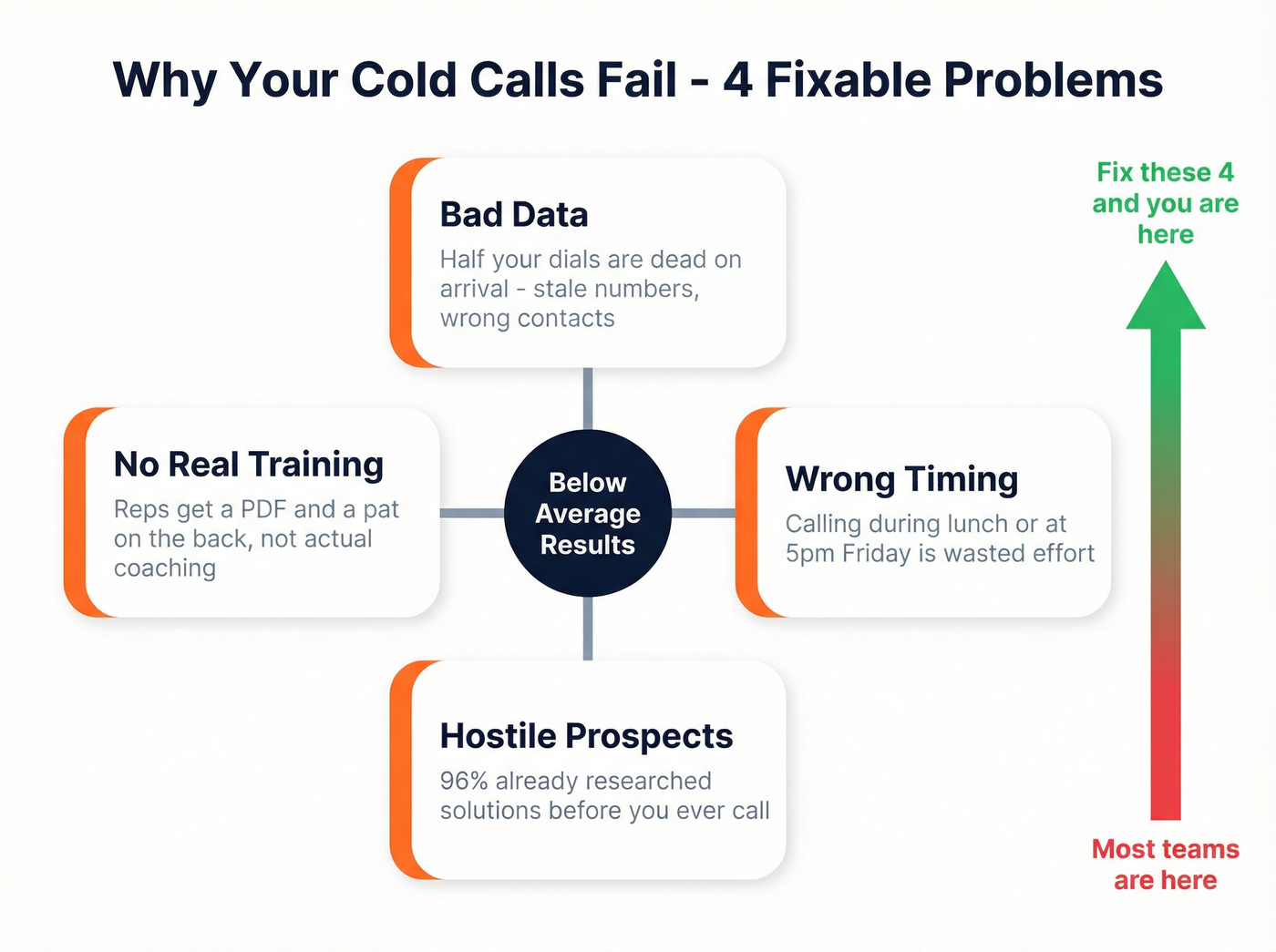
Most teams perform below even the floor-level success rate. Cold call anxiety can persist months into the job, and the frustration isn't just rejection - it's knowing half your dials never had a chance. Four fixable problems explain the gap.
Bad data is the root cause
Here's the thing: most sales orgs hand SDRs a list of landline numbers in 2026 and wonder why connect rates are abysmal. Stale databases with outdated numbers mean half your dials are dead on arrival. You're not prospecting - you're dialing into the void. And 71% of reps say the hardest part isn't the pitch; it's reaching the right person in the first place.
No real training
Scripts get handed down like family recipes, but nobody teaches tone, pacing, or how to recover when a prospect pushes back. Reps get a PDF and a pat on the back. That's not enablement. (If you want a tighter system, start with cold call coaching and a simple scorecard.)
Wrong timing
Calling during lunch, during the morning commute, or at 5pm on a Friday isn't persistence - it's wasted effort. Timing accounts for a meaningful chunk of connect rate variance, and most teams ignore it entirely.
Hostile prospects
96% of prospects have already researched solutions before they ever talk to an SDR. They don't need your pitch. They need a reason to keep listening, and "How are you doing today?" isn't it.
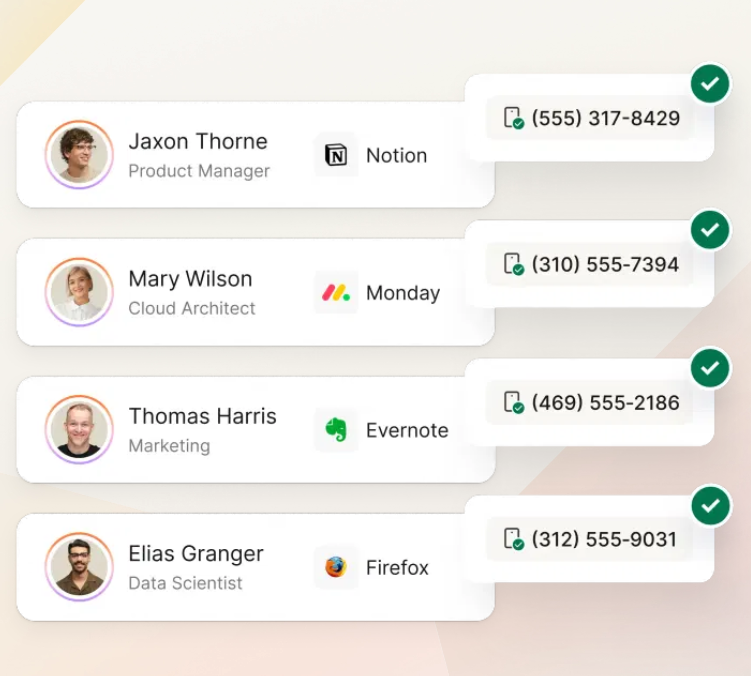

Bad phone numbers are the #1 reason cold calling sucks. You're dialing into the void with stale data that refreshes every 6 weeks. Prospeo's 125M+ verified mobile numbers refresh every 7 days and deliver a 30% pickup rate - more than double the 12.5% industry average. Meritt tripled their connect rate to 20-25% after switching.
Stop dialing dead numbers. Start reaching real decision-makers.
How to Make Cold Calling Suck Less
Fix Your Data First
Before you blame your script, check your numbers. Literally - your phone numbers.
Across common outbound stacks, mobile pickup rates sit around 12.5%. Prospeo's verified mobile numbers hit a 30% pickup rate. That gap isn't incremental; it's the difference between a productive call block and an hour of voicemails. We've seen this play out with our own outbound - the data quality lever dwarfs everything else. (If you want the deeper why, see B2B contact data decay and prospect data accuracy.)
Data freshness is the single biggest lever for connect rates. Meritt, an outbound agency, tripled their connect rate to 20-25% after switching to verified data on a 7-day refresh cycle, and their bounce rate dropped from 35% to under 4%. When your data is current, every dial has a real human on the other end. The industry average refresh cycle is about six weeks. By then, your contacts have changed jobs, changed numbers, or changed their minds about picking up.
Fix Your Timing
Tuesday is the best day for booking meetings from cold calls. The best windows are 10-11am and 2-3pm. Avoid 7-9am, lunch hour, and the 5pm commute.
One underrated tactic: try calling before 8:30am and after 5:30pm. Gatekeepers aren't at their desks, but decision-makers often are. These off-hours windows won't work for every persona, but they're worth testing if your connect rates are flat. (For a full system, use an outbound calling strategy and track it in a sales management dashboard.)
Fix Your Opening Line
Kill "How are you doing today?" Kill "Is now a good time?" Kill "I'm just touching base." These phrases signal cold caller instantly, and the prospect's guard goes up before you've said anything useful.
Master a 15-second pitch instead. State who you are, why you're calling, and what's in it for them - two sentences max. Speak one to two sentences at a time, then pause. Let them respond. And smile when you talk. It sounds ridiculous, but it changes your vocal tone in ways prospects can hear. (If you want examples, start with sales pitch opening lines and cold call tonality.)
Fix Your Mindset
Most advice tells you to "embrace the suck." That's toxic positivity for salespeople.
The real answer is to eliminate the unnecessary suffering so the unavoidable suffering is at least productive. Set a "no" goal instead of a "yes" goal. If you need 3 meetings today, aim for 30 rejections. It reframes the activity from "hoping for yeses" to "collecting nos," which is psychologically easier and keeps you dialing. Gamify the rejection instead of pretending it doesn't sting. (More on this in cold calling mindset and SDR rejection handling.)
Fix Your Cadence
Three attempts is the minimum. 93% of conversations happen by the 3rd call, and 98% by the 5th. After that, you're chasing diminishing returns.
Organize your call blocks: separate research time from blitzing time. When you're dialing, you should be only dialing - not toggling between CRM notes and prospect research. Since 97% of calls go to voicemail, have a voicemail strategy too. The 26.85% callback reach rate means a quarter of your voicemails actually generate a return call. That's not nothing - but only if the voicemail is worth calling back about. (Use a cold call checklist and keep a cold call voicemail script handy.)
Cold calling costs $300-$500 per lead with bad data. Prospeo cuts that math in half - verified emails at ~$0.01 each, verified mobiles with 30% pickup rates, and 98% email accuracy for the multichannel sequences that double your cold call success rate from 2.3% to 4.82%.
Fix the data and the dials finally start converting.
Cold Calling vs. Cold Email
The "should I just switch to email?" question comes up constantly on r/sales. The consensus there mirrors what we've found in our own testing: do both.
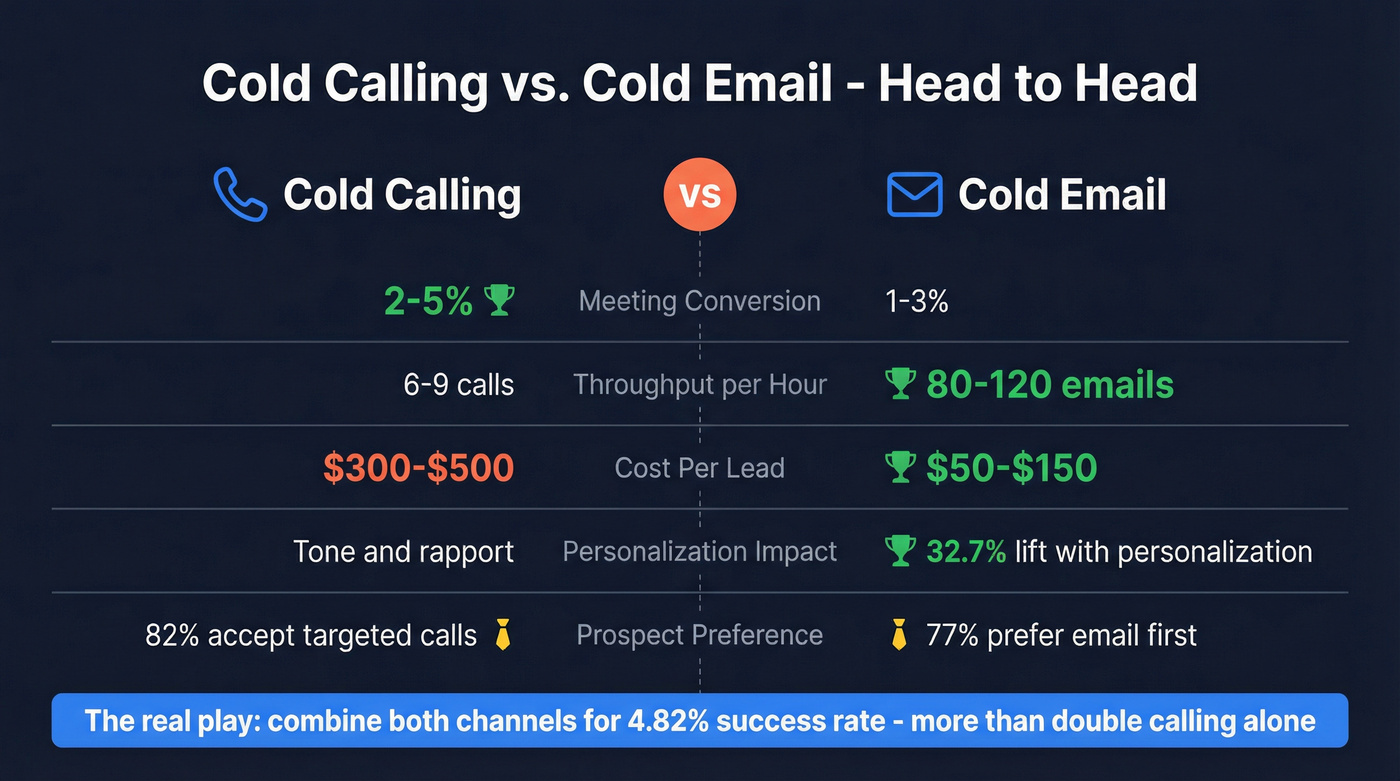
| Metric | Cold Calling | Cold Email | Edge |
|---|---|---|---|
| Meeting conversion | 2-5% | 1-3% | Calling |
| Throughput | 6-9/hr | 80-120/hr | |
| Cost per lead | $300-$500 | $50-$150+ | |
| Personalization impact | Tone, rapport | 32.7% lift w/ personalization | |
| Prospect preference | 82% accept targeted calls | 77% prefer email first | Tie |
Cold calls convert higher per touch, but email scales 10x faster. A single SDR can send 100 personalized emails in the time it takes to make 8 calls. The cost-per-lead difference is massive.
The play is to sequence both. Call, then email, then social touch. We've seen teams double their booked meetings within weeks just by layering channels instead of betting on one. But before you launch those email sequences, verify your list - one bad batch can tank deliverability for weeks. (If you need a stack, start with cold email marketing tools and an email ID validator.)
Alternatives That Actually Build Pipeline
Referrals
Referrals convert 3.6-20x higher than cold leads. That's not a typo - the trust transfer from a mutual connection compresses the entire sales cycle. Companies with structured referral programs see 86% more revenue growth than peers without them, and referred deals close 69% faster with 10% higher customer lifetime value.
The problem is that most teams treat referrals as something that happens organically. It doesn't. Ask every closed-won customer for two introductions within 30 days of signing. Make it a process, not a hope. (Templates help: referral introduction email.)
Social Selling
The 5x3x1 method is the simplest framework we've seen work: pick 5 target companies, identify 3 buyers at each, send 1 personalized message per buyer. Fifteen touches per week with zero dialing anxiety.
Your team's combined professional network is roughly 12x larger than your company page's following. If your company page has 5,000 followers, your 10-person sales team likely reaches 60,000+ connections. That's distribution most teams ignore entirely. (If you want the full playbook, see how to do social selling.)
When to Skip the Phone Altogether
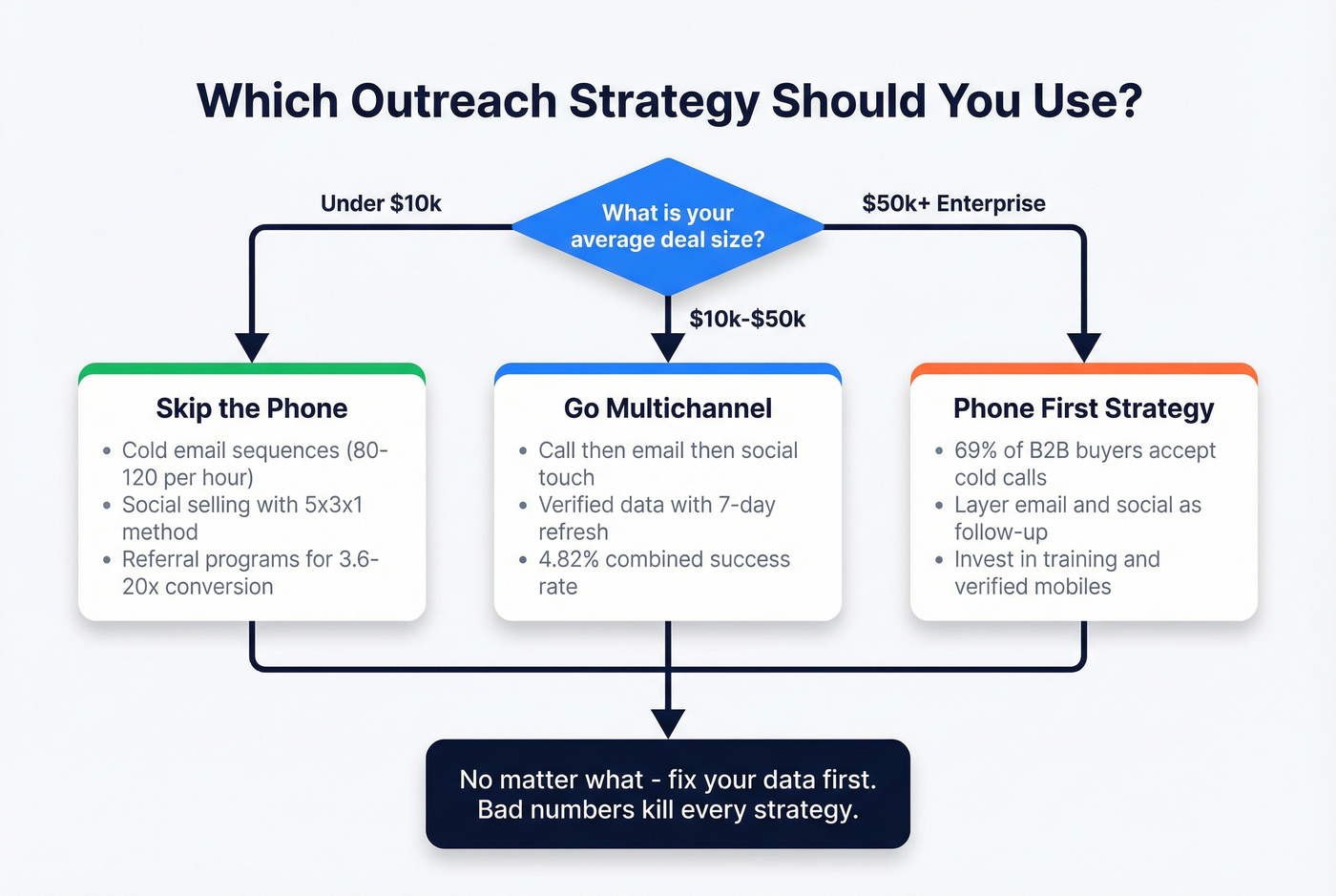
Let's be honest: if your average deal size is under $10k, you probably don't need to cold call at all. Email and social at that price point will outperform phone on a cost-per-meeting basis every time. But for mid-market and enterprise deals, the phone still matters - 69% of B2B buyers accept cold calls from new providers. They don't hate calls. They hate bad calls.
When you combine verified data, proper timing, and a multichannel sequence, success rates jump to 4.82%. That's more than double the 2.3% average. The difference isn't talent or persistence - it's infrastructure. Clean numbers, verified emails, and a cadence that meets prospects across multiple channels.
The Book: "Cold Calling Sucks and That's Why It Works"
"Cold Calling Sucks (And That's Why It Works)" by Armand Farrokh and Nick Cegelski - the duo behind 30 Minutes to President's Club - has dominated this conversation since its release. It's based on 300M+ calls analyzed via Gong, endorsed by Jeb Blount, and runs $19.99. The reframe is solid: because most reps quit before they get good, the ones who persist face less competition on the other end of the line. The discomfort is the moat.
Worth reading. But a book won't fix your connect rate if half your phone numbers are dead. The frameworks in those pages assume you're reaching real humans - and that assumption breaks down fast when your data is six weeks stale.
FAQ
Does cold calling still work in 2026?
Yes, but the average success rate is 2.3% based on 204,000+ analyzed calls. Teams that combine verified data, proper timing, and multichannel sequences see rates above 4.8%. It works - just not the way most teams currently do it.
What's a good cold calling success rate?
The most recent benchmark is 2.3%. Top-performing teams with clean data and multichannel cadences hit 4-7%. If you're consistently above 3%, you're outperforming most SDR organizations.
How many dials should I make per day?
Quality beats quantity. 40-60 well-targeted dials to verified mobile numbers outperform 100+ dials to stale landlines. Focus on connect rate per dial, not total dial count - the math favors precision over volume.
Is cold calling better than cold email?
Cold calls convert higher per touch (2-5% vs. 1-3%), but email scales 10x faster at 80-120 per hour versus 6-9 calls. The best teams sequence both - call first, then email, then a social touch within the same cadence.
How do I fix a terrible connect rate fast?
Start with your data. Average mobile pickup rates sit around 12.5%. Verified mobile databases hit 30% - that single change is the fastest fix available. Pair it with Tuesday/Wednesday call blocks during the 10-11am window and you'll see results within a week.