

Example of Buyer Persona Profiles That Actually Drive Revenue (Not Collect Dust)
94% of marketers say buyer personas are essential. Only 18% have validated them with real data. And yet 71% of companies exceeding revenue targets have documented, validated personas.
That gap is where most teams live - building personas that look great on day one and get ignored by day thirty.
The problem isn't the concept. It's the execution. Most personas describe who someone is without ever addressing why they buy, how they evaluate, or what kills the deal. Below you'll get an example of buyer persona done right - plus 7 more you can steal, a 6-step creation process, AI prompts that save weeks, and the 9 mistakes that turn personas into shelf-ware.
What Is a Buyer Persona?
A buyer persona is a semi-fictional representation of your ideal buyer, built from real data - interviews, CRM patterns, support tickets, and sales conversations. The key word is buyer. Not user. Not visitor. The person who signs off on the purchase or kills it.

Most teams build personas that read like dating profiles: "Sarah, 34, lives in Austin, drinks oat milk, listens to podcasts." That's not a persona. That's a character sketch. A useful persona tells you what triggers the buying process, what success looks like, what barriers the buyer perceives, how they evaluate options, and what criteria drive the final decision. The Buyer Persona Institute calls this the "5 Rings of Buying Insight":
5 Rings of Buying Insight
- Priority Initiatives - What triggers the search?
- Success Factors - What does "winning" look like?
- Perceived Barriers - What makes them hesitate?
- Buyer's Journey - How do they evaluate and decide?
- Decision Criteria - What tips the final choice?
If your persona doesn't address all five, it's incomplete. Demographics are context. Buying insight is the actual value.
ICP vs. Buyer Persona - Know the Difference
These get confused constantly, and the confusion costs teams real pipeline.

| Dimension | ICP | Buyer Persona |
|---|---|---|
| Level | Company | Individual |
| Answers | "Which companies to target?" | "Who's deciding?" |
| Key data | Industry, size, revenue, tech | Title, goals, pain, triggers |
| Example | "B2B SaaS, 50-200 employees" | "VP Marketing, hates manual reports" |
| When to use | Account selection, ABM | Messaging, content, sales calls |
Zapier's ICP is a great example: "Fast-growing companies with 50-500 employees using 5+ disconnected tools, with dedicated ops teams losing 10+ hours weekly to manual data entry." That's a company filter, not a person.
Personas tell you who you're speaking to. ICPs tell you which companies are worth speaking to in the first place. (If you need a tighter definition and validation approach, see ideal buyer.)
The 4 Buyer Psychology Types
Zendesk breaks buyers into four psychological types. Knowing which one you're talking to changes your messaging entirely:

- Competitive - Wants the best. Show rankings, benchmarks, head-to-head comparisons.
- Spontaneous - Wants quick solutions. Lead with speed, simplicity, instant results.
- Humanistic - Wants personal connection. Use stories, testimonials, relationship-building.
- Methodical - Wants details and process. Provide specs, documentation, implementation guides.
Most B2B buying committees include at least two of these types. Your content needs to speak to all of them - which is exactly why you need multiple personas. (This maps cleanly to buying committees in modern B2B.)
8 Buyer Persona Examples You Can Steal (B2B, B2C, and Negative)
T2D3, a B2B SaaS growth consultancy, argues you only need three personas for any B2B campaign: The User, The Supervisor, and The Executive. The logic is straightforward - these three roles represent the people who use your product, manage the team that uses it, and approve the budget.

The core dynamic that separates B2B from B2C: you're convincing someone to spend someone else's money. Aberdeen Group data backs this up - persona-driven campaigns see 73% higher conversion rates than non-targeted ones. And 70% of companies missing their revenue goals don't account for the full buying committee. (If you're running ABM, this is exactly why you need account based marketing personas.)
1. B2B SaaS - "The User" (Product Manager)
Name: Alex Reeves
Role: Senior Product Manager, B2B SaaS (50-200 employees)
Demographics: 28-35, 4-7 years experience, manages 3-5 developers and a UX designer
Goals: Ship features faster without sacrificing quality. Reduce time spent on manual reporting. Find a tool that integrates with the existing stack (Jira, Slack, Figma) without adding another login.
Pain Points: Current project management tool requires 3 hours/week of manual status updates. Can't get real-time visibility into sprint progress without pinging individual devs. Feels like they're managing a spreadsheet, not a product.
Buying Triggers: New quarter with aggressive roadmap. Team grew by 2+ people and current tool doesn't scale. Competitor shipped a feature first.
Objections: "We just migrated tools 18 months ago - I can't put the team through that again." "Will this actually integrate with Jira, or is it another 'works with Jira' that requires a third-party connector?"
Preferred Channels: Reddit (r/productmanagement), Slack communities, G2 reviews, peer recommendations. Doesn't read whitepapers - watches 3-minute demo videos.
2. B2B SaaS - "The Supervisor" (VP of Operations)
Name: Maria Gonzalez
Role: VP of Operations, B2B SaaS (200-500 employees)
Demographics: 38-45, MBA, manages 4 team leads and 20+ ICs across ops and support
Goals: Consolidate the tool stack from 12 vendors to 6. Prove ROI on every software purchase to the CFO. Improve team productivity by 15% this fiscal year without adding headcount.
Pain Points: Each team uses different tools for the same function. Can't get a unified dashboard across departments. Spends 5+ hours/month reconciling data from disconnected systems. Last vendor promised "seamless integration" - it took 4 months and a consultant.
Buying Triggers: Board meeting where the CEO asked why ops costs are up 22%. Annual vendor review cycle. A direct report champions a new tool and builds an internal business case.
Objections: "I need an ROI calculator before I bring this to finance." "What does migration look like - and who owns it?" "We've been burned by 'all-in-one' platforms that do everything at 60%."
Preferred Channels: ROI calculators, buyer's guides, case studies with hard numbers. Attends 1-2 industry conferences/year. Trusts Gartner and Forrester more than blog posts.
3. B2B SaaS - "The Executive" (CFO)
This persona doesn't care about your feature list. Here's what David Park actually evaluates:

| Cares About | Doesn't Care About |
|---|---|
| Total cost of ownership over 3 years | Individual feature comparisons |
| Compliance and data handling | UI design or user experience |
| Peer references from other CFOs | Blog posts or thought leadership |
| Alignment with the 3-year strategic plan | Speed of implementation (that's ops' problem) |
| Security certifications | Free trial experience |
Name: David Park
Role: CFO, B2B SaaS (200-1,000 employees), 45-55, CPA background
Core objection: "Who else in our space uses this?" Risk mitigation drives every decision - David isn't buying features, he's buying safety.
Reach him through: Board decks, executive summaries, and peer references. Nothing else. (For executive targeting specifics, see how to market to CEOs.)
4. B2B Services - Dr. Lauren Patel (Medical Aesthetic Director)
Name: Dr. Lauren Patel
Role: Medical Director, Aesthetic Clinic (3 locations, 15 staff)
Demographics: 42, MD with business management training, perfectionist about patient outcomes
Goals: Modernize clinic operations without disrupting patient care. Ensure HIPAA compliance across all digital tools. Reduce no-shows by 20% with better patient communication systems.
Pain Points: Current IT vendor takes 48+ hours to respond to urgent issues. Staff wastes time on manual appointment confirmations. Terrified of a data breach - one HIPAA violation can cost $50K-$1.5M depending on severity. Doesn't have time to evaluate vendors deeply - needs a "done-for-you" solution.
Buying Triggers: A near-miss security incident. Opening a new location. A colleague at a conference mentions their vendor by name.
Objections: "I don't have an IT team to manage this." "Can you guarantee HIPAA compliance in writing?" "I've been burned by vendors who promise 24/7 support and deliver 9-to-5."
Preferred Channels: Instagram and YouTube for initial vendor credibility checks. Industry conferences. Direct referrals from other practice owners. Won't read a 20-page whitepaper - needs a 2-minute video and a clear pricing page.
5. B2C Ecommerce - Eco-Conscious Millennial Shopper
Name: Priya Sharma
Role: Marketing Coordinator (but this persona is about her as a consumer)
Demographics: 29, urban, $55K salary, rents an apartment, no kids
Goals: Buy sustainable, ethically sourced products without spending premium prices. Reduce personal carbon footprint. Support brands that align with her values - not just greenwash.
Pain Points: Can't tell which "sustainable" claims are real. Eco-friendly products often cost 30-50% more. Overwhelmed by choice - 15 tabs open comparing brands. Feels guilty about fast fashion but can't always afford alternatives.
Buying Triggers: A friend shares a brand on Instagram Stories. A TikTok creator does an honest review. Payday. Seasonal wardrobe refresh.
Objections: "Is this actually sustainable or just marketing?" "I can get something similar for half the price on Amazon." "I don't trust brands that don't show their supply chain."
Preferred Channels: Instagram, TikTok, sustainability blogs, Reddit (r/sustainablefashion). Reads reviews obsessively. Trusts micro-influencers over celebrity endorsements.
6. B2C Service - Health-Conscious Professional
Marcus Webb's morning tells you everything about this persona: alarm at 5:45, skips the gym because last night ran late, grabs a protein bar at his desk, orders DoorDash for lunch, feels guilty about it, Googles "healthy meal delivery" for the third time this month, closes the tab.
Name: Marcus Webb, 33, Senior Analyst at a consulting firm, $85K salary, works 50+ hours/week
Core tension: Wants to eat healthy but won't spend an hour cooking. Previous meal kit subscription sent ingredients he didn't know how to cook.
Buying triggers: New Year's resolution. Doctor's visit with a cholesterol warning. A coworker visibly losing weight and mentioning a service.
Key objection: "I've tried this before and quit after 2 weeks. Is this actually convenient, or just more work disguised as a subscription?"
Reach him through: YouTube fitness creators, podcast ads, Instagram. Responds to free trial offers.
7. B2B Tech - Julian Chang (CTO, SaaS Scale-Up)
"Show me your incident response SLA, not your feature list."
That quote tells you everything about Julian. He evaluates vendors during breach scenarios and outage post-mortems - not during calm planning cycles. Zero patience for sales fluff.
Name: Julian Chang, 36, CTO at a Series A SaaS company (40 employees, scaling to 80). CS degree, previously led engineering at a larger company.
Goals: Infrastructure that scales to 10x current load. Consolidated vendors before the next funding round. 99.99% uptime SLAs.
Non-negotiable: "I need to talk to your engineering team, not your sales team."
Find him on: GitHub, Hacker News, direct peer referrals, vendor documentation sites.
8. Negative Persona - Who NOT to Target
Here's the thing: knowing who to exclude is just as valuable as knowing who to target. 70% of companies missing their goals don't account for the full buying committee, and that includes knowing who wastes your team's time.
Name: "The Window Shopper" - Early-Stage Startup Founder
Red Flags:
- Company has under $500K in funding and no dedicated budget for your category
- Signs up for every free trial but never converts
- Asks for enterprise-level customization on a startup budget
- Decision cycle: 6+ months of "we're still figuring out our process"
- Will churn within 30 days if they do convert - your product isn't a priority yet
Why exclude: Your sales team spends 8 hours on demos and proposals. The deal closes at your lowest tier. The customer churns before month 2. Net cost to your business: negative.
What to do instead: Offer self-serve resources and a free tier. Let them come back when they've raised their Series A.

Buyer personas only drive revenue when you can actually reach the people they describe. Prospeo gives you 30+ filters - job title, buyer intent, technographics, headcount growth - so you can turn every persona into a targeted list with 98% verified emails.
Stop describing your ideal buyer. Start emailing them.
How to Create a Buyer Persona in 6 Steps
Step 1 - Mine Your Existing Data
Start with what you already have. Your CRM holds patterns you've never analyzed: which job titles close fastest, which industries have the highest LTV, which deal sizes churn. Pull Google Analytics demographic and behavior data. Read the last 50 support tickets - the language customers use to describe problems is gold for messaging.
Real talk: if you skip talking to your sales team, your personas will be fiction. Sales reps hear objections, buying triggers, and competitor mentions every single day. That's primary research sitting in your org, and most marketing teams never tap it.
Step 2 - Interview 10-15 Real Customers
Not just happy customers. Interview lost deals and churned accounts too. The key is interviewing recent buyers - people who made a purchasing decision in the last 3-6 months, while the process is still fresh.
Questions that actually surface insight:
- "Walk me through how you first realized you needed a solution like this."
- "Who else was involved in the decision? What did they care about?"
- "What almost stopped you from buying?"
- "What were you using before, and what broke?"
Don't ask leading questions. Don't ask about features. Ask about the journey. (If you want a structured way to capture this, run a simple win-loss analysis.)
Step 3 - Identify Patterns and Segment
After 10-15 interviews, patterns emerge. You'll notice 3-4 distinct clusters of goals, pain points, and buying behaviors. Those clusters are your personas.
Look for recurring themes: similar objections, similar triggers, similar evaluation processes. If two clusters share 80% of the same characteristics, merge them. You're aiming for 3-4 personas that cover 90%+ of your sales - not a persona for every edge case.
Step 4 - Build the Profile
Name it. This sounds trivial, but companies that don't name their personas see lower adoption across teams. "The VP of Ops persona" becomes "Maria" - and suddenly sales reps say "this is a Maria deal" in pipeline reviews.
Use the persona card format from the examples above. Include buying triggers and objections, not just demographics. If knowing a detail wouldn't change your strategy, leave it out. That's the best filter for cutting persona bloat.
Step 5 - Validate with Data
Don't skip this. (Most teams do - more on that in the validation section below.) Cross-reference your personas against CRM closed-won data. If 40% of your customers don't match any persona, you've got a gap. If one persona accounts for 5% of revenue, it doesn't deserve its own messaging track. (This gets much easier with a defined lead scoring model.)
Step 6 - Activate and Update
A persona that lives in a slide deck is worthless.
Educate sales and marketing on each persona - run a 30-minute session where reps identify which persona each of their current opportunities maps to. Use personas to audit your content library: which persona has 12 blog posts and which has zero? Review annually at minimum. If your product, market, or ICP changed and your personas didn't, they're already wrong.
Once your personas are locked, the next step is finding real people who match them. Tools like Prospeo let you filter by job title, company size, industry, technographics, and buyer intent signals across 15,000 topics, then return verified emails and direct dials. The whole point of a persona is to stop spraying and start targeting - the data platform is what makes that operational. (If you're building lists, start with a clean account list workflow.)
How to Build Buyer Personas with AI in 2026
AI won't replace customer interviews. But it'll get you a working first draft in under an hour instead of 2-4 weeks. The trick is using AI to synthesize real customer data - not to generate fictional profiles from thin air.
I've seen teams paste "create a buyer persona for a SaaS company" into ChatGPT and treat the output as gospel. That's how you get personas full of plausible-sounding details that don't match reality. The review-mining method below is different because it starts with actual customer language. (If you're applying AI to outbound too, see AI cold email campaigns.)
The Review-Mining Method (3 ChatGPT Prompts)
This workflow is adapted from Budai Media's approach. The example uses HelloFresh, but swap in your own brand or a competitor.
Step 1: Gather real reviews. Pull 50-100 reviews from Trustpilot, G2, Reddit, and support forums. Copy them into a document.
Step 2: Extract insights. Paste the reviews into ChatGPT with this prompt:
I'm going to send you customer reviews in multiple parts. Once I say
"reviews over," analyze them and create a list of the most common themes.

Organize into: Pain Points, Desired Outcomes, Purchase Triggers,
Unique Value Props, Features & Benefits, Uncertainty & Risks, Objections.
Step 3: Generate the persona. Once you have the organized insights:
You're an expert marketing strategist. Based on the customer insights
from [brand] reviews, create a detailed buyer persona including: name,
demographics, lifestyle, top 3 pain points, goals, psychological drivers,
buying triggers, objections, and preferred content channels. Format as
a structured profile card.
The output won't be perfect. But it'll be grounded in real language from real customers - not AI hallucinations about "Sarah who loves hiking and podcasts."
AI Persona Tools Worth Trying
| Tool | Best For | Price | Limitation |
|---|---|---|---|
| HubSpot Make My Persona | Beginners | Free | Rigid output format |
| Miro | Collaborative workshops | Free (3 boards); ~$8/user/mo | Not persona-specific |
| ChatGPT | Flexibility | Free; Plus at $20/mo | Needs human validation |
| Figma | Design-centric teams | Free tier; ~$15/editor/mo | Steeper learning curve |
HubSpot Make My Persona is the fastest way to get started if you've never built a persona before - it walks you through a 7-step wizard and spits out a downloadable document. ChatGPT is the most flexible but requires the most judgment to validate outputs.
Skip these tools entirely if you already have 10+ customer interviews transcribed. At that point, you don't need a wizard - you need pattern recognition and a good template.
How to Validate Your Personas (Most Teams Skip This)
Here's the frustrating part: most buyer personas fail not because they're wrong, but because nobody ever checks if they're right. We've tested persona-specific email campaigns against generic sends - the difference isn't subtle. It's 2x open rates and 5x click-through rates. But you only get those numbers when the persona actually matches reality.
Businesses that validate personas see up to 19% faster revenue growth. Validation isn't optional - it's where the ROI comes from.
Four validation methods that work:
Internal validation - Present each persona to customer-facing staff with 2+ years of experience. Ask them to name 3 real customers who fit. If they can't, the persona is off.
Survey validation - Target 400-500 respondents at a 95% confidence level. Each persona segment needs its own sufficient sample size. Short surveys (10-15 questions) get the highest completion rates.
Behavioral validation - Compare persona traits against CRM data. If your persona says "VP of Operations" but 80% of closed-won deals are CTOs, you've got a mismatch. Yahoo! News created 5 detailed personas from interviews but couldn't rely on them for strategic decisions without quantitative backing - they had to go back and validate with data.
A/B testing - Test persona-specific messaging against generic messaging. Persona-segmented email campaigns consistently produce 2x open rates and 5x CTR versus broadcast sends. The numbers don't lie. (If you want a framework, use A/B testing lead generation campaigns.)
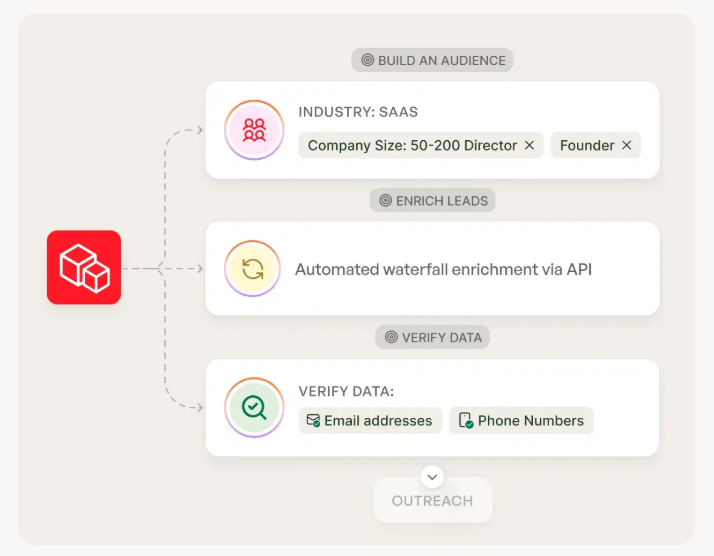
One thing worth flagging: persona validation depends on clean data. If 30% of your contact records are outdated - common with platforms on a 6-week refresh cycle - your validation is flawed from the start. Prospeo's 7-day refresh cycle and 98% email accuracy help here, because your persona-to-prospect matching actually holds up when you run segmentation analysis. (To keep it clean long-term, follow a CRM data hygiene process.)
Your personas map the User, the Supervisor, and the CFO. Prospeo's database covers 300M+ professionals so you can find all three in the same buying committee - with verified emails at $0.01 each and direct dials that pick up 30% of the time.
Reach the full buying committee, not just one contact.
9 Mistakes That Kill Buyer Personas
1. Using a B2C model for B2B. B2C personas emphasize lifestyle and personal preferences. B2B personas need to capture organizational dynamics - who else influences the decision, what's the approval process, what's the budget cycle. Fix: Map your persona fields to the buying committee.
2. Not interviewing actual customers. CRM data tells you what happened. Interviews tell you why. You need both. Fix: Schedule 10-15 interviews with recent buyers, lost deals, and churned accounts before finalizing any persona.
3. Not involving sales. Your sales team hears objections every day. They know which competitors come up, which features close deals, and which promises fall flat. If marketing builds personas in isolation, they're working with half the picture. Fix: Run a 30-minute debrief with your top 3 reps. Record it and mine it for objections, triggers, and competitor mentions. (If you're turning those insights into outreach, see objection handling scripts.)
4. Not naming personas. "Enterprise Persona 2" doesn't stick. "Maria the VP of Ops" does. Naming creates shared language across the org.
5. Not educating the org. Building personas and emailing a PDF isn't adoption. Fix: Run workshops. Make personas part of pipeline reviews. If sales and marketing can't name your personas from memory, they're not using them.
6. Not segmenting content by persona. If every blog post, email, and ad speaks to the same generic audience, your personas are decoration. Fix: Tag every content asset with its target persona and buying stage. If you can't tag it, it's generic - and generic doesn't convert. (Operationally, this pairs with how you segment your email list.)
7. Not using personas to find content gaps. Look at your content library through the persona lens. Which persona has 15 blog posts? Which has zero? Fix: Build a content matrix - personas on one axis, buying stages on the other. Empty cells are your content roadmap.
8. Not using personas outside marketing and sales. Product teams, customer success, even hiring managers benefit from persona clarity. Fix: Share personas with product and CS during quarterly planning. Let them challenge and refine the profiles based on what they see.
9. Not updating personas. Markets shift. Products evolve. Buyer behavior changes. The bigger risk isn't having too many personas - it's letting the ones you have go stale. Fix: Set a calendar reminder for an annual persona audit, or trigger a review whenever your product, market, or ICP changes significantly.
Does This Actually Work?
Thomson Reuters rebuilt their marketing around buyer personas and saw a 175% surge in marketing revenue, a 10% increase in leads sent to sales, and a 72% reduction in lead conversion time. That's not a marginal improvement.
MarketingSherpa documented a case where persona-driven content produced a 100% increase in web page visits, a 900% increase in visit duration, and a 171% increase in marketing-generated revenue. The visit duration number matters most - it means people were actually reading, not bouncing.
The49, a marketing automation SaaS company, adopted a persona-driven strategy and within 6 months saw +25% customer satisfaction, +15% customer retention, and -20% customer acquisition cost. They also closed a funding round 30% more successfully - because investors could see the go-to-market clarity.
On the email side, persona-based campaigns increase click-through rates by 14% and drive 18x more revenue than broadcast sends. That's the difference between "spray and pray" and "speak to the right person about the right problem at the right time." (If you're pressure-testing your process, audit sales pipeline challenges that typically block conversion.)
Remember the 71% stat from the top? Those companies aren't doing anything magical. They just documented and validated their personas - and they're 7x more likely to keep them updated. The bar isn't high. Most competitors aren't clearing it.
FAQ
How many buyer personas do I need?
Most companies need 3-5. Research shows 3-4 personas account for over 90% of a company's sales. Start with 3, then add a new one only when you have data proving a distinct segment exists. More than 5 usually creates internal confusion and watered-down messaging.
How often should I update my buyer personas?
At least once per year, or immediately after a major shift like a new product line, new market, or pricing change. Teams that refresh personas within the last 6 months are more likely to exceed lead and revenue goals. Simple rule: if your ICP changed, your personas are already outdated.
What's the difference between a buyer persona and a user persona?
A buyer persona maps the purchase decision (triggers, objections, approval process), while a user persona maps day-to-day product usage. In B2B, they're often different people: the CFO signs the contract, but a product manager or ops lead uses the tool daily. Treating them as one persona usually breaks messaging.
Can I build a buyer persona with AI?
Yes - use AI to draft in under 60 minutes, then validate with 10-15 interviews and CRM data. The review-mining workflow above (feed 50-100 real reviews into ChatGPT, extract themes, generate a structured persona card) is the fastest path. If you skip validation, you'll get believable fiction.
What's a good free tool for turning personas into prospect lists?
Prospeo's free tier includes 75 email credits plus 100 Chrome extension credits per month, with 98% verified email accuracy and a 7-day refresh cycle. That's enough to test persona-based outbound without burning deliverability.
Use a Persona That's Built to Be Used
A persona that drives revenue is specific about triggers, barriers, evaluation, and decision criteria - not just demographics. If you came here looking for an example of buyer persona you can actually deploy, start with the "User / Supervisor / Executive" trio, validate it against CRM reality, and then operationalize it with clean data so targeting doesn't fall apart when it hits the real world.