The Practitioner's Email Outreach Strategy for 2026: Built on Data, Not Theory
You sent 500 emails last month. You got four replies. Two were "please remove me from your list." The other two ghosted after the first call. You're staring at your sending dashboard wondering if cold email is dead - or if you're just doing it wrong.
It's the second one. Cold email isn't dead, but the margin for error has collapsed. Any email outreach strategy that worked in 2023 needs a serious overhaul. Reply rates dropped 15% from 2023 to 2024 in Belkins' study of 16.5 million cold emails, and practitioners report the trend has continued into 2026. Enterprise reply rates that used to hit 15-25% now hover around 8-10%. Almost 20% of cold emails get flagged as spam despite being legitimate. Meanwhile, one email deliverability company grew from zero to EUR120K MRR in six months using cold outreach as their only acquisition channel. The channel works. But the practitioners still booking meetings have shifted their entire approach - and it has almost nothing to do with subject lines or copywriting tricks.
The biggest lie in cold email is that you need to send more emails. You don't. You need to fix everything upstream of the email itself: your data, your infrastructure, your targeting.
What You Need (Quick Version)
If you're short on time, here's the playbook in six bullets:
- Your data is the bottleneck, not your copy. Verify every email before you send. A 98% accuracy rate means you're not torching your domain reputation on bounces.
- Keep emails under 80 words with a single soft CTA. "Worth a conversation?" beats "Are you free for 30 minutes Thursday?" (If you want stronger CTAs without sounding pushy, see soft CTA patterns.)
- Warm up domains for 6-8 weeks before scaling. This used to take 3 weeks. Those days are gone.
- 4-7 touchpoints is the sweet spot. 58% of replies come from email #1, but the first follow-up boosts replies by 49%. (More on sequence structure below.)
- Add a second channel - phone or social - for 30-50% more replies. Use a simple social selling layer to prime recognition.
- Recommended 3-tool stack: Prospeo for data, Instantly for sending, HubSpot CRM for tracking. Total cost: under $200/month.
That's the skeleton. The rest of this guide is the muscle.
How Cold Email Outreach Has Changed in 2026
Here's the thing: cold email still works. Personalized cold emails deliver positive ROI for nearly 9 in 10 sales teams. But "works" looks different than it did two years ago.

Sales cycles are 20% longer than they were in 2020. Domain warm-up takes twice as long. M365's spam filters are brutal - practitioners on Reddit describe them as "a killer." The volume playbook of spinning up 10 inboxes and blasting thousands of emails per day is effectively dead.
The teams still winning are doing fewer, better emails with cleaner data and tighter targeting. Here's how the major benchmarks stack up:
| Source | Sample Size | Avg Reply Rate | Top Performers | Methodology |
|---|---|---|---|---|
| Instantly | Billions of emails | 3.43% | 10.7%+ | Platform data, 700K+ businesses |
| Sopro | 151M data points | 5.1% | Not reported | Agency campaigns + survey |
| Belkins | 16.5M emails (2024 campaigns) | 5.8% | Not reported | Agency campaigns, 93 domains |
The spread matters. Instantly's 3.43% reflects the full range of senders - including the spray-and-pray crowd dragging the average down. Sopro and Belkins, as agencies, run more targeted campaigns. Your realistic target: 5%+ reply rate with solid fundamentals, 10%+ if you nail personalization and targeting.
Reply rates vary significantly by industry. Sopro's data shows a range from under 5% to over 6.5% depending on vertical. If you're selling into financial services or healthcare, expect longer cycles and lower reply rates than if you're targeting tech or marketing teams. Benchmark against your industry, not the global average.
The gap between average and elite is enormous. And it's almost entirely explained by what happens before the email gets written.
Hot take: If your average deal size sits below $10K, you probably don't need ZoomInfo-level data spend or a 12-tool stack. A lean setup - verified data, one sending tool, one CRM - will outperform an enterprise stack that's half-configured and bleeding bad data. (If you're building the minimum viable stack, use this B2B sales tech stack blueprint.)
Build Your Foundation - Data Quality and Deliverability
Most outreach guides bury this at the bottom. We're putting it first because it's the single biggest lever you have. Among all the best practices you'll read about, getting your data right is the one that separates teams who book meetings from teams who burn domains.
Start With Clean Data
B2B databases decay at roughly 25% per year. People change jobs, companies get acquired, email servers get reconfigured. If you're pulling a list and sending without verification, you're gambling with your domain reputation on every campaign. (If you want the deeper benchmarks and refresh cadence, see B2B contact data decay.)
The math is simple: high bounce rates trigger spam complaints. Spam complaints tank your sender reputation. A tanked sender reputation means even your good emails land in spam. It's a death spiral, and it starts with bad data. If you need a step-by-step SOP, follow this email verification workflow.
Belkins' data makes this concrete: reaching 1-2 contacts per company yields a 7.8% reply rate. Blast 10+ contacts at the same company? That drops to 3.8%. More isn't better. Precision is better.

I've seen teams spend weeks perfecting their email copy while sending to a list that's 30% invalid. Fix the data first. Everything else is downstream.
Set Up Your Sending Infrastructure
Your sending infrastructure is the plumbing. Get it wrong and nothing else matters. If you want the full checklist beyond the highlights below, use this sending infrastructure guide.

Non-negotiables before you send a single cold email:
- SPF, DKIM, and DMARC authenticated on your sending domain. No exceptions. If you don't know what these are, stop reading and go set them up. (Start here: SPF/DKIM/DMARC explained.)
- Separate cold outreach domain. Never send cold emails from your primary domain. Use a variant (e.g., tryacme.com instead of acme.com). No hyphens, no numbers, no exotic TLDs like .xyz or .biz. Stick with .com or country-specific.
- Nominative email addresses. john@tryacme.com, not sales@tryacme.com. Generic addresses get flagged.
- Custom tracking domain. Shared tracking domains are spam magnets.
- 50 emails/day max per inbox. Split between warm-up and cold sends. (For pacing math and limits, see email pacing and sending limits.)
One data point worth noting: MailReach's data shows sender names with women's first names tend to get higher open and reply rates. Worth testing if you're setting up multiple inboxes.
Here's the warm-up schedule that works in 2026:
| Week | Emails/Day | Notes |
|---|---|---|
| 1-2 | 5-10 | Warm-up only, no cold sends |
| 3-4 | 15-20 | Begin mixing 5-10 cold sends |
| 5-6 | 30-40 | Increase cold sends gradually |
| 7+ | 50 max | Split: 25 warm-up + 25 cold |
Increase volume by 20-30% weekly during ramp-up. Never jump. The practitioners on Reddit are clear: domain warm-up now takes 6-8 weeks minimum. Trying to shortcut this is how you burn a domain before your first real campaign.
If you need to send 300 emails per day, you need roughly 10 inboxes. Plan accordingly.

This article makes one thing clear: bad data is the #1 reason outreach fails. Prospeo's 5-step verification delivers 98% email accuracy with a 7-day refresh cycle - so you're never sending to stale contacts. At $0.01 per email, fixing your data costs less than one bounced campaign.
Stop perfecting copy for a list that's 30% invalid.
The playbook above recommends Prospeo for a reason. 300M+ profiles, 125M+ verified mobiles, and 30+ filters - including buyer intent and job changes - let you target precisely instead of blasting 10 contacts per company. Teams using Prospeo book 35% more meetings than Apollo users.
Build the lean, high-precision stack this guide describes.
Define Your ICP and Build a Targeted List
The second-biggest lever after data quality is who you're emailing. Smaller campaigns consistently outperform larger ones - campaigns under 100 recipients hit a 5.5% reply rate in Belkins' data, while mass blasts dilute results.

86% of business buyers are more likely to buy when vendors understand their objectives. That's not a soft stat - it's the difference between a reply and a delete. If you need a refresher on the difference between ICP and persona, use this ideal customer guide.
Build your list around signals, not just titles:
- Funding events - a company that just raised a Series B has budget and urgency
- Hiring patterns - if they're hiring 5 SDRs, they need pipeline tools
- Product launches - new products create new pain points
- Competitor moves - if their competitor just switched to your category, they're evaluating
- Technographic signals - what tools they're already running tells you what they need
- Fiscal year timing - Q4 budget season and Q1 new-budget windows are prime outreach windows for enterprise deals
One practitioner tested 30 deeply personalized emails - scraping each prospect's last 10 public posts plus 40-50 pages of company website content. Result: 3 replies (10% reply rate), 2 agreed to try a sample. That's the power of quality over volume.
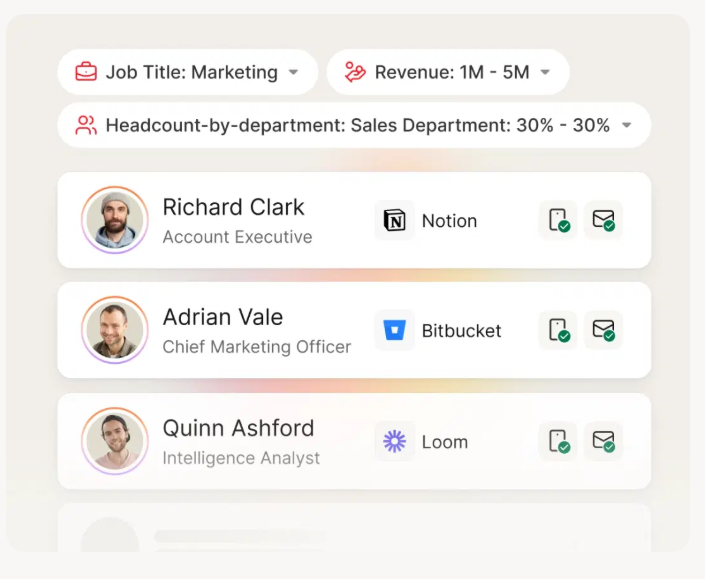
The goal isn't a bigger list. It's a list where every name has a reason to care.
Cold Email Techniques That Actually Get Replies
Now - and only now - do we talk about the actual email.
The Anatomy of a High-Performing Outbound Sales Email
The data converges on a tight range: 40-80 words. Reddit practitioners say 40-60. Instantly's benchmark data says under 80. Another practitioner pegs the ideal at 75. Emails under 150 words perform 83% better than longer ones. Write at a 6th grade reading level - that alone improves performance by 67%.

The framework is simple: Context, Value, Soft CTA.
Some teams use a longer framework (Intro, Truth, Pain Point, Value), but at 40-80 words, you don't have room for four beats. Stick with three.
Use more "you" than "I." Format for the F-shape reading pattern (readers scan the left side of the screen). And remember: 81% of emails are opened on mobile, so your email needs to look good on a 4-inch screen. For more first-line patterns, steal from these email opener examples.
Here's a template adapted from a Reddit practitioner who shared their winning format:
Hi {{first_name}},
Noticed {{company}} just {{specific signal - e.g., expanded into EMEA / launched a new product line / raised Series B}}.
We helped {{similar company}} {{specific result - e.g., cut ramp time from 10 weeks to 4}} when they were at the same stage.
Worth a quick conversation?
That's 47 words. Context in the first line. Value in the second. Soft CTA in the third. No fluff, no preamble, no "My name is Jake and I'm the VP of Sales at..."
The winning CTA from Instantly's latest benchmark: "Would you have a couple minutes to chat about this over the next few days?" Soft, low-friction, specific enough to feel real.
Subject Lines That Earn the Open
35% of recipients decide whether to open based on the subject line alone.
That's a third of your audience making a judgment before they see a single word of your email.
What works:
- 6-10 words (Sopro's data shows this is the sweet spot)
- Curiosity-based: "Quick question about {{company}}'s EMEA rollout"
- Value-based: "Idea for {{company}}'s hiring ramp"
- A/B testing subject lines has been shown to lift open rates by up to 50% (use this A/B testing framework)
What doesn't:
- Generic: "Quick question" (everyone uses this - it's invisible now)
- Clickbait: "You won't believe..." (triggers spam filters and trust issues)
- ALL CAPS or excessive punctuation (instant spam flag)
- Your company name in the subject line (nobody cares yet)
The best subject lines feel like they came from a colleague, not a salesperson. If you wouldn't send it to your VP, don't send it to a prospect.
What NOT to Write
A quick checklist of things that kill cold emails:
- More than one CTA. Emails with multiple CTAs perform worse than emails with no CTA at all. One ask. That's it.
- "Hope this email finds you well." It never found anyone well. It's filler that screams "mass email."
- Leading with your company name. "I'm reaching out from AcmeCorp because..." - nobody cares about AcmeCorp yet. Lead with their problem.
- Forced praise. "I've been following your incredible journey at {{company}}..." - this reads as fake because it usually is.
- More than 2 numbers per email. Data overload kills readability on mobile.
- Irrelevant social proof. Dropping Fortune 500 logos when you're emailing a 50-person startup doesn't build credibility - it creates distance. Reference companies similar to theirs.
Personalize at Scale Without Losing Your Mind
Signal-Based Personalization
The four pillars of effective personalization: Relevance (why now?), Context (what you know), Intent (what you want them to do), and Clarity (short, direct, human).
81% of sales and marketing decision-makers engage with cold outreach when it's tailored to their company and context. The key word is "tailored" - not "personalized with a first name merge tag."
Here's the difference between bad and good personalization:
Before: "Saw you're hiring - we can help with that."
After: "Noticed you just announced your Series B and are expanding into EMEA. We helped {{similar company}} scale across 12 countries in 6 months - cut their ramp time in half."
The first is a template with a vague signal. The second demonstrates you actually understand their situation.
High-value personalization signals:
- Recent funding rounds
- Hiring surges in specific departments
- Product launches or pivots
- Job changes (new VP = new priorities)
- Competitor moves they'd care about
- Their own content (posts, podcast appearances, conference talks)
One Reddit practitioner found that adding personalization in the PS section boosted email performance by 35%. That's a low-effort, high-impact move - keep the body templated and put the personal touch at the end. If you’re scaling AI-written openers, avoid these common AI personalization mistakes.
The AI Personalization Workflow
Here's the workflow a practitioner from an 8-figure SaaS company shared - and it's the most practical approach to personalization at scale we've seen:
- Add custom fields to your CRM: Create 'prospect_post' and 'custom_message' fields
- Scrape recent activity: Pull the last 5-10 posts or updates from each prospect's public profiles
- Store in CRM: Populate the 'prospect_post' field with raw content
- Run AI over the data: Use GPT-4o mini to generate a custom opening line based on the prospect's content. Refine with a more capable model if the output needs polish
- Human review: Scan every AI-generated message. Kill anything that sounds generic or hallucinated
- Export to CSV: Pull the enriched data with custom messages
- Import into your cold email tool: Map the {{custom_message}} variable to your template
- Send and measure: Track reply rates by personalization quality
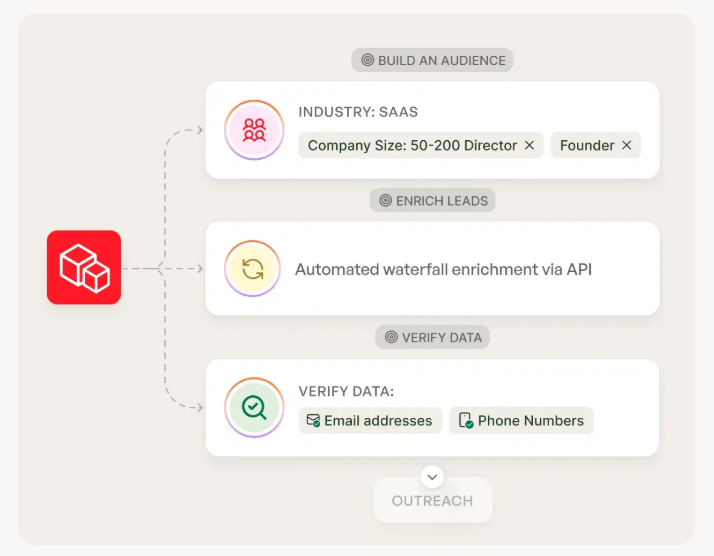
This workflow produced a 3x improvement in response rates compared to the team's previous approach.
The critical step is #5 - human review. AI can generate text, but it can't generate context. Without review, you'll send emails that reference the wrong company, misinterpret a post, or produce that uncanny-valley tone that prospects instantly recognize as AI-generated. The micro-imperfections of human writing are a feature, not a bug.
Design Your Sequence and Timing
Sequence Structure
The optimal sequence length is 4-7 touchpoints. Under 4 and you're giving up too early. Beyond 7 and you're burning goodwill.
Here's the counterintuitive data point: one-touch sequences (a single email, no follow-ups) produced an 8.4% reply rate in Belkins' study. That's higher than the overall average. The likely explanation: if your targeting and personalization are strong enough, the first email does the heavy lifting. 58% of all replies come from email #1.
But follow-ups still matter. The first follow-up boosts replies by up to 49%. The second brings 20% fewer responses. By the fourth, response rates drop 55% - and spam complaints climb from 0.5% on the first email to 1.6% on the fourth.
The progression that works:
- Email 1: Introduction - Context + value + soft CTA
- Email 2: Insight - Share something useful (a relevant stat, a competitive insight). Make it feel like a reply, not a formal follow-up. Step 2 emails that feel like replies outperform formal follow-ups by about 30%.
- Email 3: Social proof - Brief case study or result from a similar company
- Email 4: Break-up - "Seems like the timing isn't right. Happy to reconnect when it is."
Space emails 3-4 days apart. Closer than that feels aggressive. Farther apart and you lose momentum.
Timing and Sending
Look, everyone wants to know the "best day to send cold emails." The honest answer: the data conflicts.
| Source | Best Day | Best Time | Notes |
|---|---|---|---|
| Instantly | Wednesday | Not specified | Peak engagement |
| Belkins | Thursday | 7-11 AM, 8-11 PM | 6.87% reply rate |
| Sopro | Monday | Not specified | 5.29% reply rate |
What does this tell you? There's no universal best day. Your audience's behavior depends on their industry, seniority, and timezone. Test your own data.
What the data does agree on:
- Mornings (7-11 AM) and evenings (8-11 PM) in the prospect's timezone consistently perform well
- Friday triggers an auto-reply surge - avoid it for new sequences
- Remove open-rate tracking pixels. Belkins found this alone brought a 3% higher response rate. Tracking pixels trigger spam filters, and open rates are increasingly unreliable anyway (Apple's Mail Privacy Protection has made them nearly meaningless)
- 81% of emails are opened on mobile. If your email doesn't look good on a phone, it doesn't look good.
Why Multi-Channel Outreach Outperforms Email Alone
Email alone leaves money on the table.
Adding a second channel - phone, social, or both - increases reply rates by 30-50%. This is especially true when targeting mid-market and enterprise accounts, where multiple touchpoints build the familiarity needed to earn a response. (If you want the system view, use this multi-channel sales automation OS.)
Here's a multichannel sequence that works:
- Day 1: View the prospect's profile (creates a notification)
- Day 2: Send a connection request with a brief note
- Day 3: Send email #1
- Day 5: Send email #2 (the "reply-style" follow-up)
- Day 7: Call after the 3rd email - you're no longer a stranger
- Day 10: Final email (break-up)
The profile view and connection request prime the prospect to recognize your name when the email lands. The call after email #3 converts at a much higher rate because they've already seen your name multiple times.
One stat that matters: fast responses to inbound interest convert up to 3x better. If someone replies to your email or accepts your connection request, respond within the hour. Not tomorrow. Not after your next meeting. Now.
What Email Outreach Actually Costs
Let's talk real numbers. A MarketOwl breakdown for a 1,000-contact campaign:
| Line Item | Cost Range |
|---|---|
| Contact search & verification | $530-$2,000 |
| Personalization & message prep | $800-$1,000 |
| Sending infrastructure | ~$480 |
| Follow-ups | ~$200 |
| Response processing | ~$200 |
| Total (in-house) | ~$2,200 |
| Total (outsourced) | $1,500-$3,000 |
At a 5% reply rate, that's 50 conversations from 1,000 contacts. If 20% of those convert to meetings, you're looking at 10 meetings for ~$2,200. That's $220 per meeting - excellent ROI if your deal sizes are in the five-figure range.
The infrastructure costs scale linearly: 300 emails/day requires roughly 10 sending accounts. Budget for the inboxes, warm-up tools, and verification costs accordingly.
The place most teams overspend? Contact search. Using a tool with high accuracy upfront - so you're not paying to verify bad data twice - cuts that line item significantly.
Best Tools for Email Outreach in 2026
| Tool | Best For | Starting Price | Key Differentiator |
|---|---|---|---|
| Prospeo | Data accuracy | Free, ~$39/mo paid | 98% accuracy, $0.01/email |
| Apollo | All-in-one teams | Free, $59/mo/user | Database + sequencer built-in |
| Instantly | Sending at scale | ~$30/mo | Warm-up + inbox rotation |
| Saleshandy | Scaling senders | ~$25/mo | Unlimited sender accounts |
| Lemlist | Personalization | ~$39/mo/user | Dynamic images + variables |
| Smartlead | Budget scaling | ~$39/mo | Unlimited senders |
| GMass | Solopreneurs | $25/mo | Gmail-native simplicity |

The data layer sits at the top of the stack for a reason: it's the problem that makes or breaks every other tool in your outreach workflow. If you want a broader shortlist, compare the best cold email outreach tools.
Apollo is the obvious choice if you want database + sequencing in one platform. The free tier is generous (100 credits/month), and paid plans start at $59/month per user. The tradeoff: Apollo's email accuracy runs around 79% - roughly 1 in 5 emails will bounce. For small volumes, that's manageable. At scale, it'll hurt your deliverability.
Skip Instantly if you only send 20 emails a day - it's overkill. But for most outbound teams, it's the sending engine of choice. Inbox rotation, built-in warm-up, and solid deliverability tools starting around $30/month. Pair it with a high-accuracy data source and you've got a lean, high-performing stack.
Saleshandy vs. Smartlead - the real difference: Both offer unlimited sender accounts. Saleshandy (~$25/month) has a more straightforward 4-step workflow and edges out on simplicity. Smartlead (~$39/month) offers more granular controls and a slightly richer feature set. If you're scaling past 10 inboxes and want the cheapest per-inbox cost, go Saleshandy. If you want more knobs to turn, go Smartlead.
Lemlist shines on personalization - dynamic images, custom variables, and landing pages. At ~$39/month per user, it's pricier per seat but worth it if personalization is your primary differentiator.
GMass is the simplest option - it runs inside Gmail. At $25/month, it's perfect for solopreneurs or founders doing low-volume outreach who don't need a separate platform.
Compliance - CAN-SPAM, GDPR, and CASL
Cold email is legal. Cold email isn't spam. But the line between them is defined by specific rules, and the penalties for crossing it are real.
| Requirement | CAN-SPAM (US) | GDPR (EU) | CASL (Canada) |
|---|---|---|---|
| Consent needed? | No | Legitimate interest OK | Express consent required |
| Unsubscribe link | Required | Required | Required |
| Physical address | Required | Required | Required |
| Opt-out timeline | 10 business days | Prompt | 10 business days |
| Max penalty | $51,744/violation | EUR20M or 4% revenue | Up to $10M CAD |
CASL is the strictest - it requires express consent before you email. If you're targeting Canadian prospects, tread carefully or consult legal counsel.
Your compliance checklist:
- Include a visible unsubscribe link in every email
- Add a valid physical mailing address
- Use accurate sender name and reply-to address
- Never use deceptive subject lines
- Honor opt-outs within 10 business days (do it same-day - it's just good practice)
- For GDPR: be prepared to explain how you got their email and why your outreach is relevant to their role
- Keep records of consent and opt-outs
The practical distinction: spam is unsolicited, irrelevant, and sent in bulk without regard for the recipient. A well-crafted outbound sales email is targeted, relevant, and sent to someone who has a legitimate business reason to hear from you. Stay on the right side of that line and you're fine.
FAQ
Is cold email legal?
Yes, cold email is legal in most countries when you follow the rules. In the US, CAN-SPAM doesn't require prior consent - you just need accurate sender info, an unsubscribe link, and a physical address. GDPR requires legitimate interest. CASL (Canada) is strictest, requiring express consent.
What's a good cold email reply rate in 2026?
The average cold email reply rate sits between 3.4% and 5.8% depending on the study - Instantly reports 3.43% across all senders, while Belkins' agency data shows 5.8%. Above 5% is solid. Top 10% of campaigns hit 10.7%+. Below 3% means your data quality or targeting needs work before you touch your copy.
How many follow-ups should I send?
Send 4-7 total touchpoints. The first follow-up boosts replies by up to 49%, making it the highest-ROI email in your sequence. Spam complaints rise from 0.5% on email #1 to 1.6% by email #4. After 4 touchpoints, diminishing returns kick in hard. Space them 3-4 days apart.
What's the cheapest way to start cold outreach with verified data?
Prospeo's free tier gives you 75 verified emails per month - enough to test a small campaign with clean data. Pair it with GMass ($25/month) for sending and a free HubSpot CRM for tracking. Total cost: $25/month. Scale to Instantly ($30/month) once you're past 50 sends per day.
How long should a cold email be?
Keep cold emails between 40-80 words. Emails under 150 words perform 83% better than longer ones. Write at a 6th grade reading level - that alone improves performance by 67%. With 81% of emails opened on mobile, brevity isn't just a best practice, it's a formatting requirement.