Sales CTA Guide (2026): Framework + Swipe File That Gets Replies
Most sales CTA advice is written like you're designing a homepage button.
Outbound lives or dies on one thing: getting a human to respond when they didn't ask to hear from you.
Look, if your CTA is "book a demo" in email #1, you're not being direct - you're being lazy. I've watched teams burn weeks rewriting subject lines and CTAs while their real issue was that half the list bounced and the rest landed in Promotions.
Hot take (from experience): for lower-priced deals, you usually don't need "demo-first" CTAs at all. You need replies. Meetings come after.
Here's the framework I use to keep CTAs reply-first, measurable, and actually testable - and to stop arguing about wording when the real problem is friction.
What you need (quick version)
Use this as your "don't overthink it" checklist.

Your CTA should:
- Ask for one next step (one CTA per message, always)
- Match the relationship stage (cold -> warm -> close)
- Prefer reply-first over click-first in early outbound
- Be answerable in under 10 seconds
- Be specific (topic + timeframe), not vague ("thoughts?")
- Be measurable (reply rate, positive reply rate, meeting rate) - see sales sequence metrics
If you only change one thing, change this:
- Make the CTA binary (yes/no, right/wrong person, priority/not priority).
- Add a time box ("this quarter," "next week," "now or later").
- Keep it one sentence at the end of the message.
Bad CTA -> fixed CTA (steal this pattern):
- Bad: "Can you book time for a quick demo this week?"
- Fixed: "Is cutting {pain} a priority this quarter, or should I close the loop?"
Belkins' large dataset puts average cold email reply rate at 5.8%. Gong Engage benchmarks put baseline reply rate around 1.8% and top performers around 3.9%. For most teams, a practical target is 2-4% total reply rate and 0.8-1.5% positive reply rate on truly cold outbound.
If you're below that, don't rewrite your CTA five times - fix deliverability, targeting, and offer clarity first. (If you need a full system, start with a cold email sequence.)
Quick friction table (pick the lowest rung that fits):
| Stage | Best CTA type | Example | What you measure |
|---|---|---|---|
| Cold | Reply-first | "Off base?" | Reply rate |
| Warm | Time-boxed | "10 min next week?" | Positive reply rate |
| Close | Commitment | "Ready to start?" | Meeting/close |
One more ops truth: CTA tests are noise without verified lists. If your list is stale, your "winning CTA" is often just the variant that happened to hit fewer bad addresses. Tools like Prospeo help here because they verify emails in real time and refresh data every 7 days, so you're testing copy against humans, not bounce logs. (If you're evaluating options, see email verifier websites.)
What a sales CTA is (and why most CTA advice fails sales)
Most CTA advice assumes the reader already wants the thing. That's inbound.
Outbound's different: you're interrupting someone's day and asking them to spend attention on you, so your CTA has to earn a response before it earns a meeting.
Definition: A sales CTA is the next micro-commitment that earns a reply.
Not "book a demo." Not "start a trial." Not "check out this case study."
A sales CTA is the smallest next step that moves the conversation forward without triggering resistance. When you give people multiple options ("Want a demo, a deck, or a quick call?"), you're making them do work: evaluate options, pick one, and commit. Most people choose option four: ignore.
I've seen this repeatedly in production sequences: swapping "book a demo" for a binary reply CTA increases total replies even when meetings don't jump immediately. That's still a win, because now you've got signal (timing, owner, priority) you can route and act on.
Sales CTA friction ladder (what to ask for first)
The easiest way to stop guessing is to treat CTAs like a ladder. Each rung increases commitment.

Rule: one primary CTA per message. You can include a secondary "escape hatch" (like "or tell me who owns this"), but don't make it a second decision. (More routing scripts here: how to ask for the right contact person.)
Friction ladder table (hard vs soft CTAs by stage)
| Stage | Soft CTA (reply) | Hard CTA (meeting) | Use / skip |
|---|---|---|---|
| Cold | "Off base?" | "Book a demo" | Use soft |
| Cold | "Send a breakdown?" | "15 min this week?" | Use soft |
| Warm | "Worth a look?" | "10 min next week?" | Either |
| Warm | "Want a 60 sec video?" | "Two times?" | Either |
| Close | "Ready to move?" | "Sign / kickoff" | Use hard |
Use-skip guidance (what I see work in production)
Cold (no prior interaction):
- Use: binary questions, permission-based offers, "who owns this?" routing CTAs
- Skip: calendar links as the main ask, multi-link emails, "demo" language unless there's a trigger (funding, job post, inbound page view)
Warm (they engaged somehow):
- Use: time-boxed meeting asks, "two time options," short video offers
- Skip: going back to "off base?" once they've already shown interest
Close (active opportunity):
- Use: commitment CTAs (kickoff, security review, procurement steps)
- Skip: "just checking in" and other low-signal nudges that slow deals down
If you're selling into a committee (security, finance, IT), the "who owns this?" CTA isn't fluff. It's often the fastest path to the real buyer. (Related: B2B decision making.)

You just read that CTA tests are noise without verified lists. Here's the math: if 35% of your emails bounce, your "winning" CTA variant is statistical fiction. Prospeo verifies emails in real time with 98% accuracy and refreshes every 7 days - so when you A/B test reply-first vs. time-boxed CTAs, you're measuring copy performance against real humans, not dead inboxes.
Stop optimizing CTAs against bounce logs. Test against verified contacts.
Sales CTA examples by channel (copy-and-paste, sales-first)
These are reply-first templates you can paste into sequences. Keep the structure; swap the nouns.
Cold email CTAs (reply-first)
Rules (keep it simple):
- 0-1 link in email #1
- One ask only
- Make the reply binary

Templates
- "Totally off base, or is improving {pain} on your radar this quarter?"
- "Is this a priority now, or should I circle back next month?"
- "If I send a 60-sec video showing how we handle {problem}, would you watch it?"
- "Wrong person - or do you own {area}?"
These are strong sales email calls to action because they're easy to answer and don't demand a meeting before trust exists.
Why these work (in practice):
- They're fast to answer.
- They don't force a meeting before trust exists.
- They give you routing and timing even when the answer is "no."
Common CTA mistakes (quick fixes):
- "Thoughts?" -> "Is {topic} a priority this quarter - yes or no?"
- "Can we hop on a call?" -> "Worth a quick back-and-forth first?"
- "Here are 3 links" -> "Reply 'yes' and I'll send one relevant example."
Follow-up email CTAs (nudge without pressure)
Rules:
- Shorter than email #1
- One job per follow-up (route, time-box, or close the loop)
- Don't introduce new homework
Templates
- "Should I close the loop here?"
- "Worth 10 minutes next week - Tue or Thu?"
- "If I'm barking up the wrong tree, who owns {area}?"
- "Want two bullets on what we'd change in your {process}?"
Why these work:
- They create a clean "yes/no" moment.
- They make it easy to redirect you instead of ghosting you.
- They move from reply-first to meeting ask only after you've earned a response.
LinkedIn/DM CTAs (soft first, meeting later)
DMs punish verbosity. Keep it tight and make the reply easy. (If you want a full motion, build a social sales cadence.)
Rules:
- One question
- No pitch paragraph
- Earn the meeting ask after the first reply
Templates (first message)
- "Quick one - are you the right person for {topic} at {company}?"
- "Curious: is {pain} a focus right now, or not really?"
- "Open to a quick back-and-forth here? If yes, I'll share a 2-step idea."
Templates (after they reply once) 4) "Helpful if I send a 60-sec walkthrough?" 5) "Want to do 10 minutes next week to sanity-check fit?"
Cold call + voicemail CTAs (micro-commitment scripts)
Calls work best when the call-to-action is "make it easy to respond," not "let's do a demo." (For scripts and KPIs, see B2B cold calling.)
Rules:
- Ask a binary question
- Tie the call to one email thread
- Give a "no" path
Cold call CTA (live answer)
- "I'll be brief - are you actively working on {pain}, or should I talk to someone else?"
Voicemail CTA (reply-first)
- "Hey {Name}, it's {You}. I sent a quick email about {one-liner value}. If it's not relevant, reply 'no' and I'll close the loop."
Voicemail CTA (time-boxed)
- "If it's worth a look, reply 'yes' and I'll send two times for a 10-minute chat."
Landing page/demo request CTAs (when you do want the click)
On a landing page, intent's higher. Click-first CTAs are fine - just don't make the next step feel like a trap.
Rules:
- Make the outcome obvious
- Reduce perceived time cost
- Match the form to the promise (don't ask 12 fields for a "2-minute check")
Templates
- "Get a 10-minute walkthrough"
- "See it on your data"
- "Check fit in 2 minutes"
- "Get pricing & examples" (great when you're trying to filter tire-kickers)
Two high-converting form micro-CTAs (tiny, but they matter):
- Under the button: "No spam. One follow-up."
- Next to phone field: "Optional (faster routing if you include it)."
Benchmarks for 2026: what "good" looks like (so you can judge your sales CTA)
If you don't know what "good" is, you'll overreact to noise. A 0.4% swing might be meaningful, or it might just be a different slice of the list.

Outbound reply benchmarks table
| Benchmark | Metric | "Good" signal | Notes |
|---|---|---|---|
| Belkins | Avg reply rate | 5.8% | Dataset: Jan-Dec 2024, 16.5M cold emails, 93 domains |
| Belkins | Best-performing length (reply rate) | 6.9% | 6-8 sentences |
| Gong Engage | Baseline reply rate | 1.8% | 2024 data |
| Gong Engage | Top quartile reply rate | 3.9% | Best reps |
| Gong Engage | Manual reply rate | 2.1% | Manual beats automated |
| Gong Engage | Automated reply rate | 1.1% | Volume tax is real |
Two clarifications that stop bad decisions:
1) Reply rate vs positive reply rate (they diverge). A "good" reply rate can be inflated by negative replies ("stop emailing me") or routing replies ("not me"). That's not failure - routing is useful - but it's not pipeline. Track both:
- Reply rate = are humans seeing and responding?
- Positive reply rate = are the right humans interested?
- Meeting rate = does interest convert?
2) Benchmarks are list-dependent. If you email founders, you'll often see higher reply rates and faster "no's." If you email enterprise security, replies are slower and more political. Don't compare across personas; compare within the same persona and segment.
How I interpret results without lying to myself: if reply rate is low, deliverability, list quality, or relevance is broken; if reply rate is fine but positive replies are low, your offer/ICP match is off; if positive replies are fine but meetings are low, your meeting ask, scheduling flow, or qualification is the bottleneck. (If you're tightening targeting, start with an ideal customer.)
Belkins also found 6-8 sentences performed best at 6.9% reply rate. That doesn't mean "write long emails." It means vague emails get punished, and specificity usually takes a few sentences.
Sales CTA deliverability rules (what kills replies before copy matters)
Your CTA can be perfect and still fail because the email never lands in inbox. Deliverability's the tax you pay before you get to be creative. (Deep dive: email deliverability.)
Mailshake's deliverability checklist is basically the modern minimum viable setup:
Deliverability checklist (do this before you "test CTAs")
- Set up SPF, DKIM, and DMARC (work toward p=reject as your mature end state) - see SPF DKIM & DMARC explained
- Use a dedicated sending subdomain for cold outbound
- Warm up new domains/inboxes: start 10-20 emails/day, ramp over 4-8 weeks
- Keep link hygiene clean: every URL resolves over HTTPS with valid SSL
- Monitor reputation: Google Postmaster Tools + Microsoft SNDS
- Avoid purchased/scraped lists (they destroy reputation fast)
CTA choices that trigger filtering (and kill replies)
If you want more inbox placement, stop doing the stuff that looks like tracking-heavy marketing blasts.
High-risk choices (especially in email #1):
- Multiple links (even if they're "helpful")
- URL shorteners
- Heavy tracking parameters on every link
- Open-tracking pixels (test with them off; plenty of teams see cleaner deliverability)
- Attachments (PDFs are a classic filter magnet)
Low-risk choices:
- Plain-text reply CTAs ("Reply 'yes' and I'll send...")
- One optional proof link (not the main ask)
- A routing CTA ("Who owns this?") when you're unsure of the contact
One tight paragraph on list quality, because it's the silent killer: if you don't verify contacts, bounces and spam traps will wreck your domain reputation and your CTA will look "weak" when it never had a chance. (For the SOP, see email verification list.)

Follow-up CTA ladder (5-9 touches without sounding desperate)
Most replies don't come from email #1. They come from the second, third, and "oh right, that person" moment.
A solid baseline is 5 touches to get engagement, and execs often need closer to 9. Here's the thing: follow-ups help early, but once you're deep into a sequence, responses drop and spam complaints rise. Persistence works; mindless persistence backfires.
A practical 7-touch CTA map (reply-first -> meeting)
Touch 1 (email): Soft binary
CTA: "Off base or worth a quick back and forth?"
Touch 2 (email): Value offer
CTA: "Want a 60 sec video on how we'd approach {problem}?"
Touch 3 (call + voicemail): Permission + email tie-in
CTA: "Reply 'no' and I'll close the loop."
Touch 4 (email): Social proof
CTA: "Want the 3 bullets on what {peer} changed?"
Touch 5 (DM): Routing
CTA: "Are you the right person for {topic}?"
Touch 6 (email): Meeting ask with two options
CTA: "10 min next week - Tue or Thu?"
Touch 7 (email): Breakup
CTA: "Should I close this out?"
Simple cadence (steal this): Day 1 email -> Day 3 email -> Day 5 call/VM -> Day 7 email -> Day 10 DM -> Day 14 meeting ask -> Day 18 breakup. (More timing rules: when should you follow up on an email.)
Notice what's missing: "Just checking in." Every touch has a job and one clear ask.
CTA design for landing pages & demo forms (contrast beats "best color")
Website CTAs are where teams waste time arguing about button color. There's no magic color. Contrast and clarity win.
A few rules that beat folklore:
- Make the primary CTA the highest-contrast element on the page
- Use accessible contrast and readable type (especially on mobile)
- Make the click target big and close to the decision point (don't hide it below a wall of text)
- Remove competing CTAs near the primary action (one primary, one secondary text link at most)
Sales CTA verb bank (the asset you'll actually reuse)
If you want faster copywriting and cleaner tests, standardize your verbs by intent:
| Intent | Best verbs | When to use | Example CTA |
|---|---|---|---|
| Reply (lowest friction) | Reply, confirm, point, route | Cold outbound | "Reply 'yes' and I'll send the 2-step outline." |
| Learn | See, watch, review | Warm / curious | "Want a 60-sec walkthrough?" |
| Evaluate | compare, assess, sanity-check | Warm / problem-aware | "Worth a 10-min sanity-check next week?" |
| Commit (highest friction) | book, start, approve, kickoff | Late stage | "Ready to kickoff this week?" |
My opinion: "sanity-check" and "worth it" language consistently beats "demo" language in early outbound because it sounds like a buyer protecting their time, not a seller pushing a process.
For demo flows, friction's the real lever. If qualified leads aren't converting to meetings, your CTA copy usually isn't the bottleneck - your form fields, routing, and scheduling step are.
A simple CTA testing plan (so you stop guessing)
A lot of CTA advice is tool marketing dressed up as "best practices." Run your own numbers on a verified segment, or you'll end up "winning" a test that was really just better inbox placement.
Step-by-step testing workflow
Step 1: Build a small, verified test segment (don't test on your whole list). This matters more than most people want to admit. If 8% of your list is bad, your A/B test is basically a deliverability experiment with a copy label slapped on it. Prospeo is the B2B data platform built for accuracy, with 300M+ professional profiles, 143M+ verified emails, and a 7-day refresh cycle, so your test segment stays clean while you're iterating. (If you need a process, use this A/B testing lead generation campaigns framework.)
Step 2: Lock everything except the CTA. Same audience, same offer, same sender, same send window. Change one variable:
- CTA phrasing (binary vs open-ended)
- Friction level (reply-first vs meeting ask)
- Link/no-link (especially in email #1)
Step 3: Pick the right success metrics. Ignore CTR for early outbound. Track:
- Reply rate
- Positive reply rate
- Meeting rate
Step 4: Run the smallest test that can still teach you something. A practical minimum is 200-500 delivered emails per variant. If deliverability's shaky, you'll need more volume to see through the noise.
Step 5: Add one "ops" test that most teams skip. Test open tracking on vs off. It's both a deliverability variable and a trust signal.
Mini experiment table (copy this into a spreadsheet)
| Test | Variant A | Variant B | Primary metric |
|---|---|---|---|
| CTA phrasing | "Off base?" | "Worth exploring?" | Reply rate |
| Friction | Reply-first | "10 min next week?" | Positive replies |
| Link | No link | 1 proof link | Reply rate |
| Tracking | Opens on | Opens off | Reply rate |
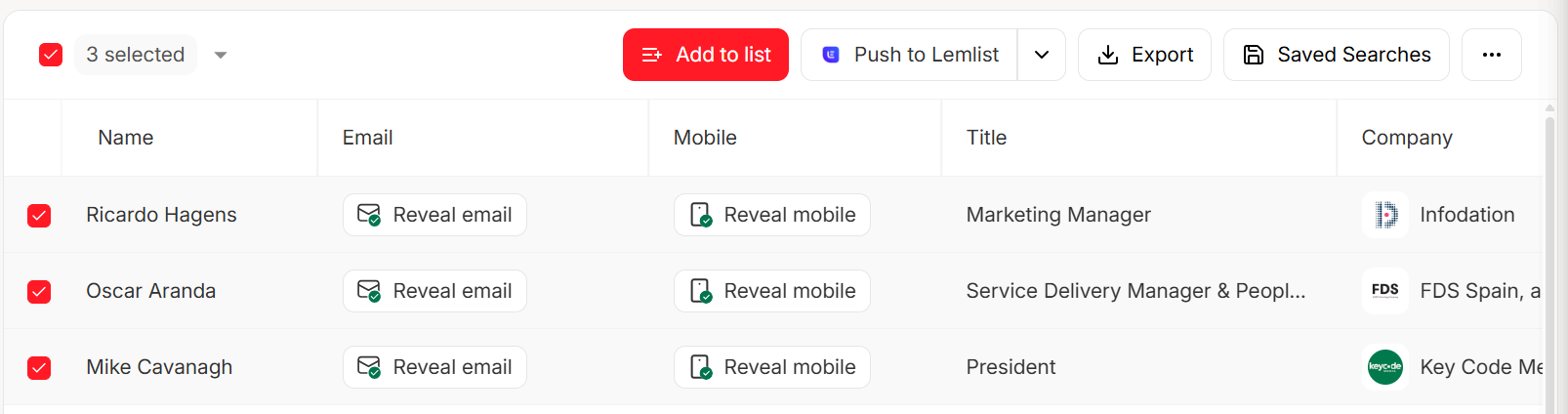
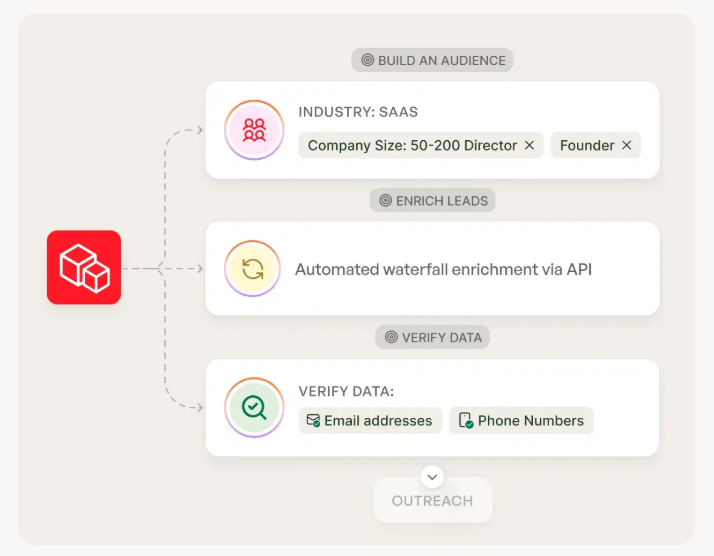
The reply-first framework only works when your message reaches the right person. Prospeo's 300M+ profiles with 30+ filters - buyer intent, job changes, technographics - let you target decision-makers who actually own the problem your CTA references. At $0.01 per email, building a clean list costs less than one wasted follow-up sequence.
Send fewer emails, get more replies. Start with the right list.
FAQ about sales CTAs
What's the best CTA for the first cold email?
A strong first cold-email CTA is a reply-first binary question (yes/no or right/wrong person), because it takes under 10 seconds to answer and doesn't demand a meeting. Use something like "Totally off base, or is {pain} a priority this quarter?" and aim for 2-4% total replies on truly cold lists.
Should you include a calendar link in email #1?
For most cold outbound, skip the calendar link in the first email because it adds friction and increases link distrust. Ask for a reply first, then move to "Tue or Thu next week?" after engagement; introduce a calendar link only once they say yes or show clear intent.
How many CTAs should a sales email have?
Use one primary CTA per email, because multiple asks create decision fatigue and lower reply rates. A single "escape hatch" line like "If not you, who owns this?" is fine, but don't offer multiple equal options (demo/deck/call) in the same message.
What reply rate should I expect from outbound in 2026?
In 2026, a practical expectation is ~1.8% baseline reply rate and ~3.9% for top performers (Gong Engage), with broader cold-email averages around 5.8% (Belkins). Track positive reply rate separately and target 0.8-1.5% positive replies on truly cold outbound.
How do I test CTAs if my list quality is bad (and what tools help)?
Fix list quality first, then test on a verified segment so you're measuring copy, not bounces and spam traps. Prospeo verifies contacts at 98% email accuracy on a 7-day refresh cycle, so your A/B results reflect the CTA and offer instead of deliverability chaos.
Summary: the sales CTA that wins in 2026 is the one that earns a reply
If you want more replies, stop treating outbound like a landing page.
Use one ask, keep it binary, time-box it, and climb the friction ladder from reply -> meeting -> commitment. Then test on verified data so you can trust the result, because a "perfect" sales CTA can't convert if it never reaches the inbox.